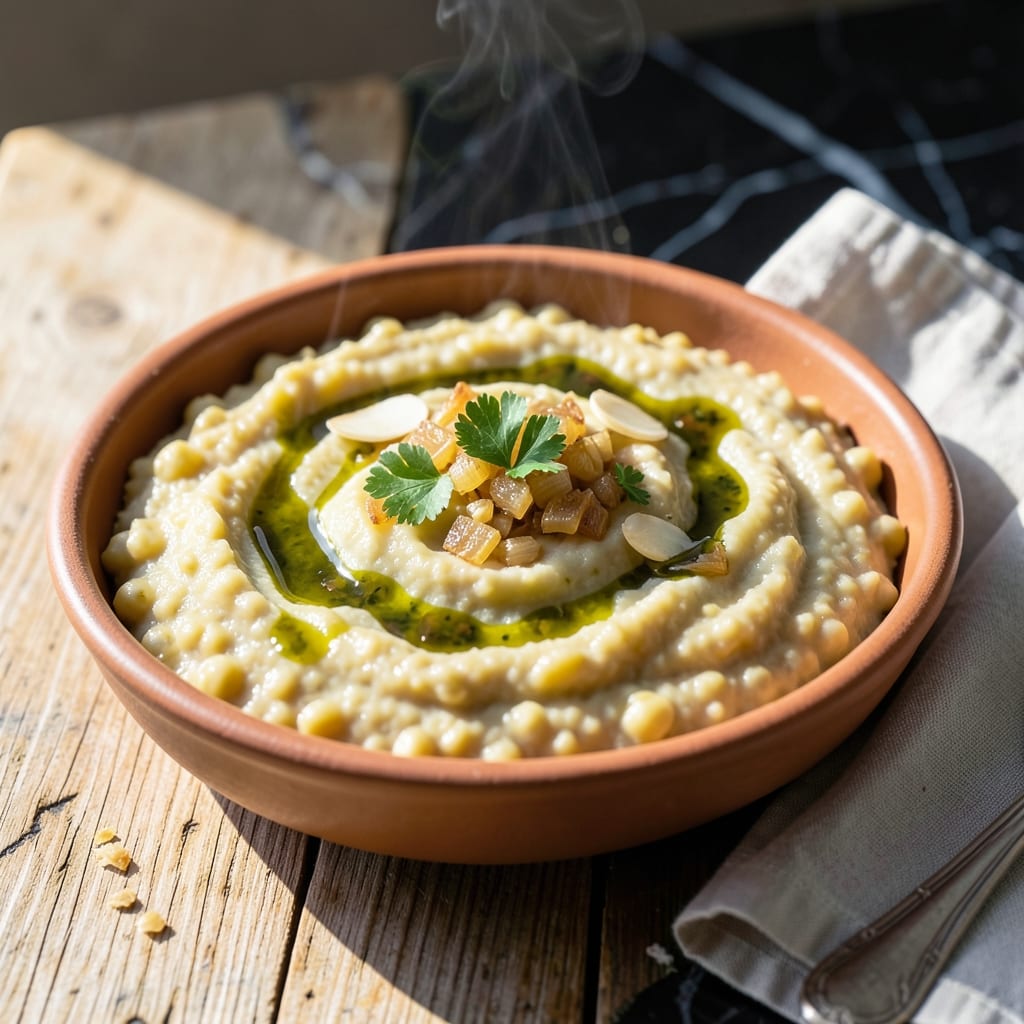
This Santorini specialty transforms humble yellow split peas into a velvety puree that captures the essence of Greek tradition.
I discovered this dish through my grandmother’s handwritten notes, which described its simple preparation with remarkable clarity. The key lies in slow cooking the peas until they break down completely, then finishing with a generous drizzle of olive oil.
The result is a dish that’s both rustic and refined—smooth, earthy, and rich with the fruity notes of good olive oil. It serves as a perfect meze or light main course.
Naturally vegan and deeply flavorful, this puree demonstrates how traditional Greek cooking elevates simple ingredients.
Ingredients for Fava Recipe Greece
Simple, traditional ingredients create this velvety Santorini puree with authentically Greek flavors.
| Ingredient | Amount | Notes |
|---|---|---|
| Yellow Split Peas 🌱 | 1 ½ cups | Rinsed and picked over |
| Extra-Virgin Olive Oil 🫒 | ½ cup | Plus extra for drizzling |
| Yellow Onion 🧅 | 1 whole | Finely diced for base |
| Garlic Cloves 🧄 | 3 cloves | Minced for depth |
| Fresh Lemon Juice 🍋 | 2 tbsp | Brightens the puree |
| Vegetable Broth 🥫 | 4 cups | Low-sodium preferred |
| Bay Leaf 🌿 | 2 pieces | Whole, for infusion |
| Dried Thyme 🍃 | ½ tsp | Crushed between fingers |
| Sea Salt 🧂 | 1 tsp | Adjust to taste |
| Freshly Ground Black Pepper 🌶️ | ½ tsp | For finishing |
| Fresh Parsley 🌿 | ¼ cup | Chopped, for garnish |
| Red Onion 🧅 | ½ whole | Thinly sliced for topping |
[recipe_ingredient_scaler]
The split peas are non-negotiable here—Yellow Split Peas from Greek or Middle Eastern markets have superior texture. Avoid green split peas; they lack the earthy depth. The extra-virgin olive oil must be high quality; Greek Koroneiki or any robust, fruity oil elevates the dish. Bay leaves and thyme should be fresh if possible, but dried (from Penzeys or Whole Foods) work well too.
No vegetable broth? Water with a bouillon cube is fine, but reduce salt elsewhere. Missing fresh parsley? Dried parsley at half the amount works in a pinch. For extra authenticity, swap red onion for shallots. The lemon juice can be bottled (though fresh is preferable), but avoid the pre-squeezed kind with preservatives—it dulls the flavor.
The puree thickens as it cools. Store in an airtight container in the fridge for up to 5 days, or freeze for 3 months. Reheat gently with a splash of water or broth to restore the velvety texture. Always drizzle fresh olive oil before serving.
Why You’ll Love This Recipe
- One Pot Wonder: I toss in the split peas, onion, and garlic, let it simmer, and that’s it—no fancy techniques, just good food.
- Bright Lemon Zing: The fresh lemon juice cuts through the richness of the olive oil, making every bite fresh and lively.
- Meal Prep Hero: Honestly, it tastes even better the next day, so I make a big batch for lunches all week.
- Pantry Staple: Yellow split peas are cheap, shelf-stable, and I always have the rest of the ingredients on hand.
Step-by-Step Instructions for Traditional Santorini Fava Puree
This method delivers the authentic texture and flavor of the Cycladic classic with precise technique.
Step 1: Sauté Aromatics and Toast the Peas
Heat 0.5 cup Extra-Virgin Olive Oil in a heavy pot over medium heat. Add the finely diced Yellow Onion and cook for 4-5 minutes until translucent, stirring occasionally. The onion should soften without browning, creating a sweet foundation.
Add the 1.5 cups Yellow Split Peas, 3 cloves minced Garlic Cloves, 2 pieces Bay Leaf, and 0.5 tsp Dried Thyme. Stir to coat the peas in oil and toast for 2 minutes until lightly fragrant. This step deepens the nutty flavor of the peas.
Step 2: Simmer Until Ultra-Tender
Pour in 4 cups Vegetable Broth and bring to a boil. Add 1 tsp Sea Salt, then reduce heat to low. Cover and simmer for 30-40 minutes, stirring occasionally, until the peas are completely soft and beginning to break apart.
The mixture should resemble a thick porridge when done. If it becomes too dry during cooking, add ¼ cup of water. The peas must be tender enough to mash easily with a fork—this ensures a smooth puree without graininess.
Step 3: Blend to Silky Consistency
Remove the 2 pieces Bay Leaf and discard. Using an immersion blender, puree the mixture until completely smooth. For an ultra-silky texture, process in 2-minute bursts, scraping down the sides between each.
The puree should be thick but pourable. If it’s too stiff, blend in 1-2 tbsp of warm water. The color will lighten as air incorporates, transforming into the characteristic pale yellow of authentic fava.
Step 4: Finish and Serve Traditionally
Transfer the puree to a serving bowl and let it cool slightly. Drizzle generously with additional Extra-Virgin Olive Oil—this creates the signature glossy surface. Sprinkle with 0.5 tsp Freshly Ground Black Pepper for contrast.
Top with thinly sliced Red Onion for a sharp crunch and a final drizzle of 2 tbsp Fresh Lemon Juice for brightness. Garnish with 0.25 cup chopped Fresh Parsley for freshness. Serve at room temperature with crusty bread for dipping.
Pro Tips For Making Fava Recipe Greece
- Soak the Peas: I learned this the hard way—soaking the yellow split peas for at least 2 hours cuts the cooking time in half and guarantees a creamier texture.
- Use Good Olive Oil: This isn’t the time for cheap oil; a high-quality extra-virgin olive oil adds depth to the fava’s flavor, especially since it’s the main fat in the dish.
- Skip the Boiling: Resist the urge to boil the peas aggressively; a gentle simmer prevents them from turning mushy and keeps the dish smooth but not gluey.
- Finish with Lemon: Stir in the fresh lemon juice at the very end—adding it earlier can make the peas tough, and the bright acidity shines best when it’s fresh.
Flavor Customization for This fava recipe greece
Citrus Variations
Swap the Fresh Lemon Juice for 2 tbsp orange juice and a pinch of zest for a sweeter, more aromatic profile. I love this with blood oranges when they’re in season at my local farmers market. 💛
Herb Infusions
Replace the Dried Thyme with ½ tsp dried rosemary or 1 tsp fresh dill for different herbal notes. Fresh rosemary from my garden adds a piney depth that pairs beautifully with the olive oil.
Spicy Kick
Add ¼ tsp red pepper flakes with the garlic for subtle heat, or top with thinly sliced jalapeños for extra bite. This adds a modern twist while keeping the dish’s rustic soul. 🌶️
Onion Swaps
Use shallots instead of Yellow Onion for a milder, slightly sweeter base. Or try leeks (white parts only) for a more delicate flavor that lets the peas shine through.
Creamy Upgrade
Stir in 2 tbsp tahini at the end for a nutty, Middle Eastern-inspired variation. The tahini blends seamlessly into the puree, adding richness without overpowering the earthy peas.
Garnish Ideas
Top with crumbled feta (if not strictly vegan), capers, or kalamata olives for a briny contrast. My grandmother would sometimes add a sprinkle of toasted breadcrumbs for texture.
Nutrition Facts
Frequently Asked Questions
Can I use canned split peas instead of dried?
No, dried yellow split peas are essential for authentic texture and flavor. Canned peas become mushy and lack the earthy depth. Soak dried peas for 1 hour if short on time.
Why does my puree taste bland?
Likely under-seasoned or rushed. Use high-quality extra-virgin olive oil and don’t skip the lemon juice—it brightens the earthy peas. Simmer peas fully until ultra-tender.
How do I fix a grainy texture?
Blend longer or add 1-2 tbsp warm water while processing. Ensure peas were fully cooked before blending. An immersion blender works best for silky results.
Can I make this ahead for a party?
Prepare up to 2 days ahead and store in the fridge. Reheat gently with a splash of broth, then add fresh olive oil and garnishes before serving.

Trained in classic French technique but raised on slow-cooked ribs and spicy rubs, she blends culinary skill with smoke and soul.
- Best Passover Beef Brisket Recipe: Molasses-Spiced Slow-Cooked Masterpiece - October 15, 2026
- Jamie Oliver’s Fast and Simple Brisket Recipe: Smoky-Sweet One-Pan Magic - October 15, 2026
- Best Smoked Oxtail Recipe: Deep-Rich Flavor After Low-and-Slow Cooking - October 14, 2026