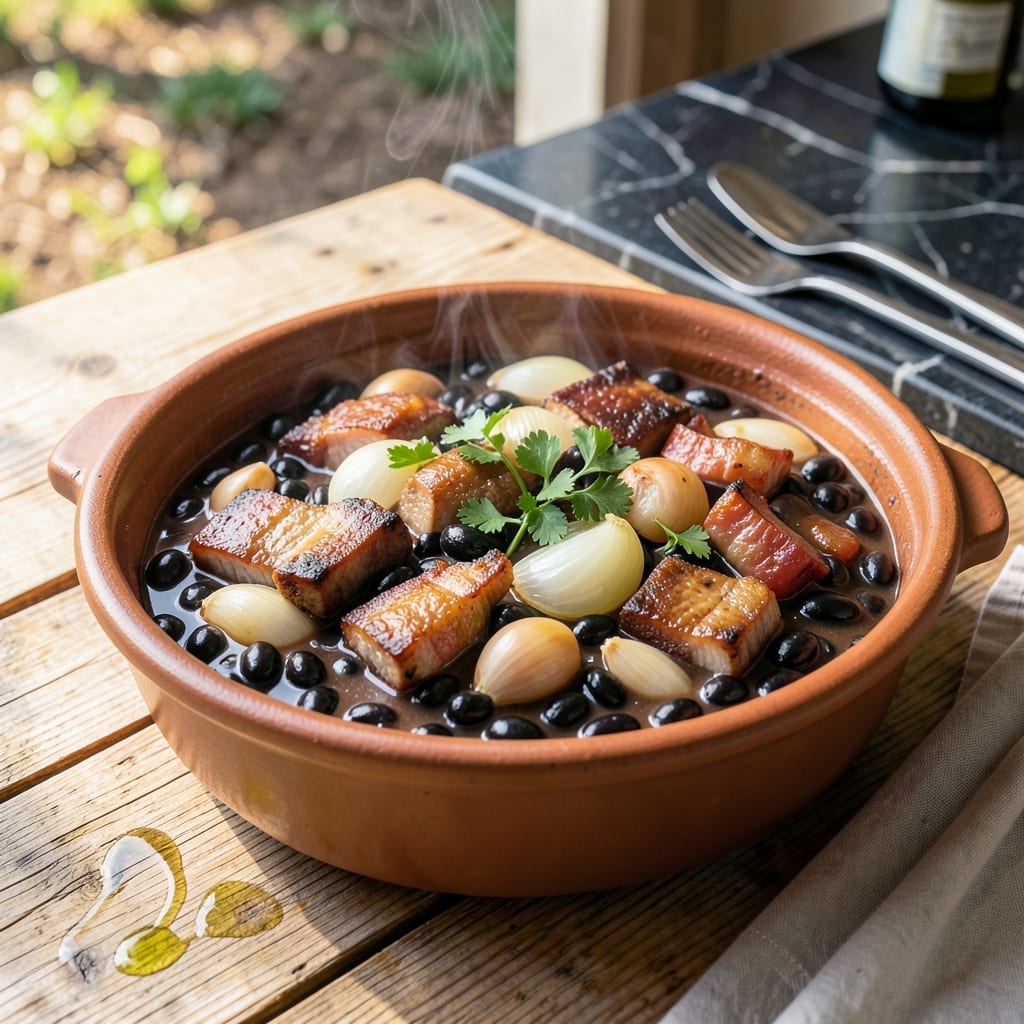
This Portuguese black bean stew brings authentic smoky depth to your table with a time-honored technique.
Slow-cooked with pork, sausage, and aromatic spices, this dish transforms humble ingredients into a rich, hearty meal. The key lies in layering flavors through proper browning and gentle simmering.
The result is a tender stew with complex flavors that improve overnight. Each bite delivers the comforting warmth of traditional Portuguese home cooking.
Perfect for family gatherings or a satisfying weekend meal. The process requires patience but rewards with exceptional taste.
Ingredients for Feijoada Recipe Portuguese
Authentic Portuguese flavors require pork, sausage, beans, and a few aromatic spices for depth.
| Ingredient | Amount | Notes |
|---|---|---|
| Dried Black Beans ⚫ | 1 lb | Soaked overnight, drained |
| Pork Shoulder 🥩 | 1 lb | Cut into 1-inch cubes |
| Smoked Sausage 🌭 | ½ lb | Linguiça or chorizo preferred |
| Bacon 🥓 | ¼ lb | Thick-cut, diced |
| Yellow Onion 🧅 | 1 whole | Medium, finely diced |
| Garlic Cloves 🧄 | 6 cloves | Minced for depth |
| Bay Leaves 🍃 | 2 whole | Dried, whole |
| Dried Oregano 🌿 | 1 tbsp | Mediterranean variety |
| Smoked Paprika 🌶️ | 1 tbsp | For authentic smokiness |
| Cumin Seeds 🌿 | 1 tsp | Toasted lightly |
| Tomato Paste 🍅 | 2 tbsp | For richness and body |
| Red Wine Vinegar 🍷 | 2 tbsp | Balances the richness |
| Chicken Stock 🍲 | 4 cups | Low-sodium preferred |
| Olive Oil 🫒 | 3 tbsp | Extra-virgin for browning |
| Salt 🧂 | 1 ½ tsp | Kosher or sea salt |
| Black Pepper 🌶️ | 1 tsp | Freshly ground for best flavor |
[recipe_ingredient_scaler]
The pork shoulder is non-negotiable for authentic texture—look for well-marbled cuts at Whole Foods or your local butcher. Linguiça sausage (Portuguese-style) adds the right smoky profile; Trader Joe’s carries a solid version if you can’t source it elsewhere. Bacon should be thick-cut to avoid burning during browning. For beans, dried black beans are traditional, but ensure they’re not older than a year (old beans stay tough).
No linguiça? Kielbasa or andouille work in a pinch—just adjust salt since they’re often pre-seasoned. Swap smoked paprika for hot paprika if you prefer a spicier profile. Out of red wine vinegar? Apple cider vinegar at the same quantity maintains the acidity. For the stock, vegetable broth can substitute, but chicken stock adds more depth. The cumin seeds can be replaced with ground cumin at half the amount.
This stew improves dramatically overnight—24 hours in the fridge lets flavors meld completely. Stores well for 4-5 days refrigerated or freezes for up to 3 months. Reheat gently to preserve the tender texture of the meats.
Why You’ll Love This Recipe
- I’ll be real: the leftovers taste even better after a night in the fridge, so I always make extra.
- Set It & Forget It: I toss everything in the pot and let the smoked sausage and pork shoulder work their magic for hours—minimal effort, maximum payoff.
- Smoky Meat Heaven: The bacon and smoked sausage infuse the black beans with this deep, rich flavor that’s honestly hard to beat.
- Feeds a Hungry Crowd: Between us, this is my go-to for Sunday dinners—it stretches easily for 6-8 people without breaking the bank.
Step-by-Step Instructions for Portuguese Feijoada
This traditional method builds layers of smoky, savory depth in every satisfying spoonful.
Step 1: Prepare and Brown the Meats
Heat 2 tablespoons of the olive oil in a large Dutch oven over medium-high heat. Add the diced bacon and cook for 4-5 minutes until the fat renders and the pieces turn golden brown. I always let the bacon crisp slightly at the edges for maximum flavor development.
Remove the bacon with a slotted spoon and set aside. In the same pot with the rendered fat, add the remaining 1 tablespoon olive oil and the cubed pork shoulder. Brown on all sides for 6-8 minutes until deeply caramelized. Transfer to the plate with the bacon, then add the sliced smoked sausage to the pot and brown for 3-4 minutes until lightly charred in spots.
Step 2: Build the Aromatic Foundation
Reduce heat to medium and add the finely diced yellow onion to the pot. Cook for 5 minutes, stirring occasionally, until softened and translucent. I find this is the perfect time to bloom the spices—add the minced garlic cloves, cumin seeds, smoked paprika, and dried oregano, stirring constantly for 1 minute until fragrant.
Stir in the 2 tablespoons tomato paste and cook for 2 minutes until it deepens in color. This step is crucial for developing the rich, concentrated base that defines an authentic feijoada. The mixture should look like a dark, thick paste coating the bottom of the pot.
Step 3: Combine and Simmer the Stew
Return all the browned meats to the pot along with any accumulated juices. Add the soaked and drained dried black beans, 2 whole bay leaves, 4 cups chicken stock, 2 tablespoons red wine vinegar, 1.5 teaspoon salt, and 1 teaspoon black pepper. Stir well to combine, ensuring all the browned bits are scraped from the bottom.
Bring to a boil, then reduce heat to maintain a gentle simmer. Cover and cook for 1.5 hours, stirring occasionally. After this time, the beans should be nearly tender. Uncover and continue simmering for another 30-45 minutes until the beans are completely tender and the stew has thickened slightly.
Step 4: Adjust and Rest Before Serving
Remove the bay leaves and discard. Taste and adjust seasoning if needed—I often find it needs a touch more salt at this stage. The stew should have a thick, hearty consistency with the beans absorbing much of the liquid. If it’s too thick, stir in a splash of hot water.
Let the feijoada rest off heat for 10-15 minutes before serving. This allows the flavors to meld fully and the meats to reabsorb some of the liquid. The final dish should have a deep, smoky aroma with the beans offering a creamy contrast to the tender, flavorful meats.
Pro Tips For Making Feijoada Recipe Portuguese
- Soak Overnight: I learned this the hard way—dried black beans need at least 8 hours in cold water to soften properly, or you’ll be waiting forever for them to cook through.
- Brown the Meats: Take the extra 10 minutes to sear the pork shoulder, sausage, and bacon in batches—it adds depth that skipping just can’t match.
- Skip the Salt Early: Sounds weird, but it works: hold off on salting the beans until they’re nearly tender, or they’ll stay tough no matter how long you simmer.
- Use a Heavy Pot: My grandmother swore by this, and she was right: a thick-bottomed Dutch oven keeps the heat steady and prevents scorching during the long cook.
Dietary Considerations for This Recipe
Gluten-Free Naturally
This dish is inherently gluten-free as written, relying on beans, meats, and spices without any wheat-based thickeners. I always double-check my linguiça or chorizo labels, as some brands add fillers. Trader Joe’s carries certified gluten-free options that work perfectly. 💪
Dairy-Free Friendly
Traditional feijoada contains no dairy, making it safe for lactose-intolerant diners. Be mindful of serving accompaniments—skip the bread and opt for white rice or sautéed greens instead. The stew’s richness comes from meat and beans, not dairy.
Lower Sodium Option
To reduce sodium, use low-sodium chicken stock and cut the added salt by half. I also rinse soaked beans thoroughly before cooking. For sausage, homemade linguiça lets you control the salt content completely.
Vegetarian Adaptation
Replace meats with smoked tofu, tempeh, and mushrooms for a plant-based version. Use vegetable broth and add liquid smoke for depth. The beans and spices remain the star, delivering that same hearty satisfaction.
Pork-Free Alternative
For religious or dietary restrictions, swap pork shoulder for beef chuck and use beef sausage instead of linguiça. The cooking time remains the same. I’ve found halal or kosher beef sausages work well in this adaptation.
Allergen Awareness
The primary allergens here are sulfites (in some sausages) and nightshades (paprika). For sulfite sensitivity, seek out sausage brands without preservatives. The dish is otherwise free of common allergens like nuts, eggs, and shellfish. 🌱
Nutrition Facts
Frequently Asked Questions
Can I use canned beans instead of dried?
Yes, but expect a texture difference. Drain and rinse 4 cans (15 oz each) of black beans, then reduce simmering time to 30 minutes since they’re pre-cooked. The flavor won’t be as deep as dried, but it’s a good shortcut.
Why soak the beans overnight?
Soaking reduces cooking time by 30-50% and helps beans cook evenly. It also removes some indigestible sugars, making the dish gentler on digestion. Skip it only if using the quick-soak method (boil 2 minutes, then rest 1 hour).
Can I make this in a slow cooker?
Brown meats first, then transfer everything to the slow cooker. Cook on low for 8-10 hours or high for 5-6 hours. The flavors meld beautifully, but stovetop simmering gives better control over thickness.
What’s the best way to reheat leftovers?
Gently warm on the stove over low heat, adding a splash of water or broth if too thick. Microwaving works in 1-minute intervals, stirring between each. Avoid boiling to keep the meats tender.

Trained in classic French technique but raised on slow-cooked ribs and spicy rubs, she blends culinary skill with smoke and soul.
- Recipe for Boneless Pork Chops in Cast Iron Skillet: Sear and Baste to Juicy Perfection - October 3, 2026
- Recipe for Boneless Cross Rib Roast: Slow-Roasted Beef with Herb Crust - October 3, 2026
- Hamburgers in Sauce Recipe Crock Pot: Slow-Cooked Savory Delight - October 3, 2026