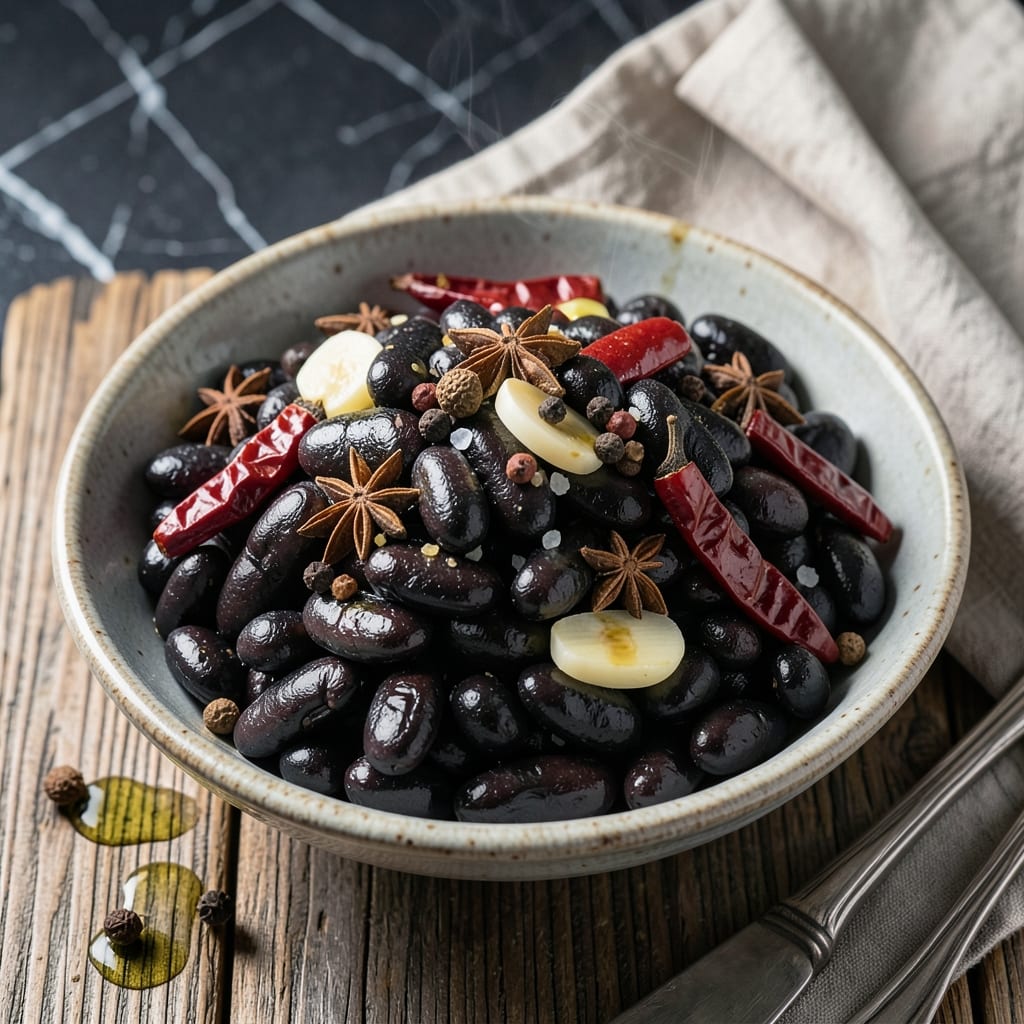
I discovered this fermented black bean condiment while exploring authentic Chinese cooking, and it changed how I approach flavor. The process transforms simple black beans into a rich, umami-packed paste that elevates any dish.
This recipe requires patience as the beans ferment, but the payoff is a complex, savory condiment that lasts for months. The fermentation develops deep, salty-sweet notes that can’t be replicated with store-bought versions.
Use it as a base for stir-fries, marinades, or dipping sauces. A small spoonful adds bold, layered flavor without overpowering other ingredients. The longer it ferments, the more intense it becomes.
Store in an airtight container in the fridge, and it will keep improving with age. Here’s how to make it at home.
Ingredients for Fermented Black Bean
Transform simple black beans into a rich, umami-packed fermented condiment with these traditional ingredients.
| Ingredient | Amount | Notes |
|---|---|---|
| Dried Black Beans ⚫ | 2 cups | Rinsed and picked over |
| Sea Salt 🧂 | 2 tbsp | Non-iodized, fine grain |
| Sichuan Peppercorns 🌶️ | 1 tsp | Lightly crushed |
| Star Anise Pods ⭐ | 2 whole | Lightly toasted |
| Dried Red Chili Peppers 🌶️ | 5 pieces | Mild to medium heat |
| Garlic Cloves 🧄 | 6 cloves | Smashed, unpeeled |
| Fresh Ginger 🌿 | 2 oz | Peeled and sliced |
| Shaoxing Wine 🍶 | ¼ cup | Or dry sherry substitute |
| Filtered Water 💧 | 3 cups | Room temperature |
[recipe_ingredient_scaler]
The black beans are the foundation—look for dried, uncooked black soybeans at Asian markets or well-stocked international aisles. Non-iodized sea salt is essential; iodine can inhibit fermentation. Sichuan peppercorns and star anise add authentic depth, but if you can’t find them, a Chinese five-spice blend works in a pinch. Toast the spices lightly to release their aromas before steeping.
No Shaoxing wine? Dry sherry is the closest substitute, but mirin with a dash of rice vinegar can work too. Dried chilis can be adjusted for heat preference—remove seeds for milder flavor or add more for extra kick. The ginger and garlic infuse the brine with aroma, but powdered versions won’t deliver the same complexity. Fresh is non-negotiable here.
Fermented black beans develop flavor over 3-4 weeks at room temperature, then keep indefinitely refrigerated. The paste intensifies with age, so 6 months is ideal for peak umami. Store in a clean, airtight glass jar to prevent contamination. Always use a clean spoon to scoop out portions.
Why You’ll Love This Recipe
- Set and Forget: I toss everything in a jar with salt and spices, then let time do the heavy lifting—no stirring, no fuss.
- Umami Bomb: The Sichuan peppercorns and star anise turn plain black beans into this deep, funky, savory punch that wakes up any dish.
- Stir-Fry Superstar: Honestly, I keep a jar in the fridge to dump into noodles, fried rice, or even scrambled eggs for an instant flavor boost.
- Pantry MVP: Dried beans and a handful of spices cost pennies, and one batch lasts me weeks in the fridge.
Step-by-Step Instructions for Fermented Black Beans
Master the fermentation process with precision—these steps ensure optimal flavor development.
Step 1: Rinse and Prepare the Dried Black Beans
Begin by placing the 2 cups Dried Black Beans in a colander and rinsing them thoroughly under cold running water. Pick over the beans to remove any debris or imperfect pieces. This step is crucial for removing surface dirt and ensuring a clean fermentation environment.
After rinsing, transfer the beans to a large bowl and cover them with enough water to submerge by 2 inches. Soak the beans at room temperature for 8-12 hours or overnight. You’ll know they’re ready when they’ve doubled in size and have a slightly softer texture when pinched between your fingers.
Step 2: Toast Aromatics and Combine with Beans
In a dry skillet over medium heat, lightly toast the 1 tsp Sichuan Peppercorns and 2 whole Star Anise Pods for 1-2 minutes until fragrant. Be careful not to burn them, as this will impart a bitter flavor. Remove from heat and set aside to cool slightly.
Drain the soaked beans completely and transfer them to a clean, non-reactive container. Add the toasted Sichuan Peppercorns, Star Anise Pods, 5 pieces Dried Red Chili Peppers, 6 cloves Garlic Cloves, and 2 oz Fresh Ginger. The combination of these aromatics will infuse the beans with complex, layered flavors during fermentation.
Step 3: Create the Fermentation Brine
In a separate bowl, dissolve the 2 tbsp Sea Salt in the 3 cups Filtered Water until fully incorporated. This brine will preserve the beans and encourage the growth of beneficial bacteria. Stir in the 0.25 cup Shaoxing Wine, which adds depth and a subtle sweetness to the final product.
Pour the brine over the beans and aromatics, ensuring everything is fully submerged. The liquid should cover the beans by at least 1 inch to prevent mold growth. If necessary, use a fermentation weight or a small plate to keep the beans under the brine.
Step 4: Ferment and Monitor
Cover the container with a clean cloth or lid, leaving a small gap for airflow. Store it in a cool, dark place with a consistent temperature between 65-75°F. Ferment for 3-5 days, checking daily for any signs of mold or off smells.
During fermentation, you’ll notice small bubbles forming—a sign that the process is active. Taste the beans after 3 days. They should have a tangy, umami-rich flavor with a slight effervescence. If they taste bland, allow them to ferment for up to 2 additional days.
Step 5: Store and Use
Once the beans have reached your desired flavor, transfer them to an airtight container along with the brine. Store in the refrigerator for up to 6 months. The flavors will continue to develop over time, becoming more complex and intense.
Use these fermented black beans as a condiment for noodles, stir-fries, or soups. Their deep, savory flavor will elevate any dish with minimal effort. Always use a clean utensil when removing beans from the container to maintain freshness and prevent contamination.
Pro Tips For Making Fermented Black Bean
- Soak Overnight: I learned this the hard way—dried black beans need at least 8 hours in cold water to soften properly, otherwise they stay tough even after fermentation.
- Toast Whole Spices: Lightly dry-toast the Sichuan peppercorns and star anise in a pan for 30 seconds before adding to the brine—it wakes up the flavors.
- Skip the Iodized Salt: Sea salt is non-negotiable here; iodized salt can inhibit fermentation and give the beans a metallic taste.
- Stir Daily: After the first 24 hours, give the jar a quick stir every day to prevent mold growth and ensure even fermentation.
Perfect Pairings for These Flavors
Stir-Fry Pairings
This condiment shines in stir-fries with bok choy and shitake mushrooms. I add 1-2 tbsp toward the end of cooking to preserve its bold flavor. The umami depth pairs perfectly with tofu or chicken as the protein. 🔥
Noodle Dishes
Toss 2 tbsp with lo mein or udon noodles for an instant flavor boost. The paste clings beautifully to the noodles. I love it with hand-pulled noodles for an authentic texture contrast.
Dipping Sauces
Mix 1 tbsp with 1 tsp sesame oil, 1 tsp rice vinegar, and 1 tsp honey for a quick dipping sauce. It’s incredible with steamed dumplings or spring rolls. The balance of sweet, salty, and umami is irresistible.
Marinade Base
Combine 3 tbsp with 2 tbsp soy sauce and 1 tbsp sugar for a marinade. I use it on pork tenderloin or chicken thighs before grilling. The fermentation tenderizes while adding complex flavor.
Soup Enhancer
Stir 1 tbsp into hot and sour soup or egg drop soup just before serving. It deepens the broth without overpowering. I also add it to pho for extra richness. 💡
Rice Accompaniment
Mix 1 tsp into plain steamed rice for a quick flavor upgrade. The paste distributes evenly through jasmine rice. I sometimes add scallions and sesame seeds for garnish.
Nutrition Facts
Frequently Asked Questions
How long does the fermentation process take?
Ferment for 3-5 days at 65-75°F. Taste after 3 days—if bland, extend up to 2 more days. Bubbles indicate active fermentation.
Can I use regular black beans instead of dried black soybeans?
No, regular black beans lack the dense texture and deep flavor. Dried black soybeans are essential for authentic umami. Find them at Asian markets or online.
What if mold appears during fermentation?
Discard the batch if you see fuzzy mold or smell off odors. Ensure beans stay submerged under brine to prevent this. Use a clean weight or plate to keep them down.
How do I know when it’s ready?
The beans should taste tangy and umami-rich. Look for small bubbles and a slightly effervescent texture. If still bland, ferment longer—up to 7 days maximum.

Trained in classic French technique but raised on slow-cooked ribs and spicy rubs, she blends culinary skill with smoke and soul.
- Meat and Potato Recipe Ideas: Savory Pairings for Hearty Meals - October 3, 2026
- Recipe for Fried Prawns Batter: Ultra-Crispy Golden Shell - October 3, 2026
- Indian Lamb Curry Recipe Pressure Cooker: Fragrant Spices in a Fraction of the Time - October 3, 2026