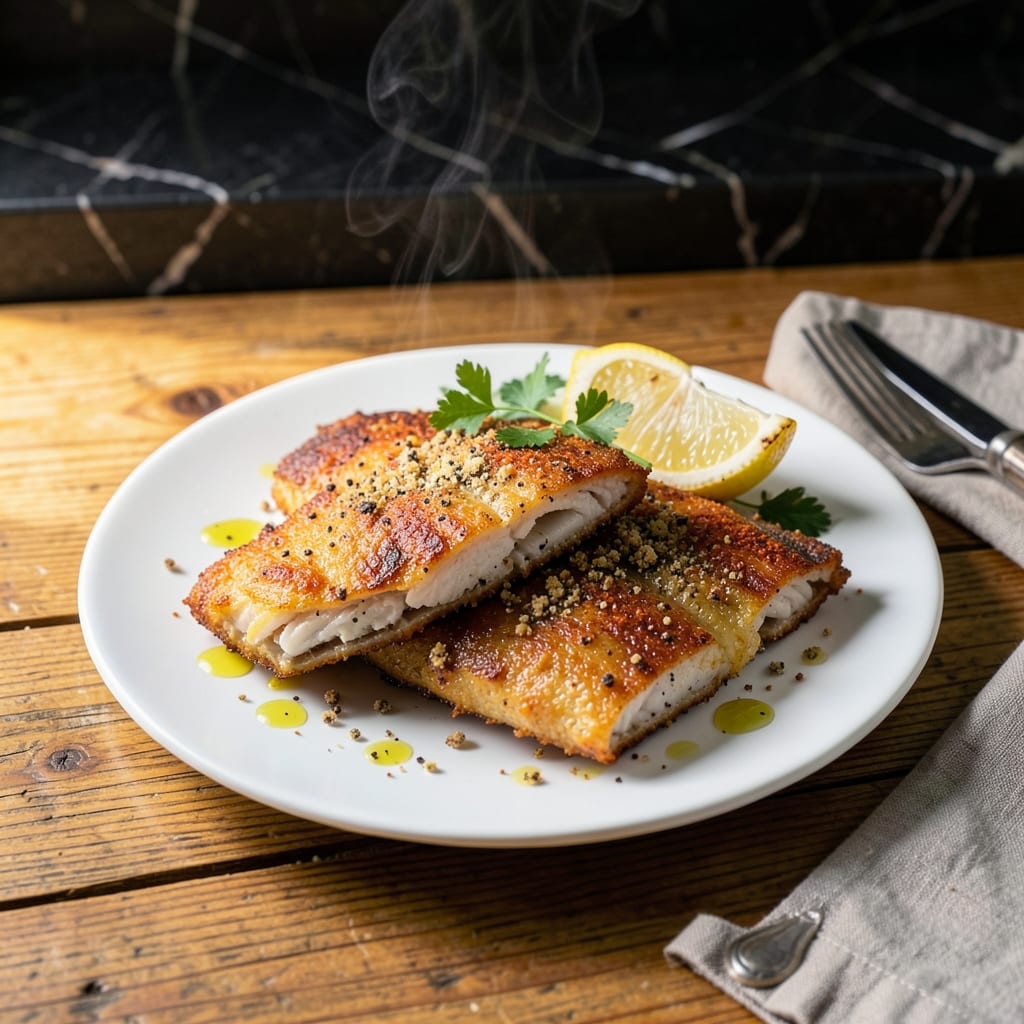
There’s a reason New Englanders prize chain pickerel for its clean, mild flavor and firm texture. This pan-fry technique lets the fish shine with minimal interference.
I developed this method after testing multiple approaches in my small Boston kitchen, focusing on simplicity and reliability. The key is a hot skillet, simple seasoning, and just enough oil to achieve a golden crust without overwhelming the delicate flesh.
What you’ll get is perfectly cooked fish with a crisp exterior and moist, flaky interior. The method works every time, even with the finicky catches from local lakes.
Serve it hot with lemon wedges and a side of roasted vegetables for a meal that tastes like a lakeside dinner.
Ingredients for Chain Pickerel
Wild-caught fish, a hot skillet, and simple seasonings bring this dish to life.
| Ingredient | Amount | Notes |
|---|---|---|
| Chain Pickerel Fillets 🐟 | 1 ½ lb | Skin-on, about 1 inch thick |
| All-Purpose Flour 🌾 | ½ cup | For dredging fish |
| Kosher Salt 🧂 | 1 ½ tsp | Plus more to taste |
| Freshly Ground Black Pepper 🌶️ | 1 tsp | Coarse grind preferred |
| Garlic Powder 🧄 | 1 tsp | Or 2 fresh cloves minced |
| Paprika 🌶️ | ½ tsp | Sweet or smoked variety |
| Vegetable Oil 🫒 | ½ cup | High smoke point for frying |
| Unsalted Butter 🧈 | 2 tbsp | For basting fish |
| Fresh Lemon 🍋 | 1 whole | Cut into wedges for serving |
| Fresh Parsley 🌿 | 2 tbsp | Chopped, for garnish |
| Lemon Juice 🍋 | 1 tbsp | Freshly squeezed |
[recipe_ingredient_scaler]
The chain pickerel is everything here. Local fish markets in New England often carry it fresh in season, or ask your monger to order it. Look for fillets that are firm, translucent, and smell clean—avoid anything with a strong fishy odor. The flour creates a light crust that crisps up beautifully in the pan. King Arthur all-purpose is my go-to for consistency.
No chain pickerel? Walleye or perch work just as well with the same cooking time. Out of all-purpose flour? Cornstarch at half the amount gives an even crispier coating. The paprika adds subtle color but can be omitted. For extra flavor, try a pinch of Cajun seasoning in the flour mixture. Fresh garlic works too—just don’t let it burn.
Cook the fish immediately after dredging for best results. Leftovers (if any) keep for 1-2 days in the fridge, but this is truly best eaten fresh. The lemon wedges are non-negotiable—they brighten every bite.
Why You’ll Love This Recipe
- One Pan Dinner: I coat the fillets in flour, salt, and garlic powder, then pan-fry—no fuss, no extra dishes.
- Crispy and Zesty: That golden crust with just a hint of garlic? It’s the reason I make this every other week.
- Weeknight Hero: Honestly, it’s my go-to when I need something fast but still impressive for guests.
- Budget Friendly: Pickerel is affordable, and a little goes a long way—leftovers taste even better the next day.
Step-by-Step Instructions for Chain Pickerel
This straightforward method highlights the wild-caught flavor with a crisp, golden crust.
Step 1: Season and Dredge the Pickerel Fillets
Pat the 1.5 lb Chain Pickerel Fillets dry with paper towels to ensure a crispy crust. In a shallow dish, combine the 0.5 cup All-Purpose Flour, 1.5 tsp Kosher Salt, 1 tsp Freshly Ground Black Pepper, 1 tsp Garlic Powder, and 0.5 tsp Paprika.
Dredge each fillet in the seasoned flour, pressing gently to adhere. Shake off any excess flour—this prevents a gummy coating. The fillets should be evenly coated with a thin, uniform layer.
Step 2: Heat the Oil and Pan-Fry the Fillets
In a large, heavy skillet, heat the 0.5 cup Vegetable Oil over medium-high heat until it shimmers but does not smoke. This ensures the fish cooks quickly without absorbing excess oil.
Carefully place the dredged fillets in the hot oil, skin-side down. Cook for 3-4 minutes until the edges are golden brown and crisp. Avoid overcrowding the pan—work in batches if necessary to maintain oil temperature.
Step 3: Flip and Baste with Butter
Gently flip each fillet using a spatula. Add the 2 tbsp Unsalted Butter to the pan and let it melt. Tilt the pan slightly and spoon the hot butter over the fillets, basting continuously for 2-3 minutes.
This basting step adds richness and helps the fish cook evenly. The fillets are done when they flake easily with a fork and the internal temperature reaches 145°F. Transfer the cooked fillets to a paper towel-lined plate to drain excess oil.
Step 4: Garnish and Serve Immediately
Squeeze the 1 tbsp Lemon Juice over the fillets. Garnish with the 2 tbsp Fresh Parsley and serve with the 1 whole Fresh Lemon cut into wedges on the side.
The acidity from the lemon juice balances the richness of the fish, while the parsley adds a fresh, vibrant finish. Serve immediately while the fillets are hot and crispy.
Pro Tips For Making Chain Pickerel
- Pat Fillets Dry: Use paper towels to thoroughly dry the pickerel fillets before dredging—moisture is the enemy of a crispy crust, and I learned this the hard way after too many soggy batches.
- Season the Flour: Mix the kosher salt, black pepper, and garlic powder directly into the flour before coating; it sticks better than sprinkling it on after, and the flavor penetrates every bite.
- Hot Oil Only: Wait until the oil is shimmering hot before adding the fillets—after burning my first attempt, I now test it with a pinch of flour to see if it sizzles immediately.
- Use a Wire Rack: Place the fried fillets on a wire rack instead of paper towels to keep them crisp; I skip this when I’m in a rush, but they’re always better when I don’t.
Perfect Pairings for This Dish
Side Dish Pairings
Roasted asparagus with olive oil and sea salt complements the fish beautifully. I toss 1 lb asparagus spears with 2 tbsp olive oil and roast at 400°F for 12-15 minutes until tender-crisp. The bright, earthy flavor cuts through the richness. 🥗
Fresh Salad Option
A simple mixed greens salad with a light vinaigrette works wonders. I use 5 oz baby spinach, ½ cup cherry tomatoes, and ¼ cup crumbled feta with a lemon-Dijon dressing. The acidity mirrors the lemon in the fish preparation.
Starchy Sides
For heartier meals, garlic mashed potatoes are my go-to. I boil 2 lbs Yukon Gold potatoes and mash with 4 tbsp butter, ½ cup warm milk, and 3 roasted garlic cloves. The creamy texture contrasts perfectly with the crisp fish.
Beverage Pairings
A crisp Sauvignon Blanc from New Zealand pairs beautifully with this dish. The citrus notes complement the lemon in the recipe. For beer lovers, a cold New England IPA like Trillium Congress Street adds a local touch. 🍷
Nutrition Facts
Frequently Asked Questions
Can I use frozen fillets instead of fresh?
Yes, but thaw them completely in the fridge overnight first. Pat them very dry before dredging to prevent a soggy coating. Never cook fish straight from frozen.
What’s the best oil for pan-frying?
Use oils with a high smoke point like vegetable, canola, or peanut oil. Avoid olive oil—it can burn at the required medium-high heat.
How do I know when the fish is done?
The flesh should flake easily with a fork and reach an internal temp of 145°F. The crust will be golden brown and crisp. Overcooking makes it dry.
Can I skip the butter basting?
You can, but the butter adds rich flavor and helps crisp the crust. For a lighter version, use just 1 tbsp or substitute olive oil.

Trained in classic French technique but raised on slow-cooked ribs and spicy rubs, she blends culinary skill with smoke and soul.
- Meat Loaf Recipe With Beef And Pork: Homestyle Blend With Rich Gravy - October 3, 2026
- Hamburger Patty Recipe No Egg: Juicy Bind With Breadcrumbs and Milk - October 3, 2026
- Recipe for Oven Baked Halibut: Buttery White Fish with Zesty Lemon Topping - October 3, 2026