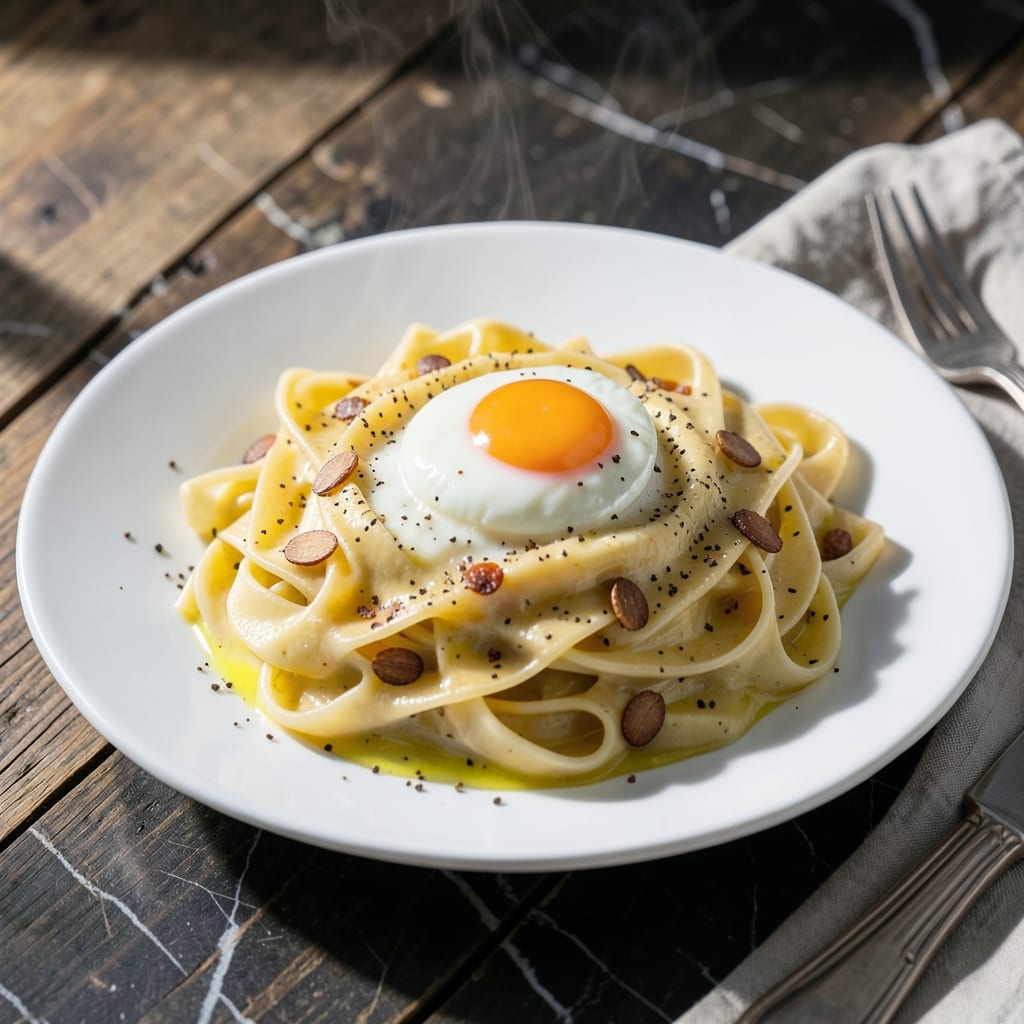
This egg-enriched alfredo creates the silkiest sauce I’ve ever made at home. The technique transforms a simple pasta dish into something restaurant-worthy with minimal effort.
Fresh fettuccine absorbs the creamy sauce beautifully, while the egg adds richness that sets this version apart. I developed this method after testing countless recipes that fell short of that ideal velvety texture.
In just 20 minutes, you’ll have tender pasta coated in a luscious, silky sauce that clings to every strand. The egg creates an emulsion so stable the sauce never separates, even when reheated.
Perfect for weeknight dinners when you want something indulgent but quick. The results speak for themselves.
Ingredients for Fettuccine Alfredo Recipe with Egg
Rich, creamy, and velvety—these ingredients transform pasta into restaurant-quality comfort in minutes.
| Ingredient | Amount | Notes |
|---|---|---|
| Fresh Fettuccine 🍝 | 1 lb | Or 16 oz dried pasta |
| Unsalted Butter 🧈 | ¾ cup | Cut into small cubes |
| Heavy Cream 🥛 | 1 cup | Full-fat for creaminess |
| Parmesan Cheese 🧀 | 1 ½ cups | Freshly grated from block |
| Large Eggs 🥚 | 2 whole | Room temperature preferred |
| Garlic Cloves 🧄 | 3 cloves | Minced finely |
| Sea Salt 🧂 | 1 ½ tsp | Divided for pasta and sauce |
| Freshly Ground Black Pepper 🌶️ | 1 tsp | Plus extra for serving |
| Fresh Parsley 🌿 | ¼ cup | Chopped, for garnish |
| Nutmeg 🌰 | ¼ tsp | Freshly grated preferred |
[recipe_ingredient_scaler]
The Parmesan is non-negotiable here. Grab a wedge from the deli counter—pre-grated has anti-caking agents that make the sauce grainy. I always use Parmigiano-Reggiano for that authentic sharpness. Fresh fettuccine (found in the refrigerated section at Whole Foods or Eataly) absorbs the sauce better than dried, but either works. Just don’t overcook it—al dente is key for that perfect bite.
No fresh pasta? Dried fettuccine works fine—just reserve that starchy pasta water for the sauce. Out of heavy cream? Half-and-half in a pinch, but the sauce won’t be as luscious. The egg is the magic ingredient—don’t skip it. If you’re worried about raw egg, the hot pasta and sauce will gently cook it (no food safety concerns here). Swap the nutmeg for white pepper if you prefer a milder warmth.
Leftovers keep for 3-4 days in the fridge, though the sauce thickens as it cools. Reheat gently with a splash of milk or reserved pasta water to restore the silky texture. Freezing isn’t ideal—the egg can separate, but it’s still edible for up to 1 month.
Why You’ll Love This Recipe
- One Pot Wonder: I love that this comes together in a single skillet—no draining pasta, no extra bowls, just melt butter, toss in fettuccine, and let the cream and eggs do their magic.
- Rich and Silky: The egg in the sauce takes this alfredo from good to ridiculous. It thickens the cream just enough and gives it that velvety texture that clings to every strand.
- Feeds a Crowd Fast: Honestly, I’ve served this to picky kids and dinner guests alike. Everyone cleans their plate, and I’m not stuck in the kitchen all night.
- Leftovers? Better: Between us, this tastes even richer the next day. The pasta soaks up all that cheesy, buttery goodness overnight—if it lasts that long.
Step-by-Step Instructions for Fettuccine Alfredo With Egg
This method delivers creamy, luxurious pasta with a silky egg-enriched sauce in minutes.
Step 1: Cook the Fettuccine Al Dente
Bring a large pot of water to a rolling boil and add 1.5 tsp sea salt. Add the 1 lb fresh fettuccine and cook for 2-3 minutes until it floats to the surface. Fresh pasta cooks much faster than dried, so watch it closely.
You want the pasta just shy of fully cooked—it will finish in the sauce. Reserve 1 cup of starchy pasta water before draining. This liquid is crucial for creating the perfect sauce consistency.
Step 2: Create the Butter and Cream Base
In a large skillet over medium-low heat, melt the 0.75 cup unsalted butter until foamy. Add the 3 cloves minced garlic cloves and cook for 30-45 seconds until fragrant but not browned. Garlic burns easily, so keep it moving.
Pour in the 1 cup heavy cream and bring to a gentle simmer. Let it cook for 2-3 minutes until slightly thickened. The cream should coat the back of a spoon but not be overly heavy.
Step 3: Temper and Add the Eggs
In a small bowl, whisk the 2 whole large eggs with the 0.25 tsp nutmeg until smooth. Slowly drizzle about ½ cup of the hot cream mixture into the eggs while whisking constantly. This tempers the eggs so they don’t scramble when added to the pan.
Pour the tempered egg mixture back into the skillet with the cream. Cook over low heat for 1-2 minutes, stirring constantly, until the sauce thickens enough to coat the back of a spoon. The sauce should look velvety and rich.
Step 4: Combine Pasta and Sauce
Add the drained fettuccine to the skillet with the sauce. Toss gently to coat, adding reserved pasta water ¼ cup at a time until the sauce clings beautifully to the noodles. You’ll likely use about ½ to ¾ cup of the pasta water.
Remove the skillet from heat and stir in the 1.5 cups parmesan cheese and 1 tsp freshly ground black pepper. The residual heat will melt the cheese into a smooth, glossy sauce without making it stringy.
Step 5: Serve Immediately with Fresh Garnish
Taste and adjust seasoning if needed—though the parmesan is salty, you may want a pinch more sea salt. Transfer to serving plates and garnish with the 0.25 cup chopped fresh parsley.
Serve right away while the sauce is at its creamiest. The egg creates a luxurious texture that thickens slightly as it cools, so don’t let it sit too long before serving.
Pro Tips For Making Fettuccine Alfredo Recipe With Egg
- Temper the Eggs: Slowly whisk about 1/2 cup of the hot cream mixture into the beaten eggs before adding them to the sauce—I learned this the hard way after scrambling eggs in my Alfredo twice.
- Grate Fresh Parmesan: Skip the pre-grated stuff; freshly grated Parmesan melts smoothly and actually changes the outcome, while the pre-shredded version turns your sauce grainy.
- Reserve Pasta Water: Always save at least 1 cup of the starchy pasta water before draining; it’s the thing that matters most for adjusting the sauce consistency when it thickens too much.
- Low and Slow Heat: Keep the butter and cream on medium-low heat—cranking it up high risks breaking the sauce, and I burned three batches before figuring this out.
Troubleshooting fettuccine alfredo recipe with egg
Sauce Separating
If your sauce looks grainy or separated, it likely means the eggs weren’t tempered properly. Remove the pan from heat immediately and whisk in 1-2 tbsp cold heavy cream to bring it back together. This usually fixes the emulsion in seconds.
Sauce Too Thin
When your sauce seems watery, it probably needs more pasta water absorption. Keep tossing the pasta in the skillet over low heat for 1-2 minutes—the starch from the noodles will thicken it naturally. 💡
Sauce Too Thick
Add reserved pasta water 1 tbsp at a time while tossing the pasta until it reaches that perfect silky consistency. Remember, the sauce thickens as it cools, so aim for slightly looser than your final desired texture.
Egg Scrambling
If you see bits of cooked egg in your sauce, you added the eggs too quickly. Next time, drizzle the hot cream into the eggs more slowly while whisking constantly. The tempering step is crucial for that smooth, velvety texture.
Lumpy Cheese
Pre-grated parmesan often contains anti-caking agents that create lumps. Always use freshly grated Parmigiano-Reggiano from a block. If you must use pre-grated, mix it with 1 tbsp cornstarch first to help it melt smoothly.
Pasta Sticking
If your fettuccine is clumping, you may have overcooked it slightly. Next time, reduce cooking time by 30 seconds and remember that fresh pasta finishes in the sauce. Tossing with a bit more pasta water can help separate the strands. ✨
Nutrition Facts
Frequently Asked Questions
Why add eggs to alfredo sauce?
The eggs create a rich, velvety emulsion that makes the sauce extra silky. They also help stabilize the sauce so it doesn’t separate when reheated.
Can I use dried pasta instead of fresh?
Yes! Use 16 oz dried fettuccine and cook until al dente. Reserve extra pasta water as dried absorbs more liquid.
Can I make this ahead of time?
It’s best served immediately, but leftovers keep 3-4 days refrigerated. Reheat gently with 1-2 tbsp milk to restore creaminess.

Trained in classic French technique but raised on slow-cooked ribs and spicy rubs, she blends culinary skill with smoke and soul.
- Recipe for Boneless Pork Chops in Cast Iron Skillet: Sear and Baste to Juicy Perfection - October 3, 2026
- Recipe for Boneless Cross Rib Roast: Slow-Roasted Beef with Herb Crust - October 3, 2026
- Hamburgers in Sauce Recipe Crock Pot: Slow-Cooked Savory Delight - October 3, 2026