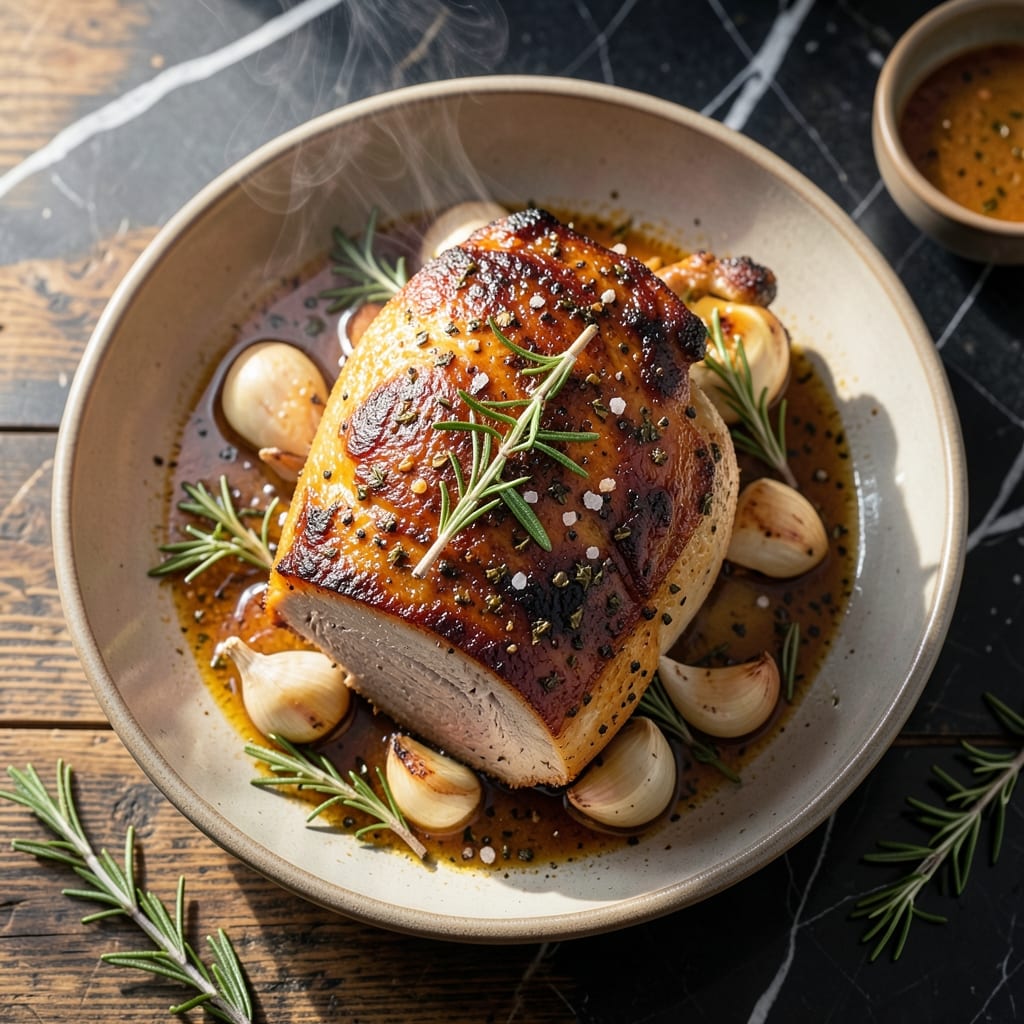
This herb-crusted pork roast transforms Christmas dinner into a memorable feast. The combination of fresh rosemary, thyme, and garlic creates a fragrant crust that seals in juices while delivering restaurant-quality flavor at home.
I developed this method after years of testing, focusing on a simple technique that guarantees tender, juicy meat every time. The key is a hot sear followed by slow roasting at 325°F, which allows the flavors to meld beautifully.
The result is a stunning centerpiece with a golden-brown crust and meat so tender it nearly falls apart. Each slice reveals perfectly seasoned pork with herbs that perfume the entire kitchen.
Serve with roasted vegetables and gravy for a complete holiday meal that will impress your guests without requiring all-day preparation.
Ingredients for Pork Roast Recipe Christmas Dinner
Eleven quality ingredients create a show-stopping herb-crusted pork roast for your holiday table.
| Ingredient | Amount | Notes |
|---|---|---|
| Bone-In Pork Shoulder Roast 🥩 | 5 lb | Skin-on for crispy crackling |
| Fresh Rosemary Sprigs 🌿 | 4 whole | Leaves stripped and chopped |
| Fresh Thyme Sprigs 🍃 | 6 whole | Leaves stripped and chopped |
| Garlic Cloves 🧄 | 8 cloves | Minced finely for crust |
| Coarse Kosher Salt 🧂 | 1 ½ tbsp | Diamond Crystal preferred |
| Freshly Ground Black Pepper 🌶️ | 1 tbsp | Coarse grind for texture |
| Dijon Mustard 🟡 | ¼ cup | For herb crust binding |
| Olive Oil 🫒 | 2 tbsp | Extra-virgin for searing |
| Dry White Wine 🍷 | ½ cup | For deglazing pan |
| Chicken Stock 🥣 | 1 cup | Low-sodium preferred |
| Unsalted Butter 🧈 | 2 tbsp | For basting roast |
| All-Purpose Flour 🌾 | 2 tbsp | For gravy thickening |
[recipe_ingredient_scaler]
The pork shoulder is non-negotiable here. Bone-in, skin-on yields the most flavorful meat and crispy crackling. Source from Whole Foods or a trusted butcher for the best marbling. For herbs, organic fresh rosemary and thyme from the grocery store work perfectly—just ensure they’re vibrant, not wilted. The Dijon mustard acts as the glue for your herb crust, so opt for a quality brand like Maille.
Short on fresh herbs? Dried rosemary and thyme at one-third the amount work in a pinch, though fresh is ideal. No white wine? Apple cider vinegar mixed with water (1:3 ratio) can substitute for deglazing. For the stock, homemade is best, but Better Than Bouillon makes a solid store-bought option. The butter can be omitted, but it adds a richness that elevates the gravy.
This roast tastes even better the next day. Store leftovers in an airtight container in the fridge for up to 4 days, or freeze for 3 months. Reheat gently in the oven with a splash of stock to maintain moisture (don’t skip this part).
Why You’ll Love This Recipe
- Set and Forget: The bone-in shoulder practically cooks itself while I wrap gifts or decorate the tree.
- Herb-Crusted Bliss: Rosemary, thyme, and garlic form a crust so fragrant, the kitchen smells like a holiday postcard.
- Feeds the Whole Table: A single roast serves eight with leftovers for sandwiches the next day.
- Budget-Friendly Centerpiece: Pork shoulder gives that impressive holiday feel without the prime rib price tag.
Step-by-Step Instructions for Herb-Crusted Pork Roast
This method delivers a showstopping centerpiece with crispy crackling and tender, aromatic meat.
Step 1: Prepare the Herb Crust
Strip the leaves from the 4 whole fresh rosemary sprigs and 6 whole fresh thyme sprigs, then finely chop them. In a bowl, combine the chopped herbs with the 8 cloves minced garlic cloves, 1.5 tbsp coarse kosher salt, 1 tbsp freshly ground black pepper, and 0.25 cup Dijon mustard. The mustard acts as a binder for the crust.
Pat the 5 lb bone-in pork shoulder roast completely dry with paper towels. This ensures the herb mixture adheres properly and promotes crispy skin. Rub the herb paste evenly over the entire surface of the roast, pressing it into the meat and skin. Let it sit at room temperature for 30 minutes to allow the flavors to penetrate.
Step 2: Sear the Roast for Maximum Flavor
Preheat your oven to 425°F. Heat the 2 tbsp olive oil in a large Dutch oven or heavy roasting pan over medium-high heat. Once shimmering, place the roast skin-side down in the pan. Sear undisturbed for 8-10 minutes until the skin develops a deep golden-brown crust.
Carefully flip the roast and sear the other side for 5-6 minutes. This initial high-heat sear creates a flavorful fond in the pan that will enrich your gravy later. Use tongs to hold the roast and sear the edges as well for even browning.
Step 3: Roast to Perfection
Transfer the pan to the preheated oven. Roast the pork for 1 hour, then reduce the oven temperature to 325°F. Continue roasting for another 2 to 2.5 hours, basting the roast with the 2 tbsp unsalted butter every 30 minutes for added richness.
The roast is done when the internal temperature reaches 195-200°F on an instant-read thermometer. At this temperature, the collagen in the shoulder breaks down, yielding fall-off-the-bone tenderness. The skin should be deeply browned and crisp.
Step 4: Make the Pan Gravy
Carefully remove the roast to a cutting board and tent it loosely with foil to rest for 30 minutes. Place the roasting pan on the stovetop over medium heat. Add the 0.5 cup dry white wine and scrape up all the browned bits from the bottom of the pan with a wooden spoon.
Cook for 2-3 minutes until the wine reduces by half. Stir in the 1 cup chicken stock and bring to a simmer. In a small bowl, whisk together the 2 tbsp all-purpose flour with 2 tbsp of the hot liquid to create a slurry. Whisk the slurry back into the pan and cook for 3-4 minutes until the gravy thickens to your desired consistency. Strain if you prefer a smooth gravy.
Step 5: Carve and Serve
After resting, carve the pork into thick slices or pull it apart into chunks using forks. The meat should separate easily with minimal effort. Arrange the pork on a serving platter and drizzle some of the pan gravy over the top, reserving the rest for serving at the table.
This herb-crusted roast pairs beautifully with the rich, savory gravy. The crispy skin provides a delightful contrast to the tender meat, making it a memorable centerpiece for your holiday feast.
Pro Tips For Making Pork Roast Recipe Christmas Dinner
- Score the Fat Cap: Cut 1/4-inch deep crosshatches in the pork shoulder’s fat cap before seasoning. I learned this the hard way—it lets the salt, rosemary, and thyme penetrate deeper and gives you crispier crackling.
- Salt Generously Overnight: Rub the pork with coarse kosher salt at least 12 hours before cooking. My grandmother swore by this, and she was right: it seasons all the way through and draws out moisture for better browning.
- Skip the Cold Roast: Let the pork sit at room temperature for 1-2 hours before it goes in the oven. After burning the edges on a few roasts, I finally figured out that cold meat seizes up and cooks unevenly.
- Use a Meat Thermometer: Pull the roast at 195°F internal temp—it’ll rise to 203°F while resting. Sounds weird, but it works: this is the sweet spot for tender, pull-apart pork that still holds its shape for slicing.
Make-Ahead Tips for This Recipe
Herb Paste Prep
Make the herb crust up to 24 hours ahead—it keeps beautifully in the fridge. I combine the chopped rosemary, thyme, garlic, salt, pepper, and Dijon mustard, then store it in an airtight container. The flavors deepen overnight, making the crust even more aromatic. 💡
Dry Brine Trick
Pat the pork dry, then rub it with the herb paste the night before cooking. Leave it uncovered in the fridge for 12-24 hours. This dry-brining technique seasons the meat deeply and helps the skin crisp perfectly during roasting.
Partial Cook Ahead
Complete the searing step in advance, then let the roast cool before refrigerating. On the day, bring it to room temperature for 1 hour, then finish roasting. This cuts active cooking time in half while maintaining all the flavor.
Gravy Base
Prepare the gravy base (wine and stock deglazing) after searing, then store it separately. On serving day, reheat the gravy, thicken with the slurry, and finish with any accumulated juices from the resting roast. This ensures fresh, vibrant flavor.
Reheating Leftovers
Slice the pork and store it in the gravy to keep it moist. Reheat gently in a 300°F oven for 20-25 minutes, covered with foil. Add a splash of stock if needed to prevent drying out. The flavors taste even better the next day. ❄️
Equipment Prep
Set out your Dutch oven, roasting rack, and thermometer the night before. I also pre-measure all ingredients and arrange them in order of use. This streamlines the process on Christmas morning, letting you focus on the cooking rather than the prep.
Nutrition Facts
Frequently Asked Questions
How long should I let the roast rest before carving?
Rest the pork for 30 minutes after removing from oven. This allows juices to redistribute throughout the meat, ensuring each slice stays moist and flavorful. Skipping this step can result in dry meat.
Can I use a boneless roast instead of bone-in?
Yes, but bone-in adds more flavor and helps keep the meat juicy. If using boneless, reduce cooking time by about 20% and check internal temperature frequently. Bone-in is ideal for this centerpiece dish.
What’s the best way to get crispy crackling?
Pat the skin completely dry before applying the herb paste. Sear skin-side down first at 425°F, then roast at 325°F. Baste with butter every 30 minutes for extra crispiness.
Can I use fresh herbs if I don’t have dried?
Fresh herbs are actually preferred for this recipe! Use 3 times the amount of fresh herbs compared to dried. Fresh rosemary and thyme will give your crust a brighter, more aromatic flavor.

Trained in classic French technique but raised on slow-cooked ribs and spicy rubs, she blends culinary skill with smoke and soul.
- Recipe for Boneless Pork Chops in Cast Iron Skillet: Sear and Baste to Juicy Perfection - October 3, 2026
- Recipe for Boneless Cross Rib Roast: Slow-Roasted Beef with Herb Crust - October 3, 2026
- Hamburgers in Sauce Recipe Crock Pot: Slow-Cooked Savory Delight - October 3, 2026