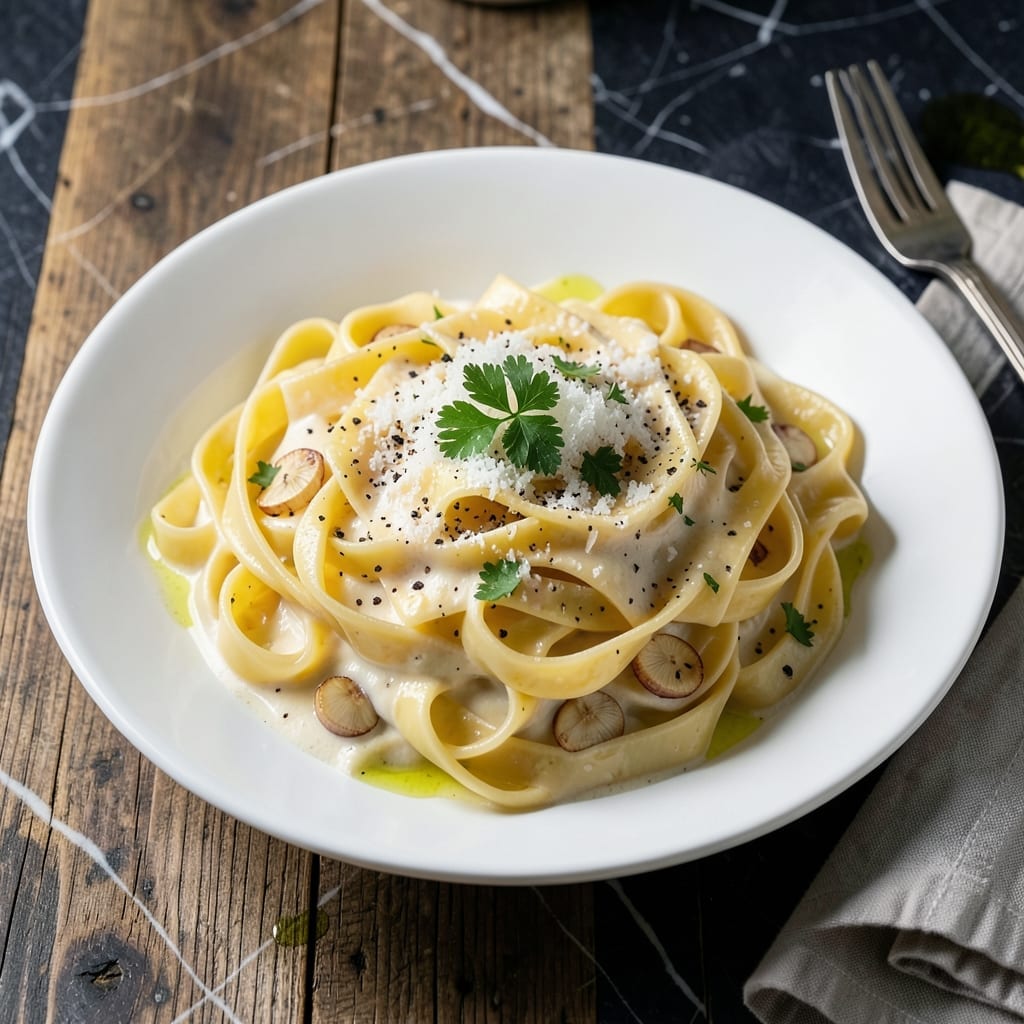
Classic alfredo doesn’t need heavy cream to achieve that silky texture. This version uses milk and butter for a lighter yet equally rich sauce.
I’ve refined this method to ensure the sauce clings perfectly to fettuccine without separating. The result is a dish that stays creamy from first bite to last.
Ingredients for Fettuccine Alfredo Recipe Without Cream
No heavy cream needed for this silky sauce—just butter, milk, and good cheese.
| Ingredient | Amount | Notes |
|---|---|---|
| Fettuccine 🍝 | 12 oz | Dried pasta preferred |
| Unsalted Butter 🧈 | ½ cup | Cut into small cubes |
| Whole Milk 🥛 | 2 cups | Full-fat for creaminess |
| All-Purpose Flour 🌾 | 2 tbsp | For thickening sauce |
| Parmesan Cheese 🧀 | 1 ½ cups | Freshly grated from block |
| Garlic Cloves 🧄 | 3 cloves | Minced finely |
| Salt 🧂 | 1 tsp | Kosher or sea salt |
| Black Pepper 🌶️ | ½ tsp | Freshly ground preferred |
| Nutmeg 🌰 | 0.125 tsp | Freshly grated if possible |
| Heavy Cream 🚫 | 0 cup | Excluded as per recipe |
[recipe_ingredient_scaler]
The Parmesan is critical here. Grab a wedge from the deli counter—pre-grated versions contain anti-caking agents that make the sauce grainy. Whole milk is non-negotiable for that velvety texture; skim or 2% won’t give you the same richness. For butter, Land O’Lakes or Kerrygold are reliable. The fettuccine should be high-quality—De Cecco or Barilla hold sauce well.
No whole milk? Half-and-half at a 1:1 ratio works, but avoid cream (defeats the purpose). Out of Parmesan? Pecorino Romano at half the amount adds a sharper kick. Gluten-free? Swap all-purpose flour for cornstarch at half the quantity. The garlic can be garlic powder at one-third the amount if fresh isn’t available, but fresh is ideal.
Sauce thickens as it cools. Serve immediately for best texture. Leftovers keep 3-4 days in the fridge but may separate—reheat gently with a splash of milk. Freeze without pasta for up to 2 months (the pasta gets mushy).
Why You’ll Love This Recipe
- One Pot Magic: I love that I only dirty one saucepan—melt butter, whisk in flour and milk, then toss with pasta and parmesan.
- Rich Without Cream: The butter and parmesan melt together into this silky sauce that feels indulgent but skips the heavy cream.
- Kid-Approved Comfort: Honestly, this is the only pasta my picky nephew cleans his plate for.
- Pantry Staples: Between us, I always have these five ingredients on hand, so it’s my go-to when the fridge looks sad.
Step-by-Step Instructions for Fettuccine Alfredo Without Cream
This method delivers a velvety sauce using just milk and butter—no heavy cream needed.
Step 1: Cook the Fettuccine Al Dente
Bring a large pot of water to a rolling boil and salt it generously with the 1 tsp salt. Add the 12 oz fettuccine and cook according to package instructions until al dente—about 1 minute less than the suggested time.
Reserve 1 cup of pasta water before draining, as the starchy liquid will help create a silky sauce. Drain the pasta but do not rinse it; the starch on the surface is essential for the sauce to cling properly.
Step 2: Create a Roux for the Sauce Base
In a large skillet, melt the 0.5 cup unsalted butter over medium heat. Once melted, add the 3 cloves minced garlic and cook for 30 seconds until fragrant but not browned. Stir in the 2 tbsp all-purpose flour to form a smooth paste.
Cook the roux for 1-2 minutes, stirring constantly, until it turns a light golden color. This step removes the raw flour taste and builds the foundation for a creamy sauce. The mixture should bubble gently but not darken.
Step 3: Gradually Incorporate the Milk
Slowly pour in the 2 cups whole milk, whisking continuously to prevent lumps from forming. Keep the heat at medium and stir frequently as the mixture thickens. This process should take 3-4 minutes.
You’ll notice the sauce beginning to coat the back of a spoon. At this point, reduce the heat to low to maintain a gentle simmer. The goal is a smooth, velvety consistency that’s thick enough to coat the pasta but still pourable.
Step 4: Add Parmesan and Seasonings
Remove the skillet from heat and stir in the 1.5 cups parmesan cheese, a handful at a time, until fully melted and smooth. Add the 0.5 tsp black pepper and 0.125 tsp nutmeg, stirring to combine. The nutmeg adds depth, so don’t skip it.
If the sauce becomes too thick, thin it with a splash of the reserved pasta water, 1-2 tbsp at a time, until it reaches your desired consistency. Taste and adjust seasoning if needed, though the parmesan provides plenty of saltiness.
Step 5: Combine Pasta and Sauce
Add the drained fettuccine to the skillet with the sauce. Toss gently over low heat for 1-2 minutes, adding pasta water as needed to loosen the sauce and help it cling to every strand of pasta.
Serve immediately, garnished with additional grated parmesan and a sprinkle of black pepper. The sauce should be creamy and rich, with a smooth texture that coats the pasta evenly without being heavy.
Pro Tips For Making Fettuccine Alfredo Recipe Without Cream
- Whisk Constantly: I learned this the hard way—once you add the milk to the butter-flour roux, keep whisking nonstop over medium heat until it thickens, or you’ll end up with lumpy sauce that no amount of stirring will fix.
- Grate Fresh Parmesan: Skip the pre-shredded stuff; freshly grated Parmesan melts smoother and clings better to the fettuccine, and after using the bagged kind once, I noticed the difference immediately.
- Salt the Pasta Water: More salt than you think—about 1-2 tablespoons per gallon—because the pasta absorbs it, and unsalted butter in the sauce won’t compensate later.
- Reserve Pasta Water: Before draining, scoop out a cup of that starchy pasta water; a splash or two loosens the sauce and helps it coat every strand without turning gluey.
Regional Styles of This Recipe
Roman Original
In Rome, this dish was traditionally made with just butter, Parmigiano-Reggiano, and pasta water—no cream or milk. The starchy water emulsifies with the cheese to create a silky texture. I learned this technique from a Roman chef at a local cooking class.
Northern Italian Style
In the north, they sometimes add a splash of whole milk to mellow the sharpness of aged cheese. The version you’re making leans into this tradition while keeping it lighter. Use Parmigiano-Reggiano from Parma for the most authentic flavor.
American Adaptation
US versions often include heavy cream, but your recipe proves it’s unnecessary. The key is patience—let the roux cook fully before adding milk to avoid a floury taste. I’ve served this at dinner parties, and no one believes it’s cream-free. 💡
French Influence
French technique emphasizes the roux as the sauce base, which your recipe uses beautifully. The butter and flour create a stable foundation for the cheese. A pinch of nutmeg is a French touch that elevates the dish.
Coastal Twist
Near the coast, some add a touch of lemon zest or white wine to brighten the richness. Try adding 1 tbsp lemon zest with the cheese for a coastal-inspired variation. It pairs well with seafood sides.
Mountain Version
In the mountains, they might use Fontina cheese for extra creaminess. Swap ½ cup Parmesan for Fontina if you want a heartier, winter-ready dish. The flavor is deeper and nuttier.
Nutrition Facts
Frequently Asked Questions
Can I use 2% milk instead of whole?
Whole milk is best for richness, but 2% works in a pinch. The sauce may be slightly less creamy. Avoid skim milk as it lacks the fat needed for proper texture.
Why does my sauce turn out grainy?
Graininess usually comes from pre-grated cheese (contains anti-caking agents). Always grate Parmesan fresh from a block. Also, keep heat at medium-low to prevent curdling.
How do I make this gluten-free?
Replace the all-purpose flour with cornstarch at half the amount. Use gluten-free fettuccine and verify all other ingredients are certified gluten-free.
Can I add chicken to this dish?
Cook 1 lb chicken breast separately, slice it, and toss with the pasta at the end. The sauce pairs perfectly with grilled or poached chicken.

Trained in classic French technique but raised on slow-cooked ribs and spicy rubs, she blends culinary skill with smoke and soul.
- Recipe for Boneless Pork Chops in Cast Iron Skillet: Sear and Baste to Juicy Perfection - October 3, 2026
- Recipe for Boneless Cross Rib Roast: Slow-Roasted Beef with Herb Crust - October 3, 2026
- Hamburgers in Sauce Recipe Crock Pot: Slow-Cooked Savory Delight - October 3, 2026