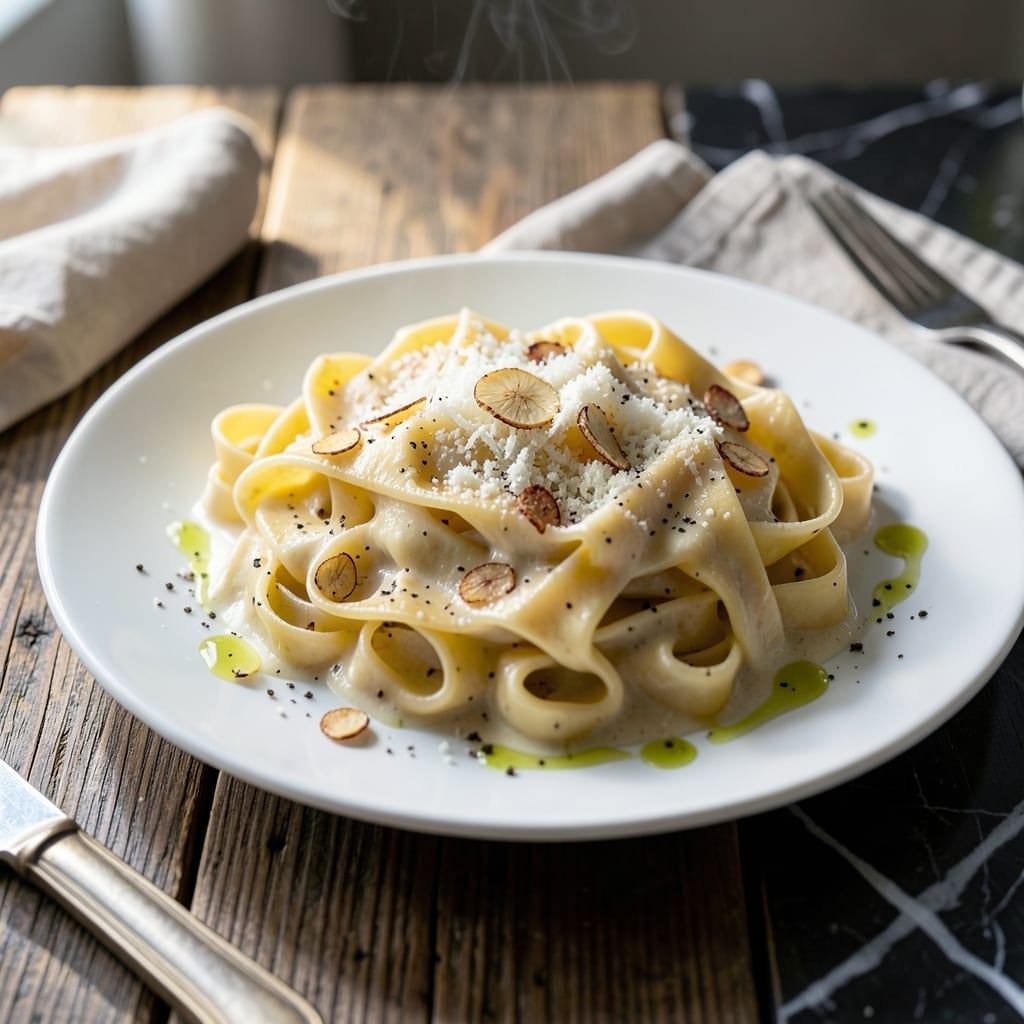
This classic sauce achieves a velvety texture without heavy cream by using a simple flour-based roux as its foundation.
The result is a silky, rich Alfredo that clings perfectly to fettuccine, with just the right balance of Parmesan and butter.
Ingredients for Fettuccine Alfredo Sauce Recipe with Flour
Nine ingredients create this silky, restaurant-quality sauce without relying on heavy cream as the base.
| Ingredient | Amount | Notes |
|---|---|---|
| Unsalted Butter 🧈 | ½ cup | European-style preferred for richness |
| All-Purpose Flour 🌾 | 2 tbsp | For the roux foundation |
| Whole Milk 🥛 | 2 cups | Warm to room temperature |
| Parmesan Cheese 🧀 | 1 ½ cups | Freshly grated from block |
| Garlic Cloves 🧄 | 3 cloves | Minced for depth of flavor |
| Salt 🧂 | ½ tsp | Diamond Crystal kosher preferred |
| Freshly Ground Black Pepper 🌶️ | ¼ tsp | Coarse grind for texture |
| Ground Nutmeg 🌰 | 0.125 tsp | Essential for authentic flavor |
| Heavy Cream 🥛 | ¼ cup | Optional for extra richness |
[recipe_ingredient_scaler]
The butter and Parmesan are non-negotiable for authenticity. European-style butter (like Plugrá or Kerrygold) has higher fat content, creating a more stable emulsion. For the Parmesan, Parmigiano-Reggiano is the gold standard—avoid pre-grated, which contains anti-caking agents that prevent smooth melting. The flour must be all-purpose; bread flour’s higher protein can make the sauce gummy.
No whole milk? Half-and-half at half the quantity works in a pinch, though the sauce will be thicker. For a lighter version, 2% milk can be used, but expect slightly less richness. Out of Parmesan? Pecorino Romano adds a sharper, saltier note—use 25% less and adjust seasoning. The nutmeg is subtle but essential; freshly grated (from a whole nut) offers superior aroma to pre-ground.
The sauce thickens as it cools. Store in an airtight container in the fridge for up to 5 days. Reheat gently over low heat, adding a splash of milk to restore creaminess. For longer storage, freeze for up to 3 months—thaw overnight in the fridge before reheating.
Why You’ll Love This Recipe
- No-Fuss Roux: I whisk flour and butter together in one pan—no fancy techniques, just a smooth base for the creamiest sauce.
- Garlicky Parmesan Bliss: The garlic cloves and Parmesan melt into the milk for that rich, velvety taste you crave in every bite.
- Weeknight Hero: Honestly, it’s my go-to for busy evenings when I need something satisfying on the table fast.
- Budget Stretcher: A handful of pantry staples and a block of cheese feed my family without breaking the bank.
Step-by-Step Instructions for Fettuccine Alfredo Sauce With Flour
Master the technique for a velvety, restaurant-quality sauce with perfect consistency.
Step 1: Create the Roux Foundation
Melt the 0.5 cup Unsalted Butter in a heavy-bottomed saucepan over medium heat. The butter is ready when the foaming subsides and it turns a pale golden color—this indicates the water has evaporated and the milk solids are beginning to toast.
Immediately add the 2 tbsp All-Purpose Flour and whisk constantly for 1-2 minutes until the mixture forms a smooth paste. This roux should be a light golden color, not brown. The constant whisking prevents lumps and ensures even cooking, which eliminates the raw flour taste that can ruin your sauce.
Step 2: Incorporate Warm Milk Gradually
Slowly pour in the 2 cups Whole Milk while whisking vigorously. I add it in a thin, steady stream to prevent clumping. The milk should be at room temperature—cold milk can cause the roux to seize up, creating a lumpy sauce that’s difficult to smooth out.
Continue whisking as the mixture thickens over medium heat for 4-5 minutes. You’re aiming for a smooth, velvety base that coats the back of a spoon. If the mixture seems too thick, reduce the heat slightly. This step develops the sauce’s body and ensures the flour cooks through completely.
Step 3: Infuse with Aromatics and Seasonings
Add the 3 cloves Garlic Cloves (minced) to the sauce and cook for 30-45 seconds, stirring constantly. The garlic should release its fragrance but not brown—burnt garlic will impart a bitter taste to your sauce.
Season with 0.5 tsp Salt, 0.25 tsp Freshly Ground Black Pepper, and 0.125 tsp Ground Nutmeg. The nutmeg is subtle but essential—it adds depth and warmth that balances the richness of the cheese. Taste and adjust seasoning now, as the Parmesan will add more saltiness later.
Step 4: Achieve the Perfect Cheese Emulsion
Reduce heat to low and gradually add the 1.5 cups Parmesan Cheese, whisking constantly after each addition. Freshly grated Parmesan melts more smoothly than pre-shredded, which contains anti-caking agents that can make your sauce grainy.
The sauce should become thick and creamy, with a glossy finish. If it becomes too thick, add a splash of the pasta cooking water to loosen it. The key is patience—rushing this step or using high heat can cause the cheese to separate or become stringy.
Step 5: Finish with Optional Cream and Serve
For extra richness, stir in the 0.25 cup Heavy Cream until fully incorporated. This step is optional but recommended for an ultra-luxurious texture. The cream adds a silky mouthfeel and balances the sharpness of the Parmesan.
Taste and adjust seasoning one final time. The sauce should be smooth, velvety, and coat the back of a spoon with a slight ribbon when drizzled. Serve immediately over cooked fettuccine, tossing the pasta in the sauce to ensure every strand is evenly coated.
Pro Tips For Making Fettuccine Alfredo Sauce Recipe With Flour
- Whisk the Roux: Cook the butter and flour together for exactly 2-3 minutes on medium heat—I learned this the hard way after my first batch tasted like raw flour paste.
- Warm the Milk: Heat your whole milk in the microwave for 30 seconds before adding it to the roux; cold milk makes the sauce seize up and turn lumpy.
- Grate Fresh Parmesan: Skip the pre-shredded stuff as it’s coated in anti-caking agents that make the sauce grainy; freshly grated melts smoothly every time.
- Low and Slow Finish: After adding the cheese, keep the heat on low and stir constantly for 3-4 minutes—any higher and the sauce will break.
Essential Equipment for This Dish
Must-Have Tools
To whip up the perfect fettuccine alfredo sauce with flour, you’ll need a few non-negotiable kitchen staples. A heavy-bottomed saucepan (like All-Clad or Cuisinart) ensures even heat distribution, preventing hot spots that could scorch your roux. A whisk is essential for smoothly blending the flour and butter into a lump-free base.
Don’t forget a wooden spoon for stirring the sauce as it thickens—it’s gentle on your cookware and won’t scratch. A measuring cup and spoons set keeps your ratios precise, which is key for that velvety texture. 🔥
Nice-to-Have
For an upgrade, a double boiler (or a heatproof bowl over a pot) helps maintain a low, steady heat for your sauce, reducing the risk of curdling. A fine-mesh strainer can smooth out any accidental lumps, and a thermometer (like Thermoworks) ensures your sauce stays in the safe zone (160–180°F).
A stand mixer with a whisk attachment can also save your arm some work if you’re making large batches. For cheese lovers, a microplane grates Parmesan into a fine, melt-friendly dust. 🧀
Budget Alternatives
No fancy gear? No problem! A non-stick skillet can stand in for a saucepan, and a fork works in a pinch for whisking. Use a mason jar to shake your flour and butter together if you’re short on tools. For grating cheese, a box grater gets the job done just fine.
If you lack a thermometer, simply watch for the sauce to coat the back of a spoon—it’s a classic (and free!) test for doneness. ✨
Nutrition Facts

Trained in classic French technique but raised on slow-cooked ribs and spicy rubs, she blends culinary skill with smoke and soul.
- Recipe for Boneless Pork Chops in Cast Iron Skillet: Sear and Baste to Juicy Perfection - October 3, 2026
- Recipe for Boneless Cross Rib Roast: Slow-Roasted Beef with Herb Crust - October 3, 2026
- Hamburgers in Sauce Recipe Crock Pot: Slow-Cooked Savory Delight - October 3, 2026