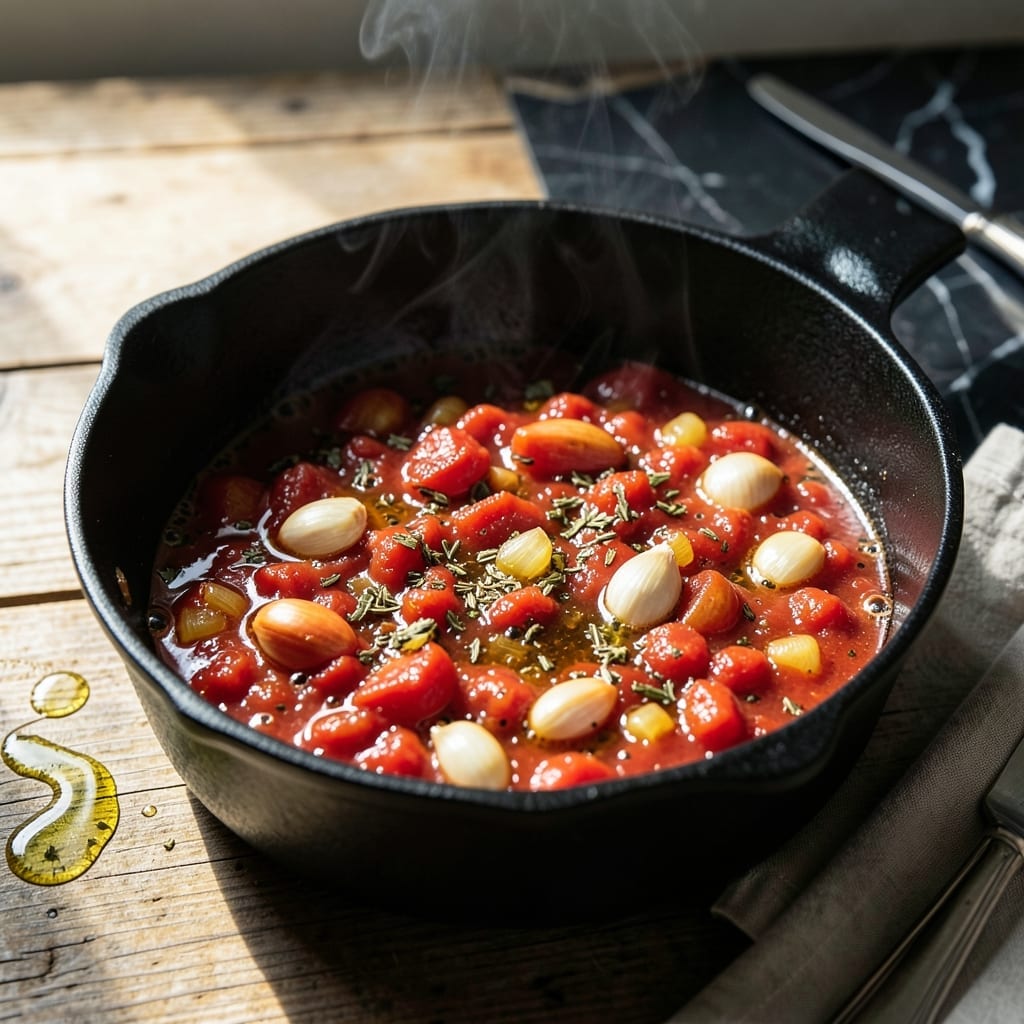
This sauce transforms canned tomatoes into something vibrant and fresh with just a handful of pantry staples. A slow simmer concentrates the flavors, creating a bright and herby base for countless dishes.
Perfect for pasta, pizza, or as a dipping sauce, it’s a homemade staple that tastes far better than store-bought. Simple, versatile, and always reliable.
Ingredients for Homemade Tomato Sauce Recipe with Canned Tomatoes
Pantry staples transform into vibrant, herby goodness with this simple list.
| Ingredient | Amount | Notes |
|---|---|---|
| Canned San Marzano Tomatoes 🍅 | 28 oz | Whole, peeled, crushed by hand |
| Extra-Virgin Olive Oil 🫒 | 3 tbsp | Divided for sautéing and finishing |
| Yellow Onion 🧅 | 1 whole | Finely diced for even cooking |
| Garlic Cloves 🧄 | 4 cloves | Minced for aromatic base |
| Dried Oregano 🌿 | 1 tsp | Mediterranean variety preferred |
| Dried Basil 🍃 | 1 tsp | Crushed between fingers to release oils |
| Red Pepper Flakes 🌶️ | ¼ tsp | Adjust for desired heat level |
| Sea Salt 🧂 | 1 tsp | Fine grain for even dissolution |
| Black Pepper 🌶️ | ½ tsp | Freshly ground for best flavor |
| Fresh Basil Leaves 🌿 | ¼ cup | Torn just before serving |
[recipe_ingredient_scaler]
The tomatoes are non-negotiable—San Marzano canned tomatoes are the gold standard for their sweet, low-acid flavor. Whole Foods or Italian specialty stores usually carry them, but any high-quality canned tomato works in a pinch. The olive oil should be extra-virgin; its fruity notes complement the sauce beautifully. Look for California Olive Ranch or Bertolli for reliable quality without breaking the bank.
No San Marzano tomatoes? Muir Glen organic is a solid backup. Fresh herbs can replace dried—use 1 tbsp fresh for every 1 tsp dried. Missing red pepper flakes? Cayenne at half the amount adds similar heat. The onion can be white or red if that’s what you have, though yellow offers the most balanced flavor. For extra depth, a parmesan rind (vegan alternative if needed) simmered in the sauce works wonders.
This sauce tastes even better the next day once flavors meld. Store in an airtight container in the fridge for up to 5 days or freeze for 3 months. Portion into ice cube trays for easy single-serving use later (worth the extra minute).
Why You’ll Love This Recipe
- One Pan Wonder: I just dump the San Marzano tomatoes, a splash of olive oil, and a few aromatics into one pot—hardly any cleanup.
- Pure Satisfaction: The slow-cooked garlic and oregano turn those canned tomatoes into something rich and deep, like it simmered all day.
- Meal Prep Hero: I make a big batch and freeze portions for quick dinners, pasta nights, or even pizza sauce in a pinch.
- Budget Friendly: San Marzano cans are affordable luxury, and this sauce costs pennies per serving compared to store-bought.
Step-by-Step Instructions for Homemade Tomato Sauce
Here is the method for building layers of flavor in this bright, herby sauce.
Step 1: Build the Aromatic Foundation
Heat 2 tablespoons of the extra-virgin olive oil in a heavy-bottomed pot over medium heat until it shimmers. Add the yellow onion and cook for 6-8 minutes, stirring occasionally, until it turns translucent and begins to soften at the edges.
Add the garlic cloves, dried oregano, dried basil, and red pepper flakes. Sauté for 1-2 minutes until the garlic releases its fragrance but does not brown—this prevents bitterness. The spices will bloom in the warm oil, deepening their aroma.
Step 2: Incorporate and Break Down the Tomatoes
Pour in the 28 oz Canned San Marzano Tomatoes, including their juices. Use your hands or a wooden spoon to crush the tomatoes as they hit the pot. This releases their natural juices and helps them break down faster during cooking.
Stir in the sea salt and black pepper, then reduce the heat to medium-low. Bring the mixture to a gentle simmer—you should see small bubbles breaking the surface occasionally, not a rolling boil.
Step 3: Simmer for Depth of Flavor
Let the sauce simmer uncovered for 25-30 minutes, stirring occasionally to prevent sticking. You’ll notice the sauce thicken slightly as excess liquid evaporates, and the tomatoes will further collapse into a chunky, cohesive texture.
Taste and adjust seasoning if needed, though the sea salt should already enhance the natural sweetness of the tomatoes. The sauce should have a vibrant red color and a balance of sweetness, acidity, and herbal notes.
Step 4: Finish with Fresh Basil and Olive Oil
Remove the pot from heat and stir in the fresh basil leaves, tearing them as you add them to release their essential oils. The heat from the sauce will gently wilt the leaves, infusing the sauce with a bright, fresh aroma.
Drizzle in the remaining 1 tablespoon of extra-virgin olive oil and stir to incorporate. This final touch adds a silky richness and rounds out the flavors. Serve immediately or let it sit for 10 minutes to allow the flavors to meld further.
Pro Tips For Making Homemade Tomato Sauce Recipe With Canned Tomatoes
- Crush the Tomatoes: Use your hands to crush the canned San Marzano tomatoes before adding them to the pot—this breaks them down faster and gives you chunkier texture without a blender.
- Bloom the Oregano: Add the dried oregano to the hot olive oil for 10-15 seconds before the onion goes in—it wakes up the flavor and prevents that dull, dusty taste.
- Skip the Garlic Press: Smash the garlic cloves with the side of your knife instead of mincing them fine; they’ll infuse the oil gently without burning, and you can remove them later if you want.
- Simmer Uncovered: Leave the pot uncovered while simmering so the sauce reduces properly—covered sauce stays watery, and I learned this the hard way after too many soupy pasta nights.
Dietary Considerations for These Flavors
Keto-Friendly Options
For a keto-approved version, focus on reducing sugar and thickening agents. Skip added sweeteners and opt for high-fat ingredients like olive oil or butter for richness. A splash of heavy cream can also add a velvety texture without breaking ketosis.
Gluten-Free Adjustments
This recipe is naturally gluten-free if you avoid cross-contamination. Check canned tomato labels for hidden additives, and use gluten-free broth or water. Thicken with a cornstarch slurry or xanthan gum instead of flour.
Allergen Information
Common allergens in tomato sauce include garlic, onions, and dairy (if added). Omit or substitute these as needed. For nut allergies, ensure your oil and spices are processed in allergen-free facilities. Always verify ingredient sources.
Vegetarian Modifications
This sauce is inherently vegetarian, but you can enhance it with umami-rich additions like mushrooms, miso paste, or nutritional yeast. For a vegan version, avoid butter or Parmesan rinds and use plant-based oil.
Low-Sodium Alternatives
To reduce sodium, rinse canned tomatoes thoroughly and use no-salt-added varieties. Boost flavor with fresh herbs, citrus zest, or a pinch of smoked paprika instead of salt. Homemade broth can also control sodium levels.
Nutrition Facts

Trained in classic French technique but raised on slow-cooked ribs and spicy rubs, she blends culinary skill with smoke and soul.
- Recipe for Boneless Pork Chops in Cast Iron Skillet: Sear and Baste to Juicy Perfection - October 3, 2026
- Recipe for Boneless Cross Rib Roast: Slow-Roasted Beef with Herb Crust - October 3, 2026
- Hamburgers in Sauce Recipe Crock Pot: Slow-Cooked Savory Delight - October 3, 2026