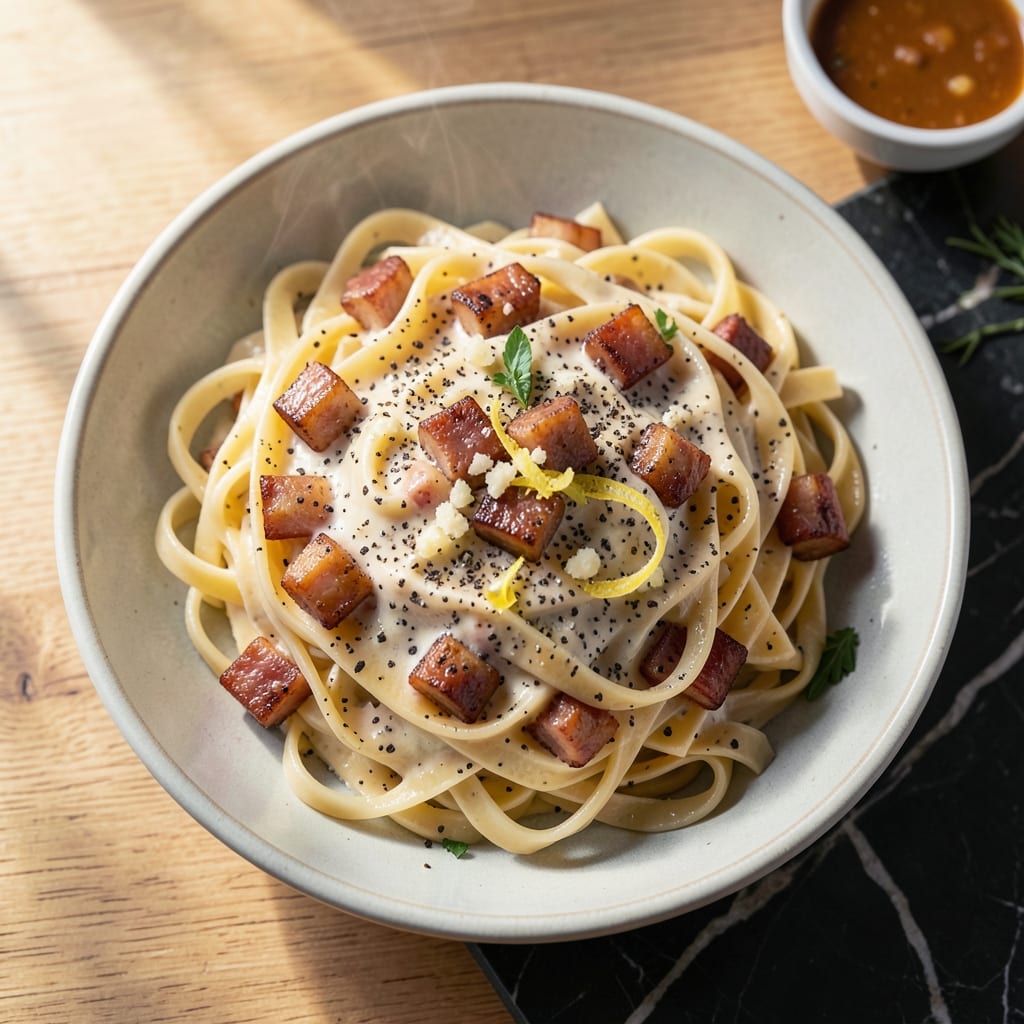
This is the authentic Roman carbonara you’ve been searching for—no cream, just eggs and cheese creating a velvety sauce that clings to every strand of pasta.
I developed this recipe after years of testing, perfecting the balance between rich egg yolks, sharp pecorino, and crispy guanciale. The technique is simple but precise, ensuring the sauce emulsifies into a silky coating without scrambling.
What you’ll get is pasta with a glossy, pepper-flecked sauce that’s creamy without a drop of dairy. The key is tempering the eggs with hot pasta water before combining, so the heat gently thickens the mixture into a luscious finish.
Serve immediately while the sauce is at its peak. This is Roman tradition on a plate.
Ingredients for Fettuccine Carbonara Recipe No Cream
Seven ingredients. Roman tradition. Creamy without cream.
| Ingredient | Amount | Notes |
|---|---|---|
| Fettuccine Pasta 🍝 | 1 lb | Fresh or dried, al dente |
| Guanciale 🥓 | 6 oz | Diced, or substitute pancetta |
| Large Egg Yolks 🥚 | 6 whole | Room temperature, for creamy sauce |
| Pecorino Romano Cheese 🧀 | 1 ½ cups | Freshly grated, finely |
| Parmigiano-Reggiano Cheese 🧀 | ½ cup | Freshly grated, finely |
| Coarse Black Pepper 🌶️ | 2 tsp | Freshly cracked, to taste |
| Diamond Crystal Kosher Salt 🧂 | 2 tsp | For pasta water and seasoning |
| Reserved Pasta Water 💧 | 1 cup | Hot, starchy, for emulsifying |
[recipe_ingredient_scaler]
The guanciale is non-negotiable for authenticity—Eataly or a quality Italian deli will have it. If you can’t find it, pancetta is your next best bet (avoid regular bacon, it’s too smoky). The cheese matters too: Pecorino Romano brings the sharp, salty kick that defines carbonara. Buy it in a wedge and grate it yourself—pre-grated has anti-caking agents that mess with the sauce’s texture.
No guanciale or pancetta? Thick-cut bacon works in a pinch, but blot it well to remove excess grease. Egg substitution isn’t ideal here, but if you must, use 4 whole eggs instead of 6 yolks. The cheese blend can lean heavier on Parmigiano if you prefer a milder flavor. Freshly cracked pepper is a must—pre-ground lacks the aromatic punch. Need to scale up? Keep the ratio of 1 yolk per 1 oz of guanciale.
Serve this immediately—it waits for no one. Leftovers? Reheat gently with a splash of water, but the sauce won’t be the same. Best eaten fresh, so make only what you’ll finish. Guanciale keeps in the fridge for 1 week or freezes for 3 months.
Why You’ll Love This Recipe
- One Pot Wonder: I love that this comes together in a single skillet—just toss the hot pasta with the guanciale and egg yolks, and the residual heat does the rest.
- Rich Without Cream: The combination of Pecorino Romano and Parmigiano-Reggiano creates a silky, cheesy sauce that’s somehow even better than the creamy versions I’ve tried.
- Date Night Ready: Honestly, it feels fancy enough for a special dinner but is simple enough that I can make it on a weekday without stress.
- Budget Stretcher: A little guanciale goes a long way, and the eggs and cheese are pantry staples for me, so it’s a meal that doesn’t break the bank.
Step-by-Step Instructions for Fettuccine Carbonara
This is the authentic Roman method—simple ingredients, perfect technique, no shortcuts.
Step 1: Cook the Fettuccine and Render the Guanciale
Bring a large pot of water to a boil and add the 2 tsp Diamond Crystal Kosher Salt. Cook the 1 lb Fettuccine Pasta until 1 minute shy of al dente—it’ll finish cooking in the sauce. Reserve the 1 cup Reserved Pasta Water before draining.
Meanwhile, heat a large skillet over medium heat. Add the 6 oz Guanciale and cook for 5-7 minutes, stirring occasionally, until the fat renders and the meat turns crispy and golden brown. Remove from heat and set aside, but leave the rendered fat in the pan.
Step 2: Prepare the Egg and Cheese Mixture
In a bowl, whisk together the 6 whole Large Egg Yolks, 1.5 cups Pecorino Romano Cheese, 0.5 cup Parmigiano-Reggiano Cheese, and 2 tsp Coarse Black Pepper. The mixture should be thick, smooth, and pale yellow—this is your sauce base.
I always use room-temperature yolks to ensure they emulsify properly with the hot pasta. Finely grated cheese is key here—it melts seamlessly into the sauce, avoiding a grainy texture.
Step 3: Combine Everything Off Heat
Remove the skillet with guanciale from heat and let it cool for 1 minute. Add the drained fettuccine to the skillet and toss to coat in the rendered fat. Then, add ½ cup of the Reserved Pasta Water and toss vigorously for 30 seconds.
Working quickly, pour the egg and cheese mixture over the pasta. Toss constantly for 1-2 minutes until the sauce becomes creamy and clings to every strand. The residual heat from the pasta is enough to gently cook the eggs—never return the pan to direct heat, or you’ll scramble them.
Step 4: Adjust Consistency and Serve
If the sauce seems too thick, add more of the Reserved Pasta Water, 1 tablespoon at a time, until it reaches a silky, glossy consistency. The sauce should coat the back of a spoon but still flow smoothly.
Divide the fettuccine among plates, topping each serving with extra Pecorino Romano Cheese and Coarse Black Pepper. Serve immediately—the sauce waits for no one. Each bite should deliver rich, salty guanciale, sharp cheese, and a velvety egg coating.
Pro Tips For Making Fettuccine Carbonara Recipe No Cream
- Temper Your Eggs: Whisk your egg yolks with the grated cheeses in a bowl, then slowly add about 1/4 cup of the hot pasta water while stirring constantly. I learned this the hard way—adding hot pasta directly to cold eggs makes scrambled carbonara.
- Use Guanciale, Not Bacon: Sounds weird, but it works: guanciale’s fatty, cured richness is non-negotiable for authentic flavor. Bacon’s smokiness overpowers the dish, and pancetta, while closer, still isn’t the same.
- Reserve Pasta Water: Before draining, scoop out at least 1 cup of that starchy pasta water. After burning three batches, I finally figured out it’s the only way to loosen the sauce and help it cling to the noodles.
- Work Fast Off Heat: Toss the hot pasta with the guanciale in the pan, then remove from heat before adding the egg mixture. My grandmother swore by this, and she was right: residual heat is enough to create a creamy sauce without turning it into omelet fettuccine.
Regional Styles of These Flavors
Roman Tradition
In Rome, this dish is sacred—guanciale is the only cured meat used, and it’s never replaced with pancetta or bacon. The sauce is a simple emulsion of egg yolks, Pecorino Romano, and pasta water, creating a creamy texture without a drop of cream. This is the version I fell in love with during my first trip to Italy. 💛
Neapolitan Twist
Naples adds a touch of Parmigiano-Reggiano to balance the sharpness of Pecorino, which I’ve adopted in my recipe. Some cooks also include a splash of the pasta’s cooking water earlier in the process to help the sauce cling better. It’s a small tweak that makes a big difference.
Northern Italian Style
In the north, you might find carbonara made with pancetta instead of guanciale, as it’s more widely available. The technique remains the same, but the flavor is slightly milder. I’ve used pancetta in a pinch, and while it’s not traditional, it still delivers a delicious result.
Modern Adaptations
Some modern Roman chefs add a touch of black pepper to the egg mixture before combining it with the pasta. This ensures the pepper is evenly distributed. I always crack my own pepper fresh—it’s a small step that elevates the dish.
American Variations
Here in the US, many home cooks use thick-cut bacon because guanciale can be hard to find. While it’s not traditional, it’s a practical swap. Just be sure to blot the bacon well to remove excess grease. The key is to keep the spirit of the dish alive. 🔥
Lazio Countryside
In the rural areas around Rome, some families add a sprinkle of freshly grated Pecorino on top just before serving. It’s a simple finishing touch that adds another layer of cheese flavor. I always keep a wedge of Pecorino in my fridge for this exact purpose.
Nutrition Facts
Frequently Asked Questions
Can I use regular bacon instead of guanciale?
Yes, thick-cut bacon works in a pinch. Blot it well to remove excess grease for best results.
Why does the sauce turn out scrambled?
This happens if the pan is too hot when adding eggs. Always remove from heat and use residual warmth to gently cook the sauce.
How do I make it creamier without dairy?
Use extra pasta water and toss vigorously. The starch in the water helps emulsify the egg-cheese mixture into a silky sauce.
Can I make this ahead of time?
No, carbonara is best served immediately. The sauce thickens and separates as it cools.

Trained in classic French technique but raised on slow-cooked ribs and spicy rubs, she blends culinary skill with smoke and soul.
- Recipe for Boneless Pork Chops in Cast Iron Skillet: Sear and Baste to Juicy Perfection - October 3, 2026
- Recipe for Boneless Cross Rib Roast: Slow-Roasted Beef with Herb Crust - October 3, 2026
- Hamburgers in Sauce Recipe Crock Pot: Slow-Cooked Savory Delight - October 3, 2026