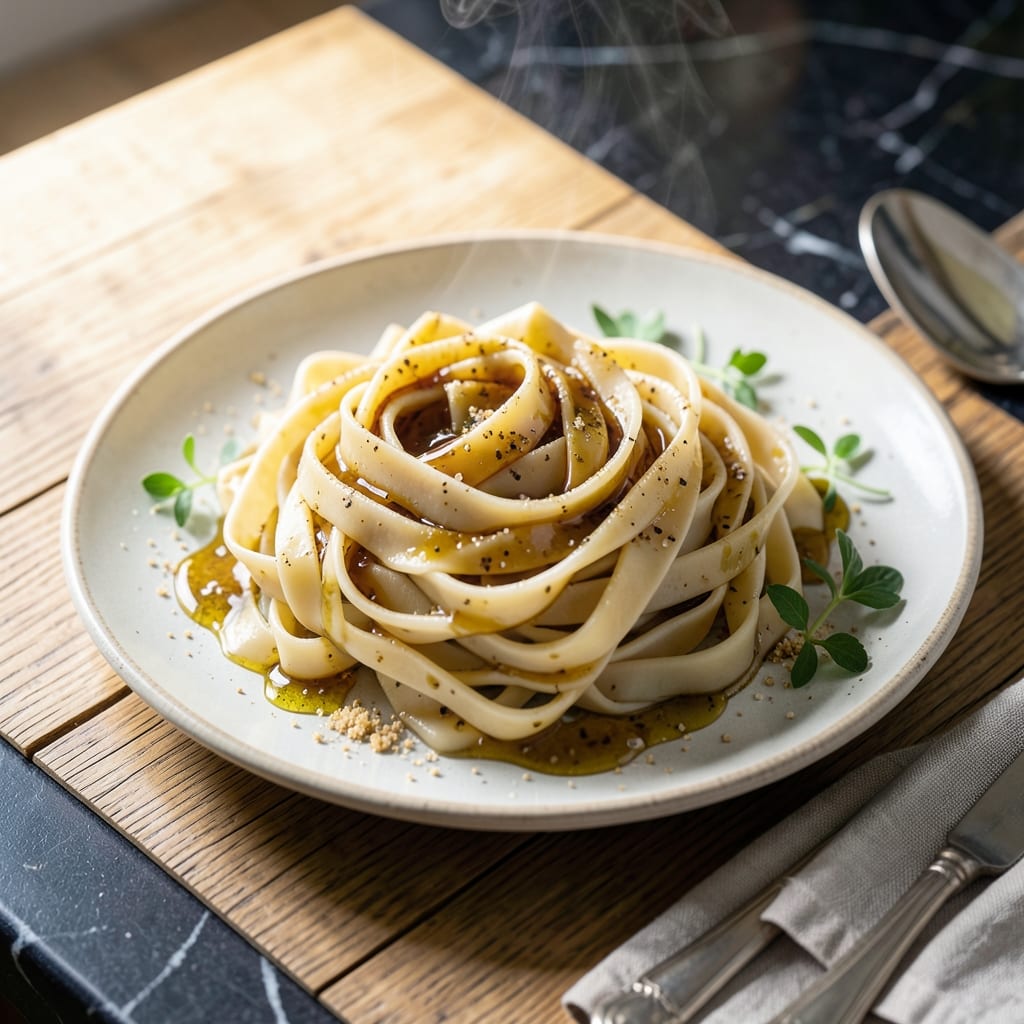
Fresh pasta at home doesn’t require expensive equipment—just patience and a good rolling pin. This method transforms basic ingredients into silky fettuccine ribbons with the perfect chew.
The dough comes together in minutes with flour and eggs, then rests to develop elasticity. Rolling it thin and cutting by hand ensures those characteristic wide, flat noodles.
You’ll achieve restaurant-quality texture without machinery, with each strand ready to hold rich sauces beautifully. The process is surprisingly simple once you get the rhythm.
No special tools, just your hands and a little practice. The results are worth every roll.
Ingredients for Fettuccine Noodle Recipe Without Pasta Maker
Just flour, eggs, and a rolling pin transform into restaurant-worthy fettuccine ribbons every time.
| Ingredient | Amount | Notes |
|---|---|---|
| All-Purpose Flour 🌾 | 2 ½ cups | Plus extra for dusting |
| Large Eggs 🥚 | 4 whole | Room temperature preferred |
| Semolina Flour 🌾 | ½ cup | For texture and bite |
| Olive Oil 🫒 | 1 tbsp | Extra-virgin for richness |
| Fine Sea Salt 🧂 | 1 tsp | Dissolved in egg mixture |
| Water 💧 | 1 tbsp | If dough feels too dry |
[recipe_ingredient_scaler]
The flour is the foundation here. King Arthur all-purpose gives consistent results, but any good brand works. Semolina adds that authentic bite—find it in the baking aisle at Whole Foods or Trader Joe’s. I always keep a bag on hand for pasta nights. Room temp eggs incorporate better, so pull them out an hour before starting (or soak in warm water for 10 minutes).
No semolina? Durum wheat flour works too, or just add an extra tablespoon of all-purpose. Out of eggs? Pasta won’t work without them—this is one substitution that’s non-negotiable. The olive oil can be any neutral oil in a pinch, but extra-virgin adds depth. If your dough cracks while rolling, that tablespoon of water will save it (don’t add it all at once).
Fresh pasta cooks in 2-3 minutes—watch it closely. Uncooked dough keeps in the fridge for 24 hours (tightly wrapped) or freezes for 1 month. Dust with extra flour before storing to prevent sticking. Cut into nests before freezing for easier portioning.
Why You’ll Love This Recipe
- No Machine Needed: I roll this dough out with a wine bottle—no fancy gadgets, just my kitchen counter and a little elbow grease.
- Rich, Toothy Bite: The semolina flour gives it that perfect chew, and the olive oil adds a subtle richness you just can’t get from store-bought.
- Freezer’s Best Friend: I double the batch, slice, and freeze half for lazy nights when only fresh pasta will do.
- Pennies per Serving: A handful of pantry staples makes four generous portions, and honestly, it tastes better than the $12 bag at the market.
Step-by-Step Instructions for Fettuccine Noodles Without Pasta Maker
No machine? No problem. Here’s how to roll and cut perfect fettuccine by hand.
Step 1: Create the Dough on a Clean Surface
On a clean countertop, mound the 2.5 cups All-Purpose Flour and 0.5 cup Semolina Flour together. Create a well in the center and add the 4 whole Large Eggs, 1 tbsp Olive Oil, and 1 tsp Fine Sea Salt. I find room temperature eggs incorporate more smoothly into the flour.
Using a fork, gradually draw the flour into the egg mixture until it becomes too stiff to stir. At this point, dig in with your hands and knead for 8-10 minutes until the dough is smooth and elastic. If it feels dry, add the 1 tbsp Water—but only if needed. The dough should feel slightly tacky but not stick to your hands.
Step 2: Rest the Dough for Optimal Texture
Wrap the dough tightly in plastic wrap and let it rest at room temperature for 30 minutes. This resting period allows the gluten to relax, making the dough much easier to roll out thinly. Real talk: skipping this step means you’ll fight the dough the entire time.
While waiting, I like to clean my workspace and set up my rolling area. Dust your counter generously with additional all-purpose flour to prevent sticking. The semolina in the dough gives it a nice bite, but you still need that extra flour for rolling.
Step 3: Roll the Dough Paper-Thin
Divide the rested dough into 4 equal portions for manageability. Working with one portion at a time (keep the others covered), flatten it slightly with your hands, then begin rolling with a rolling pin. Roll from the center outward, rotating the dough a quarter turn after each pass to maintain an even thickness.
Continue rolling until the sheet is nearly translucent—you should be able to see your hand through it when held up to the light. This thinness is crucial for authentic fettuccine texture. If the dough starts to spring back, let it rest for 5 minutes before continuing. Patience here prevents tough noodles.
Step 4: Cut and Separate the Noodles
Once rolled, let the sheet dry for 2-3 minutes until it’s slightly leathery but still pliable. This brief drying makes cutting cleaner. Using a sharp knife or pizza cutter, trim the edges to create straight lines, then cut the sheet into ¼-inch wide strips for classic fettuccine width.
Immediately dust the cut noodles with additional all-purpose flour and gently toss to prevent sticking. I like to create little nests of noodles on a floured baking sheet. At this point, you can cook them fresh or let them dry completely for storage.
Step 5: Cook the Fresh Fettuccine
Bring a large pot of salted water to a rolling boil. The water should taste like the sea—this is your only chance to season the noodles. Add the fresh fettuccine and cook for 2-3 minutes until they float to the surface and are al dente. Fresh pasta cooks much faster than dried.
Drain immediately and toss with your favorite sauce. The semolina gives these noodles a wonderful texture that holds sauce beautifully. Serve at once while hot—they’ll absorb sauce better when freshly cooked.
Pro Tips For Making Fettuccine Noodle Recipe Without Pasta Maker
- Rest the Dough: After kneading, wrap the dough in plastic and let it sit at room temperature for at least 30 minutes—I learned this the hard way when my first batch kept springing back like a rubber band.
- Use Semolina Wisely: Dust your work surface with semolina instead of all-purpose flour to prevent sticking; it adds a subtle texture that makes the noodles feel more authentic.
- Roll Thin Enough: Aim for about 1/8-inch thickness when rolling by hand—any thicker and your fettuccine will be chewy instead of tender (yes, even if your arms get tired).
- Cut Even Strips: Fold the rolled dough loosely before slicing to make clean, even cuts—sounds weird, but it works better than trying to cut flat sheets freehand.
Flavor Customization for This fettuccine noodle recipe without pasta maker
Herb Infusions
Add 1 tbsp finely chopped fresh rosemary or 2 tbsp fresh basil to your dough for aromatic depth. I love rosemary with a brown butter sauce—it’s a game-changer. The herbs should be minced finely to distribute evenly without tearing the dough.
Spiced Variations
For warmth, mix ½ tsp ground black pepper or ¼ tsp red pepper flakes into the flour before making the well. The black pepper gives a subtle kick, while the red pepper flakes add a noticeable heat. Both pair well with creamy sauces. 🌶️
Citrus Zest
Brighten the pasta with 1 tbsp lemon or orange zest added to the flour. The citrus oils infuse the dough with a fresh, vibrant flavor that complements seafood or light vegetable sauces. I prefer lemon zest for its clean, sharp notes.
Spinach or Beet
Blend ½ cup cooked spinach (drained and chopped) or ¼ cup beet puree into the egg mixture for colorful pasta. Spinach adds a subtle earthiness, while beets lend a sweet, earthy tone. Adjust flour as needed—vegetable purees can make the dough stickier.
Garlic and Onion
Incorporate 1 tsp garlic powder or 1 tbsp finely grated onion into the dough for savory depth. Garlic works beautifully with tomato-based sauces, while onion adds a mild, sweet backdrop. Both should be finely grated to avoid lumps. 💡
Cheese Boost
Mix ¼ cup finely grated Parmesan into the flour for a rich, umami flavor. This addition elevates the pasta’s ability to hold sauces and adds a subtle cheesy note. Use freshly grated cheese for the best texture and melt.
Nutrition Facts
Frequently Asked Questions
What can I use instead of a rolling pin?
A wine bottle works perfectly as a substitute. It provides the same smooth, even pressure for rolling the dough paper-thin. Just ensure it’s clean and dry before use.
Why does my dough keep springing back?
This means the gluten needs more time to relax. Let the dough rest for 5 minutes between rolling passes. If it persists, your resting time after kneading may have been too short.
How do I keep noodles from sticking together?
Dust them generously with flour after cutting and toss gently. For storage, create little nests on a floured surface. Never stack fresh noodles without flour between layers.
Can I make this with whole wheat flour?
Yes, but replace only 50% of the all-purpose with whole wheat. The dough will be denser and may need extra water. Expect a nuttier flavor and slightly heartier texture.

Trained in classic French technique but raised on slow-cooked ribs and spicy rubs, she blends culinary skill with smoke and soul.
- Recipe for Boneless Pork Chops in Cast Iron Skillet: Sear and Baste to Juicy Perfection - October 3, 2026
- Recipe for Boneless Cross Rib Roast: Slow-Roasted Beef with Herb Crust - October 3, 2026
- Hamburgers in Sauce Recipe Crock Pot: Slow-Cooked Savory Delight - October 3, 2026