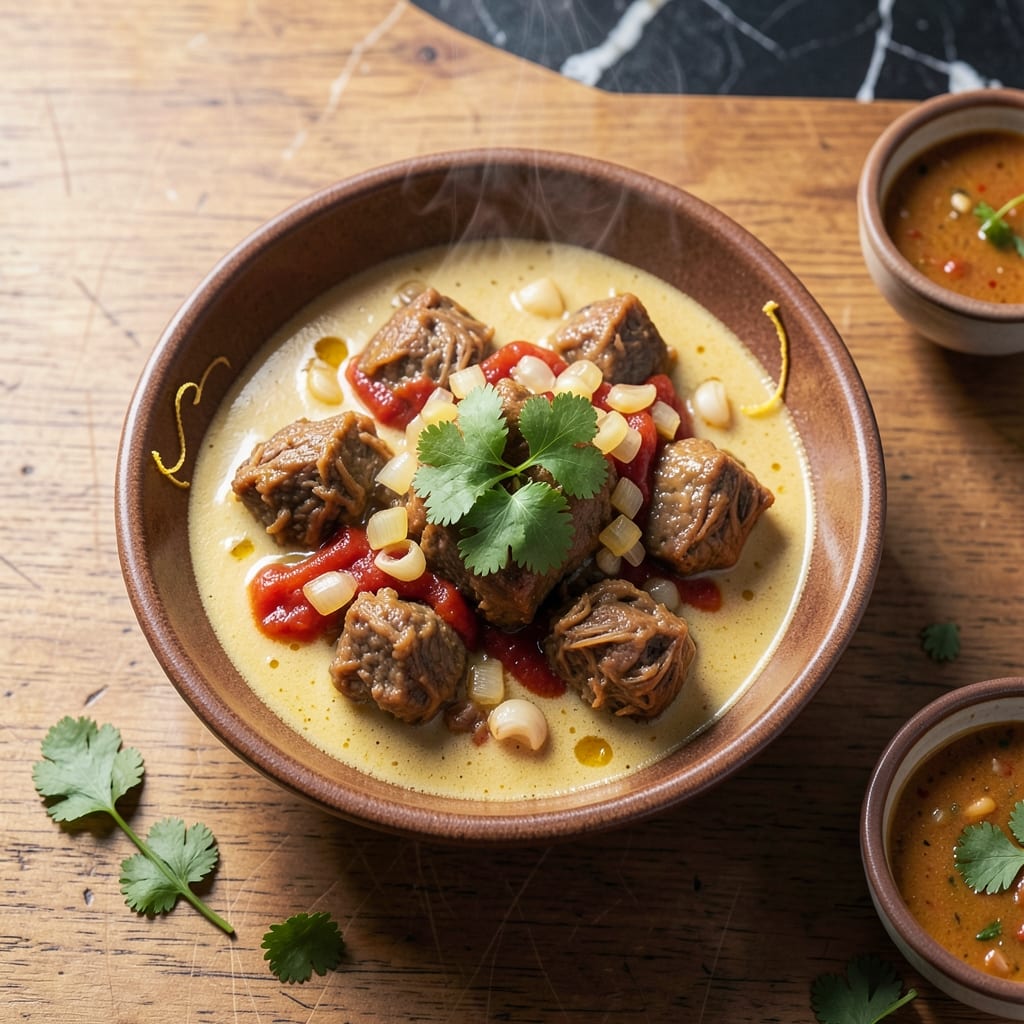
Transforming leftover lamb roast into a tender curry brings new life to yesterday’s meal. This method honors the meat’s richness while building deep, aromatic flavors.
I developed this approach after watching my grandmother repurpose leftovers with simple spices and intuition. No complicated techniques—just a foolproof way to create something extraordinary from what you already have.
The slow simmer allows the lamb to absorb the spices completely, resulting in melt-in-your-mouth texture. One pot, minimal effort, and a dish that tastes like it cooked all day.
Serve with steamed rice or naan to soak up every bit of the fragrant sauce. Here’s how to make it happen.
Ingredients for Lamb Curry Recipe with Leftover Lamb Roast
Leftover lamb plus aromatic spices transform into this rich, comforting curry.
| Ingredient | Amount | Notes |
|---|---|---|
| Cooked Lamb Roast 🐑 | 2 cups | Shredded or cubed leftover meat |
| Yellow Onion 🧅 | 1 whole | Medium, finely diced |
| Garlic Cloves 🧄 | 4 cloves | Minced for depth of flavor |
| Fresh Ginger Root 🌿 | 1 tbsp | Peeled and grated finely |
| Tomato Paste 🍅 | 2 tbsp | For rich umami base |
| Coconut Milk 🥥 | 1 cup | Full-fat for creaminess |
| Ground Cumin 🌿 | 1 tsp | Toasted for warmth |
| Ground Coriander 🌿 | 1 tsp | Complements the cumin |
| Turmeric Powder 🌶️ | ½ tsp | For golden color |
| Garam Masala 🌶️ | 1 ½ tsp | Aromatic spice blend |
| Cayenne Pepper 🔥 | ¼ tsp | Adjust to heat preference |
| Olive Oil 🫒 | 2 tbsp | For sautéing aromatics |
| Chicken Stock 🧂 | 1 cup | Low-sodium preferred |
| Fresh Cilantro 🌿 | ¼ cup | Chopped, for garnish |
| Salt 🧂 | 1 tsp | Kosher or sea salt |
[recipe_ingredient_scaler]
The lamb is the star here—use what you have left over (the good stuff, not the dried-out bits). Cooked lamb roast works best since it’s already tender. I grab mine from Whole Foods or Trader Joe’s when I’m meal prepping. The coconut milk needs to be full-fat for that creamy texture. Don’t skimp on the ginger and garlic—they’re doing most of the flavor work here.
No leftover lamb? Chicken thighs or beef stew meat can stand in, but cook them fresh first. No garam masala? Curry powder at half the amount gets you close. Fresh cilantro not an option? Parsley or mint work too. The cayenne is flexible—skip it if you’re heat-sensitive. And if you’re out of tomato paste, ketchup in a pinch (don’t tell my grandmother).
This tastes even better the next day once the flavors meld. Keeps for 4-5 days in the fridge, freezes for 3 months (worth the extra minute to portion it first). Reheats beautifully—just add a splash of water if it thickens too much.
Why You’ll Love This Recipe
- No-Fuss Cooking: I just dump the leftover lamb in with onions, garlic, and ginger—no pre-cooking, no stress.
- Deep, Rich Taste: The tomato paste with fresh ginger and garlic gives it this warm, complex flavor that’s honestly hard to beat.
- Weeknight Hero: It’s my go-to for busy evenings when I need something hearty and fast.
- Zero Waste: I love that it uses up every bit of that roast lamb without sacrificing flavor or effort.
Step-by-Step Instructions for Lamb Curry With Leftover Lamb Roast
Here’s the method. Straightforward, tested, works every time to transform those leftovers into something extraordinary.
Step 1: Build the Aromatic Foundation
Heat the 2 tablespoons olive oil in a heavy pot over medium heat until it shimmers. Add the 1 whole yellow onion and cook for 5-7 minutes, stirring often, until it turns translucent and lightly golden—this is your flavor base.
Stir in the 4 cloves garlic cloves and 1 tablespoon fresh ginger root, cooking for 1-2 minutes until fragrant. I press the garlic and ginger into the onion with the back of my spoon to release their oils. Watch closely—garlic burns easily and turns bitter.
Add the 2 tablespoons tomato paste and cook for 2 minutes, stirring constantly. The paste will darken slightly and develop a rich, brick-red color. This step intensifies the umami depth that defines a great curry.
Step 2: Toast the Spices for Maximum Flavor
Reduce heat to medium-low and add the 1 teaspoon ground cumin, 1 teaspoon ground coriander, 0.5 teaspoon turmeric powder, 1.5 teaspoon garam masala, and 0.25 teaspoon cayenne pepper. Toast the spices for 30-45 seconds until they become deeply aromatic.
This toasting step is non-negotiable. Raw spices taste flat and chalky, but toasting unlocks their essential oils. You’ll notice the kitchen fills with a warm, intoxicating scent—that’s how you know they’re ready.
Immediately add the 1 cup chicken stock to deglaze the pot, scraping up any browned bits. These bits, called fond, contain concentrated flavor that will enrich your sauce.
Step 3: Simmer the Curry to Perfection
Stir in the 2 cups cooked lamb roast and 1 cup coconut milk, then add the 1 teaspoon salt. Bring to a gentle simmer, then reduce heat to low and cook uncovered for 20-25 minutes.
You want the sauce to reduce slightly and thicken, coating the back of a spoon. The lamb should be tender and heated through, absorbing all those complex flavors. Stir occasionally, and if the curry gets too thick, add a splash of water.
Taste and adjust seasoning. Remember, the coconut milk mellows the spices, so you might need an extra pinch of salt. The cayenne will develop more heat as it simmers, so go easy if you’re sensitive to spice.
Step 4: Finish and Serve
Remove the pot from heat and let the curry rest for 5 minutes. This allows the flavors to meld and the sauce to thicken slightly more. The lamb will become even more tender as it soaks up the aromatic sauce.
Stir in the 0.25 cup fresh cilantro just before serving. The cilantro adds a bright, fresh contrast to the rich spices. Garnish each serving with additional cilantro for a vibrant finish.
This curry tastes even better the next day as the flavors continue to develop. Serve it with steamed basmati rice or warm naan to soak up every last bit of that incredible sauce.
Pro Tips For Making Lamb Curry Recipe With Leftover Lamb Roast
- Shred the Lamb: Use two forks to pull the leftover roast into rough chunks—this helps the curry sauce cling better and prevents dry, stringy bites. I learned this the hard way after chewing through rubbery strips in my first attempt.
- Bloom the Spices: Cook the tomato paste with your onions, garlic, and ginger for at least 2-3 minutes before adding liquid. Sounds weird, but it works: this builds a deeper base flavor that makes the curry taste like it simmered for hours.
- Skip the Cold Lamb: Let the leftover lamb come to room temperature before adding it to the pot, or it’ll seize up and turn tough. After burning my tongue testing this too early, I now pull the meat out 20 minutes before starting.
- Use the Pan Juices: If your roast had any drippings saved, add a spoonful or two to the curry—it’s packed with flavor and cuts through the richness. My grandmother swore by this, and she was right: it’s the easiest upgrade you’ll make.
Regional Styles of These Flavors
Indian Style
This version leans into traditional flavors with garam masala as the star. I increase it to 2 teaspoons and add ½ teaspoon cardamom for warmth. The coconut milk creates that signature creamy texture found in Northern Indian curries. 🗺️
Thai Inspiration
Swap 1 teaspoon red curry paste for the garam masala and add 1 tablespoon fish sauce with the chicken stock. Use kaffir lime leaves and Thai basil instead of cilantro for garnish. This creates a bright, citrusy profile.
Moroccan Twist
Add ½ teaspoon cinnamon and ½ teaspoon smoked paprika with the spices. Replace coconut milk with 1 cup diced tomatoes for a lighter, tagine-style dish. Finish with preserved lemon and fresh parsley.
British Pub Style
This is my grandmother’s approach. Skip the coconut milk entirely and use 1 cup beef stock instead. Add 1 teaspoon Worcestershire sauce and 1 bay leaf during simmering. Serve with crusty bread rather than rice.
Caribbean Flare
Increase the cayenne to ½ teaspoon and add 1 teaspoon allspice and 1 Scotch bonnet pepper (seeds removed). Use coconut water instead of chicken stock for a lighter, island-inspired version. 🌶️
Mild Family Version
Omit the cayenne entirely and reduce garam masala to 1 teaspoon. Add 1 diced apple with the onions for natural sweetness. The apple also helps balance the spices for sensitive palates.
Nutrition Facts
Frequently Asked Questions
Can I use raw lamb instead of leftovers?
Yes, but cook it first. Brown 1 pound cubed lamb in the pot before adding aromatics, then simmer for 1 hour until tender. Leftover meat works best as it’s already cooked and absorbs flavors faster.
How do I adjust the spice level?
Start with ¼ teaspoon cayenne and add more to taste. For milder heat, omit it entirely and use ½ teaspoon paprika for color. Coconut milk also naturally tempers spiciness.
What if my curry is too thick?
Thin it with ¼ cup water or stock at a time until desired consistency. Simmer for 2-3 minutes after adding liquid to blend flavors. Avoid adding cold water directly.
Can I make this ahead of time?
The flavors deepen after 24 hours in the fridge. Store in an airtight container for up to 4 days or freeze for 3 months.

Trained in classic French technique but raised on slow-cooked ribs and spicy rubs, she blends culinary skill with smoke and soul.
- Recipe for Boneless Pork Chops in Cast Iron Skillet: Sear and Baste to Juicy Perfection - October 3, 2026
- Recipe for Boneless Cross Rib Roast: Slow-Roasted Beef with Herb Crust - October 3, 2026
- Hamburgers in Sauce Recipe Crock Pot: Slow-Cooked Savory Delight - October 3, 2026