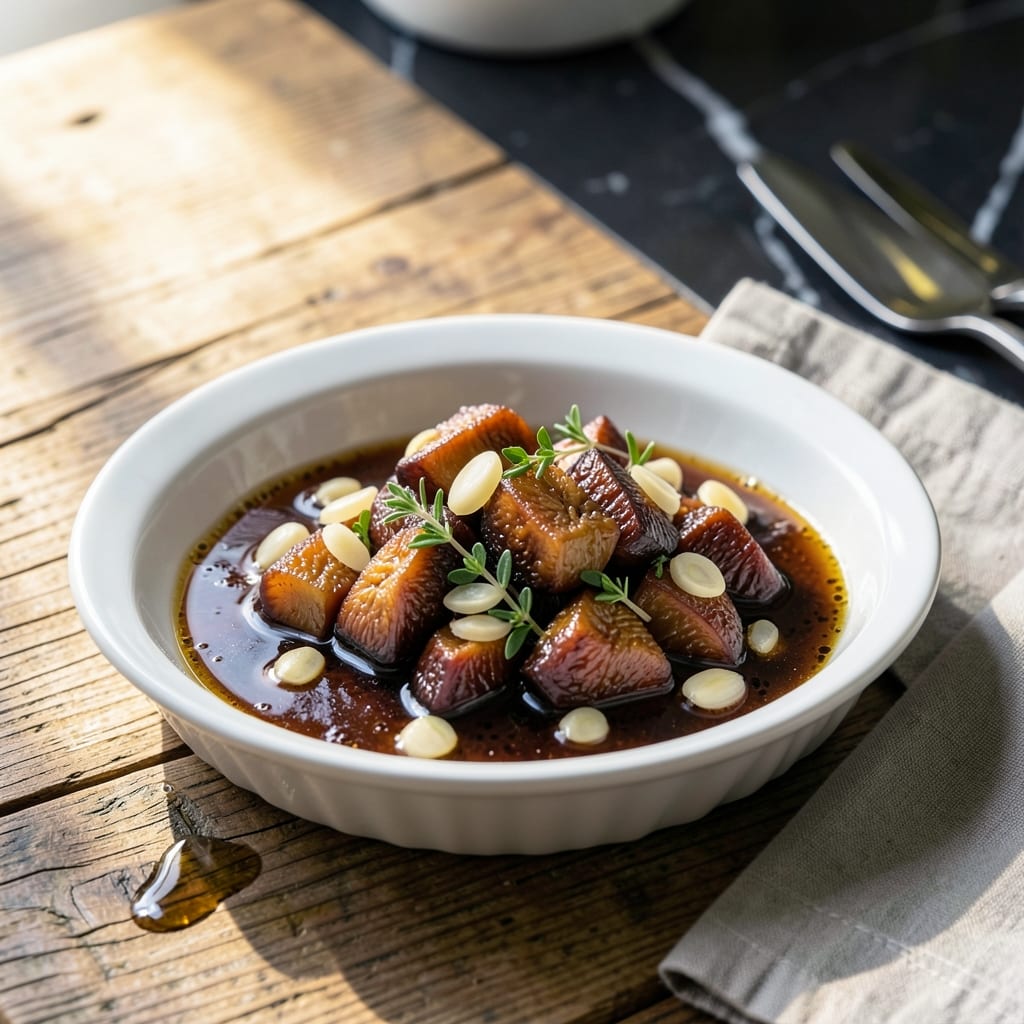
This reduction transforms ordinary balsamic vinegar into a sweet-tart glaze with deep, complex flavor. The figs add natural sweetness and body that balances the vinegar’s acidity perfectly.
I developed this method after years of experimenting with fruit-infused reductions, and the key is patience. Simmering the mixture low and slow allows the figs to break down and the flavors to meld into a smooth, syrupy consistency.
What you’ll end up with is a versatile glaze that’s thick enough to cling to meats and vegetables but still pourable. It adds restaurant-quality depth to everything from roasted pork to fresh berries.
Make a batch and keep it on hand for finishing dishes. The flavor only improves as it sits.
Ingredients for Fig Balsamic
Nine ingredients transform balsamic into a rich, versatile glaze you’ll use constantly.
| Ingredient | Amount | Notes |
|---|---|---|
| Dried Mission Figs 🍇 | 8 oz | Stems removed, chopped |
| Balsamic Vinegar 🍷 | 1 ½ cups | Aged, high-quality preferred |
| Maple Syrup 🍁 | ¼ cup | Pure, grade A or B |
| Shallot 🧅 | 1 whole | Finely minced |
| Garlic Cloves 🧄 | 2 cloves | Minced for depth |
| Fresh Thyme Sprigs 🌿 | 2 whole | Leaves stripped, stems discarded |
| Black Pepper 🌶️ | ¼ tsp | Freshly cracked preferred |
| Sea Salt 🧂 | ¼ tsp | Fine grain for even dissolving |
| Olive Oil 🫒 | 1 tbsp | Extra-virgin for richness |
[recipe_ingredient_scaler]
The vinegar is the foundation, so spring for aged balsamic from a specialty store—it’s thicker and more complex than the basic grocery stuff. Mission figs are ideal for their deep, jammy sweetness, but any dried fig works (just avoid the cheap, chalky ones). I grab mine from Whole Foods or bulk bins at natural food stores. Fresh thyme adds a subtle earthiness that dried can’t match.
No maple syrup? Agave nectar or date syrup at the same amount works. Shallots can be swapped for red onion at half the quantity. The olive oil is just for sautéing, so any neutral oil works in a pinch. If your vinegar is particularly sharp, a pinch of brown sugar tames it. Want more depth? Add a splash of vegan red wine while simmering.
This keeps beautifully—3 weeks in the fridge, 6 months frozen. Store in a clean jar (sterilize if canning). The flavor gets deeper and more complex as it sits. Thin with water if it thickens too much after refrigeration.
Why You’ll Love This Recipe
- 5-Minute Simmer: I just dump everything in a pot and let the figs and balsamic work their magic while I set the table.
- Sweet-Tart Obsession: The maple and balsamic create this sticky, tangy glaze that makes the figs taste like candy.
- Dressing or Glaze: I drizzle it over roasted veggies one night, then use it as a marinade the next.
- Pantry Hero: Dried figs keep forever, and I always have balsamic and maple syrup on hand for last-minute flavor bombs.
Step-by-Step Instructions for Fig Balsamic Glaze
This method transforms simple ingredients into a complex, restaurant-worthy reduction with minimal effort.
Step 1: Sauté Aromatics in Olive Oil
Heat 1 tbsp Olive Oil in a medium saucepan over medium heat until it shimmers. Add the finely minced Shallot and cook for 2-3 minutes, stirring frequently, until it turns translucent and just begins to caramelize at the edges.
Add the minced Garlic Cloves and the leaves stripped from 2 whole Fresh Thyme Sprigs. Sauté for 45-60 seconds until fragrant—don’t let the garlic brown or it will turn bitter. This aromatic base builds the foundation of your glaze.
Step 2: Combine Figs and Liquids
Stir in the 8 oz Dried Mission Figs (stems removed and chopped) and cook for 1 minute to allow the pieces to soften slightly in the hot oil. The figs will absorb the shallot and garlic flavors, creating depth in every bite.
Pour in the 1.5 cups Balsamic Vinegar and 0.25 cup Maple Syrup. Add 0.25 tsp Sea Salt and 0.25 tsp Black Pepper. Stir well to combine, scraping up any browned bits from the bottom of the pan. These bits contain concentrated flavor that will enrich your reduction.
Step 3: Simmer and Reduce
Increase the heat to medium-high and bring the mixture to a boil. Once boiling, reduce the heat to medium-low to maintain a gentle simmer. Cook for 15-20 minutes, stirring occasionally, until the figs have completely broken down and the liquid has reduced by about half.
The reduction is ready when it coats the back of a spoon and leaves a clear trail when you run your finger through it. At this stage, the glaze will have developed a deep, glossy appearance with a balance of sweet and tangy flavors. The figs will have melted into the liquid, creating a thick, jam-like consistency.
Step 4: Strain and Finish
Remove the saucepan from heat and let the mixture cool for 5 minutes. This allows the glaze to thicken slightly as it cools. For a smoother texture, you can strain the mixture through a fine-mesh sieve to remove any remaining fig seeds or thyme stems.
If you prefer a chunkier glaze, skip the straining step and simply give it a final stir. The glaze will continue to thicken as it cools. Taste and adjust seasoning if needed, though the balance of sweet, tangy, and savory should be perfect as is.
Pro Tips For Making Fig Balsamic
- Soak the Figs: Rehydrate dried Mission Figs in warm water for 15-20 minutes before chopping—I learned this the hard way after ending up with chewy chunks in my reduction.
- Low and Slow: Simmer the balsamic mixture on medium-low heat, not a rolling boil, or the vinegar will reduce too quickly and turn bitter.
- Mince Finely: Shallots and garlic should be minced almost to a paste so they melt into the syrup rather than floating as noticeable bits.
- Strain the Solids: After cooking, press the mixture through a fine-mesh sieve to remove fig seeds and shallot skins—it’s an extra step, but the texture is worth it.
Wine and Beer Pairings for This fig balsamic
Italian Reds
I love pairing this glaze with a bold Chianti Classico from Tuscany. Its bright acidity and cherry notes complement the sweet-tart profile beautifully. Look for Banfi or Ruffino at your local wine shop. 🍷
Dessert Wines
A glass of Moscato d’Asti with its light effervescence and peach flavors creates a lovely contrast. The low alcohol content lets the glaze’s complexity shine through.
Craft Beers
For beer lovers, a Belgian dubbel like Chimay Red offers rich caramel notes that echo the fig sweetness. The malty backbone stands up to the vinegar’s tang.
Sparkling Options
Surprisingly, Prosecco works wonderfully. Its crisp bubbles cleanse your palate between bites of dishes featuring this glaze. I always keep a bottle of La Marca on hand.
Non-Alcoholic
Try sparkling apple cider for a festive pairing. The natural sweetness mirrors the fig while the acidity balances the reduction. Serve chilled for best results.
Serving Tip
Always pour pairings slightly cooler than room temperature. This lets the flavors develop without overpowering the glaze’s delicate balance. 💡
Nutrition Facts
Frequently Asked Questions
Can I use fresh figs instead of dried?
Yes, but reduce other liquids by 25% since fresh figs release moisture. Simmer for 5-8 minutes longer to achieve the right thickness.
How do I fix a glaze that’s too thin?
Return it to the pan and simmer for 3-5 minutes more. If still thin, mix 1 tsp cornstarch with water and stir in while heating.
What dishes pair best with this?
It’s incredible on roasted pork, grilled chicken, or even vanilla ice cream. Drizzle over roasted vegetables like Brussels sprouts for a gourmet touch.
How long does it keep in the fridge?
Stored in an airtight container, it stays fresh for up to 3 weeks. The flavors deepen over time, making it even better after a few days.

Trained in classic French technique but raised on slow-cooked ribs and spicy rubs, she blends culinary skill with smoke and soul.
- Recipe for Boneless Pork Chops in Cast Iron Skillet: Sear and Baste to Juicy Perfection - October 3, 2026
- Recipe for Boneless Cross Rib Roast: Slow-Roasted Beef with Herb Crust - October 3, 2026
- Hamburgers in Sauce Recipe Crock Pot: Slow-Cooked Savory Delight - October 3, 2026