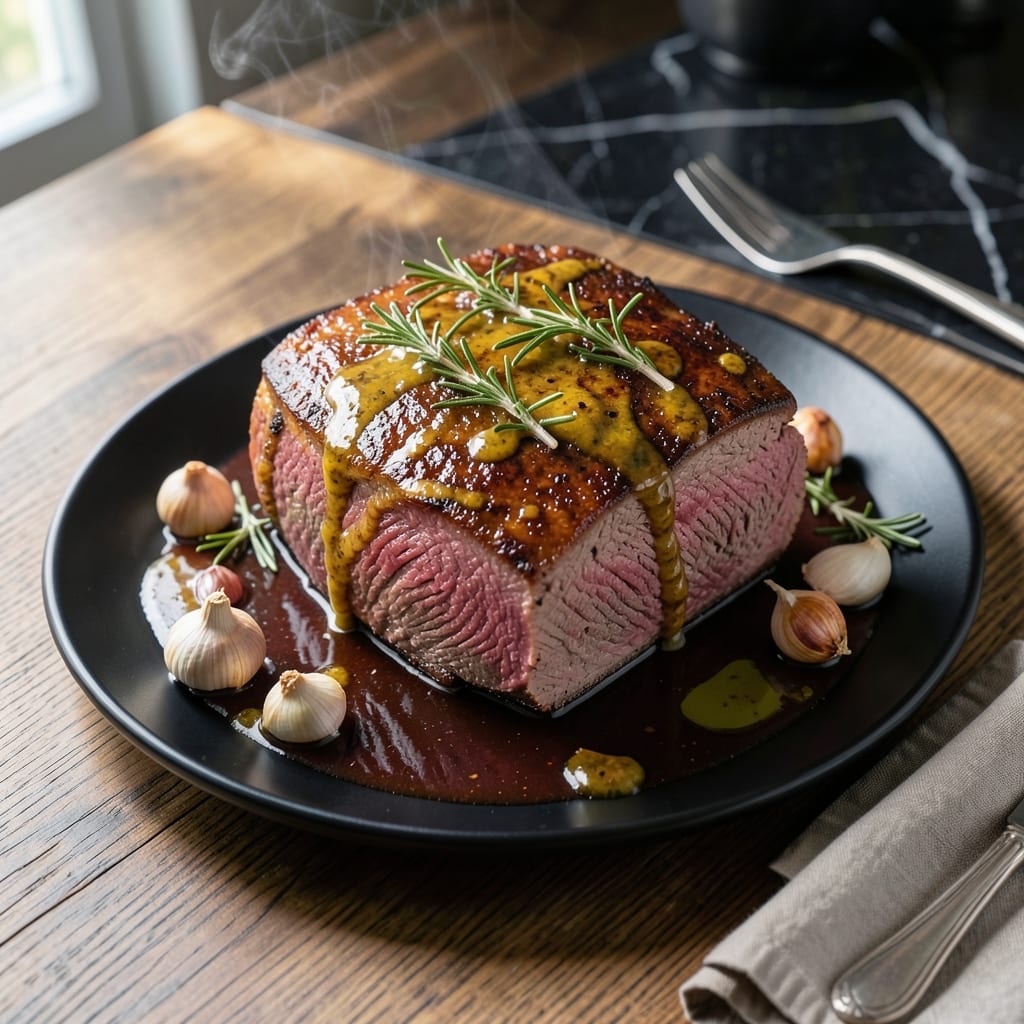
This oven-baked filet roast delivers on the promise of melt-in-your-mouth tenderness every time. I learned the hard way that the secret isn’t just in the cut—it’s in the technique.
My grandmother never measured anything, but I’ve decoded her intuitive approach into a foolproof method. The herb crust forms a flavorful seal that locks in those precious juices while the outside develops a beautiful golden-brown color.
What comes out of that oven is nothing short of magical—tender beef with a buttery texture that practically dissolves on your tongue. The herb crust adds just enough savory depth without overpowering the natural richness of the filet.
Perfect for Sunday suppers or holiday feasts, this dish proves that restaurant-quality results are absolutely achievable in a home kitchen.
Ingredients for Filet Roast Recipe Oven
A handful of quality ingredients transform this luxurious cut into an unforgettable meal.
| Ingredient | Amount | Notes |
|---|---|---|
| Beef Tenderloin Roast 🥩 | 2 ½ lb | Center-cut, trimmed of excess fat |
| Unsalted Butter 🧈 | ½ cup | Room temperature, divided |
| Fresh Rosemary 🌿 | 2 tbsp | Finely chopped, stems discarded |
| Fresh Thyme 🍃 | 2 tbsp | Leaves stripped from stems |
| Fresh Garlic Cloves 🧄 | 4 cloves | Minced to a paste |
| Dijon Mustard 🟡 | 2 tbsp | Whole-grain variety preferred |
| Kosher Salt 🧂 | 1 ½ tsp | Diamond Crystal brand recommended |
| Freshly Ground Black Pepper 🌶️ | 1 tsp | Coarse grind for texture |
| Olive Oil 🫒 | 2 tbsp | Extra-virgin for richness |
| Shallot 🧅 | 1 whole | Finely minced for herb crust |
| Dry Red Wine 🍷 | ¼ cup | For deglazing pan optional |
| Beef Broth 💧 | ½ cup | Low-sodium preferred |
[recipe_ingredient_scaler]
The filet is the star—splurge on USDA Prime or Choice from Whole Foods or a trusted butcher. Look for even marbling and a deep red color (not brown). Ask for center-cut pieces, which are more uniform in shape and cook evenly. For the herbs, organic bunches from the farmers market have more aromatic oils than the pre-packaged stuff at regular supermarkets.
No fresh herbs? Dried at one-third the amount, but the flavor won’t be as bright. Out of Dijon? Regular mustard works, but cut it with a little honey for balance. The wine can be substituted with additional beef broth—just add a splash of balsamic vinegar for acidity. Butter must be unsalted so you can control the seasoning precisely.
Prep the herb crust up to 12 hours ahead—it actually benefits from sitting. The roast itself needs no aging, but let it sit at room temperature for 1 hour before cooking. Leftovers (if any) keep 3-4 days wrapped tightly in the fridge.
Why You’ll Love This Recipe
- Hands-Off Cooking: I just season, sear, and let the oven do the rest—hardly any active work.
- Buttery Herb Crust: The rosemary, thyme, and garlic melt into the butter for a crust so good I sneak bites before serving.
- Dinner Party Ready: It feels fancy, but honestly, it’s my go-to when I need to impress without stressing.
- Leftovers for Days: The tenderloin slices reheat beautifully, so I get a second gourmet meal with zero extra effort.
Step-by-Step Instructions for Filet Roast in the Oven
Here’s my foolproof method for a perfectly tender roast with a fragrant herb crust every time.
Step 1: Prepare and Season the Beef Tenderloin
Begin by patting the 2.5 lb Beef Tenderloin Roast completely dry with paper towels. This ensures the seasoning adheres properly and creates a beautiful crust. I always trim any remaining silver skin or excess fat for the most tender result.
In a small bowl, combine the 2 tbsp Fresh Rosemary, 2 tbsp Fresh Thyme, 4 cloves Fresh Garlic Cloves, 2 tbsp Dijon Mustard, 1.5 tsp Kosher Salt, and 1 tsp Freshly Ground Black Pepper. Rub this mixture all over the roast, pressing it into the meat so it sticks.
Let the seasoned roast sit at room temperature for 30-45 minutes while you preheat the oven. This takes the chill off the meat so it cooks more evenly.
Step 2: Sear for a Flavorful Crust
Heat the 2 tbsp Olive Oil in a large oven-safe skillet or roasting pan over medium-high heat. When the oil shimmers (you’ll see it ripple slightly), add the beef tenderloin and sear on all sides for 2-3 minutes per side until deeply browned.
This searing step isn’t just for color—it develops complex flavors through the Maillard reaction. You’re looking for a rich, golden-brown crust that forms a natural barrier to lock in the juices. Don’t rush this; a proper sear makes all the difference.
Add the 1 whole Shallot to the pan during the last minute of searing. It will soften and add another layer of flavor to the crust.
Step 3: Roast to Perfection
Transfer the seared roast to a preheated 425°F oven. Place the pan with the beef on the center rack. Roast for 25-35 minutes or until the internal temperature reaches 130-135°F for medium-rare.
I use an instant-read thermometer inserted into the thickest part of the roast to check the temperature. Remember the meat will continue cooking as it rests, so pull it out a few degrees before your desired doneness. The 2.5 lb size should give you perfect medium-rare in this timeframe.
If the crust starts to darken too quickly, tent the pan loosely with foil. This protects the herbs from burning while allowing the interior to cook through.
Step 4: Rest and Make a Simple Pan Sauce
Remove the roast from the oven and transfer it to a cutting board. Tent it loosely with foil and let it rest for 15 minutes. This resting period allows the juices to redistribute throughout the meat—cutting into it too soon would result in dry slices.
While the roast rests, place the pan on the stovetop over medium heat. Add the 0.25 cup Dry Red Wine and scrape up all the browned bits from the bottom of the pan. Let it reduce by half, then add the 0.5 cup Beef Broth.
Simmer for 3-4 minutes until slightly thickened. Stir in any remaining 0.5 cup Unsalted Butter (you likely used some for the herb crust) to create a glossy, rich sauce. Pour this over the sliced roast before serving.
Pro Tips For Making Filet Roast Recipe Oven
- Sear Before Roasting: I learned this the hard way—skip the sear and your filet will look pale and taste bland. A screaming-hot pan with 1 tablespoon of oil for 2 minutes per side gives that deep crust that makes the roast sing.
- Room Temp First: Pull the beef tenderloin out of the fridge at least 1 hour before cooking. Cold meat cooks unevenly, and I used to wonder why my ends were overdone while the center was still cool.
- Butter Last: Brush on that unsalted butter mixed with rosemary, thyme, and minced garlic only in the last 20 minutes of roasting. It prevents burning and lets the herbs infuse without turning bitter.
- Rest Under Foil: After roasting, tent it loosely with foil and let it rest 15 minutes—yes, even if you’re starving. This keeps the juices inside where they belong, not all over your cutting board.
Common Mistakes When Making Perfect Results
Skipping the Rest
I learned this the hard way—cutting into the roast too soon sends all those beautiful juices straight to your cutting board. That 15-minute rest isn’t optional. The muscle fibers relax and reabsorb moisture, so your slices stay succulent. Skip this and you’ll wonder why your filet tastes dry. 💡
Cold Meat in the Oven
Never put a straight-from-the-fridge roast into the oven. The 30-45 minute room temperature rest ensures even cooking. Otherwise, you’ll end up with a well-done exterior and undercooked center. I set mine on the counter while preheating the oven.
Overcrowding the Pan
Using a pan that’s too small steams the meat instead of searing it. Choose a heavy-bottomed pan or roasting dish with at least 2 inches of space around the roast. This allows proper browning and prevents the herbs from steaming rather than crisping.
Ignoring Internal Temp
Color alone won’t tell you when it’s done. Use an instant-read thermometer for accuracy. Pull the roast at 130-135°F for perfect medium-rare. Remember, it will rise another 5-10°F while resting. My grandmother’s “poke test” method worked for her, but I prefer precision.
Uneven Herb Coating
Don’t just sprinkle the herb mixture on top. Press it firmly into every surface of the roast so it adheres during cooking. I use my hands to ensure complete coverage. This creates that gorgeous crust and prevents the herbs from falling off during searing.
Skipping the Sear
Some recipes suggest putting the roast directly in the oven, but you’ll miss out on incredible flavor. That 2-3 minute sear on each side develops the Maillard reaction, creating complex, meaty flavors that make this dish extraordinary.
Nutrition Facts
Frequently Asked Questions
What oven temperature works best?
Preheat to 425°F for a perfect sear and even cooking. This high heat creates a beautiful crust while keeping the center tender and juicy.
How do I know when it’s done?
Use a meat thermometer—pull it at 130-135°F for medium-rare. The temperature will rise 5-10°F during resting, ensuring perfect doneness every time.
Can I use dried herbs instead of fresh?
Yes, use 1/3 the amount of dried herbs, but fresh delivers brighter flavor. If substituting, add a pinch of lemon zest to compensate for the missing freshness.
Why let the meat rest before slicing?
Resting for 15 minutes lets juices redistribute. Skipping this step means dry slices, as the juices will spill out onto the cutting board instead of staying in the meat.

Trained in classic French technique but raised on slow-cooked ribs and spicy rubs, she blends culinary skill with smoke and soul.
- Recipe for Boneless Pork Chops in Cast Iron Skillet: Sear and Baste to Juicy Perfection - October 3, 2026
- Recipe for Boneless Cross Rib Roast: Slow-Roasted Beef with Herb Crust - October 3, 2026
- Hamburgers in Sauce Recipe Crock Pot: Slow-Cooked Savory Delight - October 3, 2026