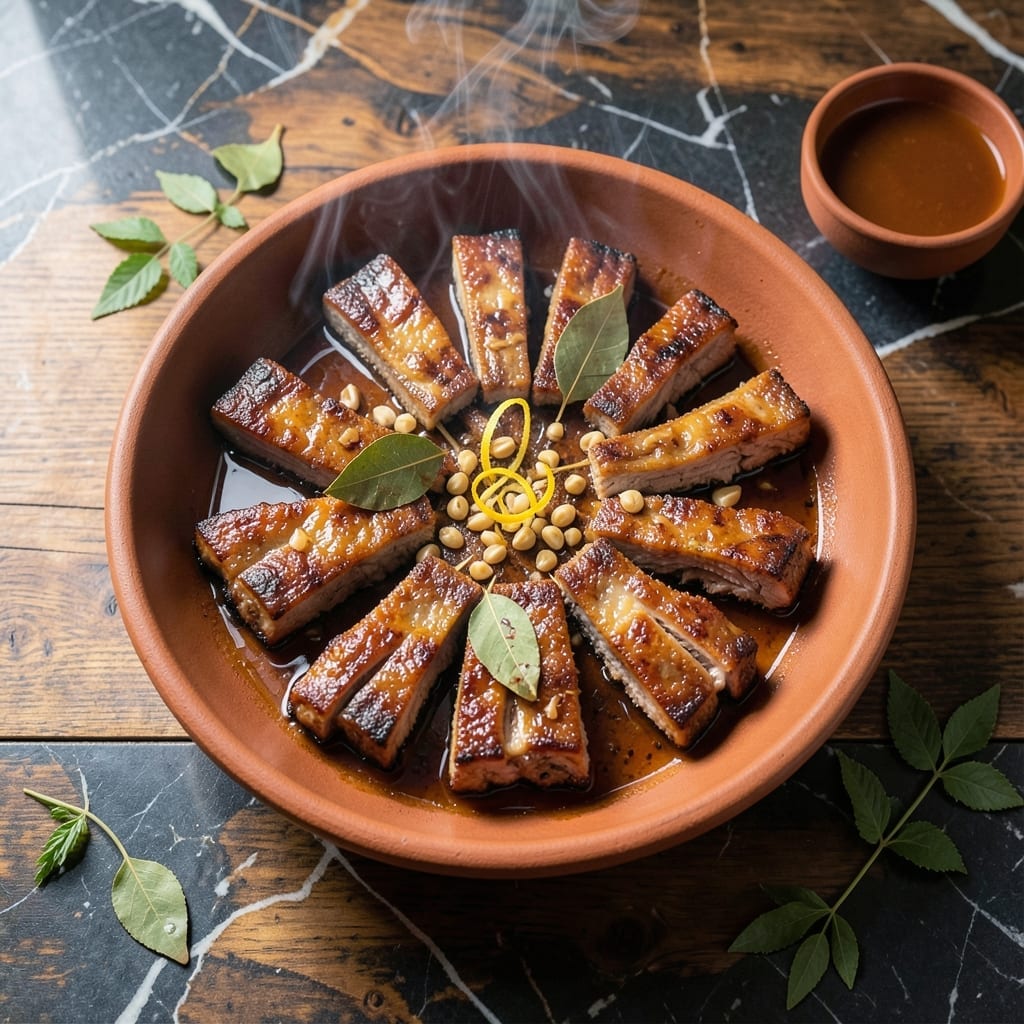
This recipe brings together classic Filipino flavors with my pitmaster expertise for ribs that fall off the bone. The adobo-inspired marinade infuses deep, tangy notes before hitting the grill.
You’ll achieve sticky-sweet char with a balanced savory backbone, using simple ingredients and foolproof technique. These ribs deliver restaurant-quality results at home.
Ingredients for Filipino Bbq Pork Ribs
Classic Filipino flavors meet pitmaster technique in these fall-off-the-bone ribs with deep adobo notes.
| Ingredient | Amount | Notes |
|---|---|---|
| Pork Baby Back Ribs 🥓 | 3 lb | Full rack, membrane removed |
| Soy Sauce 🫒 | ¾ cup | Low-sodium preferred for balance |
| White Vinegar 💧 | ½ cup | Distilled or cane vinegar works |
| Brown Sugar 🍚 | ¾ cup | Light or dark, firmly packed |
| Garlic Cloves 🧄 | 8 cloves | Peeled and minced finely |
| Bay Leaves 🌿 | 4 whole | Dried, for marinade depth |
| Black Peppercorns 🌶️ | 2 tsp | Freshly cracked preferred |
| Pineapple Juice 🍍 | 1 cup | Canned or fresh, unsweetened |
| Banana Ketchup 🍌 | ½ cup | Filipino brand preferred for authenticity |
| Calamansi Juice 🍈 | ¼ cup | Or lime juice as substitute |
| Onion 🧅 | 1 whole | Yellow or white, finely chopped |
| Vegetable Oil 🫒 | 2 tbsp | For searing ribs initially |
| Kosher Salt 🧂 | 1 tbsp | Diamond Crystal recommended |
| Honey 🍯 | ¼ cup | For glaze stickiness |
[recipe_ingredient_scaler]
The ribs are everything here. Baby back ribs give you the perfect meat-to-bone ratio for even cooking and maximum flavor absorption. Look for racks with good marbling at Costco or your local butcher—avoid pre-trimmed versions if possible. The soy sauce forms the backbone, and Filipino brands like Silver Swan or Datu Puti offer the authentic umami depth this marinade demands.
No banana ketchup? Mix tomato ketchup with a touch of honey and banana puree for a close approximation. Calamansi juice is traditional, but lime or lemon juice works at a one-to-one ratio. For the vinegar, apple cider can substitute white in a pinch. The brown sugar is non-negotiable for that sticky-sweet char—don’t substitute with liquid sweeteners as they’ll burn on the grill.
Marinate the ribs overnight for best results—12 hours minimum. The finished ribs keep for 3 days refrigerated or freeze for 1 month. Reheat gently in the oven to preserve that perfect fall-off-the-bone texture you worked so hard to achieve.
Why You’ll Love This Recipe
- One Pan Wonder: I toss the ribs with soy sauce, vinegar, and brown sugar, then let the oven do the work—no fancy equipment needed.
- Sweet-Savory Magic: The brown sugar caramelizes with the soy and garlic, creating that sticky, finger-licking glaze I can’t resist.
- Crowd Pleaser: I’ve served this at potlucks and weeknight dinners alike—everyone, even the picky eaters, cleans their plate.
- Leftovers? Yes Please: Honestly, these ribs taste even better the next day—if they last that long. I double the batch just for the leftovers.
Step-by-Step Instructions for Filipino BBQ Pork Ribs
Master the technique behind this dish with precise steps and professional timing for exceptional results.
Step 1: Create the Adobo Marinade Base
In a large bowl, combine the 0.75 cup soy sauce, 0.5 cup white vinegar, 0.75 cup brown sugar, 8 cloves minced garlic, 4 whole bay leaves, 2 tsp black peppercorns, and 1 tbsp kosher salt. Whisk vigorously until the brown sugar fully dissolves—this ensures even distribution of flavors throughout the marinade.
Add the 3 lb pork baby back ribs (membrane already removed) to the marinade, turning to coat every surface completely. The ribs should be fully submerged for maximum flavor penetration. Cover and refrigerate for at least 4 hours, though I recommend overnight for optimal tenderness and depth of flavor.
Step 2: Infuse with Tropical Flavors
After marination, transfer the ribs to a clean bowl but reserve the marinade. In a separate container, blend the 1 cup pineapple juice, 0.5 cup banana ketchup, and 0.25 cup calamansi juice until smooth. This tropical mixture will create the signature sticky-sweet glaze.
Pour this tropical blend into the reserved marinade and stir well. The combination of adobo and tropical elements creates a complex flavor profile that defines this dish. Let the ribs soak in this enhanced marinade for an additional 1 hour at room temperature before cooking.
Step 3: Sear and Slow Cook the Ribs
Heat the 2 tbsp vegetable oil in a large pot or Dutch oven over medium-high heat. Remove the ribs from the marinade (reserve the liquid) and sear on all sides for 2-3 minutes per side until deeply browned. This step develops a rich crust and locks in juices.
Pour the reserved marinade over the seared ribs. Add the 1 whole finely chopped onion to the pot. Bring to a simmer, then reduce heat to low. Cover and cook for 1.5 to 2 hours, turning the ribs occasionally, until the meat is fork-tender and nearly falling off the bone.
Step 4: Glaze and Char for Finish
Transfer the ribs to a baking sheet. Brush generously with the 0.25 cup honey mixed with some of the cooking liquid. Position the oven rack in the upper third and broil on high for 5-7 minutes, watching closely to prevent burning.
The ribs are done when they develop a deep, sticky char with caramelized edges. The glaze should be glossy and slightly blistered in spots. Let them rest for 10 minutes before slicing between the bones to serve. The meat should pull away cleanly from the bone with minimal resistance.
Pro Tips For Making Filipino Bbq Pork Ribs
- Parboil First: Simmer the ribs in water with a splash of vinegar for 20 minutes before grilling—I learned this the hard way after my first batch came out tough as leather.
- Crush the Garlic: Minced garlic burns too fast in the marinade, so crush the cloves instead and let them steep in the soy-vinegar mix for at least an hour.
- Watch the Sugar: Brown sugar can blacken quickly over direct heat, so baste the ribs with the marinade only in the last 5 minutes of grilling.
- Rest Before Serving: Give the ribs a solid 5-10 minutes under foil after grilling—sounds weird, but it lets the juices redistribute so they don’t run dry when you cut in.
Essential Equipment for This Recipe
Grill Setup
For authentic char, I use a charcoal grill with hickory or coconut husk briquettes—the latter is traditional in the Philippines. A Weber Kettle works perfectly for even heat distribution. Maintain 275°F indirect heat for slow cooking. 🔥
Marinating Tools
A large zip-top bag or non-reactive container is essential for marinating the ribs. I prefer 2-gallon food-grade bags as they allow easy turning and full submersion. Avoid metal containers—the vinegar in the adobo can react.
Basting Essentials
Use a silicone basting brush for applying the sticky glaze. Unlike bristle brushes, silicone won’t trap marinade in hard-to-clean crevices. I keep a small bowl of warm water nearby to thin the glaze for easier application.
Temperature Control
A dual-probe thermometer is non-negotiable. One probe monitors grill temperature, while the other tracks rib internal temp. I use ThermoWorks Smoke for precision. Aim for 195-203°F internal temp for fall-off-the-bone tenderness.
Resting and Serving
After grilling, rest the ribs on a wire rack set over a baking sheet. This prevents soggy bottoms. Invest in a good chef’s knife—I prefer Wüsthof—for clean cuts between the bones.
Cleanup Help
Heavy-duty aluminum foil under the ribs on the grill simplifies cleanup. For the marinade container, soak in warm, soapy water immediately after use—the sugar and vinegar can create stubborn residue if left to dry.
Nutrition Facts

Trained in classic French technique but raised on slow-cooked ribs and spicy rubs, she blends culinary skill with smoke and soul.
- Recipe for Boneless Pork Chops in Cast Iron Skillet: Sear and Baste to Juicy Perfection - October 3, 2026
- Recipe for Boneless Cross Rib Roast: Slow-Roasted Beef with Herb Crust - October 3, 2026
- Hamburgers in Sauce Recipe Crock Pot: Slow-Cooked Savory Delight - October 3, 2026