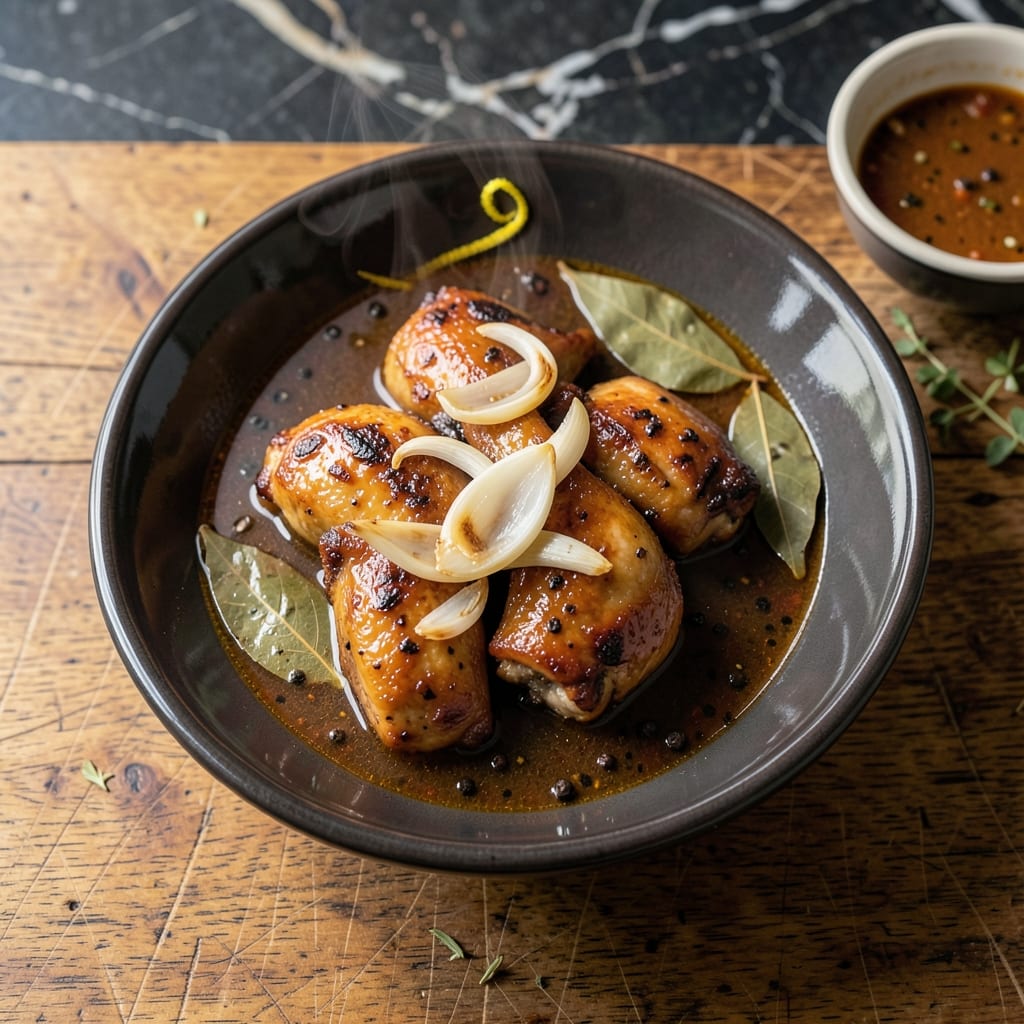
Bringing Filipino flavors to your dinner table has never been more rewarding. This feast combines two iconic dishes that showcase the perfect balance of savory and tangy tastes.
Adobo delivers rich, garlicky depth with its vinegar-soy marinade, while sinigang offers bright, sour notes through tamarind broth. Both dishes use simple ingredients but create complex, memorable flavors.
The adobo develops a tender texture after slow cooking, and the sinigang’s broth becomes aromatic as it simmers. Together, they represent the heart of Filipino home cooking.
Serve with steamed rice to complete the meal. The contrasting flavors will transport you straight to a Manila kitchen.
Ingredients for Filipino Food Recipe for Dinner
Two iconic dishes, one incredible dinner. Simple ingredients, bold Filipino flavors.
| Ingredient | Amount | Notes |
|---|---|---|
| Chicken Thighs 🍗 | 2 lb | Boneless, skin-on preferred |
| Soy Sauce 🫒 | ½ cup | Filipino brand like Silver Swan |
| White Vinegar 💧 | ½ cup | Cane vinegar if available |
| Garlic Cloves 🧄 | 12 cloves | Minced for adobo marinade |
| Bay Leaves 🍃 | 4 whole | Dried, for adobo |
| Black Peppercorns 🌶️ | 1 tsp | Crushed for adobo |
| Pork Belly 🥓 | 1 lb | Sliced thin for sinigang |
| Tamarind Soup Base 🍋 | 1 package | Knorr Sinigang mix recommended |
| Daikon Radish 🥬 | 1 whole | Peeled, sliced into rounds |
| Long Green Chili 🌶️ | 2 whole | Optional for sinigang heat |
| Kangkong Leaves 🌿 | 2 cups | Water spinach, stems trimmed |
| White Onion 🧅 | 1 whole | Quartered for both dishes |
| Jasmine Rice 🍚 | 2 cups | Uncooked, for serving |
| Cooking Oil 🫒 | ¼ cup | Neutral oil for browning |
| Sugar 🧂 | 1 tbsp | Balances tamarind sourness |
[recipe_ingredient_scaler]
The chicken thighs are key for adobo—skin-on, bone-in gives the richest flavor (though boneless works). For soy sauce, Silver Swan is the gold standard at any Filipino market. Don’t skip the cane vinegar—it’s milder than white vinegar and lets the other flavors shine. Bay leaves and peppercorns should be fresh; old spices taste like dust.
No pork belly? Baby back ribs or shrimp work great in sinigang. Kangkong (water spinach) is traditional, but bok choy or regular spinach will do in a pinch. Tamarind soup base is non-negotiable for that signature sour kick—Knorr’s mix is the easiest to find. If you’re missing tamarind, guava or calamansi can add a similar tang (but it won’t be the same).
Adobo tastes even better the next day—3-4 days in the fridge, 3 months frozen. Sinigang broth keeps 2-3 days but the veggies get mushy. Cook the rice fresh though; nobody likes cold, clumpy rice. Leftovers? Pack them separately for easy reheating.
Why You’ll Love This Recipe
- One Pan Wonder: I just toss chicken thighs with soy sauce, vinegar, and garlic in a single pan—minimal cleanup, maximum flavor.
- Tangy Garlic Punch: The soy-vinegar combo with loads of garlic hits that sweet-savory-tangy balance I crave every time.
- Weeknight Savior: Between us, it’s my Tuesday night lifesaver—ready before the kids finish their homework.
- Budget Stretcher: Chicken thighs stay juicy and cheap, and the sauce soaks into rice for next-day lunches that taste even better.
Step-by-Step Instructions for Savory Adobo and Sinigang Feast
Here’s how I cook both dishes simultaneously for a perfect Filipino dinner spread.
Step 1: Marinate Chicken for Adobo
In a large bowl, combine the 2 lb Chicken Thighs with 0.5 cup Soy Sauce, 0.5 cup White Vinegar, minced 12 cloves Garlic Cloves, 4 whole Bay Leaves, and 1 tsp Black Peppercorns. I crush the peppercorns slightly to release their aroma.
Mix thoroughly to ensure every piece is coated. Let it marinate at room temperature for 15 minutes while you prep the other ingredients. This short marinade is enough to infuse flavor without over-tenderizing the chicken.
Step 2: Start the Adobo Cooking Process
Heat 2 tablespoons of the 0.25 cup Cooking Oil in a large pot over medium-high heat. Remove the chicken from the marinade (reserve the marinade) and sear until golden brown on both sides, about 3-4 minutes per side.
Pour in the reserved marinade and bring to a boil. Reduce heat to medium-low, cover, and let it simmer for 30 minutes. I check occasionally to ensure the sauce isn’t reducing too quickly.
Step 3: Prepare and Cook the Sinigang
In another pot, add the remaining cooking oil and sauté the quartered 1 whole White Onion for 2 minutes until fragrant. Add the sliced 1 lb Pork Belly and cook for 5 minutes to render some fat.
Pour in 4 cups water (enough to cover the pork) and bring to a boil. Add the 1 package Tamarind Soup Base, peeled and sliced 1 whole Daikon Radish, 2 whole Long Green Chili, and 1 tbsp Sugar. Simmer for 20 minutes until the pork is tender.
Step 4: Finish Both Dishes
Stir the 2 cups Kangkong Leaves into the sinigang and cook for 2 minutes until just wilted. Meanwhile, uncover the adobo and let it reduce for 5-7 minutes until the sauce thickens slightly.
Taste both dishes and adjust seasoning if needed. The adobo should have a balanced salty-sour flavor, while the sinigang should be tangy with a hint of sweetness.
Step 5: Serve with Steamed Rice
Cook the 2 cups Jasmine Rice according to package instructions. Fluff with a fork before serving. I like to arrange the adobo and sinigang in separate serving bowls with the rice in the center.
Ladle the sinigang broth generously over each serving. The combination of the rich adobo and the tangy sinigang with fluffy rice creates the ultimate Filipino comfort meal.
Pro Tips For Making Filipino Food Recipe For Dinner
- Sear the Thighs First: I learned this the hard way—browning the chicken thighs in a hot pan before adding the sauce gives that sticky, caramelized crust that makes adobo taste like it came from a Manila kitchen.
- Balance the Vinegar: Sounds weird, but it works: taste as you go and add a pinch of sugar if the vinegar’s bite is too sharp—my grandmother swore by this, and she was right.
- Don’t Boil the Sauce: After burning three batches, I finally figured out that a gentle simmer, not a rolling boil, keeps the soy-vinegar mixture from turning bitter and reducing too fast.
- Crush the Garlic: Skip the mincing and just smash the garlic cloves with the flat of your knife—it infuses the oil faster and gives bigger flavor with half the effort.
Dietary Considerations for These Flavors
Gluten-Free Options
Both adobo and sinigang are naturally gluten-free when using tamari soy sauce instead of regular soy sauce. I recommend San-J brand tamari for authentic flavor without wheat. Always check labels for hidden gluten in soup bases. 💡
Low-Carb Adaptations
Skip the jasmine rice and serve over cauliflower rice instead. For sinigang, reduce daikon to ½ radish and add extra kangkong. The adobo sauce thickens naturally without added starch.
Dairy-Free Naturally
This feast contains no dairy ingredients, making it perfect for lactose-intolerant diners. The flavors come from meat, vegetables, and pantry staples. I’ve served this to dairy-free friends with rave reviews.
Pescatarian Version
Swap chicken thighs for firm tofu in adobo, and replace pork belly with shrimp or white fish in sinigang. The cooking times remain similar—just adjust until proteins are cooked through.
Allergen Notes
Common allergens here are soy and possibly shellfish if using shrimp. For soy allergies, coconut aminos can replace soy sauce in adobo, though the flavor profile changes slightly. 🌱
Vegetable Variations
Add eggplant or okra to sinigang for more texture. These vegetables soak up the tamarind broth beautifully. I often include both when they’re in season at my local Boston markets.
Nutrition Facts
Frequently Asked Questions
Can I use chicken breast instead of thighs?
Yes, but thighs stay juicier during the 30 minutes simmer. If using breasts, reduce cooking time to 20 minutes to prevent dryness. The flavor will be milder but still delicious.
What if I can’t find tamarind soup base?
Use 1/4 cup tamarind paste or 2 tablespoons calamansi juice as a substitute. The flavor won’t be identical but will still deliver that signature sour tang.
How do I store leftovers?
Keep adobo and sinigang separate in airtight containers. Adobo lasts 3-4 days in the fridge, sinigang 2-3 days. Freeze adobo for up to 3 months.
Can I make this in one pot?
Not recommended. The adobo needs to reduce while sinigang requires extra liquid. Using separate pots ensures both dishes develop their distinct textures and flavors perfectly.

Trained in classic French technique but raised on slow-cooked ribs and spicy rubs, she blends culinary skill with smoke and soul.
- Hamburger Patty Recipe No Egg: Juicy Bind With Breadcrumbs and Milk - October 3, 2026
- Recipe for Oven Baked Halibut: Buttery White Fish with Zesty Lemon Topping - October 3, 2026
- Meatball Curry Recipe Kerala Style: Coconut-Spiced Gravy With Tender Bites - October 3, 2026