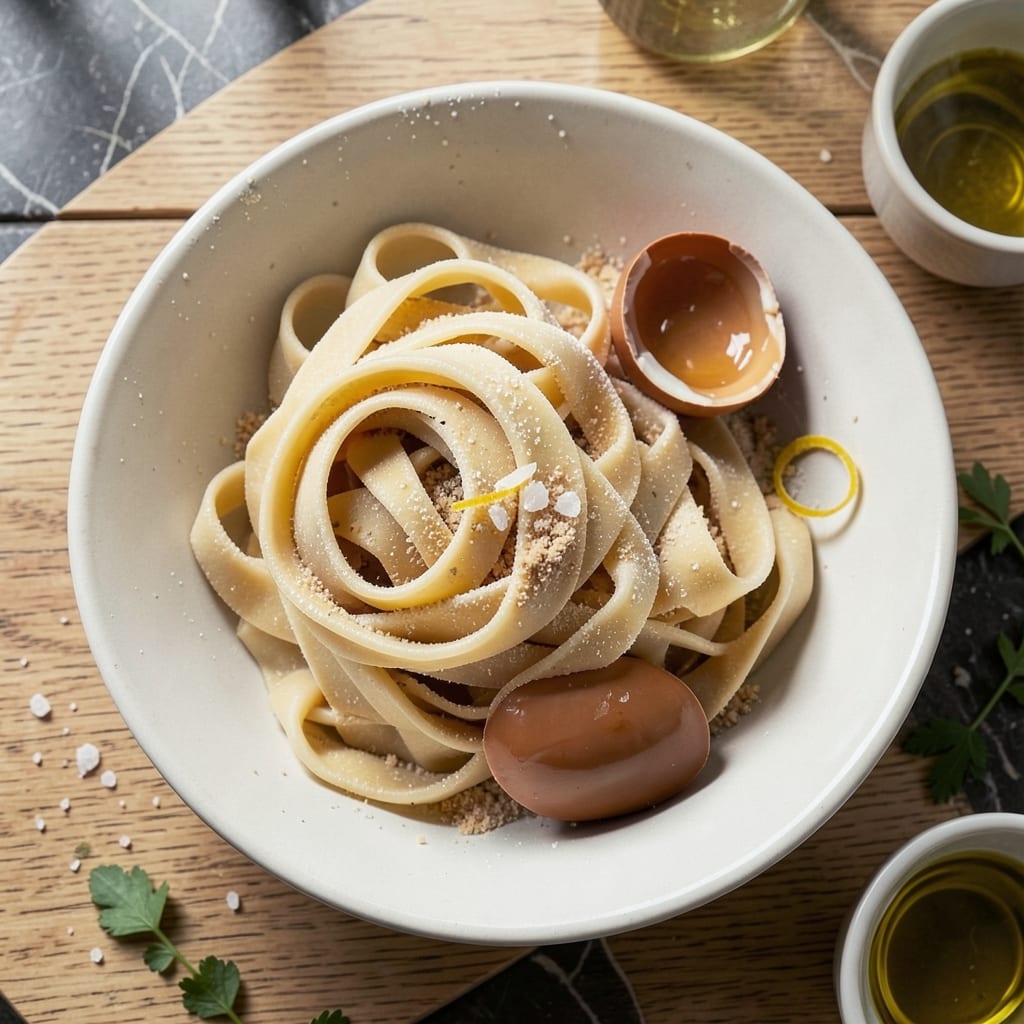
There’s a reason fresh pasta tastes superior to dried, and this method makes it effortless. Using a food processor eliminates the guesswork, creating silky smooth dough with minimal effort.
The machine handles the mixing and kneading, so you avoid sticky hands and uneven texture. In just 10 minutes, you’ll have a supple dough ready to rest before rolling.
What you’ll end up with is tender, delicate pasta that cooks in 2-3 minutes and absorbs sauces beautifully. The difference from store-bought is undeniable.
No special equipment beyond the processor and a rolling pin. This is the easiest way to make restaurant-quality pasta at home.
Ingredients for Homemade Pasta Recipe Food Processor
Six simple ingredients transform into restaurant-quality pasta with your food processor.
| Ingredient | Amount | Notes |
|---|---|---|
| All-Purpose Flour 🌾 | 2 ½ cups | 00 flour preferred for authenticity |
| Large Eggs 🥚 | 4 whole | Room temperature for best texture |
| Extra-Virgin Olive Oil 🫒 | 1 tbsp | Cold-pressed for richness |
| Sea Salt 🧂 | ½ tsp | Fine grain for even distribution |
| Semolina Flour 🌾 | ½ cup | For dusting and texture |
| Water 💧 | 1 tbsp | As needed for consistency |
[recipe_ingredient_scaler]
The flour is everything here. 00 flour (look for it at Eataly or Italian markets) gives that authentic, silky texture, but all-purpose works in a pinch. Semolina adds bite and prevents sticking—Bob’s Red Mill is widely available. Eggs at room temp blend better into the dough. Don’t skimp on the olive oil; a good extra-virgin adds depth you’ll notice.
No 00 flour? All-purpose is fine, though the pasta will be slightly denser. Out of semolina? Bread flour at half the amount adds similar structure. Need to make it vegan? Water plus olive oil can replace eggs (about 1/4 cup total for 4 servings), but the texture changes. The salt is non-negotiable—it’s what brings all the flavors together.
Fresh pasta cooks fast—2-3 minutes in boiling water. Store dough wrapped tightly in plastic for 24 hours in the fridge, or freeze for 1 month. Dust with extra semolina before freezing to prevent sticking. Always let it come to room temp before rolling.
Why You’ll Love This Recipe
- Food Processor Magic: I just pulse the flour, eggs, and olive oil—no kneading, no mess, and it comes together in minutes.
- Rich, Silky Bite: The semolina adds this subtle nutty depth that makes every forkful taste like it came from a Roman trattoria.
- Meal Prep Hero: I make a double batch on Sunday and freeze half for those I-don’t-feel-like-cooking nights.
- Penny-Pincher’s Dream: A pound of fresh pasta costs me less than a fancy restaurant appetizer, and honestly, it tastes better.
Step-by-Step Instructions for Homemade Pasta
Here’s the method I use to create perfect pasta dough every time with a food processor.
Step 1: Combine Dry Ingredients in the Processor
Add the 2.5 cups All-Purpose Flour and 0.5 tsp Sea Salt to the bowl of your food processor. Pulse 3-4 times just until combined—you want to evenly distribute the salt without overworking the flour.
This brief mixing ensures the salt is incorporated throughout the dough, seasoning every bite. The flour should look slightly aerated but not compacted. I’ve found that over-pulsing at this stage can lead to tough pasta later.
Real talk: the salt might seem like a small amount, but it’s the perfect ratio for 4 servings without overpowering the delicate egg flavor.
Step 2: Incorporate Wet Ingredients for a Cohesive Dough
Create a well in the center of the flour mixture (though in the processor, just dump them on top). Add the 4 whole Large Eggs and 1 tbsp Extra-Virgin Olive Oil. Pulse in 1-second bursts until the mixture starts to come together.
You’ll notice the dough will go from crumbly to shaggy in about 10-15 pulses. Stop when the mixture forms small clumps that look like wet sand. The eggs should be fully incorporated with no visible streaks of white or yolk.
Here’s the thing—the olive oil adds richness and helps create a more pliable dough that’s easier to roll out. Don’t be tempted to add it all at once; let the processor work in stages.
Step 3: Assess and Adjust the Dough Consistency
At this point, the dough should hold together when pressed between your fingers. If it’s too dry and crumbly, add the 1 tbsp Water through the feed tube while pulsing. If it’s too sticky, sprinkle in 1-2 tablespoons of the 0.5 cup Semolina Flour and pulse to incorporate.
You want the dough to be slightly tacky but not sticky. When you pinch a piece between your fingers, it should hold its shape without cracking. The semolina adds texture and helps prevent sticking during rolling.
I know it seems counterintuitive to add more flour when the dough is dry, but the semolina works differently than all-purpose—it absorbs moisture more slowly and gives the pasta a pleasant bite.
Step 4: Knead and Rest the Dough
Turn the dough out onto a clean work surface and knead by hand for 2-3 minutes until smooth and elastic. The dough should feel supple, not dry or brittle. If it’s still too wet, dust lightly with more semolina as you knead.
Form the dough into a ball, wrap it tightly in plastic wrap, and let it rest at room temperature for 30 minutes. This resting period relaxes the gluten strands, making the dough easier to roll out thinly.
This is the moment that matters: don’t skip the resting time. I’ve tried rushing this step, and the dough always springs back when rolled. The wait is worth it for perfectly smooth sheets.
After resting, your dough is ready for the pasta machine or rolling pin. You’ll notice it’s much more manageable and rolls out beautifully thin for that authentic homemade pasta texture.
Pro Tips For Making Homemade Pasta Recipe Food Processor
- Pulse, Don’t Blend: Use short pulses in the food processor—overworking the dough develops too much gluten, making it tough instead of tender.
- Weigh Your Flour: I learned this the hard way: volume measurements for flour can vary wildly, so use a scale for consistent results every time.
- Rest the Dough: After mixing, let the dough rest for at least 30 minutes wrapped in plastic—this relaxes the gluten and makes rolling much easier.
- Add Semolina Last: Mix the all-purpose flour, eggs, and olive oil first, then pulse in the semolina at the end—this prevents a gritty texture and ensures even distribution.
Flavor Customization for This homemade pasta recipe food processor
Herb-Infused Dough
Add 2 tbsp finely chopped fresh basil or 1 tbsp dried Italian herbs to the flour before pulsing. The processor distributes the herbs evenly throughout the dough. I love how the basil turns the pasta a beautiful speckled green.
For a more intense flavor, steep herbs in warm olive oil for 10 minutes before adding to the dough. This extracts maximum aroma and color.
Spicy Kick
Mix in 1 tsp red pepper flakes or ½ tsp cayenne with the dry ingredients. The heat builds subtly as you eat. I prefer the flakes for visible flecks of spice in the finished pasta.
For a smoky version, use ½ tsp smoked paprika instead. It pairs beautifully with rich sauces like carbonara.
Citrus Zest
Add 1 tbsp lemon or orange zest to brighten the flavor profile. The citrus oils in the zest add a fresh dimension that works well with light sauces. I always use organic citrus for zest to avoid pesticide residue.
Whole Wheat Twist
Replace ½ cup all-purpose flour with whole wheat flour for a nuttier flavor and extra fiber. The dough may need an additional 1-2 tbsp water as whole wheat absorbs more liquid. 💛
Garlic Lovers
Roast 4 garlic cloves until soft, then mash into a paste with the eggs before adding. The roasted garlic adds sweetness rather than sharpness. I strain out any large pieces to prevent uneven texture.
Colorful Variations
Blend ½ cup cooked spinach (drained well) or ¼ cup beet puree with the eggs for vibrant green or pink pasta. Reduce the water as the purees add moisture. These are perfect for impressing kids or dinner guests.
Nutrition Facts
Frequently Asked Questions
Can I use a stand mixer instead?
Yes, but the texture may differ slightly. Use the paddle attachment and mix on low for 8-10 minutes. The dough might require extra kneading by hand to reach the same smoothness.
Why does my dough feel too dry?
Add 1 tsp water at a time while pulsing. The processor method needs precise moisture. Too much flour or cold eggs can also cause dryness.
How thin should I roll the pasta?
For most shapes, aim for 1/16 inch thickness. Use a pasta machine’s thinnest setting for delicate sheets like fettuccine. Thicker dough works better for stuffed pastas.
Can I make this without a pasta machine?
A rolling pin works fine, though it requires more effort. Roll in small batches, dusting with semolina to prevent sticking. Expect slightly thicker, rustic results.

Trained in classic French technique but raised on slow-cooked ribs and spicy rubs, she blends culinary skill with smoke and soul.
- Recipe for Boneless Pork Chops in Cast Iron Skillet: Sear and Baste to Juicy Perfection - October 3, 2026
- Recipe for Boneless Cross Rib Roast: Slow-Roasted Beef with Herb Crust - October 3, 2026
- Hamburgers in Sauce Recipe Crock Pot: Slow-Cooked Savory Delight - October 3, 2026