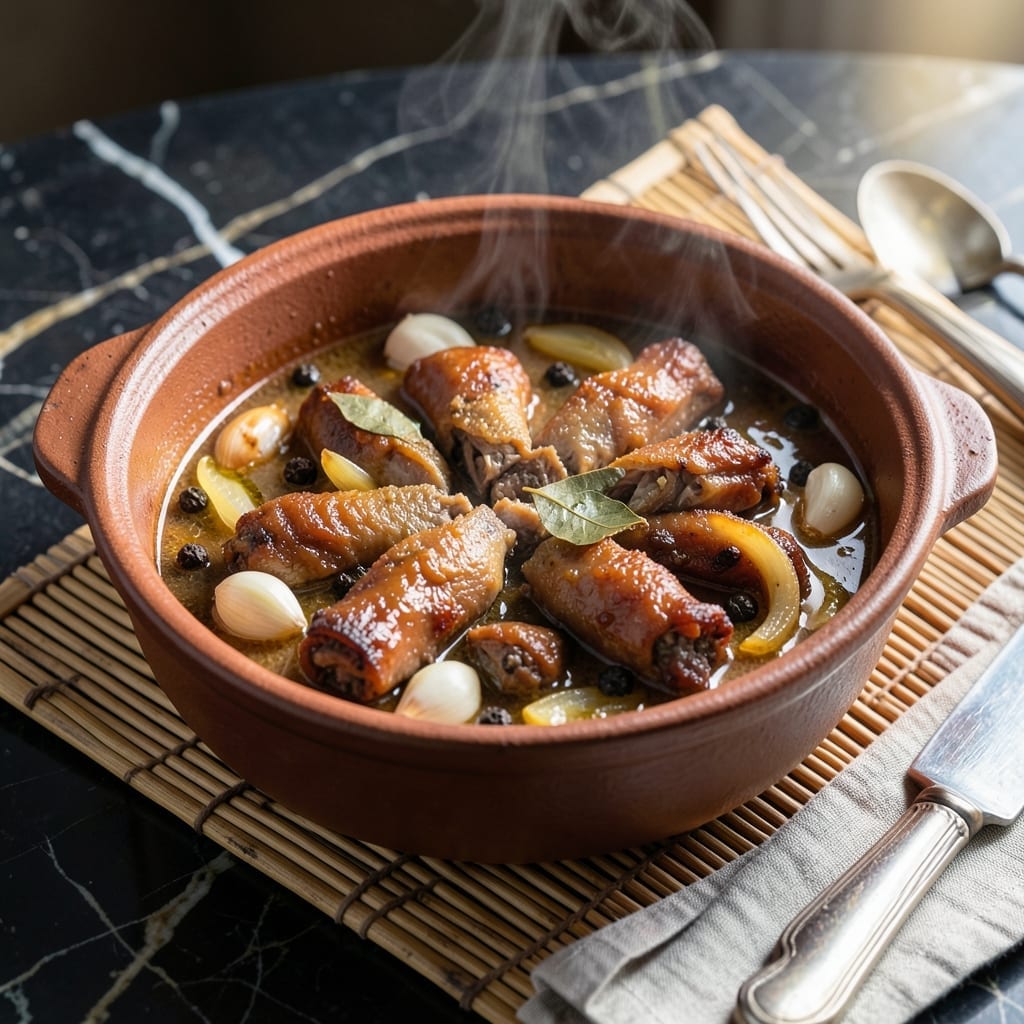
This Filipino classic transforms humble pig feet into a dish of fall-off-the-bone richness with a signature vinegar tang. The slow cooking process renders the meat incredibly tender while creating a deeply flavorful sauce.
Traditional techniques ensure authentic results. The pork is first parboiled to remove impurities, then simmered with garlic, bay leaves, and peppercorns. Vinegar added late in cooking preserves its sharpness.
What emerges is meat so tender it nearly dissolves, swimming in a sauce balanced between savory and tangy. The dish improves overnight as flavors meld.
Serve with steamed rice to soak up every drop of the flavorful sauce. This recipe stays true to its cultural roots while delivering restaurant-quality results.
Ingredients for Filipino Pig Feet
Pantry staples meet traditional cuts for a dish that delivers authentic Filipino flavor.
| Ingredient | Amount | Notes |
|---|---|---|
| Pig Feet 🐷 | 2 lb | Cleaned and split |
| White Vinegar 💧 | 1 ½ cups | Distilled or cane vinegar |
| Garlic Cloves 🧄 | 10 cloves | Peeled and smashed |
| Yellow Onion 🧅 | 1 whole | Quartered |
| Bay Leaves 🍃 | 3 pieces | Dried or fresh |
| Black Peppercorns 🌶️ | 1 tbsp | Lightly crushed |
| Kosher Salt 🧂 | 1 tbsp | Adjust to taste |
| Soy Sauce 🫒 | ½ cup | Low-sodium preferred |
| Water 💧 | 8 cups | For parboiling and simmering |
| Brown Sugar 🍚 | 2 tbsp | For balancing acidity |
| Green Onions 🧅 | 4 whole | Thinly sliced for garnish |
| Fresh Cilantro 🌿 | ¼ cup | Chopped for garnish |
[recipe_ingredient_scaler]
The pig feet are non-negotiable here—ask your butcher to split and clean them for you, or look for pre-prepped versions at Asian markets. Choose feet with good skin integrity for the best texture. The vinegar is critical for that signature tang; Filipino brands like Datu Puti are ideal, but any distilled white vinegar works in a pinch (avoid balsamic—it’s too sweet).
No pig feet? Honestly, there’s no perfect substitute—the collagen-rich skin and bone are key. For a similar texture in a different dish, pork hock or oxtail can work, but the flavor profile changes. If you must skip the vinegar, calamansi juice at half the amount offers a citrusy alternative, but the dish won’t taste traditional. Brown sugar can be swapped for coconut sugar for depth.
This improves overnight as the flavors meld—use 2 days as a minimum for optimal results. Store in the fridge for up to 5 days, or freeze for 3 months. Reheat gently to preserve the meat’s tenderness.
Why You’ll Love This Recipe
- One Pot Wonder: I just toss the pig feet, vinegar, garlic, and bay leaves in a pot and let it simmer—no complicated steps.
- Flavor Bomb: The garlic and vinegar give it that tangy, savory kick that’s purely addictive.
- Feeds a Crowd: I make a big batch for family gatherings, and everyone leaves satisfied.
- Budget Stretcher: Pig feet are cheap, and this dish turns them into something ridiculously good.
Step-by-Step Instructions for Filipino Pig Feet
This traditional method transforms humble pig feet into melt-in-your-mouth perfection with balanced sweet-tangy depth.
Step 1: Parboil and Clean the Pig Feet
Place the 2 lb Pig Feet in a large pot and cover completely with 8 cups Water. Bring to a rolling boil over high heat, then reduce to medium and parboil for 30-45 minutes until impurities rise to the surface as foam.
Skimming frequently with a fine-mesh strainer removes these impurities, which would otherwise cloud your final sauce. Drain the pig feet and rinse under cold water, scratching the skin with a knife to remove any remaining scum or hair. This cleaning step ensures the purest flavor in your finished dish.
Step 2: Simmer with Aromatics for Tenderness
Return the cleaned pig feet to the pot and add the 1.5 cups White Vinegar, 10 cloves Garlic Cloves, 1 whole Yellow Onion, 3 pieces Bay Leaves, 1 tbsp Black Peppercorns, 1 tbsp Kosher Salt, and 0.5 cup Soy Sauce. Cover with fresh water by 2 inches.
Bring to a boil, then reduce to low heat and simmer covered for 2.5-3 hours until the meat pulls away from the bone easily when tested with a fork. The vinegar tenderizes the collagen-rich tissue while the aromatics infuse deep, complex flavor into every bite.
Step 3: Sweeten and Reduce the Sauce
Once the pig feet are fork-tender, stir in the 2 tbsp Brown Sugar to balance the vinegar’s sharpness. Increase heat to medium-high and simmer uncovered for 20-25 minutes, stirring occasionally, until the sauce reduces by half and clings to the pig feet in a glossy, rich coating.
Watch for the sauce to transform from a thin liquid to a syrupy consistency that thickly coats the back of a spoon. This reduction concentrates all the layered flavors—garlicky, tangy, salty-sweet—into a luxurious glaze that defines this dish.
Step 4: Garnish and Serve
Transfer the pig feet to a serving platter, arranging them to showcase their glossy, caramelized exteriors. Sprinkle with the 4 whole Green Onions, thinly sliced, and the 0.25 cup Fresh Cilantro, chopped, for a bright, fresh contrast to the rich meat.
Serve immediately with plenty of the reduced sauce spooned over the top. The ideal serving temperature is just below boiling, when the sauce is at its most fluid and the flavors are most vibrant. Each piece should offer resistance that gives way to fall-off-the-bone tenderness with every bite.
Pro Tips For Making Filipino Pig Feet
- Boil Twice: Parboil the pig feet for 10 minutes first to remove impurities, then drain and boil again with vinegar and aromatics—I learned this the hard way when my first batch had a funky aftertaste.
- Crush the Garlic: Lightly crush the garlic cloves before adding them whole; it releases more flavor without burning, and I skip mincing because it turns bitter in long simmers.
- Skip the Salt Early: Hold off on salting until the last 30 minutes of cooking, since the pig feet reduce and concentrate in flavor as they soften.
- Use More Vinegar: Add 1 cup of white vinegar—not just a splash—to cut through the richness and tenderize the feet, but don’t worry, the sourness mellows out as it cooks.
Dietary Considerations for This Recipe
Gluten-Free Friendly
This dish is naturally gluten-free as written, provided you use tamari instead of regular soy sauce. I always keep a bottle of San-J Tamari in my pantry for recipes like this. The vinegar, garlic, and aromatics contain no gluten, making this a safe choice for anyone avoiding wheat. 💪
Low-Carb Adaptation
You can reduce the carbs by cutting the brown sugar in half or replacing it with 1 tbsp of erythritol. The vinegar and soy sauce will still provide plenty of flavor without the sugar spike. Honestly, I often skip the sugar entirely when I’m watching my carbs.
Dairy-Free by Default
There’s no dairy in this recipe at all, which makes it perfect for lactose-intolerant diners. The richness comes from the collagen in the pig feet, not from butter or cream. I love how the meat’s natural gelatin creates that luxurious mouthfeel without any dairy additions.
Allergen Awareness
The main allergen here would be soy in the soy sauce. For a soy-free version, use coconut aminos instead. It has a similar umami depth but comes from coconut sap. Also, check your vinegar—some brands process with corn, which may be an issue for corn allergies. ✨
Sodium Considerations
To reduce sodium, use low-sodium soy sauce and cut the added salt by half. The vinegar and aromatics will still provide plenty of flavor. I find that reducing the soy sauce to ¼ cup and adding 1 tsp of fish sauce gives great depth without excessive salt.
Pork Alternatives
While pig feet are traditional, you could use beef shank for a similar texture. The cooking time will be about the same, but the flavor profile will be different. I’d recommend adding 1 extra tbsp of vinegar to compensate for beef’s richer taste.
Nutrition Facts
Frequently Asked Questions
How do I clean pig feet before cooking?
Parboil for 30-45 minutes to remove impurities, then rinse under cold water. Scrub the skin with a knife to remove any remaining scum or hair.
Can I use a pressure cooker for faster results?
Yes! Cook on high pressure for 60-75 minutes after parboiling. This cuts the simmering time significantly while keeping the meat tender.
What if my sauce isn’t reducing?
Remove the lid and increase heat to medium-high. Stir occasionally for 20-25 minutes until it thickens to a syrupy consistency.
How long can I store leftovers?
Store in an airtight container in the fridge for up to 5 days or freeze for 3 months. Flavors deepen overnight!

Trained in classic French technique but raised on slow-cooked ribs and spicy rubs, she blends culinary skill with smoke and soul.
- Recipe for Boneless Pork Chops in Cast Iron Skillet: Sear and Baste to Juicy Perfection - October 3, 2026
- Recipe for Boneless Cross Rib Roast: Slow-Roasted Beef with Herb Crust - October 3, 2026
- Hamburgers in Sauce Recipe Crock Pot: Slow-Cooked Savory Delight - October 3, 2026