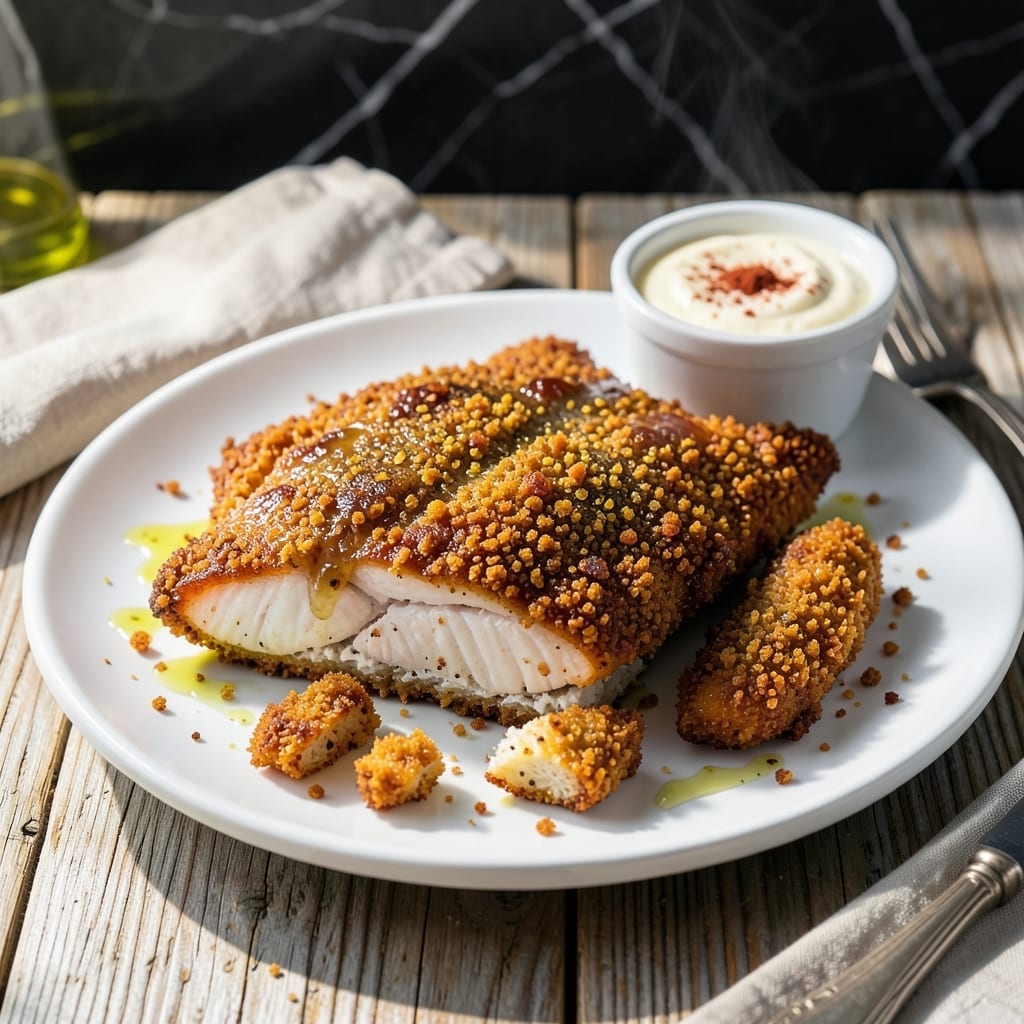
This breading delivers a crispy, golden coat that adheres perfectly to fish during pan frying. The key is a simple three-step process that creates a shatteringly crisp exterior while keeping the fish moist inside.
I’ve tested this method with cod, haddock, and tilapia—each time achieving restaurant-quality results with just a few pantry staples. The breading stays put, even when flipped, ensuring every bite is as crispy as the first.
Ingredients for Fish Breading Recipe for Pan Frying
Pantry staples create that restaurant-quality crispy fish coating everyone loves with minimal effort.
| Ingredient | Amount | Notes |
|---|---|---|
| All-Purpose Flour 🌾 | 1 cup | For initial dredging layer |
| Cornstarch 🌾 | ¼ cup | Creates extra crispiness |
| Large Eggs 🥚 | 2 whole | Beaten for binding agent |
| Buttermilk 🥛 | ½ cup | For egg wash mixture |
| Panko Breadcrumbs 🍞 | 2 cups | Japanese-style for maximum crunch |
| Old Bay Seasoning 🌶️ | 1 tbsp | Classic seafood seasoning blend |
| Kosher Salt 🧂 | 1 tsp | Diamond Crystal preferred |
| Freshly Ground Black Pepper 🌶️ | ½ tsp | Coarse grind for texture |
| Garlic Powder 🧄 | 1 tsp | Adds savory depth |
| Onion Powder 🧅 | 1 tsp | Complements seafood flavor |
| Paprika 🌶️ | 1 tsp | Sweet or smoked variety |
| White Fish Fillets 🐟 | 1 ½ lb | Cod, haddock, or tilapia |
| Neutral Cooking Oil 🫒 | 1 cup | For pan frying, high smoke point |
[recipe_ingredient_scaler]
The breadcrumbs are non-negotiable here. Panko from the Asian aisle delivers that shatteringly crisp texture regular breadcrumbs can’t match. I’ve tested with Kikkoman brand and store brands—both work, but the texture is what matters. For the fish, fresh fillets from a trusted seafood counter (ask for skinless) give the best results. The buttermilk can be substituted with regular milk plus a teaspoon of vinegar if needed.
No buttermilk? Regular milk with lemon juice or vinegar works in a pinch. Out of Old Bay? Combine paprika, salt, celery salt, and cayenne at a 2:1:1:0.5 ratio. Panko too coarse? Pulse in a food processor for finer texture. The cornstarch is key for that extra crunch—don’t skip it. For a gluten-free version, swap all-purpose flour for rice flour and use gluten-free panko.
The breading mix can be prepped 1 day ahead and stored in the fridge. Fried fish is best eaten immediately, but leftovers keep 2-3 days in the fridge (reheat in oven to maintain crispiness). The oil can be strained and reused 2-3 times if kept cool and filtered between uses.
Why You’ll Love This Recipe
- One Bowl Wonder: I just dump flour, cornstarch, eggs, buttermilk, and panko in one bowl and mix—no fancy steps, no extra dishes.
- Crispy Perfection: The panko and cornstarch combo gives that golden, crunchy crust that stays put while the inside stays tender.
- Feeds the Crew: I’ve used this for everything from weeknight cod to Friday fish fries with friends—always a hit.
- Leftover Magic: Honestly, the breading freezes beautifully, so I double the batch and save half for next time.
Step-by-Step Instructions for Fish Breading for Pan Frying
Achieve restaurant-quality crispiness with this foolproof breading technique for pan frying.
Step 1: Season and Prepare the Dredging Stations
In a shallow dish, combine the 1 cup all-purpose flour, 0.25 cup cornstarch, 1 tbsp Old Bay seasoning, 1 tsp kosher salt, 0.5 tsp freshly ground black pepper, 1 tsp garlic powder, 1 tsp onion powder, and 1 tsp paprika. Whisk until evenly distributed. This seasoned flour base creates the first layer of flavor and crispiness.
Set up two additional shallow dishes: one with the 2 whole large eggs beaten with the 0.5 cup buttermilk, and another with the 2 cups panko breadcrumbs. The buttermilk-egg mixture acts as a binding agent, while panko provides maximum crunch.
Step 2: Bread the White Fish Fillets
Pat the 1.5 lb white fish fillets dry with paper towels. This is critical—excess moisture prevents the breading from adhering properly. Season both sides lightly with a pinch of salt, though the dredge already contains seasoning.
Dredge each fillet in the seasoned flour mixture, pressing gently to ensure full coverage. Shake off any excess. Next, dip the floured fillet into the buttermilk-egg mixture, allowing any excess to drip off. Finally, press the fillet into the panko breadcrumbs, coating all sides completely. Place breaded fillets on a wire rack set over a baking sheet.
Step 3: Rest the Breaded Fillets
Let the breaded fillets rest for 10 minutes at room temperature. This allows the coating to set and adhere better to the fish during frying. Resting also helps prevent the breading from falling off when it hits the hot oil.
While the fish rests, heat 1 cup neutral cooking oil in a large, heavy-bottomed skillet over medium-high heat until it reaches 350-375°F. Use a deep-fry or candy thermometer for accuracy. The oil is ready when a small piece of panko sizzles immediately and floats to the surface.
Step 4: Pan Fry to Golden Perfection
Carefully place 2-3 breaded fillets in the hot oil, being careful not to overcrowd the pan. Fry for 3-4 minutes per side until the coating is golden brown and crispy. The fish should release easily from the pan when it’s ready to flip.
Use a slotted spatula to transfer the fried fillets to a paper towel-lined plate to drain excess oil. The internal temperature of the fish should reach 145°F when checked with an instant-read thermometer. If the oil temperature drops below 325°F between batches, allow it to reheat before adding more fish.
Step 5: Serve Immediately While Hot
Serve the crispy pan-fried fish immediately while the coating is at its peak texture. The contrast between the crunchy exterior and tender, flaky fish inside is best enjoyed fresh from the pan.
For even crispiness, keep the fried fillets warm in a 200°F oven on a wire rack while you finish cooking the remaining batches. This prevents the breading from becoming soggy from trapped steam.
Pro Tips For Making Fish Breading Recipe For Pan Frying
- Heat the Oil First: I learned this the hard way—crank your pan to medium-high and let the oil shimmer before adding the fish, or you’ll end up with soggy breading that absorbs oil like a sponge.
- Dry the Fish Well: Pat the fillets bone-dry with paper towels first; even a little moisture makes the breading slide right off when it hits the pan.
- Skip the Overcrowding: Resist the urge to fill the pan—give each piece at least an inch of space, or the temperature drops and your breading steams instead of crisps.
- Chill the Breading: After dredging, pop the fish in the fridge for 10 minutes while the oil heats; the cold breading holds together better and fries up extra crispy.
Flavor Customization for This Recipe
Spicy Kick Option
Add 1 tsp cayenne pepper to your seasoned flour mix for a subtle heat that builds with each bite. For more intensity, mix 1 tbsp hot sauce into the buttermilk-egg wash. I love using Crystal or Tabasco for that Louisiana-style punch. 🌶️
Herb-Infused Crust
Stir 2 tbsp chopped fresh parsley and 1 tbsp chopped dill into your panko breadcrumbs. The herbs add freshness that pairs beautifully with mild fish. For a Mediterranean twist, add 1 tsp dried oregano to the seasoned flour.
Cheesy Crunch Upgrade
Mix ½ cup grated Parmesan into your panko for an umami-rich, golden crust. The cheese browns beautifully and adds depth. For a bolder flavor, use Pecorino Romano instead. This works especially well with cod or haddock.
Extra Crispy Layer
Double-dip your fillets in the buttermilk-egg wash and panko for a thicker, crunchier coating. This technique creates a dramatic texture contrast. Just be sure to press the panko firmly to ensure it adheres during frying.
Citrus Zest Boost
Add 1 tbsp lemon zest to your seasoned flour for a bright, citrusy note. The acidity cuts through the richness of the fried fish. For a more complex flavor, combine lemon and orange zest. This variation shines with tilapia. 🍋
Cajun Blackened Style
Replace Old Bay with 1 tbsp Cajun seasoning in your flour mix. Use a blend with paprika, garlic, onion, and cayenne. The result is a dark, flavorful crust with a little heat. I recommend Tony Chachere’s for authentic taste.
Nutrition Facts
Frequently Asked Questions
Why does my breading fall off during frying?
This usually happens if the fish isn’t dry before breading or if it didn’t rest after coating. Always pat fillets completely dry and let breaded fish rest for 10 minutes before frying.
Can I use regular breadcrumbs instead of panko?
You can, but panko’s coarse texture creates superior crispiness. If using regular breadcrumbs, pulse them in a food processor first for better texture. The result won’t be as crunchy, however.
How do I keep the fish warm while frying batches?
Place finished fillets on a wire rack in a 200°F oven. This prevents steam from making the breading soggy while keeping everything crisp until serving.
What’s the best oil for pan frying?
Use a neutral oil with a high smoke point like vegetable, canola, or peanut oil. Avoid olive oil as it can burn at the required 350-375°F temperature.

Trained in classic French technique but raised on slow-cooked ribs and spicy rubs, she blends culinary skill with smoke and soul.
- Recipe for Oven Baked Halibut: Buttery White Fish with Zesty Lemon Topping - October 3, 2026
- Meatball Curry Recipe Kerala Style: Coconut-Spiced Gravy With Tender Bites - October 3, 2026
- Recipe for Curried Tofu: Aromatic Spices With Crispy Edges - October 3, 2026