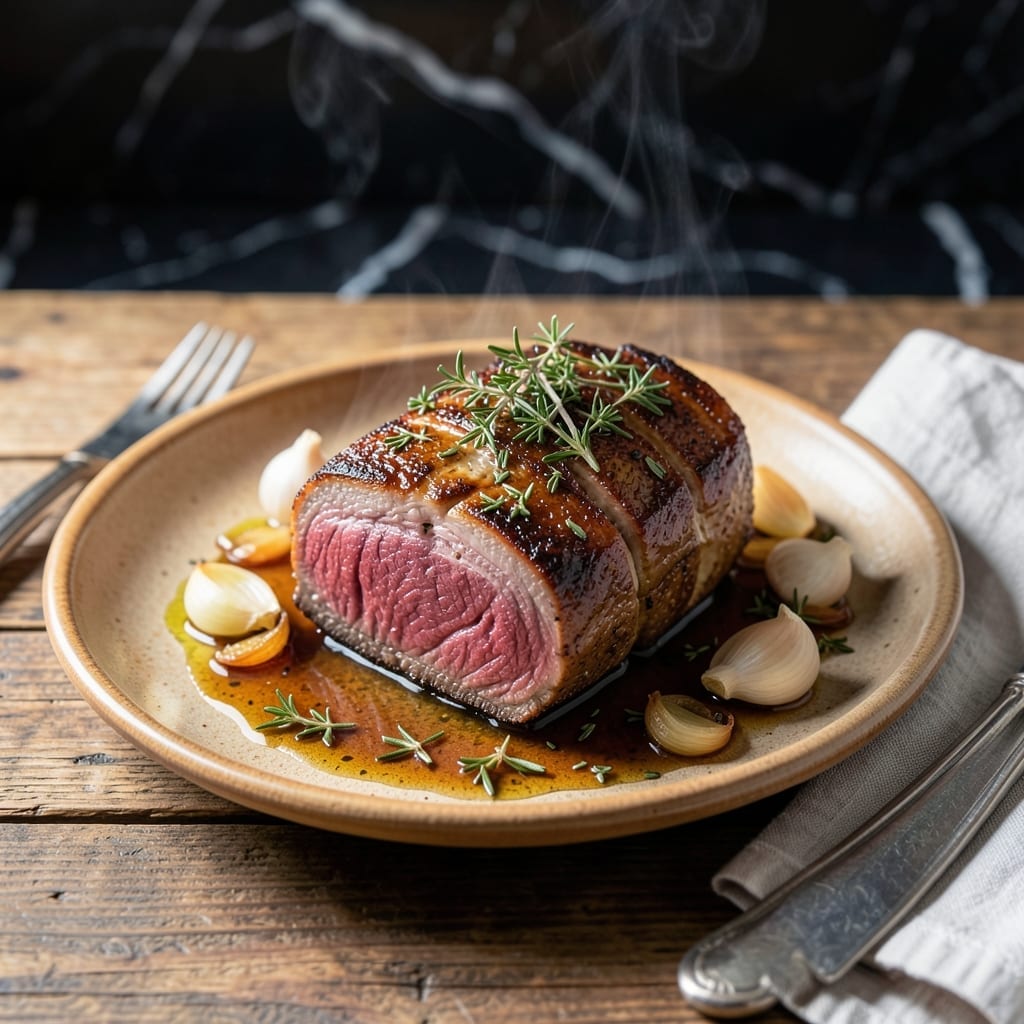
This recipe brings classic French technique to your home kitchen with Julia Child’s timeless approach. The thick-cut beef tenderloin, seared and finished with a fragrant herb crust, delivers restaurant-quality results every time.
Mastering this dish means understanding the balance between a perfectly pink center and rich, buttery sauce. It’s elegant yet approachable, proving that traditional methods never go out of style.
Ingredients for Chateaubriand Recipe Julia Child
Classic French elegance requires just a dozen premium ingredients for restaurant-quality results at home.
| Ingredient | Amount | Notes |
|---|---|---|
| Beef Tenderloin Center-Cut 🥩 | 2 lb | Thick-cut, evenly shaped |
| Unsalted Butter 🧈 | 6 tbsp | Divided for searing and sauce |
| Shallots 🧅 | 2 whole | Finely minced for sauce |
| Garlic Cloves 🧄 | 3 cloves | Minced for herb crust |
| Fresh Thyme Sprigs 🌿 | 4 pieces | Leaves stripped, stems discarded |
| Fresh Rosemary Sprigs 🌿 | 2 pieces | Leaves stripped, stems discarded |
| Kosher Salt 🧂 | 2 tsp | Diamond Crystal preferred |
| Freshly Ground Black Pepper 🌶️ | 1 tsp | Coarse grind preferred |
| Dry Red Wine 🍷 | ½ cup | Bold variety like Cabernet |
| Beef Stock 🥫 | ½ cup | Low-sodium preferred |
| Dijon Mustard 🟡 | 2 tbsp | Smooth, not whole grain |
| Heavy Cream 🥛 | ¼ cup | Full-fat for richness |
| Neutral Oil 🫒 | 2 tbsp | High smoke point for searing |
[recipe_ingredient_scaler]
The beef tenderloin is non-negotiable. Center-cut pieces from Whole Foods or a trusted butcher ensure even cooking and that signature thick shape. Look for USDA Prime or Choice with abundant marbling. The herb crust demands fresh thyme and rosemary—dried simply won’t deliver the aromatic punch. For the wine, a bold Cabernet Sauvignon from Trader Joe’s offers excellent value without compromising flavor.
No shallots? Yellow onion at half the quantity works in a pinch. Substitute brandy for red wine if preferred, though the acidity of wine balances the richness better. The beef stock can be homemade or high-quality store-bought like Better than Bouillon. If avoiding alcohol entirely, additional stock with a splash of red wine vinegar mimics the depth.
The seared beef can rest while you finish the sauce. Serve immediately for optimal temperature—medium-rare perfection holds for about 10 minutes. Leftovers, while rare, reheat gently in low oven to preserve tenderness. The herb crust loses vibrancy after 24 hours, so this dish is best enjoyed fresh.
Why You’ll Love This Recipe
- Minimal Effort: I just sear the tenderloin, baste it with butter, thyme, and shallots—no fancy techniques required.
- Buttery Heaven: The melted butter and garlic create this ridiculous crust that’s crispy outside, tender inside.
- Dinner Party Star: Honestly, it feels fancy enough for guests but I’ve made it for a quiet Sunday too.
- Leftovers Luxury: Cold slices make the best sandwiches the next day—if there are any left.
Step-by-Step Instructions for Chateaubriand
Classic French technique delivers tender, flavorful beef with an elegant herb crust.
Step 1: Prepare the Herb Crust and Season the Beef
Strip the leaves from the 4 pieces fresh thyme sprigs and 2 pieces fresh rosemary sprigs, discarding the stems. Finely chop the leaves with the 3 cloves garlic cloves until you have a fine, aromatic paste. This herb mixture will form the flavorful crust that defines this dish.
Pat the 2 lb beef tenderloin center-cut completely dry with paper towels. Season generously with the 2 tsp kosher salt and 1 tsp freshly ground black pepper, pressing the seasoning into all surfaces. Let the beef sit at room temperature for 30 minutes to allow the salt to penetrate and the meat to cook more evenly.
Step 2: Sear the Beef to Perfection
Heat the 2 tbsp neutral oil in a heavy oven-safe skillet over high heat until it begins to shimmer. Add the beef tenderloin and sear undisturbed for 3-4 minutes until a deep, golden-brown crust forms on the bottom. The oil should be hot enough to create an immediate sizzle when the beef touches the pan.
Flip the beef and sear the other side for another 3-4 minutes. Add 2 tbsp unsalted butter to the pan and baste the beef continuously with the melted butter for 1 minute. This basting step adds richness and enhances the crust formation. Rub the prepared herb mixture all over the seared beef, pressing it gently to adhere.
Step 3: Roast to Desired Doneness
Transfer the skillet to a preheated 400°F oven. Roast the beef for 15-20 minutes until the internal temperature reaches 125-130°F for medium-rare. The exact time will depend on the thickness of your cut, so use an instant-read thermometer for accuracy.
Remove the skillet from the oven and transfer the beef to a cutting board. Tent loosely with foil and let it rest for 10-15 minutes. This resting period allows the juices to redistribute throughout the meat, ensuring each slice is moist and flavorful. The internal temperature will continue to rise 5-10°F during this time.
Step 4: Prepare the Red Wine Sauce
Place the same skillet over medium heat and add the 2 whole shallots, finely minced. Cook for 2-3 minutes until softened and translucent. Add the 0.5 cup dry red wine and deglaze the pan, scraping up all the browned bits from the bottom with a wooden spoon.
Let the wine reduce by half, then add the 0.5 cup beef stock, 2 tbsp dijon mustard, and remaining 4 tbsp unsalted butter. Simmer for 3-4 minutes until the sauce thickens slightly. Stir in the 0.25 cup heavy cream and cook for an additional 1-2 minutes until the sauce coats the back of a spoon. Taste and adjust seasoning if needed.
Step 5: Slice and Serve
Slice the rested beef into ½-inch thick medallions. Arrange the slices on a platter and spoon the red wine sauce over the top. Serve immediately while hot, with any remaining sauce on the side for dipping.
The beef should be tender and juicy with a perfectly pink center, complemented by the rich, aromatic herb crust and the deep, savory flavors of the red wine sauce. This classic preparation highlights the natural elegance of the beef tenderloin.
Pro Tips For Making Chateaubriand Recipe Julia Child
- Sear Hard, Finish Soft: I learned this the hard way—blast the tenderloin in a ripping hot pan to get that deep crust, then move it to a 350°F oven to finish. A meat thermometer is non-negotiable here; pull it at 125°F for medium-rare.
- Dry the Beef Well: Pat that center-cut tenderloin bone-dry with paper towels before seasoning, or it’ll steam instead of sear. Sounds obvious, but I skipped this once and the crust never formed.
- Skip the Cold Butter: Take the unsalted butter out of the fridge 30 minutes early so it melts evenly into the shallots and thyme. Cold butter seizes up and makes a greasy mess—ask me how I know.
- Rest Before Carving: Tent the chateaubriand with foil and let it rest 10 minutes before slicing, or all those juices will end up on the cutting board. My grandmother swore by this, and she was right.
Regional Styles of chateaubriand recipe julia child
Classic French Style
In Paris, this dish is traditionally prepared with a thick center-cut tenderloin roasted whole, then sliced tableside. The French emphasize a simple herb crust of thyme, rosemary, and garlic, allowing the beef’s natural flavor to shine. I always use fresh herbs for the most vibrant aroma. 🌿
Julia Child’s Approach
Julia popularized this recipe in America, insisting on a high-heat sear followed by oven roasting. She often added Dijon mustard to the herb crust for extra depth. Her version always included a red wine reduction to complement the rich beef.
British Variation
Across the channel, the British often serve this with Yorkshire pudding and roasted root vegetables. They prefer a thinner cut of tenderloin, cooked quickly at high heat. The sauce tends to be lighter, sometimes just a simple beef jus.
American Adaptation
In the US, we’ve embraced Julia’s method but often add bacon-wrapped variations or blue cheese crumbles on top. The sauce might incorporate heavy cream for extra richness, as in your recipe. I find this makes it more approachable for home cooks.
German Influence
German versions sometimes include juniper berries in the herb crust, a nod to their love of bold flavors. They might serve it with red cabbage and potato dumplings. This adds a wonderful earthy complexity to the dish.
Modern Twist
Contemporary chefs often deconstruct the dish, serving the beef with herb-infused oils instead of a traditional crust. Some even add truffle shavings for an extra touch of luxury. While purists might frown, I think these updates keep the classic relevant. ✨
Nutrition Facts
Frequently Asked Questions
What’s the best way to achieve a perfect sear?
Use a heavy oven-safe skillet over high heat with 2 tbsp neutral oil. Sear undisturbed for 3-4 minutes per side until a deep golden-brown crust forms.
Can I use dried herbs instead of fresh?
Fresh herbs are strongly recommended for vibrant flavor. If necessary, use 1/3 the amount of dried, but the aroma won’t be as bright. Fresh thyme and rosemary are key to the classic taste.
How do I know when it’s done?
Use an instant-read thermometer. Remove at 125-130°F for medium-rare. The temperature will rise 5-10°F while resting, ensuring juicy, tender slices.
What if my sauce is too thin?
Simmer longer to reduce. If needed, mix 1 tsp cornstarch with cold water and stir into the sauce. Cook for 1-2 minutes until thickened.

Trained in classic French technique but raised on slow-cooked ribs and spicy rubs, she blends culinary skill with smoke and soul.
- Recipe for Boneless Pork Chops in Cast Iron Skillet: Sear and Baste to Juicy Perfection - October 3, 2026
- Recipe for Boneless Cross Rib Roast: Slow-Roasted Beef with Herb Crust - October 3, 2026
- Hamburgers in Sauce Recipe Crock Pot: Slow-Cooked Savory Delight - October 3, 2026