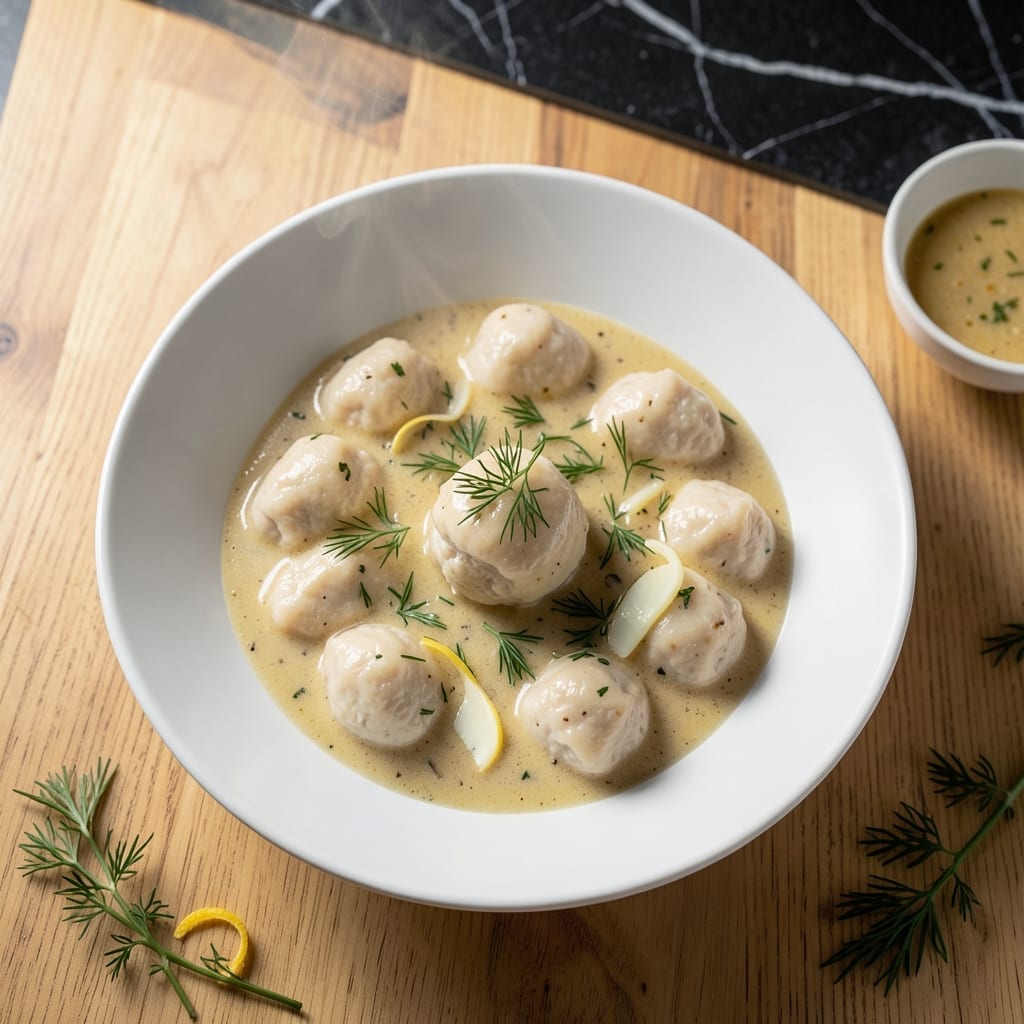
These delicate Norwegian fish dumplings capture a taste of Scandinavia with their velvety texture and subtle seasoning. I developed this version after studying my grandmother’s vague notes about “light hands” and “just enough” flour.
The key lies in gently folding the fish mixture to maintain airiness, creating dumplings that are tender yet hold their shape. Simmering in salted water ensures they cook evenly without falling apart.
What emerges are light, pillowy fish balls that soak up broth or melt in your mouth when served with butter and potatoes. This dish brings Nordic comfort to any home kitchen.
The process requires patience but rewards with a dish that feels both special and homey.
Ingredients for Fiskeboller
Light, pillowy dumplings start with fresh fish, a touch of flour, and gentle hands.
| Ingredient | Amount | Notes |
|---|---|---|
| White Fish Fillets 🐟 | 1 ½ lb | Cod or pollock, skinless, boneless |
| All-Purpose Flour 🌾 | ½ cup | Sifted for lightness |
| Whole Milk 🥛 | ½ cup | Cold for better texture |
| Large Eggs 🥚 | 2 whole | Room temperature, beaten |
| Unsalted Butter 🧈 | 4 tbsp | Melted and cooled |
| Onion 🧅 | ½ whole | Finely grated for subtle flavor |
| Salt 🧂 | 1 ½ tsp | Divided for seasoning |
| White Pepper 🌶️ | ½ tsp | Ground, for mild heat |
| Ground Nutmeg 🌿 | ¼ tsp | Freshly grated if possible |
| Fresh Dill 🌿 | 2 tbsp | Chopped, for brightness |
| Water 💧 | 8 cups | For simmering dumplings |
| Potatoes 🥔 | 1 ½ lb | Waxy variety, peeled and cubed |
[recipe_ingredient_scaler]
The fish makes all the difference here. Fresh cod or pollock from the seafood counter is ideal—ask them to skin and debone it for you. Whole Foods or a local fishmonger usually has the best selection. If you’re using frozen, thaw it completely and pat it dry (the good stuff, not the pre-breaded kind). The milk and butter add richness, so don’t skip the full-fat versions.
No cod? Haddock or halibut work just as well. Out of fresh dill? Dried dill at half the amount gets you close. The nutmeg might seem unusual but it’s classic in Scandinavian cooking—one-quarter teaspoon is enough. If you don’t have white pepper, black pepper works in a pinch (just use a little less). For extra tenderness, some cooks add a spoonful of sour cream to the mix.
These dumplings are best served fresh but will keep in the fridge for 1-2 days. Reheat gently in warm water or broth. The potatoes can be prepped ahead—just keep them in cold water until ready to cook. Leftovers? Freeze the dumplings on a tray first, then transfer to a bag for up to 1 month.
Why You’ll Love This Recipe
- One-Bowl Wonder: I mix everything right in the same bowl—fish, flour, milk, eggs—no fancy prep or multiple dishes.
- Buttery Richness: The melted butter in the dough gives these fish balls a velvety texture that’s pure comfort.
- Freezer Friendly: I double the batch and freeze half for lazy dinners. They reheat like a dream.
- Budget Stretcher: Honestly, a pound of white fish makes about 20 balls, and they’re filling enough for a family meal.
Step-by-Step Instructions for Norwegian-Style Fish Dumplings
Here’s how to create tender, melt-in-your-mouth dumplings with a delicate texture.
Step 1: Prepare the Fish Base
Place the 1.5 lb White Fish Fillets in a food processor and pulse until finely ground. I like to scrape down the sides halfway through to ensure an even texture. This step creates the foundation for your dumplings’ velvety consistency.
Next, finely grate the 0.5 whole Onion and add it to the fish. The grated onion blends seamlessly into the mixture, giving subtle sweetness without visible chunks. Avoid chopping—grating is key for the right texture here.
Step 2: Mix the Dumpling Batter
In a large bowl, combine the ground fish and onion with the 0.5 cup All-Purpose Flour, 0.5 cup Whole Milk, 2 whole Large Eggs, 4 tbsp Unsalted Butter, 1.5 tsp Salt, 0.5 tsp White Pepper, and 0.25 tsp Ground Nutmeg. Stir gently just until everything is incorporated—overmixing can make the dumplings dense.
Fold in the 2 tbsp Fresh Dill last. The dill adds a bright, fresh note that balances the richness of the fish. The batter should be smooth but slightly sticky.
Step 3: Form and Simmer the Dumplings
Fill a large pot with the 8 cups Water and bring to a gentle simmer over medium heat. While waiting, shape the batter into small, oval dumplings using wet hands—this prevents sticking. Aim for sizes slightly smaller than a golf ball for even cooking.
Carefully drop the dumplings into the simmering water. They’ll sink at first, then float to the surface when ready. Cook for 10-12 minutes until they’re firm and no longer translucent in the center. Avoid boiling vigorously, as this can break them apart.
Step 4: Prepare the Potatoes and Serve
While the dumplings simmer, peel and cube the 1.5 lb Potatoes. Boil them in a separate pot of salted water for 10-12 minutes until fork-tender. Drain and keep warm.
Serve the dumplings hot with the potatoes, spooning a little of the cooking liquid over the top if desired. The dumplings should be light and airy, with a delicate flavor that pairs perfectly with the hearty potatoes.
Pro Tips For Making Fiskeboller
- Chill the Fish: Pop your white fish fillets in the fridge for 20-30 minutes before processing—makes a real difference in getting a smooth, firm texture for your fiskeboller.
- Use Ice-Cold Milk: I learned this the hard way: warm milk makes the mixture gummy. Keep your whole milk ice-cold for light, tender fish balls.
- Skip Overmixing: After burning three batches, I finally figured out that overworking the fish mixture turns it rubbery. Mix just until combined.
- Poach in Butter: Sounds weird, but it works: use about 2 tablespoons of unsalted butter in your poaching liquid for extra richness in every bite.
Pro Cooking Tips for This Recipe
Fish Selection Matters
The foundation of light, pillowy dumplings starts with ultra-fresh cod or pollock. I always ask my fishmonger for skinless, boneless fillets and have them grind it while I wait—this gives the most delicate texture. If using frozen, thaw completely and pat very dry to remove excess moisture. 💡
Gentle Mixing Technique
Overworking the batter develops gluten, which makes dumplings tough. I use a wide spatula and fold just until combined—about 8-10 strokes. The mixture should look slightly shaggy but hold together when shaped. This mimics my grandmother’s “light hands” approach.
Simmering Perfection
Water temperature is crucial. Maintain a gentle simmer (small bubbles, not rolling boil) at 180-190°F. If the water boils too hard, your dumplings will break apart. I use a candy thermometer clipped to the pot for precision.
Shaping Pro Tips
Wet your hands with cold water before shaping each dumpling—this prevents sticking and helps create smooth surfaces. For uniform cooking, aim for 1.5-inch ovals. Place shaped dumplings on a plate until ready to cook, then slide them in gently with a spoon. 🌟
Doneness Test
Dumplings are done when they float and reach an internal temperature of 145°F. I cut one open to check—the center should be opaque and slightly springy. If unsure, let them simmer an extra 2-3 minutes.
Resting Before Serving
Once cooked, let dumplings rest in warm water for 5 minutes before serving. This allows them to firm up slightly for better texture. Serve immediately with potatoes—they lose their delicate quality if left sitting too long.
Nutrition Facts
Frequently Asked Questions
Can I use a different type of fish?
Yes, haddock or halibut work just as well as cod or pollock. Avoid oily fish like salmon, as they can make the dumplings too rich. Stick to 1.5 lb of any white fish for best results.
Why do my dumplings fall apart in the water?
This usually happens if the water is boiling too hard or the batter is too wet. Maintain a gentle simmer and ensure your fish is very dry before mixing. Wet hands also help shape them firmly.
Can I make these ahead of time?
You can shape and refrigerate the dumplings for up to 2 hours before cooking. For longer storage, freeze them on a tray first, then transfer to a bag for up to 1 month.
What’s the best way to reheat leftovers?
Gently warm them in a pot of simmering water or broth for 3-5 minutes. Avoid microwaving, as it can make them rubbery. Serve with fresh potatoes for best texture.

Trained in classic French technique but raised on slow-cooked ribs and spicy rubs, she blends culinary skill with smoke and soul.
- Recipe for Boneless Pork Chops in Cast Iron Skillet: Sear and Baste to Juicy Perfection - October 3, 2026
- Recipe for Boneless Cross Rib Roast: Slow-Roasted Beef with Herb Crust - October 3, 2026
- Hamburgers in Sauce Recipe Crock Pot: Slow-Cooked Savory Delight - October 3, 2026