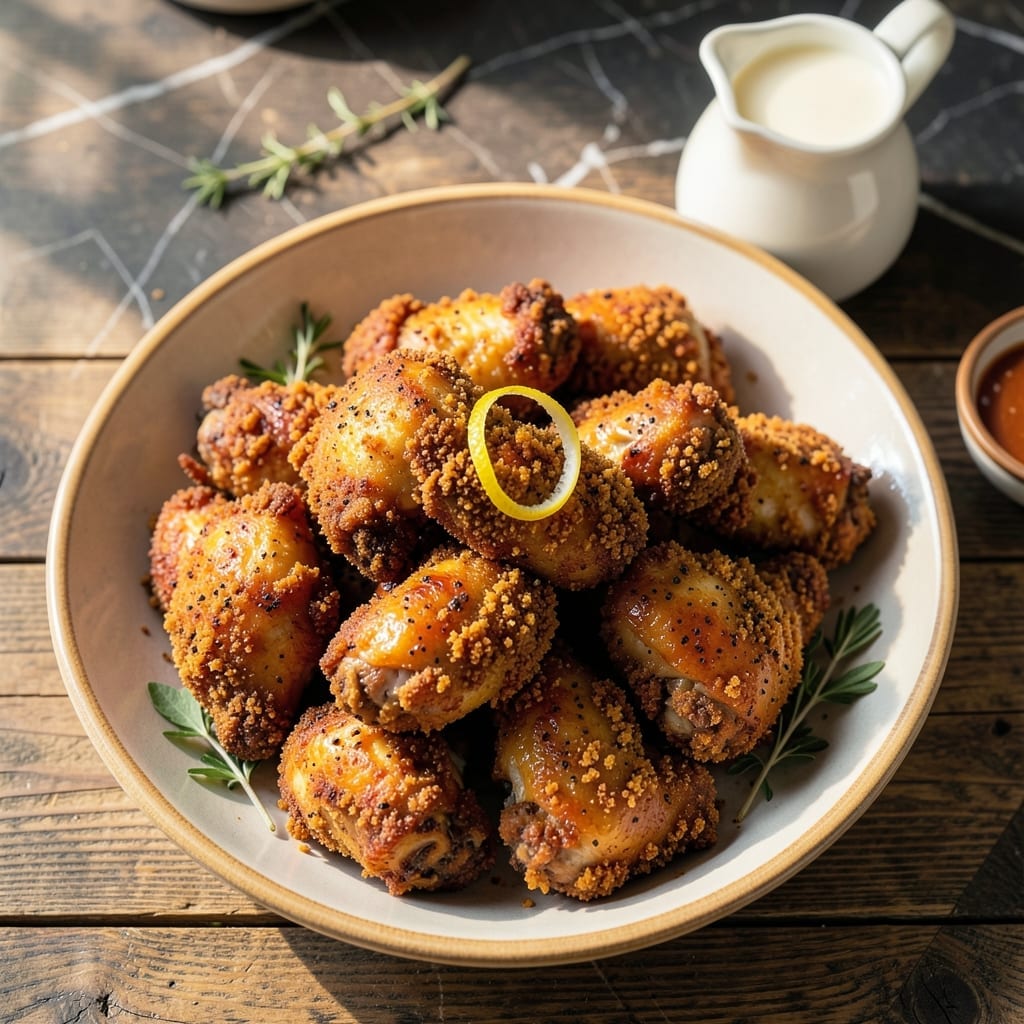
I developed this method after years of testing in my tiny Boston kitchen, seeking the crispy result that eluded most home cooks. The secret lies in potato starch, which creates a shatteringly light crust that stays crisp long after frying.
Unlike traditional flour coatings, potato starch absorbs less oil, delivering a golden, crackling exterior while keeping the meat incredibly juicy. The double-dredge technique ensures every piece gets maximum crunch with minimal effort.
You’ll achieve professional-quality fried chicken with a crust so delicate it breaks at the slightest touch. The interior remains tender and succulent, never dry or stringy.
This approach works with any cut of chicken and maintains its crispy texture even when served later. The results speak for themselves.
Ingredients for Fried Chicken Recipe with Potato Starch
Potato starch is the star here—just a few pantry staples create that legendary crunch.
| Ingredient | Amount | Notes |
|---|---|---|
| Chicken Thighs 🍗 | 2 lb | Boneless, skinless, cut into strips |
| Chicken Breasts 🍗 | 1 lb | Boneless, skinless, cut into strips |
| Potato Starch 🥔 | 1 ½ cups | Primary coating for ultra-crispy crust |
| All-Purpose Flour 🌾 | 1 cup | For initial dredge layer |
| Large Eggs 🥚 | 2 whole | Beaten for binding dredge |
| Buttermilk 🥛 | 1 ½ cups | For marinade and wet dredge |
| Kosher Salt 🧂 | 2 tbsp | Diamond Crystal preferred for even seasoning |
| Black Pepper 🌶️ | 1 tbsp | Freshly ground for best flavor |
| Garlic Powder 🧄 | 1 tbsp | Enhances savory depth in crust |
| Onion Powder 🧅 | 1 tbsp | Balances seasoning blend |
| Paprika 🌶️ | 1 tbsp | Sweet or smoked for color and warmth |
| Cayenne Pepper 🔥 | ½ tsp | Optional for subtle heat |
| Vegetable Oil 🫒 | 6 cups | High smoke point for deep frying |
| Baking Powder 🧂 | 1 tsp | For extra crispiness in coating |
[recipe_ingredient_scaler]
The potato starch is non-negotiable for that shatteringly crisp crust. Bob’s Red Mill is my go-to (easy to find at Whole Foods or Target), but any pure potato starch works—just avoid potato flour, which behaves totally differently. For the chicken, thighs stay juicier than breasts, but use what you like. Buttermilk? Full-fat if you can get it (trust me on the full-fat version).
No buttermilk? Whole milk plus a tablespoon of lemon juice works in a pinch. Swap thighs for drumsticks or tenders—just adjust cooking time. The seasoning blend is flexible: add a teaspoon of celery salt if you love that classic fried chicken flavor. For the oil, peanut oil has the highest smoke point, but vegetable or canola work too. Skip the cayenne if you’re sensitive to heat.
Fry in batches so the oil stays hot—crowding drops the temp and makes everything greasy. Leftovers keep in the fridge for 3-4 days but reheat in the oven to revive that crispiness. Honestly, it’s best eaten fresh (worth the extra minute to fry right before serving).
Why You’ll Love This Recipe
- 30-Minute Meal: I can coat and fry this in less time than it takes to decide on takeout. Honestly, the potato starch crisp is worth every second.
- Crispy Perfection: That first bite—shatteringly crisp outside, juicy chicken inside—makes me forget all other fried chicken recipes.
- Feeds Everyone: I’ve served this at Sunday dinner, picnics, and even packed cold in lunchboxes. My daughter picks off the crust, but still asks for more.
- Budget Stretcher: Thighs and breasts both work, so I use whichever’s on sale. Leftovers? Still amazing the next day.
Step-by-Step Instructions for Fried Chicken With Potato Starch
Here’s the method. Straightforward, tested, works every time.
Step 1: Marinate the Chicken in Seasoned Buttermilk
In a large bowl, whisk together the 1.5 cups buttermilk, 2 tbsp kosher salt, 1 tbsp black pepper, 1 tbsp garlic powder, 1 tbsp onion powder, 1 tbsp paprika, and 0.5 tsp cayenne pepper until fully combined. The buttermilk’s acidity tenderizes the meat while the spices penetrate deeply.
Add the 2 lb chicken thighs and 1 lb chicken breasts (both cut into strips) to the marinade, ensuring each piece is fully coated. Cover and refrigerate for at least 4 hours, but overnight is ideal. The longer it marinates, the more flavorful and tender your creation will be.
Step 2: Prepare the Double-Fry Coating
In a shallow dish, combine the 1 cup all-purpose flour and 1 tsp baking powder. The baking powder creates tiny air pockets in the coating, contributing to extra crispiness. In a second shallow dish, add the 1.5 cups potato starch—this is your secret weapon for that shatteringly crisp crust.
Beat the 2 whole large eggs in a third shallow dish. This three-step dredging station (flour, egg, potato starch) ensures maximum adhesion and the crispiest possible exterior. I’ve found the potato starch creates a lighter, more delicate crunch than flour alone.
Step 3: Coat Each Piece Thoroughly
Remove the chicken from the marinade, letting excess buttermilk drip off (don’t rinse). Dredge each piece first in the flour mixture, pressing gently to adhere. Then dip in the beaten eggs, allowing any excess to drip back into the dish. Finally, coat in the potato starch, pressing firmly to create an even, thick layer.
Place the coated pieces on a wire rack set over a baking sheet. This setup prevents the coating from getting soggy by allowing air circulation on all sides. Let the chicken rest for 10-15 minutes—this helps the coating set and adhere better during frying.
Step 4: Deep-Fry to Golden Perfection
Heat the 6 cups vegetable oil in a deep, heavy-bottomed pot or Dutch oven to 350°F. Use a deep-fry or candy thermometer to monitor the temperature, as it’s critical for even cooking and crispiness. The oil should be deep enough to fully submerge the chicken pieces without crowding the pot.
Fry the chicken in batches to avoid overcrowding, which lowers the oil temperature and leads to greasy results. Cook for 6-8 minutes per batch, turning occasionally, until the coating is deep golden brown and the internal temperature reaches 165°F. The potato starch will create an incredibly crisp, delicate crust that stays crunchy long after frying.
Transfer the fried chicken to a wire rack or paper towel-lined plate to drain excess oil. The coating should be uniformly crisp and golden, with a satisfying crunch when bitten into.
Pro Tips For Making Fried Chicken Recipe With Potato Starch
- Double Dredge: Dip the chicken in egg, then flour, then egg again, and finally potato starch for an extra-crispy crust that clings better.
- Hot Oil Only: I learned this the hard way—start frying only when the oil reaches 350°F, or the coating absorbs grease instead of crisping.
- Dry the Chicken: Pat the thighs and breasts completely dry with paper towels before dredging, or the starch won’t stick properly.
- Rest Before Frying: Let the dredged pieces sit for 10 minutes before hitting the oil—this keeps the coating from sliding off during cooking.
Best Sauces and Condiments for This Recipe
Classic Comfort Pairings
Nothing beats creamy coleslaw with this chicken—the cool crunch contrasts the hot crispiness perfectly. I toss 4 cups shredded cabbage with ½ cup mayo and 1 tbsp apple cider vinegar. Serve it on a soft bun for a killer sandwich. 🥗
Sweet and Tangy Options
Honey mustard is my go-to dip, blending ¼ cup Dijon with 3 tbsp honey. For a spicier kick, sriracha mayo (mix ½ cup mayo with 1-2 tbsp sriracha) adds heat without overpowering the chicken’s flavor.
Southern Style Favorites
Hot honey drizzled over the top brings sweet heat that complements the potato starch crust. For a Boston twist, serve with pickle spears and ranch dressing—a childhood favorite from my Irish-Italian family gatherings. The acidity cuts through the richness.
Spicy Dipping Sauces
Try gochujang sauce for an umami punch: 2 tbsp gochujang with 1 tbsp each honey and rice vinegar. Buffalo sauce works too—just thin ½ cup Frank’s RedHot with 2 tbsp melted butter. These bold flavors stand up to the crispy exterior. 🔥
Fresh and Light Accompaniments
Balance the richness with quick-pickled cucumbers (slice 1 cucumber, soak in ½ cup vinegar with 1 tsp sugar for 30 minutes). Or serve with sliced jalapeños for those who love a fresh, spicy bite.
Nutrition Facts
Frequently Asked Questions
Why use potato starch instead of flour?
Potato starch creates a lighter, crispier crust that stays shatteringly crunchy longer than flour. It absorbs less oil, making the coating less greasy while keeping the chicken juicy inside.
Can I bake this instead of frying?
For oven-baking, use 400°F and place on a wire rack over a baking sheet. Spray with oil and bake for 20-25 minutes, flipping halfway. The crust won’t be as crispy but still delicious.
What if my coating falls off during frying?
This usually means the chicken wasn’t dry before dredging or the oil wasn’t hot enough. Pat pieces dry after marinating and ensure oil reaches 350°F before frying. Let coated pieces rest 10-15 minutes before frying too.
How do I keep it crispy for leftovers?
Reheat in a 400°F oven on a wire rack for 10-12 minutes. Microwaving makes it soggy. Store leftovers in the fridge for up to 3-4 days.

Trained in classic French technique but raised on slow-cooked ribs and spicy rubs, she blends culinary skill with smoke and soul.
- Recipe for Boneless Pork Chops in Cast Iron Skillet: Sear and Baste to Juicy Perfection - October 3, 2026
- Recipe for Boneless Cross Rib Roast: Slow-Roasted Beef with Herb Crust - October 3, 2026
- Hamburgers in Sauce Recipe Crock Pot: Slow-Cooked Savory Delight - October 3, 2026