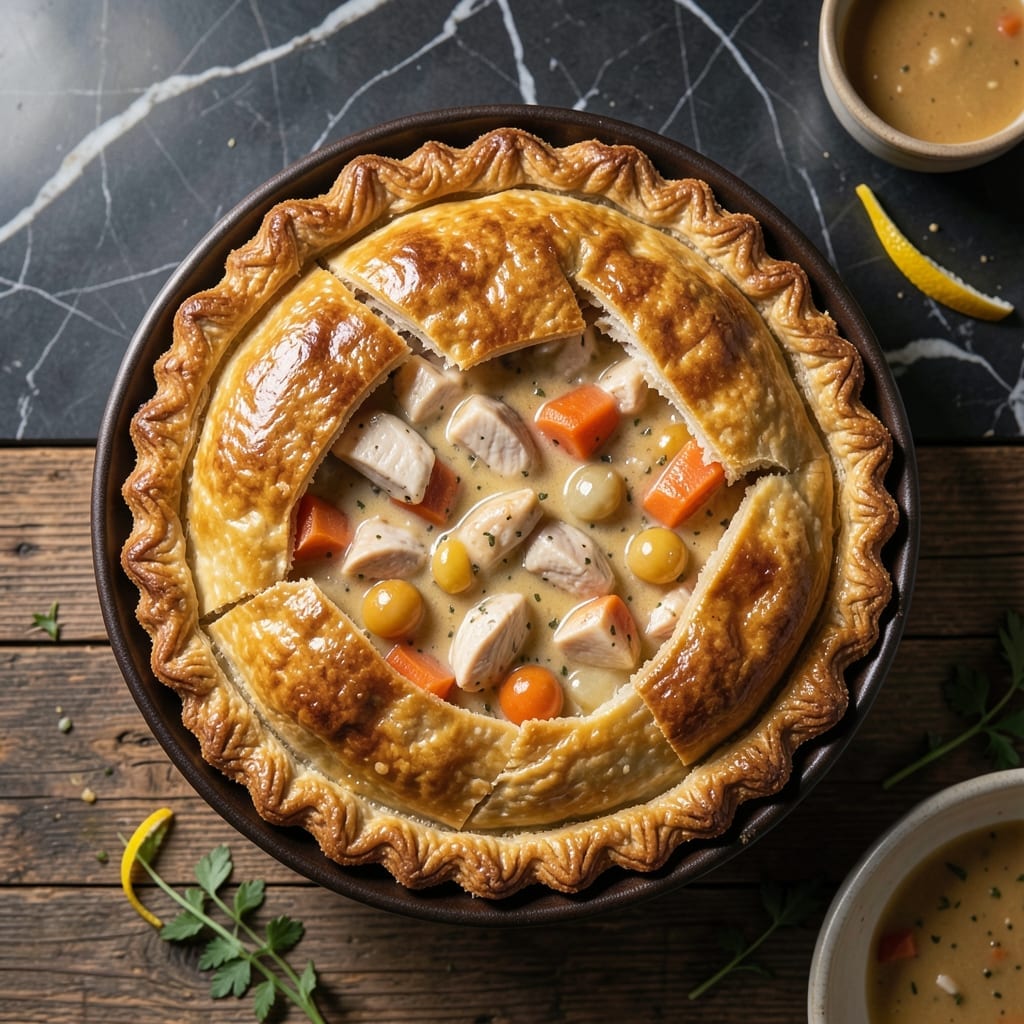
There’s an art to creating the perfect flaky crust that elevates chicken pot pie from good to extraordinary. This recipe delivers buttery layers that shatter with every bite, transforming a simple comfort dish into something truly special.
The secret lies in cold ingredients and minimal handling. Using ice water and chilled butter prevents the fat from melting prematurely, which creates those coveted flaky layers. The technique is simple but precise, ensuring consistent results every time.
What you’ll achieve is a golden crust that’s crisp on the outside and tender on the inside, perfectly complementing the rich, creamy chicken filling. The contrast between the flaky pastry and hearty filling makes each bite irresistible.
This crust works beautifully for both top and bottom layers, or as a lattice for an elegant presentation. Here’s how to master this essential technique.
Ingredients for Flaky Pie Crust Recipe for Chicken Pot Pie
Cold butter and minimal handling create that extraordinary flaky texture for this perfect crust.
| Ingredient | Amount | Notes |
|---|---|---|
| All-Purpose Flour 🌾 | 2 ½ cups | Spoon and level measurement |
| Unsalted Butter 🧈 | 1 cup | Chilled and cubed, 2 sticks |
| Ice Water 💧 | ½ cup | Plus 1 tbsp as needed |
| Kosher Salt 🧂 | 1 tsp | Diamond Crystal preferred |
| Granulated Sugar 🍚 | 1 tsp | Optional, for color |
| White Vinegar 💧 | 1 tbsp | Or lemon juice alternative |
| Boneless Skinless Chicken Breast 🍗 | 1 ½ lb | Cubed into bite-sized pieces |
| Carrots 🥕 | 2 whole | Peeled and diced |
| Celery Stalks 🥬 | 2 whole | Diced, leaves reserved |
| Yellow Onion 🧅 | 1 whole | Finely diced |
| Garlic Cloves 🧄 | 3 cloves | Minced finely |
| Fresh Thyme 🌿 | 1 tbsp | Chopped, or 1 tsp dried |
| Chicken Broth 🍲 | 1 ½ cups | Low-sodium preferred |
| Heavy Cream 🥛 | ½ cup | Full-fat for richness |
| Frozen Peas 🌱 | 1 cup | No need to thaw |
[recipe_ingredient_scaler]
The butter is non-negotiable here. European-style unsalted butter (like Plugrá or Kerrygold) has higher fat content, which translates to better layers. The flour should be all-purpose—pastry flour works but lacks structure. King Arthur is my go-to brand. Keep everything ice cold, including your mixing bowl. Warm ingredients mean tough crust, not flaky.
Out of unsalted butter? Salted works at a pinch—just omit the added kosher salt. No ice water? Vodka at the same amount creates an even flakier crust (alcohol evaporates, leaving extra flakiness). The vinegar tenderizes the gluten—apple cider vinegar adds nice depth. For the filling, rotisserie chicken saves time, or swap in turkey for a variation.
The dough can rest overnight in the fridge (actually improves the texture). Baked crust keeps 2-3 days at room temperature in an airtight container. The filling is best made fresh but holds 3-4 days refrigerated. Freeze unbaked dough disks for up to 3 months.
Why You’ll Love This Recipe
- I’ll be real: I always make a double batch and freeze one—it’s a lifesaver for last-minute dinners.
- Five Ingredient Magic: I love that this crust comes together with just flour, butter, ice water, salt, and a touch of sugar—no fancy pantry items needed.
- Buttery Layers: That cold butter creates the most incredible flaky layers that shatter with every bite, making the chicken pot pie filling taste even better.
- Freezer Friendly: I’ll be real: I always make a double batch and freeze one—it’s a lifesaver for last-minute dinners.
Step-by-Step Instructions for Flaky Pie Crust for Chicken Pot Pie
This method delivers layers of butter and flour that create the perfect shatter with every bite.
Step 1: Chill and Prepare the Ingredients
Begin by cubing the 1 cup unsalted butter into ½-inch pieces and returning it to the refrigerator to stay cold. In a separate bowl, combine the 0.5 cup ice water, 1 tbsp white vinegar, and 1 tsp granulated sugar. Stir until the sugar dissolves completely.
Chilling the butter is non-negotiable—it must remain cold throughout the process to create distinct layers. The vinegar tenderizes the dough slightly, while the sugar promotes browning for that golden finish.
Step 2: Cut the Butter into the Flour
In a large bowl, whisk together the 2.5 cups all-purpose flour and 1 tsp kosher salt. Add the chilled, cubed unsalted butter and toss lightly to coat each piece in flour. Using a pastry cutter or your fingers, work the butter into the flour until the mixture resembles coarse crumbs with pea-sized butter pieces visible.
This step is critical for flakiness—you want visible butter chunks throughout the dough. If the butter melts or becomes greasy, the layers won’t form properly. Work quickly and handle the mixture as little as possible to keep everything cold.
Step 3: Incorporate the Liquid and Form the Dough
Create a well in the center of the flour-butter mixture and pour in the ice water mixture, 1 tbsp at a time. Use a fork to gently mix until the dough just begins to come together. You may not need all the liquid—stop when the dough can be pressed into a shaggy mass.
Turn the dough out onto a lightly floured surface and divide it into two equal portions. Gently shape each into a disk, wrap them in plastic wrap, and refrigerate for at least 1 hour (or up to 2 days). This resting period allows the gluten to relax and the butter to firm up, ensuring a tender, flaky crust.
Step 4: Roll and Blind-Bake the Bottom Crust
On a floured surface, roll one dough disk into a 12-inch circle. Transfer it to a 9-inch pie dish, pressing it gently into the bottom and up the sides. Trim the edges to leave a ½-inch overhang, then crimp decoratively. Freeze the crust for 15 minutes to prevent shrinking.
Preheat the oven to 375°F. Line the frozen crust with parchment paper and fill it with pie weights or dried beans. Blind-bake for 15 minutes, then remove the weights and bake for an additional 5-7 minutes until the crust is lightly golden and set. This ensures a crisp, sturdy base for the filling.
Pro Tips For Making Flaky Pie Crust Recipe For Chicken Pot Pie
- Chill Your Butter: Cut the butter into small cubes and refrigerate for 10 minutes before mixing—this keeps it cold so it doesn’t melt into the flour, which is non-negotiable for flaky layers.
- Use Ice-Cold Water: I learned this the hard way: even slightly warm water toughens the crust. Fill a glass with ice cubes and water, then measure from that for the flakiest texture.
- Don’t Overwork Dough: Mix just until the dough comes together, even if it looks shaggy. After burning three batches to crispy frustration, I finally figured out overworking = tough crust.
- Rest Before Rolling: Give the dough a solid 30 minutes in the fridge before rolling—this relaxes the gluten and makes it easier to handle, plus it prevents shrinking when baked.
Common Mistakes When Making Perfect Results
Overworking the Dough
The most common mistake is handling the dough too much, which develops gluten and makes it tough. Stop mixing as soon as it comes together—visible butter chunks are good! The shaggy appearance means you’re on the right track.
Warm Butter Disaster
If your butter softens before baking, those flaky layers won’t form. Keep everything ice cold: chilled butter, ice water, even your mixing bowl. I pop my flour in the freezer for 10 minutes before starting.
Skipping the Rest
Rushing the 1-hour rest in the fridge leads to shrinking and tough crust. This downtime lets the gluten relax and butter redistribute. Overnight resting actually improves the texture.
Insufficient Chilling
Freezing the rolled crust for 15 minutes before blind-baking prevents shrinking. Without this step, the warm oven can cause the edges to slump. I use this time to prep my filling ingredients.
Overbaking the Crust
For chicken pot pie, the bottom crust should be lightly golden after pre-baking. It continues cooking with the filling, so 15 minutes with weights and 5-7 without is perfect. Dark brown means it’s already overdone. 💡
Wrong Flour Choice
Stick with all-purpose flour—pastry flour lacks the structure needed for this dish. I’ve tested with bread flour and whole wheat, but King Arthur all-purpose gives the best flaky yet sturdy result.
Nutrition Facts
Frequently Asked Questions
Why does my crust turn out tough instead of flaky?
Tough crust usually means the dough was overworked or the butter melted. Keep ingredients ice cold and stop mixing as soon as it comes together.
Can I make the dough ahead of time?
Yes! The dough keeps refrigerated for 2 days or frozen for 3 months. Let it warm slightly before rolling to prevent cracking.
How do I prevent the bottom crust from getting soggy?
Blind-bake the bottom crust until lightly golden before adding filling. This creates a barrier against moisture.
What’s the best way to crimp the edges?
Use your thumb and forefinger to pinch the dough between them. For a decorative touch, press with fork tines.

Trained in classic French technique but raised on slow-cooked ribs and spicy rubs, she blends culinary skill with smoke and soul.
- Recipe for Boneless Pork Chops in Cast Iron Skillet: Sear and Baste to Juicy Perfection - October 3, 2026
- Recipe for Boneless Cross Rib Roast: Slow-Roasted Beef with Herb Crust - October 3, 2026
- Hamburgers in Sauce Recipe Crock Pot: Slow-Cooked Savory Delight - October 3, 2026