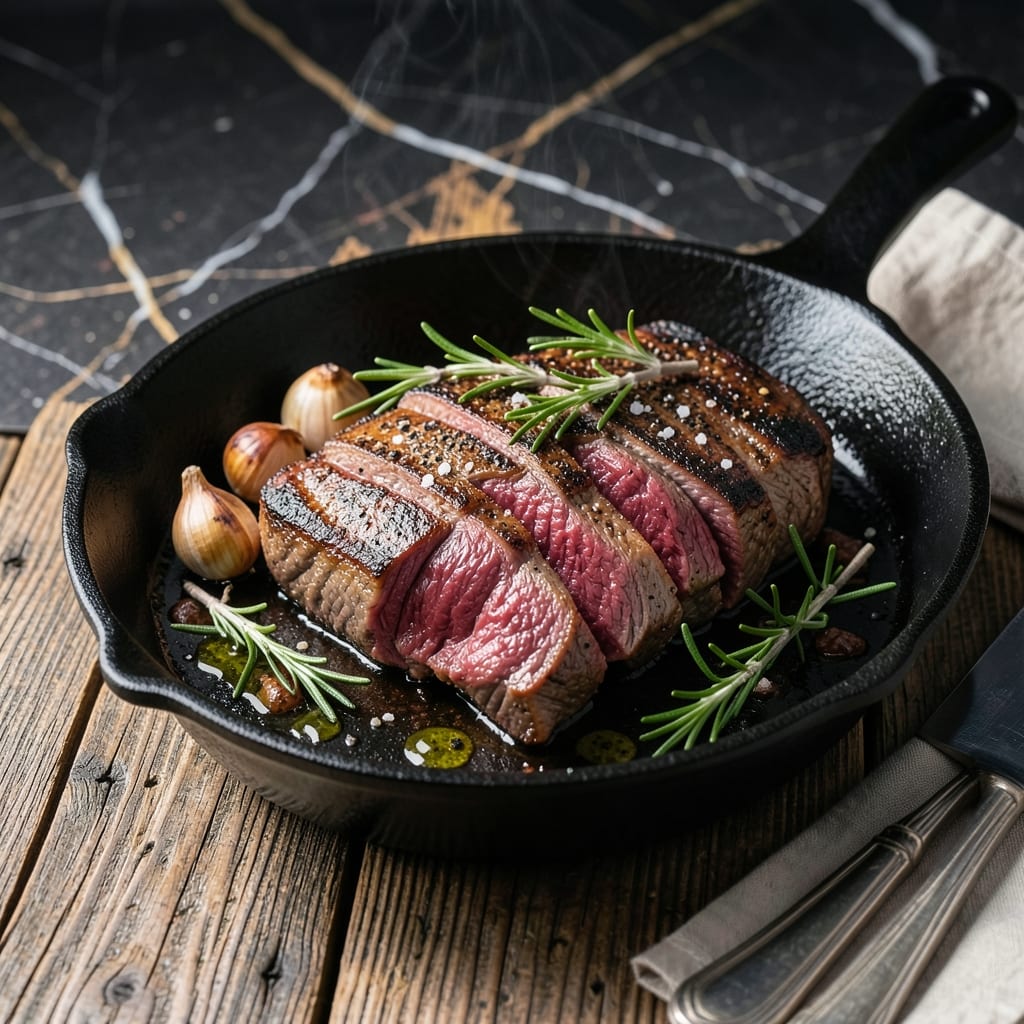
This cast iron method delivers a perfect sear every time with minimal effort. The flat iron’s natural marbling ensures a juicy finish when cooked properly.
High heat and a well-seasoned skillet are key to achieving that restaurant-quality crust. I’ve tested this technique repeatedly to guarantee consistent results.
You’ll get a tender, flavorful steak with a deep brown crust in just 10 minutes. The cast iron retains heat evenly, ensuring even cooking throughout.
Rest the steak before slicing to lock in those precious juices. Serve with roasted vegetables or mashed potatoes for a complete meal.
Ingredients for Flat Iron Steak Recipe Cast Iron
A few quality ingredients transform flat iron into restaurant-worthy perfection with minimal effort.
| Ingredient | Amount | Notes |
|---|---|---|
| Flat Iron Steak 🥩 | 1 ½ lb | About 1-inch thick, well-marbled |
| Kosher Salt 🧂 | 1 tbsp | Diamond Crystal preferred for even seasoning |
| Freshly Ground Black Pepper 🌶️ | 1 tsp | Coarse grind for texture |
| Garlic Cloves 🧄 | 4 cloves | Smashed, peeled, halved |
| Fresh Rosemary Sprigs 🌿 | 2 whole | Woody stems removed |
| Fresh Thyme Sprigs 🍃 | 3 whole | Optional but recommended |
| Unsalted Butter 🧈 | 2 tbsp | High-quality, European-style preferred |
| Extra-Virgin Olive Oil 🫒 | 2 tbsp | High smoke point variety |
| Soy Sauce 💧 | 1 tbsp | Low-sodium if available |
| Worcestershire Sauce 💧 | 1 tsp | Contains anchovies, omit for strict vegetarian |
| Shallot 🧅 | 1 whole | Minced for pan sauce |
| Red Wine 🍷 | ¼ cup | Dry variety like Cabernet Sauvignon |
[recipe_ingredient_scaler]
The steak is everything here. Flat iron offers exceptional marbling and tenderness at a reasonable price point—sourced from Whole Foods or Costco for reliable quality. Look for pieces with visible fat streaks (that’s the marbling) and a deep red color. Thickness matters: aim for 1-inch for even cooking. The butter should be unsalted so you control the seasoning.
No flat iron? Ribeye or New York strip work well at similar thickness. Skip the Worcestershire for a vegetarian version, or use coconut aminos as a vegan swap. The herbs can be substituted with dried at one-third the amount. For the wine, any dry red works—Pinot Noir if you prefer lighter flavor. No alcohol? Beef broth with a splash of balsamic vinegar mimics the depth.
Steaks rest best on a warm plate (not cutting board) for 5-10 minutes. Leftover cooked steak keeps 3-4 days refrigerated, or freeze for 3 months. Slice against the grain just before serving for maximum tenderness.
Why You’ll Love This Recipe
- One Pan Wonder: I love that I only need my cast iron skillet and 5 ingredients to make this—no extra bowls or utensils.
- Ridiculously Good: The garlic and rosemary crust on the flat iron steak is next-level flavor without a fancy marinade.
- Weeknight Hero: It’s my go-to for quick dinners when I want something impressive but unfussy. (Yes, even on a Tuesday night)
- Leftovers Gold: The steak slices taste even better the next day in sandwiches or salads, so I always make extra.
Step-by-Step Instructions for Flat Iron Steak Cast Iron
This method delivers a perfect sear with a juicy finish, leveraging cast iron for optimal heat retention.
Step 1: Season and Rest the Steak
Pat the 1.5 lb flat iron steak thoroughly dry with paper towels—this ensures a proper sear. Season generously on all sides with the 1 tbsp kosher salt and 1 tsp freshly ground black pepper. The salt should create a visible crust on the surface.
Let the seasoned steak rest at room temperature for 30-45 minutes. This step is crucial for even cooking, as cold steak won’t develop a good crust and may cook unevenly. The surface should dull slightly as the salt begins to draw out moisture.
Step 2: Sear the Steak in Cast Iron
Place a cast iron skillet over high heat until it’s smoking hot—this takes about 5 minutes. Add the 2 tbsp extra-virgin olive oil and swirl to coat the pan. The oil should shimmer but not smoke excessively.
Carefully add the steak to the skillet. Sear undisturbed for 3-4 minutes per side until a deep, dark brown crust forms. Use tongs to flip—never pierce the steak, as this releases precious juices. For a well-marbled 1-inch thick cut, you should see a clear crust forming along the edges.
In the final minute, add the 2 tbsp unsalted butter, 4 cloves garlic cloves, 2 whole fresh rosemary sprigs, and 3 whole fresh thyme sprigs to the pan. Tilt the skillet and baste the steak continuously with the melted butter and herbs for added flavor.
Step 3: Rest and Prepare the Pan Sauce
Transfer the steak to a cutting board and tent loosely with foil. Let it rest for 10 minutes—this allows the juices to redistribute, ensuring every slice is moist. The internal temperature will rise by 5-10°F during this time.
While the steak rests, reduce the heat to medium and add the minced shallot to the skillet. Sauté for 1-2 minutes until translucent and fragrant. Deglaze the pan with the 0.25 cup red wine, scraping up all the browned bits with a wooden spoon.
Step 4: Finish the Sauce and Serve
Simmer the wine for 2-3 minutes until reduced by half. Stir in the 1 tbsp soy sauce and 1 tsp Worcestershire sauce, then remove the skillet from heat. The sauce should coat the back of a spoon with a glossy sheen.
Slice the steak against the grain into ½-inch thick strips. This shortens the muscle fibers, guaranteeing tenderness. Spoon the pan sauce over the sliced steak just before serving. The result should be a rich, aromatic finish that complements the steak’s natural juiciness.
Pro Tips For Making Flat Iron Steak Recipe Cast Iron
- Dry the Steak: Pat the flat iron steak thoroughly dry with paper towels before seasoning—I learned this the hard way after my first few steaks steamed instead of seared in the cast iron.
- Crush the Garlic: Smash the garlic cloves with the flat of your knife before adding them to the pan; it releases more flavor without burning, and you can remove the skins easily afterward.
- Let It Rest: Give the steak a solid 5-10 minutes under foil after cooking—yes, even if you’re hungry—so the juices redistribute instead of pooling on your cutting board.
- Preheat the Pan: Heat the cast iron until it’s smoking hot before adding oil or steak, about 5 minutes on medium-high. Sounds like overkill, but it’s the only way to get that deep, caramelized crust on a flat iron.
Flavor Customization for This Dish
Herb-Infused Variations
Swap the rosemary and thyme for 2 sage leaves and 1 tsp juniper berries for a woodsy, earthy twist. I love this combination with a Cabernet Sauvignon pan sauce. The sage adds a subtle peppery note that pairs beautifully with the steak’s richness. 🌿
Garlic Butter Boost
Double the garlic to 8 cloves and add 1 tbsp minced shallot during the final minute of searing. This creates an ultra-aromatic butter that takes the flavor to another level. I always keep pre-minced garlic on hand for busy weeknights.
Spicy Kick
Add ½ tsp red pepper flakes when basting with butter, or include 2 sliced jalapeños for a Southwestern flair. The heat balances the fat beautifully. I learned this trick from a Texas pitmaster during a bbq competition. 🔥
Asian Fusion
Replace the herbs with 1-inch fresh ginger and 2 star anise pods during basting. Swap the wine for ¼ cup soy sauce and add 1 tbsp honey to the pan sauce. This creates a stunning Asian-inspired glaze.
Mediterranean Style
Add ½ cup kalamata olives and 2 tbsp capers to the pan sauce. Finish with 1 tbsp lemon zest for brightness. I love serving this with roasted eggplant and a glass of Greek Assyrtiko. 💛
Classic French
Deglaze with ¼ cup brandy instead of wine, then add 4 oz sliced mushrooms to the pan sauce. The brandy’s caramel notes complement the beef’s umami. I use Hennessy VS for consistent quality.
Nutrition Facts
Frequently Asked Questions
How do I know when the cast iron is hot enough?
Your pan is ready when a drop of water dances across the surface and evaporates immediately. For this recipe, heat it over high heat for about 5 minutes until smoking.
What if my steak doesn’t have a good crust?
Pat the steak completely dry before seasoning and ensure your pan is smoking hot. Don’t move the steak for at least 3 minutes per side to develop that perfect sear.
Can I use a different pan if I don’t have cast iron?
Stainless steel works well, but avoid nonstick as it won’t get hot enough. Heat retention is key for even cooking and a good crust.
Why is resting the steak important?
Resting for 10 minutes allows juices to redistribute throughout the meat. Slicing too soon causes those precious juices to spill out, leaving your steak dry.

Trained in classic French technique but raised on slow-cooked ribs and spicy rubs, she blends culinary skill with smoke and soul.
- Recipe for Boneless Pork Chops in Cast Iron Skillet: Sear and Baste to Juicy Perfection - October 3, 2026
- Recipe for Boneless Cross Rib Roast: Slow-Roasted Beef with Herb Crust - October 3, 2026
- Hamburgers in Sauce Recipe Crock Pot: Slow-Cooked Savory Delight - October 3, 2026