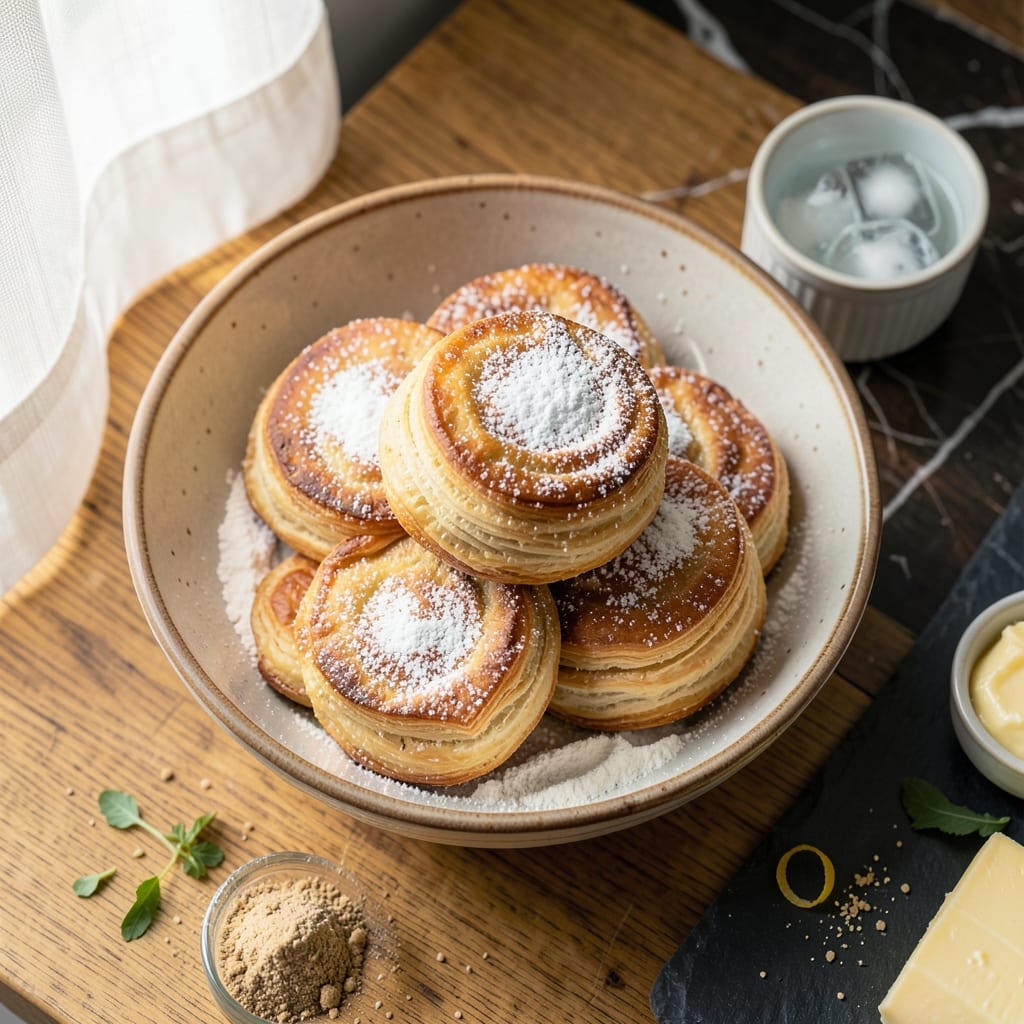
I’ve spent years perfecting gluten-free pastry that doesn’t rely on xanthan gum. This recipe delivers flaky layers through a simple psyllium husk technique.
The psyllium husk replaces traditional binders, creating a dough that holds together beautifully while maintaining that coveted flaky texture. No special equipment required—just a mixing bowl and standard kitchen tools.
What emerges from the oven is golden, layered pastry that rivals traditional versions. The psyllium creates structure while allowing the dough to puff and separate into perfect layers.
This method works for pies, tarts, or turnovers. The pastry stays tender for days when stored properly.
Ingredients for Gluten Free Pastry Recipe Without Xanthan Gum
These nine ingredients create gluten-free pastry with perfect flaky layers, no xanthan gum required.
| Ingredient | Amount | Notes |
|---|---|---|
| Gluten-Free All-Purpose Flour 🌾 | 2 ½ cups | Plus extra for dusting work surface |
| Psyllium Husk Powder 🌿 | 2 tbsp | Key for structure and flakiness |
| Cold Unsalted Butter 🧈 | 1 cup | Cut into small cubes, keep chilled |
| Ice Water 💧 | ¾ cup | Plus 1 tbsp as needed for consistency |
| Fine Sea Salt 🧂 | 1 tsp | Diamond Crystal preferred for even distribution |
| Granulated Sugar 🍚 | 1 tbsp | Optional for sweet applications |
| Apple Cider Vinegar 🍎 | 1 tbsp | Enhances flakiness and tenderness |
| Large Egg 🥚 | 1 whole | For binding and richness |
| Cornstarch 🌽 | ¼ cup | Lightens texture, prevents gumminess |
| Baking Powder 🍞 | ½ tsp | Ensures proper rise and lift |
[recipe_ingredient_scaler]
The psyllium husk powder is non-negotiable here—it’s the secret to structure without gumminess. Bob’s Red Mill offers consistent quality, but any pure psyllium husk powder works. Cold butter is critical; European-style or high-fat content (82%+) yields superior flakiness. Source from Whole Foods or Trader Joe’s for reliable options. The flour blend should be a 1:1 gluten-free all-purpose; avoid single-flour types like almond or coconut.
No psyllium husk? Ground flaxseed at a 1:1 ratio can work, though texture suffers slightly. For a vegan version, swap the egg for 1 tbsp aquafaba or flax egg. If avoiding dairy, cold coconut oil or vegan butter substitutes well—just ensure it’s solid at room temperature. Apple cider vinegar can be replaced with white vinegar or lemon juice in a pinch. The sugar is optional for savory applications.
The dough rests 30-60 minutes before rolling, allowing the psyllium to hydrate fully. Wrap unused pastry tightly and refrigerate for up to 3 days, or freeze for 1 month. Thaw overnight in the fridge before using. Baked items stay fresh for 2-3 days at room temperature in an airtight container.
Why You’ll Love This Recipe
- No-Fuss Mixing: I just dump the dry ingredients, cut in the cold butter, and add ice water—no special tools or xanthan gum required.
- Buttery Richness: The cold unsalted butter gives it that flaky, melt-in-your-mouth texture I crave in a pastry.
- Endless Uses: I’ve used it for hand pies, quiches, and even a last-minute tart—psyllium husk powder holds it together beautifully.
Step-by-Step Instructions for Gluten Free Pastry Without Xanthan Gum
This method delivers perfect flakiness using psyllium husk as the structural foundation.
Step 1: Mix Dry Ingredients for Structural Integrity
In a large bowl, whisk together the 2.5 cups Gluten-Free All-Purpose Flour, 0.25 cup Cornstarch, 2 tbsp Psyllium Husk Powder, 0.5 tsp Baking Powder, and 1 tsp Fine Sea Salt until evenly combined. The psyllium husk replaces xanthan gum by creating a gel-like structure when hydrated.
Add the 1 tbsp Granulated Sugar and whisk again. This small amount of sugar enhances browning and balances the earthy notes of the gluten-free flour blend. The mixture should look homogeneous with no visible streaks of psyllium husk.
Step 2: Cut in Cold Butter for Flaky Layers
Add the 1 cup Cold Unsalted Butter (cut into small cubes) to the dry ingredients. Using a pastry cutter or your fingertips, work the butter into the flour mixture until it resembles coarse crumbs with pea-sized butter pieces visible. The key to flakiness is keeping the butter cold—this creates steam pockets during baking.
I recommend chilling the bowl briefly if the butter starts to soften during this process. You should see distinct butter pieces throughout the mixture, not a uniform dough. This step typically takes 3-5 minutes of consistent cutting.
Step 3: Add Wet Ingredients to Form the Dough
In a separate bowl, whisk together the 1 whole Large Egg, 0.75 cup Ice Water, and 1 tbsp Apple Cider Vinegar until fully combined. The vinegar tenderizes the dough while the egg provides structure. Make a well in the center of your flour-butter mixture.
Pour the wet ingredients into the well and use a fork to gradually incorporate the dry ingredients. The dough will appear shaggy at first. Switch to using your hands to gently knead it just until it comes together—overworking develops gluten in the flour blend, which makes the pastry tough.
Step 4: Chill the Dough for Optimal Texture
Shape the dough into a disk, wrap it tightly in plastic wrap, and refrigerate for at least 2 hours or up to 24 hours. This resting period allows the psyllium husk to fully hydrate and the butter to firm up, which is essential for creating those coveted flaky layers.
During this time, the psyllium forms a gel that mimics the elasticity normally provided by gluten. The dough should feel firm and slightly tacky when properly chilled. If it feels too dry, add 1 tbsp Ice Water as needed, but avoid adding too much liquid.
Step 5: Roll and Shape for Baking
On a surface dusted with additional gluten-free all-purpose flour, roll the chilled dough to your desired thickness. For pie crust, aim for ⅛-inch thickness. The dough should hold together well but may require occasional patching with your fingers if cracks appear.
Transfer the rolled dough to your baking vessel and trim as needed. For best results, chill the shaped dough for an additional 30 minutes before baking to prevent shrinking. This pastry is now ready for blind baking or filling according to your specific application.
Pro Tips For Making Gluten Free Pastry Recipe Without Xanthan Gum
- Chill the Dough: After mixing, wrap the dough and refrigerate for at least 30 minutes—psyllium husk needs time to gel properly, and cold butter prevents a greasy texture.
- Use Ice-Cold Water: Measure your water, then add ice cubes to it for 5 minutes before using; warm water activates the psyllium too soon, making the pastry tough.
- Skip Overworking: I learned this the hard way—gluten-free dough gets gummy fast, so mix just until it holds together, even if it looks shaggy.
- Roll Between Parchment: Press the dough between two sheets of parchment instead of flipping it—gluten-free pastry tears easily, and this saves time and frustration.
Creative Variations of This Dish
Savory Herb Version
Add 1 tbsp fresh rosemary and 1 tsp dried thyme to the dry ingredients for an aromatic twist. This pairs beautifully with quiche or savory galettes. I love how the herbs infuse the pastry with subtle earthy notes without overpowering.
Sweet Cinnamon Roll
Increase the sugar to ¼ cup and add 1 tsp cinnamon to the dry mix. After rolling, spread with 2 tbsp softened butter, sprinkle with brown sugar, and roll into a log. Slice and bake for a cozy breakfast treat. 🌟
Chocolate Pastry
Replace ¼ cup of the flour with cocoa powder for a rich chocolate version. This works wonderfully for chocolate croissants or tarts. The psyllium husk still creates perfect layers, just with a decadent chocolate flavor.
Cheese Straw Twists
After rolling the dough, sprinkle with ½ cup grated sharp cheddar and a pinch of paprika. Cut into strips, twist, and bake at 375°F for 12-15 minutes until golden. These make excellent appetizers or snacks.
For extra crispiness, brush with 1 beaten egg white before baking. 💫
Lemon Zest Brightness
Add 1 tbsp lemon zest to the dry ingredients for a bright, citrusy note. This pairs especially well with berry fillings or custards. The acidity balances the richness of the butter beautifully.
Nutrition Facts
Frequently Asked Questions
Why use psyllium husk instead of other binders?
Psyllium husk creates a gel that mimics gluten’s elasticity, giving you flaky layers without gumminess. It’s also more natural than commercial binders and easier to find in grocery stores.
Can I skip the chilling step?
No, chilling is essential. It lets the psyllium hydrate fully and keeps the butter cold for steam pockets. Skipping it risks a dense, tough pastry. Rest for at least 2 hours.
How do I prevent cracks when rolling?
Use plenty of gluten-free flour to dust your surface. If cracks appear, patch them with a bit of dough. Work quickly to keep the butter cold.
What’s the best way to store leftover pastry?
Wrap baked items tightly in an airtight container at room temperature for 2-3 days. For dough, refrigerate up to 3 days or freeze for 1 month.

Trained in classic French technique but raised on slow-cooked ribs and spicy rubs, she blends culinary skill with smoke and soul.
- Recipe for Boneless Pork Chops in Cast Iron Skillet: Sear and Baste to Juicy Perfection - October 3, 2026
- Recipe for Boneless Cross Rib Roast: Slow-Roasted Beef with Herb Crust - October 3, 2026
- Hamburgers in Sauce Recipe Crock Pot: Slow-Cooked Savory Delight - October 3, 2026