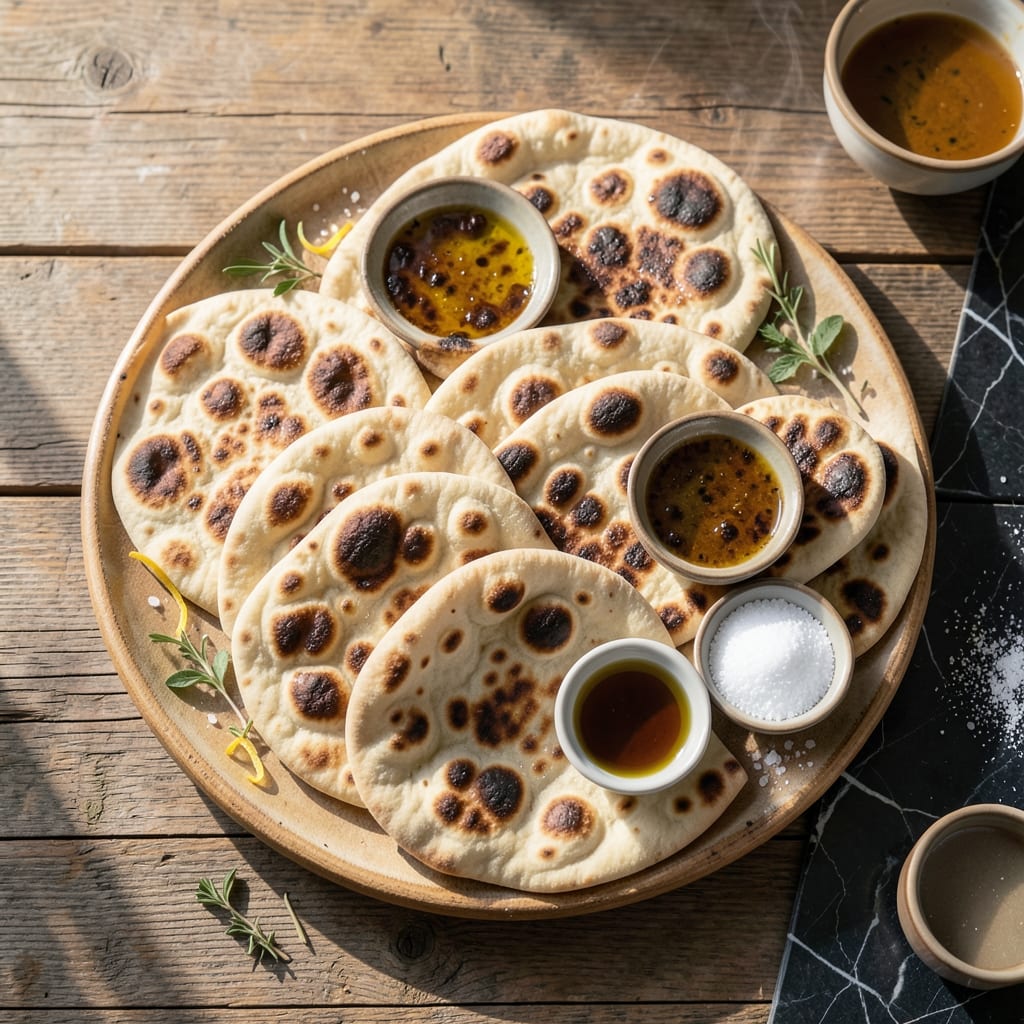
Flatbreads offer endless possibilities for every meal, from quick weeknight dinners to elegant appetizers. This collection provides foolproof techniques for creating versatile bases that adapt to any flavor profile.
Whether you prefer traditional methods or modern shortcuts, these recipes deliver consistent results with minimal effort. Each variation builds on simple dough that bakes to perfectly crisp or tender textures depending on your preference.
The beauty lies in their adaptability—top with fresh herbs and olive oil, or load with hearty meats and vegetables. Every version maintains the essential characteristics that make flatbreads universally loved.
Master one dough recipe, then customize endlessly for breakfasts, lunches, or dinners that impress without complexity.
Ingredients for Flatbread Recipe Ideas
Simple dough, endless toppings. Here’s what builds that perfect flatbread base.
| Ingredient | Amount | Notes |
|---|---|---|
| All-Purpose Flour 🌾 | 3 cups | Plus extra for dusting |
| Warm Water 💧 | 1 ¼ cups | About 110-115°F |
| Active Dry Yeast 🍞 | 2 ¼ tsp | One packet plus a pinch |
| Granulated Sugar 🍚 | 1 tsp | To activate the yeast |
| Extra-Virgin Olive Oil 🫒 | 2 tbsp | Divided for dough and brushing |
| Kosher Salt 🧂 | 1 tsp | Diamond Crystal preferred |
| Greek Yogurt 🥛 | ½ cup | Full-fat for tenderness |
| Fresh Rosemary 🌿 | 1 tbsp | Finely chopped |
| Garlic Cloves 🧄 | 2 cloves | Minced for topping |
| Flaky Sea Salt 🧂 | ½ tsp | For finishing |
| Crushed Red Pepper 🌶️ | ½ tsp | Optional for heat |
| Coarse Semolina 🌾 | ¼ cup | For dusting pans |
[recipe_ingredient_scaler]
The flour matters here—King Arthur or Bob’s Red Mill give you that reliable rise without weird aftertastes. Yeast loses potency fast, so check the expiration date (yes, even the packets). I grab mine from Whole Foods bulk bins where turnover is quick. Warm water should feel like a baby’s bath—too hot kills the yeast, too cold won’t wake it up (worth the extra minute).
No Greek yogurt? Sour cream at the same amount works, but it’s a touch tangier. Swap rosemary for thyme or oregano—dried at half the amount. The olive oil can be any neutral oil in a pinch, but extra-virgin adds that depth. Out of semolina? Cornmeal gives a similar crunch for dusting your baking sheet.
Dough keeps 2 days in the fridge (it’ll actually develop more flavor), or freeze it for 1 month. Baked flatbreads stay crisp for 48 hours in an airtight container—reheat in a dry skillet to revive. Always dust your surface well to prevent sticking (don’t skip this part).
Why You’ll Love This Recipe
- No-Knead Magic: I just mix flour, water, yeast, and a drizzle of olive oil—no fancy techniques or standing mixer required.
- Golden Crisp: The olive oil gives it this rich, slightly crisp edge that’s honestly hard to resist.
- Endless Toppings: I’ve done garlic-herb, za’atar, even cinnamon-sugar—same dough, totally different vibes.
- Pennywise Feast: Five basic pantry staples make a batch for less than a buck. Here’s what sold me—it’s cheaper than takeout and twice as good.
Step-by-Step Instructions for Flatbread
Here’s my method for foolproof, tender flatbread with a perfect golden crust.
Step 1: Activate the Yeast and Mix the Dough
In a small bowl, combine the 1.25 cups warm water, 2.25 tsp active dry yeast, and 1 tsp granulated sugar. Let it sit for 5-7 minutes until frothy—this confirms your yeast is alive and active. That bubbly surface is your green light to proceed.
In a large mixing bowl, whisk together the 3 cups all-purpose flour and 1 tsp kosher salt. Make a well in the center and add the yeast mixture, 0.5 cup Greek yogurt, and 1 tbsp extra-virgin olive oil (reserve the other tablespoon). Stir until a shaggy dough forms. The yogurt adds tang and tenderness you won’t get from standard bread.
Step 2: Knead Until Smooth and Elastic
Turn the dough out onto a lightly floured surface. I like to sprinkle some extra all-purpose flour here to prevent sticking. Knead for 8-10 minutes until the dough becomes smooth and elastic—it should spring back when you poke it with your finger.
If the dough feels too sticky, add more flour 1 tbsp at a time, but don’t overdo it. A slightly tacky dough will yield softer flatbread. Once kneaded, coat the dough lightly with olive oil, place it back in the bowl, cover with a damp towel, and let it rise in a warm spot for 1-2 hours until doubled in size.
Step 3: Shape and Proof the Flatbreads
Punch down the risen dough to release the air. Divide it into 4 equal portions (this matches your 4 servings) and shape each into a ball. Dust your work surface with 0.25 cup coarse semolina—this prevents sticking and adds a subtle crunch to the crust.
Roll each ball into a ¼-inch thick circle or oval. The semolina will give you that rustic, bakery-style texture. Place the shaped dough on a parchment-lined baking sheet, cover with a towel, and let them proof for 15-20 minutes while you preheat your oven to 475°F.
Step 4: Bake and Add Toppings
Transfer the proofed flatbreads to a preheated baking stone or inverted baking sheet. Bake for 3-4 minutes until the tops start to puff slightly and the bottoms are just beginning to turn light golden brown. This quick bake ensures they stay soft and pliable.
Remove from the oven and immediately brush the tops with the remaining 1 tbsp extra-virgin olive oil. Sprinkle with 1 tbsp finely chopped fresh rosemary, minced garlic cloves, 0.5 tsp flaky sea salt, and 0.5 tsp crushed red pepper for a flavor boost. Return to the oven for 1-2 minutes to set the toppings.
Step 5: Finish and Serve Warm
Let the flatbreads cool for 2 minutes on a wire rack—they should still be warm when served. The surface should be dotted with golden brown spots where the garlic and rosemary kissed the dough.
Serve immediately while they’re still soft and pliable. These are best enjoyed fresh out of the oven, with the aromatics releasing their fragrance. Tear into pieces or slice into strips for sharing. They’ll keep in an airtight container for 2 days, but I doubt they’ll last that long.
Pro Tips For Making Flatbread Recipe Ideas
- Proof the Yeast: Always bloom your active dry yeast in the warm water with sugar first—if it doesn’t foam within 5-10 minutes, your flatbread won’t rise. I learned this the hard way after wasting a batch of dough.
- Use Hot Water: Make sure your water is around 110°F—too hot kills the yeast, too cold makes it sluggish. A quick finger test should feel warm but not scalding.
- Skip Cold Oil: Let your olive oil sit at room temperature before mixing it in—cold oil can slow down the yeast activity and leave your flatbread dense.
- Rest the Dough: After kneading, give the dough at least 1 hour to rise in a warm spot. Sounds weird, but covering it with a damp towel speeds it up.
Serving Suggestions for This flatbread recipe ideas
Warm Appetizer Spread
Serve these warm flatbreads as a base for hummus or baba ganoush with a drizzle of extra-virgin olive oil. The crisp texture holds up perfectly to creamy dips. I love the contrast of warm bread with cool, velvety spreads. 🔥
Mediterranean Mezze Platter
Create a stunning platter with torn flatbread pieces, olives, feta cheese, and roasted red peppers. Add sliced cucumbers and cherry tomatoes for freshness. The rosemary and garlic flavors pair beautifully with these classic Mediterranean ingredients.
Breakfast Flatbread Twist
Top warm flatbreads with soft scrambled eggs, crumbled feta, and fresh herbs for a quick breakfast. The slightly crisp base prevents sogginess. I often add a sprinkle of crushed red pepper for a morning kick.
Soup Sidekick
These make ideal companions for tomato basil soup or lentil stew. Tear into pieces for dipping or drizzle with olive oil for extra flavor. The sturdy texture won’t fall apart in broth. 💛
Dessert Flatbread
For a sweet finish, brush with honey and sprinkle with cinnamon sugar while still warm. The hint of rosemary in the dough adds a sophisticated note. Serve with fresh berries for a light dessert option.
Party Platter
Arrange flatbread pieces on a board with cured meats, cheeses, and marinated vegetables. The versatile base complements both bold and delicate flavors, making it perfect for sharing.
Nutrition Facts
Frequently Asked Questions
Can I make this dough ahead of time?
Yes! The dough keeps well in the fridge for 2 days, and it actually develops more flavor. For longer storage, freeze it for up to 1 month.
What if I don’t have Greek yogurt?
Use sour cream as a 1:1 substitute, though it adds a touch more tang. For a neutral flavor, plain yogurt works too.
How do I get extra crispy flatbread?
Roll the dough thinner (⅛-inch thick) and bake at 500°F for 2-3 minutes. Brushing with olive oil before baking also helps.
Why did my flatbread turn out dense?
Over-kneading or using expired yeast are common culprits. Ensure your yeast is fresh and active (bubbly in 5-7 minutes).

Trained in classic French technique but raised on slow-cooked ribs and spicy rubs, she blends culinary skill with smoke and soul.
- Recipe for Boneless Pork Chops in Cast Iron Skillet: Sear and Baste to Juicy Perfection - October 3, 2026
- Recipe for Boneless Cross Rib Roast: Slow-Roasted Beef with Herb Crust - October 3, 2026
- Hamburgers in Sauce Recipe Crock Pot: Slow-Cooked Savory Delight - October 3, 2026