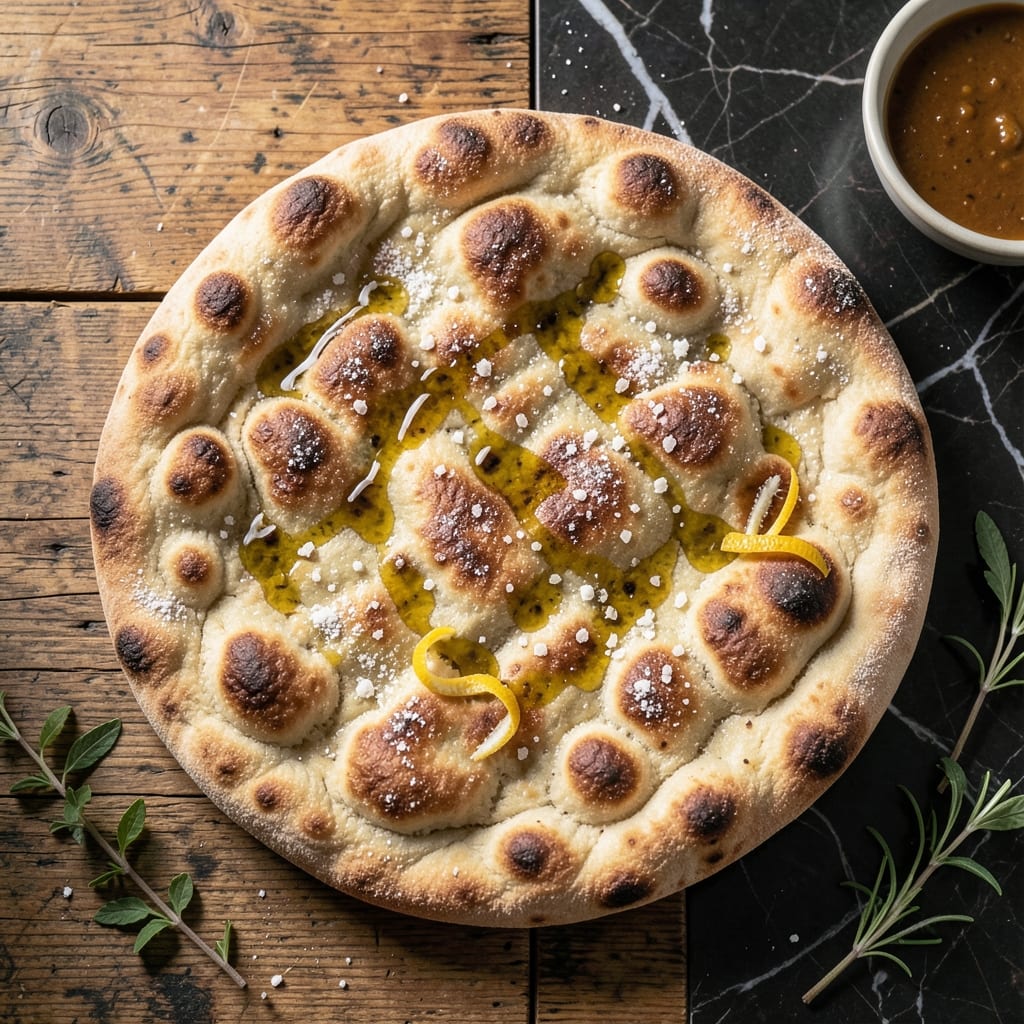
Achieving crispy, golden flatbread at home is simpler than you might expect. I developed this method after years of experimenting with dough hydration and oven temperatures, focusing on a foolproof approach that works in any kitchen.
This recipe delivers restaurant-quality results with minimal effort. The dough comes together quickly with basic ingredients, and the high-heat baking method ensures a perfectly crispy crust with soft, chewy centers every time.
The key is rolling the dough thin and baking it at a high temperature. This creates those signature air pockets and golden-brown spots that make flatbread irresistible. No special equipment is required.
Serve warm with dips, toppings, or alongside your favorite main course. The versatility of this flatbread makes it perfect for any meal.
Ingredients for Flatbread Recipe Oven Baked
Basic pantry staples combine to create perfectly crispy, golden flatbread every time.
| Ingredient | Amount | Notes |
|---|---|---|
| All-Purpose Flour 🌾 | 3 cups | Plus extra for dusting |
| Instant Yeast 🍞 | 2 ¼ tsp | Or one 0.25 oz packet |
| Granulated Sugar 🍚 | 1 tsp | Activates the yeast |
| Kosher Salt 🧂 | 1 ½ tsp | Diamond Crystal preferred |
| Warm Water 💧 | 1 ¼ cups | 110-115°F for yeast |
| Olive Oil 🫒 | 2 tbsp | Extra-virgin for richness |
| Plain Greek Yogurt 🥛 | ½ cup | Full-fat for tenderness |
| Cornmeal 🌽 | 2 tbsp | For dusting baking sheet |
| Garlic Powder 🧄 | 1 tsp | Optional for flavor depth |
| Dried Oregano 🌿 | 1 tsp | Optional for herbaceous note |
[recipe_ingredient_scaler]
The flour is foundational—King Arthur or Bob’s Red Mill all-purpose deliver consistent texture and reliable rise. Instant yeast is non-negotiable for speed; active dry requires proofing first. For the water, use a thermometer to hit that 110-115°F sweet spot (too hot kills yeast, too cold slows activation). The olive oil should be high-quality extra-virgin—this isn’t the place for generic vegetable oil.
No Greek yogurt? Plain whole-milk yogurt works, or swap in sour cream at the same quantity. Missing cornmeal? Use semolina or additional flour for the baking sheet dusting. For a whole-wheat version, replace up to half the all-purpose flour with whole-wheat (add 1-2 tbsp extra water as needed). The sugar can be honey or maple syrup if preferred, though granulated is most reliable.
Store flour and yeast in airtight containers in a cool, dark place for up to 6 months. Prepared dough can rest in the fridge for 24 hours before baking. Baked flatbread keeps at room temperature for 2 days, or freeze for up to 1 month.
Why You’ll Love This Recipe
- No-Knead Magic: I just mix, let it rise, and pop it in the oven—no fancy techniques or stand mixer required.
- Warm, Puffy Perfection: That first bite of crisp-edged, soft-centered bread with just a hint of sugar? Pure comfort.
- Blank Canvas Bread: Honestly, it pairs with everything—soup, dips, or as a wrap for leftovers.
- Penny-Pincher’s Dream: Flour, yeast, and water cost pennies but taste like a bakery splurge. I’ll be real: I make this twice a week.
Step-by-Step Instructions for Flatbread
Master the technique for a perfectly crispy golden crust with these foolproof steps.
Step 1: Activate the Yeast and Prepare the Dough
In a large mixing bowl, combine the 1.25 cups Warm Water, 1 tsp Granulated Sugar, and 2.25 tsp Instant Yeast. Stir gently and let sit for 5-7 minutes until the mixture becomes frothy and cloudy. This confirms the yeast is active and ready to work its magic.
Add the 0.5 cup Plain Greek Yogurt, 2 tbsp Olive Oil, 1.5 tsp Kosher Salt, 1 tsp Garlic Powder, and 1 tsp Dried Oregano to the yeast mixture. The yogurt adds tenderness while the olive oil enriches the dough. Whisk until the wet ingredients are fully combined and smooth.
Step 2: Incorporate the Flour and Knead
Gradually add the 3 cups All-Purpose Flour to the wet mixture, stirring with a wooden spoon until a shaggy dough forms. The dough will be sticky at first, but resist the urge to add more flour prematurely. Turn the dough onto a lightly floured surface and knead for 8-10 minutes.
Knead until the dough is smooth, elastic, and slightly tacky but not sticky. If it sticks to your hands or the surface, dust with a bit more flour, but use a light touch—too much flour will make the flatbread dense. You’ll know it’s ready when it springs back slowly when poked with a finger.
Step 3: First Rise and Shape the Dough
Place the kneaded dough in a lightly oiled bowl, turning once to coat all sides. Cover with a damp kitchen towel and let it rise in a warm, draft-free spot for 1 to 1.5 hours, or until doubled in size. The dough should look puffy and jiggle slightly when shaken.
Once risen, punch down the dough to release the air. Divide it into 4 equal portions (since this makes 4 servings) and shape each into a smooth ball. Cover the balls with the towel and let them rest for 15 minutes—this relaxes the gluten, making the dough easier to roll out.
Step 4: Roll, Season, and Preheat for Baking
Preheat your oven to 475°F and place a baking sheet or pizza stone inside to heat up. While the oven preheats, dust your work surface with a mix of 2 tbsp Cornmeal and a touch of flour. Roll each dough ball into a thin oval or circle, about ⅛-inch thick, directly on the dusted surface.
The cornmeal adds a subtle crunch and prevents sticking, ensuring your flatbreads bake evenly. If the dough resists rolling, let it rest for another 5 minutes to relax the gluten. Use a fork to dock the rolled dough lightly—this prevents large air bubbles from forming during baking.
Step 5: Bake to Crispy Golden Perfection
Carefully transfer the rolled dough to the preheated baking sheet or stone. Bake for 8-10 minutes, or until the edges are golden brown and the surface is lightly blistered in spots. For extra crispiness, flip the flatbread halfway through baking using a spatula.
Remove from the oven and let cool on a wire rack for 2-3 minutes. The flatbread should be crisp on the outside yet tender inside, with a beautiful golden hue. Serve warm for the best texture, and enjoy the satisfying crunch of a perfectly baked flatbread.
Pro Tips For Making Flatbread Recipe Oven Baked
- Preheat the Stone: I learned this the hard way—your pizza stone or baking sheet needs at least 30 minutes in a 500°F oven to mimic a real tandoor. Cold surfaces give you sad, pale flatbreads instead of that puffed, golden magic.
- Activate Yeast Right: Use 110°F water, no hotter—anything above 120°F kills the yeast instantly. I skip the sugar in the proofing step; instant yeast doesn’t need it, and you’ll see bubbles in 5 minutes if it’s alive.
- Roll Thin, Not Tear: Dust your surface well and roll the dough paper-thin—about 1/8 inch. Pressing too hard or re-rolling toughens the gluten, and you’ll end up with flatbread that’s more like cardboard.
- Skip the Oil: Sounds weird, but it works: don’t brush the dough with oil before baking. It steams the surface and blocks the direct heat you need for those beautiful blistered spots.
Best Sauces and Condiments for This flatbread recipe oven baked
Classic Garlic Butter
Melt 4 tbsp unsalted butter with 3 minced garlic cloves and 1 tbsp fresh parsley. Brush warm flatbread with the mixture right after baking. I love the Boston Italian deli trick of adding a pinch of red pepper flakes for subtle heat. 💛
Mediterranean Tzatziki
Combine 1 cup Greek yogurt with ½ cup grated cucumber, 1 tbsp lemon juice, and 1 tsp dill. The cool, creamy sauce balances the flatbread’s warmth perfectly. I use Fage 2% for the best texture.
Spicy Harissa Dip
Mix 3 tbsp harissa paste with ¼ cup olive oil and 1 tbsp honey. This North African sauce adds a smoky, spicy kick that pairs wonderfully with the crispy crust. Find harissa at any Middle Eastern market in Boston. 🌶️
Herb-Infused Oil
Heat ½ cup olive oil with 2 sprigs rosemary and 1 tsp crushed red pepper until fragrant. Drizzle over flatbread for a simple yet elegant finish. I often use Colavita brand oil for this.
Lemon-Tahini Sauce
Whisk ¼ cup tahini with 2 tbsp lemon juice, 1 tbsp water, and 1 minced garlic clove. This creamy, tangy sauce adds a Middle Eastern flair that complements the flatbread’s texture beautifully.
Nutrition Facts
Frequently Asked Questions
Can I make this without yeast?
Yes! Swap yeast for 1 tsp baking powder and ½ tsp baking soda for a quick version. The texture will be denser but still delicious. Skip the rising time and bake immediately.
Why did my flatbread turn out tough?
Overworking the dough or using too much flour causes toughness. Knead just until smooth (8-10 minutes) and add flour sparingly. Let it rest 15 minutes before rolling for best results.
How do I get it extra crispy?
Bake at 475°F on a preheated pizza stone or baking sheet. Flip halfway through the 8-10 minute bake time. For even more crunch, brush with olive oil before baking.

Trained in classic French technique but raised on slow-cooked ribs and spicy rubs, she blends culinary skill with smoke and soul.
- Recipe for Boneless Pork Chops in Cast Iron Skillet: Sear and Baste to Juicy Perfection - October 3, 2026
- Recipe for Boneless Cross Rib Roast: Slow-Roasted Beef with Herb Crust - October 3, 2026
- Hamburgers in Sauce Recipe Crock Pot: Slow-Cooked Savory Delight - October 3, 2026