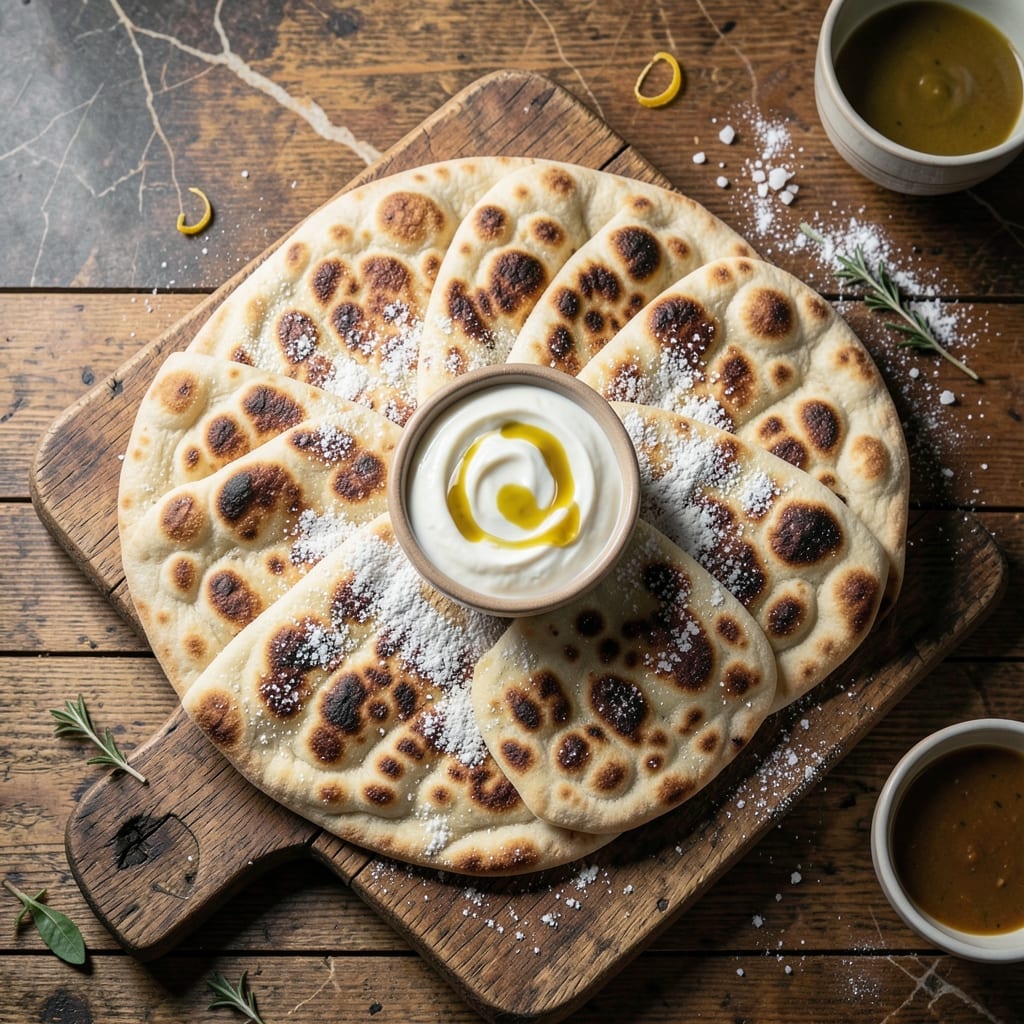
This flatbread recipe transforms simple ingredients into something extraordinary. The yoghurt in the dough creates a tang that balances the soft, pillowy texture perfectly.
I developed this method after years of experimenting with different leavening agents. The yoghurt not only adds flavor but also ensures the bread stays tender and fresh for days.
What you get is a warm, slightly chewy flatbread with a golden crust and that signature tangy depth. It pairs beautifully with both savory and sweet dishes.
Serve it fresh from the pan or use it as a base for sandwiches and wraps. Here’s how to make it.
Ingredients for Flatbread Recipe Yoghurt
Simple pantry staples create extraordinary flatbread with tangy depth and pillowy texture.
| Ingredient | Amount | Notes |
|---|---|---|
| All-Purpose Flour 🌾 | 3 cups | Plus extra for dusting |
| Plain Yoghurt 🥛 | 1 cup | Full-fat Greek for richness |
| Baking Powder 🧂 | 2 tsp | Ensures proper rise |
| Salt 🧂 | 1 tsp | Fine sea salt preferred |
| Granulated Sugar 🍚 | 1 tsp | Balances the tang |
| Olive Oil 🫒 | 2 tbsp | Extra-virgin for flavor |
| Warm Water 💧 | ¼ cup | Adjust as needed for dough consistency |
| Garlic Powder 🧄 | 1 tsp | Optional for savory flavor |
| Dried Oregano 🍃 | 1 tsp | Optional for herbaceous notes |
| Cornmeal 🌽 | 2 tbsp | For dusting, prevents sticking |
[recipe_ingredient_scaler]
The yoghurt is non-negotiable here. Full-fat Greek yoghurt delivers the best texture and tang. Fage or Chobani are reliable brands, but any thick, unsweetened variety works. The flour should be all-purpose—no need for bread flour. For the baking powder, check the expiration date; old leaveners lose potency. Clabber Girl is a trusted choice. Always measure flour by spooning into the cup, not scooping directly from the bag.
No yoghurt? Buttermilk at a 1:1 ratio works in a pinch, though the flavor profile shifts slightly. Out of baking powder? Baking soda plus cream of tartar (1/4 tsp each per 1 tsp baking powder) can substitute. For a richer dough, melted butter can replace olive oil. The cornmeal is optional but adds texture—semolina or extra flour work too. Skip the sugar if you prefer a less sweet flatbread.
Dough keeps in the fridge for 24 hours (let it come to room temp before shaping). Cooked flatbreads stay fresh for 2-3 days in an airtight container, though they’re best eaten warm. Reheat in a dry skillet for 30 seconds per side to restore that pillowy texture. Freezing isn’t recommended—it alters the consistency.
Why You’ll Love This Recipe
- No-Fuss Mixing: I just stir together flour, yogurt, and a pinch of baking powder—no yeast, no waiting, no complicated steps.
- Tangy Comfort: The yogurt gives it this subtle richness that makes every bite feel special, with just the right hint of sweetness from the sugar.
- Endless Pairings: I serve these with soups, salads, or even as a quick wrap for leftovers. Honestly, they work for breakfast, lunch, or dinner.
- Budget Stretcher: A handful of pantry staples and yogurt I already have on hand makes a stack of these for pennies.
Step-by-Step Instructions for Flatbread With Yoghurt
This method ensures pillowy texture and balanced flavor with precise technique.
Step 1: Combine Dry Ingredients and Yoghurt
In a large mixing bowl, whisk together the 3 cups All-Purpose Flour, 2 tsp Baking Powder, 1 tsp Salt, and 1 tsp Granulated Sugar until evenly distributed. This dry mixture forms the structural base of your flatbread.
Create a well in the center and add the 1 cup Plain Yoghurt and 2 tbsp Olive Oil. Begin mixing with a wooden spoon until the ingredients start to come together. The yoghurt provides both moisture and a subtle tang that distinguishes this flatbread.
Step 2: Form and Knead the Dough
Gradually incorporate the 0.25 cup Warm Water as you continue mixing. The dough will initially appear shaggy, but resist the urge to add more water immediately—let the flour hydrate for 1-2 minutes as you work it.
Turn the dough onto a lightly floured surface and knead for 6-8 minutes until smooth and elastic. The dough should feel slightly tacky but not sticky. If it sticks excessively, dust with additional all-purpose flour sparingly, just enough to prevent adherence.
Step 3: Incorporate Flavor and Rest
Once the dough reaches the proper consistency, knead in the 1 tsp Garlic Powder and 1 tsp Dried Oregano if using. These optional additions infuse the flatbread with savory depth. Distribute them evenly through the dough with an additional 1-2 minutes of kneading.
Shape the dough into a ball and place it in a lightly oiled bowl. Cover with a damp towel and let it rest at room temperature for 30 minutes. This resting period allows the gluten to relax, making the dough easier to roll out and preventing it from shrinking during cooking.
Step 4: Shape and Preheat Cooking Surface
After resting, divide the dough into 4 equal portions (for 4 servings). Roll each portion into a ball, then flatten slightly with your hands. Dust your work surface with 2 tbsp Cornmeal to prevent sticking and add a subtle texture to the finished flatbread.
Heat a large skillet or griddle over medium-high heat. I prefer cast iron for its even heat distribution and retention. You want the surface to be hot enough that a drop of water sizzles and evaporates immediately upon contact.
Step 5: Cook to Golden Perfection
Working with one piece at a time, roll the dough out to about ⅛-inch thickness. The shape doesn’t need to be perfect—rustic edges add character. Carefully transfer the rolled dough to the preheated skillet.
Cook for 2-3 minutes per side until golden brown spots appear and the flatbread puffs slightly in areas. Press down gently with a spatula if it puffs too much to ensure even cooking. The finished flatbread should have a soft, pillowy texture with a slightly crisp exterior. Serve warm for the best experience.
Pro Tips For Making Flatbread Recipe Yoghurt
- Use thick yogurt: Drain your plain yogurt in a sieve for 10 minutes if it’s runny—I learned this the hard way after my first batch spread into a pancake instead of staying soft and pillowy.
- Rest the dough: Let the dough sit covered for at least 20 minutes before rolling; the gluten relaxes and the baking powder starts its work, making the flatbreads lighter and easier to shape.
- Roll it thin: Aim for ⅛-inch thickness—any thicker and the center stays gummy, especially since there’s no yeast to help it rise evenly.
- Cook on high: Heat your pan until a drop of water sizzles and evaporates instantly, then cook each side for just 45-60 seconds; after burning three batches, I finally figured out that low heat makes them tough.
Creative Variations of This Dish
Herbed Garlic Twist
Mix 2 tbsp chopped fresh rosemary and 3 minced garlic cloves into the dough during kneading. This Sicilian-inspired variation fills my kitchen with Nonna’s beloved aromas. Brush finished flatbreads with 1 tbsp melted butter for extra richness. 🌿
Spiced Za’atar Version
Before cooking, brush rolled dough with 2 tbsp olive oil and sprinkle generously with Za’atar seasoning. I source mine from Sadaf at the Italian deli. The sesame and sumac blend perfectly with the yoghurt’s tang.
Sweet Cinnamon Flatbread
Add 1 tbsp cinnamon and 2 tbsp brown sugar to the dry ingredients. Drizzle warm flatbreads with honey and a dusting of powdered sugar. My kids devour this for Sunday breakfast—just like Nonna’s treat.
Cheesy Stuffed Delight
Roll each dough portion around ¼ cup crumbled feta and 2 tbsp chopped Kalamata olives. Seal edges tightly before cooking. The filling melts into gooey pockets that pair wonderfully with the yoghurt’s tang.
Everything Bagel Style
Sprinkle dough with 1 tbsp everything bagel seasoning before cooking. I love the sesame and poppy seed crunch against the soft bread. It’s my go-to for quick lunches with hummus. ✨
Whole Wheat Boost
Replace 1 cup All-Purpose Flour with whole wheat flour for nuttier flavor. The dough may need 1-2 tbsp extra water. It’s how I sneak in whole grains for my family without sacrificing texture.
Nutrition Facts
Frequently Asked Questions
Can I use regular yogurt instead of Greek?
Yes, but you’ll need to strain it first. Regular yogurt has more moisture, so drain it in a fine-mesh sieve for 30 minutes to achieve the thickness of Greek yogurt. This ensures the dough holds together properly.
Why does my dough feel too sticky?
This usually means too much water was added. Dust your surface with extra flour and knead for 2-3 minutes until smooth. Avoid adding too much flour at once, as it can make the flatbread dense.
Can I bake these in the oven instead of a skillet?
Preheat your oven to 400°F and bake on a preheated pizza stone or baking sheet for 6-8 minutes per side. The texture will be slightly different but equally delicious.

Trained in classic French technique but raised on slow-cooked ribs and spicy rubs, she blends culinary skill with smoke and soul.
- Recipe for Boneless Pork Chops in Cast Iron Skillet: Sear and Baste to Juicy Perfection - October 3, 2026
- Recipe for Boneless Cross Rib Roast: Slow-Roasted Beef with Herb Crust - October 3, 2026
- Hamburgers in Sauce Recipe Crock Pot: Slow-Cooked Savory Delight - October 3, 2026