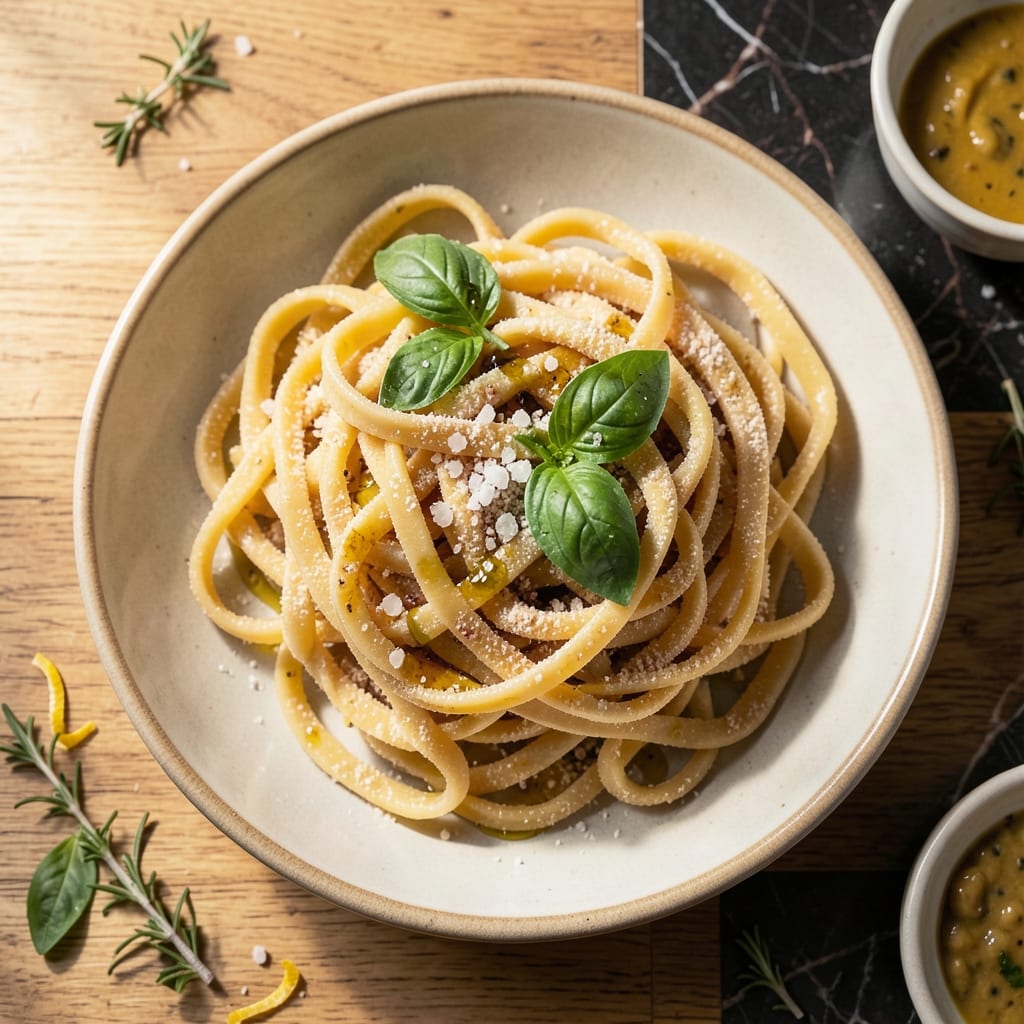
Making pasta from scratch requires only two ingredients and a bit of patience. I learned this technique in my Nonna’s cramped kitchen, where simple methods produced extraordinary results.
This approach uses just flour and water to create homemade noodles with a tender bite. The dough comes together quickly, then rests to develop the perfect texture before rolling and cutting.
You’ll end up with fresh pasta that cooks in minutes, offering a clean, delicate flavor that store-bought versions can’t match. The process is straightforward, with no special equipment needed beyond a rolling pin.
Serve with your favorite sauce for a meal that tastes like tradition on a plate. The satisfaction of making it yourself makes every bite worthwhile.
Ingredients for Flour and Water Pasta
Two ingredients plus a pinch of patience. That is all you need for this.
| Ingredient | Amount | Notes |
|---|---|---|
| All-Purpose Flour 🌾 | 2 cups | Plus more for dusting |
| Water 💧 | ½ cup | Warm, divided as needed |
| Salt 🧂 | ½ tsp | Fine sea salt preferred |
| Olive Oil 🫒 | 1 tbsp | Optional for elasticity |
| Semolina Flour 🌾 | ¼ cup | For texture, optional |
[recipe_ingredient_scaler]
The flour is everything here. King Arthur all-purpose is my go-to—consistent protein content, always reliable. If you want to geek out, 00 flour (find it at Eataly or Italian markets) makes it even more authentic. Semolina adds that restaurant-style bite, but don’t stress if you can’t find it. Just make sure your flour isn’t expired (yes, it goes stale).
No semolina? Skip it—all-purpose works fine alone. Out of olive oil? Water-only dough still works (just a touch less forgiving). The salt isn’t negotiable though—use fine sea salt so it dissolves evenly. If your dough feels too dry, add water 1 tsp at a time. Too sticky? More flour, but don’t overdo it (that’s how you end up with brick pasta).
Fresh pasta cooks in 2-3 minutes, so keep an eye on it. Dough keeps wrapped in the fridge for 24 hours, or freeze for 1 month. Thaw completely before rolling. Always dust your surface well—sticking is the enemy of thin sheets.
Why You’ll Love This Recipe
- Five Ingredients Only: I love that this uses just all-purpose flour, semolina, water, salt, and olive oil—no fancy shopping required.
- Pure Pasta Taste: The semolina adds a nutty depth that makes it taste like Nonna’s, not the boxed stuff.
- Weeknight Hero: Honestly, I roll this out while dinner simmers and it’s ready before the sauce.
- Pennywise Pasta: A pound of flour makes four generous servings for the cost of a single restaurant plate.
Step-by-Step Instructions for Flour and Water Pasta
Here’s my simple method for making fresh noodles that taste better than any store-bought variety.
Step 1: Mix the Dry Ingredients on a Clean Surface
On a clean, dry countertop or large cutting board, combine the 2 cups All-Purpose Flour and 0.25 cup Semolina Flour. I like to use my hands to create a well in the center of the flour mixture—this acts as a bowl for the wet ingredients.
Add the 0.5 tsp Salt to the flour and mix it in evenly. The salt enhances the flavor of the pasta, so don’t skip it. If you’re using the 1 tbsp Olive Oil, add it now as well. The oil adds elasticity to the dough, making it easier to work with.
Step 2: Gradually Incorporate the Water
Pour about half of the 0.5 cup Water (make sure it’s warm) into the well you created. Using a fork, slowly start to incorporate the flour into the water, beginning from the inner edge of the well and working your way outward.
Once the initial water is absorbed, add the remaining water a little at a time. You might not need all of it—the dough should come together into a shaggy mass but not be sticky. If it feels too dry, add a few drops more water; if too wet, add a bit more flour.
Step 3: Knead the Dough Until Smooth
Once the dough starts to come together, use your hands to knead it directly on the countertop. Push the dough away from you with the heel of your hand, then fold it back over itself. Rotate the dough a quarter turn and repeat.
Knead for 8-10 minutes until the dough is smooth and elastic. It should feel slightly tacky but not stick to your hands. If it does stick, lightly dust your hands and the counter with a bit of extra flour. The dough is ready when it springs back when you press it with your finger.
Step 4: Rest and Roll Out the Pasta
Wrap the dough in plastic wrap and let it rest at room temperature for 30 minutes. This resting period relaxes the gluten, making the dough easier to roll out thinly. Don’t skip this step—it makes a noticeable difference in the texture of your final pasta.
After resting, divide the dough into 4 equal portions. Lightly dust your work surface with flour. Using a rolling pin or pasta machine, roll each portion out until it’s paper-thin. For a pasta machine, start at the widest setting and progressively move to thinner settings, passing the dough through each setting once or twice.
Step 5: Cut and Cook Your Fresh Noodles
Once rolled out, dust the pasta sheets with a bit of flour to prevent sticking. Fold or roll each sheet loosely and slice into your desired noodle width. Unfold the noodles and let them dry on a floured surface for 10-15 minutes before cooking.
To cook, bring a large pot of salted water to a rolling boil. Add the fresh pasta and cook for 2-3 minutes—it cooks much faster than dried pasta. You’ll know it’s done when the noodles float to the surface. Drain immediately and serve with your favorite sauce. Fresh pasta tastes best when cooked right away, but you can also dry it for later use.
Pro Tips For Making Flour And Water Pasta
- Knead Until Smooth: Work the dough for at least 8-10 minutes until it stops feeling gritty—I learned this the hard way after my first three batches turned out dense and chewy.
- Use Warm Water: About 105°F water blends better with the flour and makes the dough more pliable, especially when using semolina.
- Rest the Dough: Let it sit covered for 30 minutes minimum (yes, even if you’re impatient like me)—this relaxes the gluten so it rolls out thin without springing back.
- Dust with Semolina: Instead of all-purpose flour for dusting, use semolina to prevent sticking and add a subtle texture to the finished pasta.
Best Sauces and Condiments for This Recipe
Classic Tomato Basil
A simple San Marzano tomato sauce lets the pasta shine. Sauté 3 minced garlic cloves in 2 tbsp olive oil, add 1 can crushed tomatoes, and simmer for 20 minutes. Finish with fresh basil and a pinch of sugar. 🌟
Garlic and Olive Oil
Heat ½ cup extra virgin olive oil with 6 sliced garlic cloves on low until fragrant. Add ½ tsp red pepper flakes for heat. Toss with pasta and ¼ cup grated Pecorino Romano. This aglio e olio is my go-to for quick weeknight dinners.
Brown Butter Sage
Melt ½ cup butter until nutty brown, then add 10 fresh sage leaves. The butter transforms into a rich, aromatic sauce that clings beautifully to fresh noodles. Sprinkle with Parmesan cheese before serving.
Lemon Garlic Cream
Combine ½ cup heavy cream, zest of 1 lemon, and 2 minced garlic cloves in a pan. Simmer until slightly thickened. Toss with pasta and fresh parsley. The brightness cuts through the richness perfectly.
Pesto Perfection
Blend 2 cups fresh basil, ¼ cup pine nuts, ½ cup olive oil, ½ cup Parmesan, and 1 garlic clove. This classic pesto pairs wonderfully with the delicate flavor of flour and water pasta. 🌿
Nutrition Facts
Frequently Asked Questions
Can I use cold water instead of warm?
Warm water helps the gluten develop better for elastic dough. Cold water works but may require extra kneading for 8-10 minutes to achieve the same smooth texture.
Why does my dough keep springing back when rolling?
The gluten needs to relax. Let the dough rest for 30 minutes wrapped in plastic before rolling. If it still resists, give it another 15-20 minutes.
Is a pasta machine necessary for thin sheets?
Not at all! A rolling pin works fine—just roll as thin as possible, about 1-2mm. Dust with flour to prevent sticking between rolls.
How long can I store fresh pasta?
Fresh noodles keep in the fridge for 24 hours or freeze for 1 month. Thaw completely before cooking, and always dust with flour to prevent sticking.

Trained in classic French technique but raised on slow-cooked ribs and spicy rubs, she blends culinary skill with smoke and soul.
- Recipe for Boneless Pork Chops in Cast Iron Skillet: Sear and Baste to Juicy Perfection - October 3, 2026
- Recipe for Boneless Cross Rib Roast: Slow-Roasted Beef with Herb Crust - October 3, 2026
- Hamburgers in Sauce Recipe Crock Pot: Slow-Cooked Savory Delight - October 3, 2026