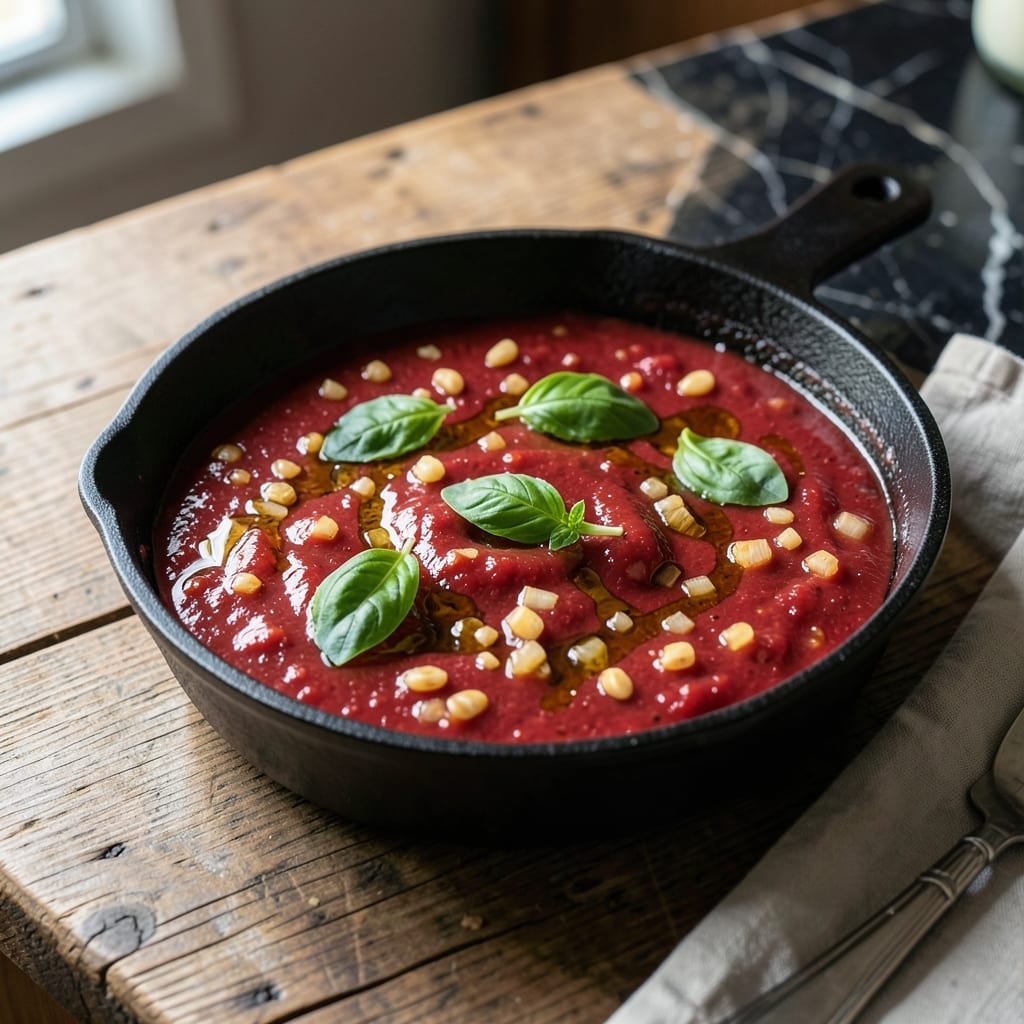
There’s a reason Italian grandmothers swear by San Marzano tomatoes—their sweet, low-acid flesh creates the smoothest, most authentic sauce with minimal effort. This method honors tradition without cutting corners.
With just a few ingredients and slow simmering, you’ll achieve a rich, velvety sauce that clings to pasta perfectly. It’s the foundation of countless Italian dishes, preserving the tomatoes’ natural sweetness.
Ingredients for San Marzano Tomato Sauce Recipe Giada
San Marzano tomatoes and a few aromatics create this rich, velvety Italian sauce.
| Ingredient | Amount | Notes |
|---|---|---|
| San Marzano Whole Peeled Tomatoes 🍅 | 28 oz | Canned, with juice reserved |
| Extra-Virgin Olive Oil 🫒 | ¼ cup | High-quality, fruity variety |
| Yellow Onion 🧅 | ½ whole | Finely diced for base |
| Garlic Cloves 🧄 | 4 cloves | Peeled and minced |
| Fresh Basil Leaves 🌿 | ¼ cup | Torn by hand for flavor |
| Sea Salt 🧂 | 1 tsp | Fine grain, to taste |
| Black Pepper 🌶️ | ½ tsp | Freshly ground preferred |
| Red Pepper Flakes 🌶️ | ¼ tsp | Optional for heat |
| Tomato Paste 🍅 | 2 tbsp | For depth of flavor |
[recipe_ingredient_scaler]
The tomatoes are non-negotiable here. San Marzano DOP from Italy is the gold standard—look for the certification on the can. Whole Foods and Eataly carry them, but most well-stocked supermarkets have them too. The olive oil should be high-quality extra-virgin; this isn’t the time for generic brands. A good rule: if you wouldn’t drizzle it on bread, don’t use it here.
No San Marzano? Regular canned tomatoes at half the quantity will work in a pinch, but the flavor won’t be as sweet. Fresh basil is ideal, but dried at one-third the amount can substitute. The onion and garlic form the flavor base—don’t skip them. If you’re out of tomato paste, simmer the sauce longer to reduce it naturally. Pinch of sugar can balance acidity if needed.
This sauce freezes beautifully for up to 6 months. Let it cool completely before transferring to airtight containers. In the fridge, it keeps for 1 week. The flavor actually deepens over time, so making a double batch is always a good idea.
Why You’ll Love This Recipe
- Five Ingredients: That’s it—just tomatoes, olive oil, onion, garlic, and basil. No complicated shopping list.
- Sweet & Rich: San Marzano tomatoes taste like summer in a can, and the slow simmer with garlic makes it irresistibly smooth.
- Freezer Friendly: I double the batch and freeze half for those nights I need a quick pasta fix.
- Pasta Night Hero: It’s my go-to for everything from spaghetti to lasagna, and honestly, it’s better than store-bought.
Step-by-Step Instructions for San Marzano Tomato Sauce
Achieve restaurant-quality results with this traditional technique for building layers of flavor.
Step 1: Build the Aromatic Base
Heat the 0.25 cup Extra-Virgin Olive Oil in a heavy saucepan over medium-low heat. Add the 0.5 whole Yellow Onion, finely diced, and cook for 8-10 minutes until translucent and just beginning to caramelize around the edges.
This slow cooking process develops the natural sugars in the onion, creating a sweet foundation for your sauce. Stir occasionally to prevent browning, adjusting heat as needed. The onion is ready when it becomes soft and fragrant without taking on color.
Step 2: Develop Depth with Garlic and Tomato Paste
Add the 4 cloves Garlic Cloves, minced, and cook for 1 minute until aromatic but not browned. Immediately stir in the 2 tbsp Tomato Paste and continue cooking for 2-3 minutes, stirring constantly.
The tomato paste should turn a deeper brick red color as it cooks—this indicates the raw flavor has mellowed and the paste has begun to caramelize. Be careful not to let it burn, as this would introduce bitterness to your final sauce.
Step 3: Incorporate the Tomatoes and Simmer
Add the 28 oz San Marzano Whole Peeled Tomatoes, crushing them by hand as they go into the pot. Include all the juice from the can. Stir well to combine with the onion mixture.
Increase heat to medium and bring to a gentle simmer. Reduce heat to low and let it cook uncovered for 45-60 minutes, stirring occasionally. The sauce should reduce by about one-third and thicken slightly.
Step 4: Season and Finish with Fresh Basil
Stir in the 1 tsp Sea Salt, 0.5 tsp Black Pepper, and 0.25 tsp Red Pepper Flakes (if using). Taste and adjust seasoning as needed—the acidity of tomatoes varies, so you may need slightly more salt.
Just before serving, remove from heat and stir in the 0.25 cup Fresh Basil Leaves, torn by hand. The basil should wilt slightly but retain its bright green color and fresh aroma. Let the sauce rest for 5 minutes to allow the flavors to meld completely.
Pro Tips For Making San Marzano Tomato Sauce Recipe Giada
- Crush by Hand: I learned this the hard way—resist the urge to blend or chop the San Marzano tomatoes. Crushing them with your hands preserves the texture and sweetness better than any tool.
- Bloom the Garlic: Cook the minced garlic in olive oil for just 30 seconds until fragrant, not brown. Any longer and it turns bitter, and I’ve ruined a batch or two by walking away.
- Skip the Salt Early: San Marzano tomatoes are naturally sweeter, so hold off on salting until the sauce has simmered for at least 15 minutes. Taste first—you might need less than you think.
- Add Basil Last: Sounds weird, but it works: Stir in the fresh basil leaves right at the end of cooking. Adding them earlier turns the sauce bitter, and my grandmother swore by this.
Essential Equipment for This Recipe
Must-Have Tools
To nail Giada’s San Marzano tomato sauce, you’ll need a few kitchen staples. A large, heavy-bottomed pot (like a Dutch oven) ensures even heat distribution, preventing scorching. A wooden spoon is ideal for stirring and crushing tomatoes by hand. Don’t forget a sharp chef’s knife and cutting board for prepping fresh garlic and herbs!
Nice-to-Have
For smoother sauce, an immersion blender or food mill helps achieve that silky texture without seeds or skins. A fine-mesh strainer can also refine the consistency if you prefer a ultra-smooth finish. These tools aren’t mandatory but elevate the process.
Budget Alternatives
No Dutch oven? A sturdy stainless steel pot works fine—just keep an eye on the heat. Swap the immersion blender for a handheld potato masher to break down tomatoes affordably. Even a fork can do the trick in a pinch! 💡
Nutrition Facts

Trained in classic French technique but raised on slow-cooked ribs and spicy rubs, she blends culinary skill with smoke and soul.
- Recipe for Boneless Pork Chops in Cast Iron Skillet: Sear and Baste to Juicy Perfection - October 3, 2026
- Recipe for Boneless Cross Rib Roast: Slow-Roasted Beef with Herb Crust - October 3, 2026
- Hamburgers in Sauce Recipe Crock Pot: Slow-Cooked Savory Delight - October 3, 2026