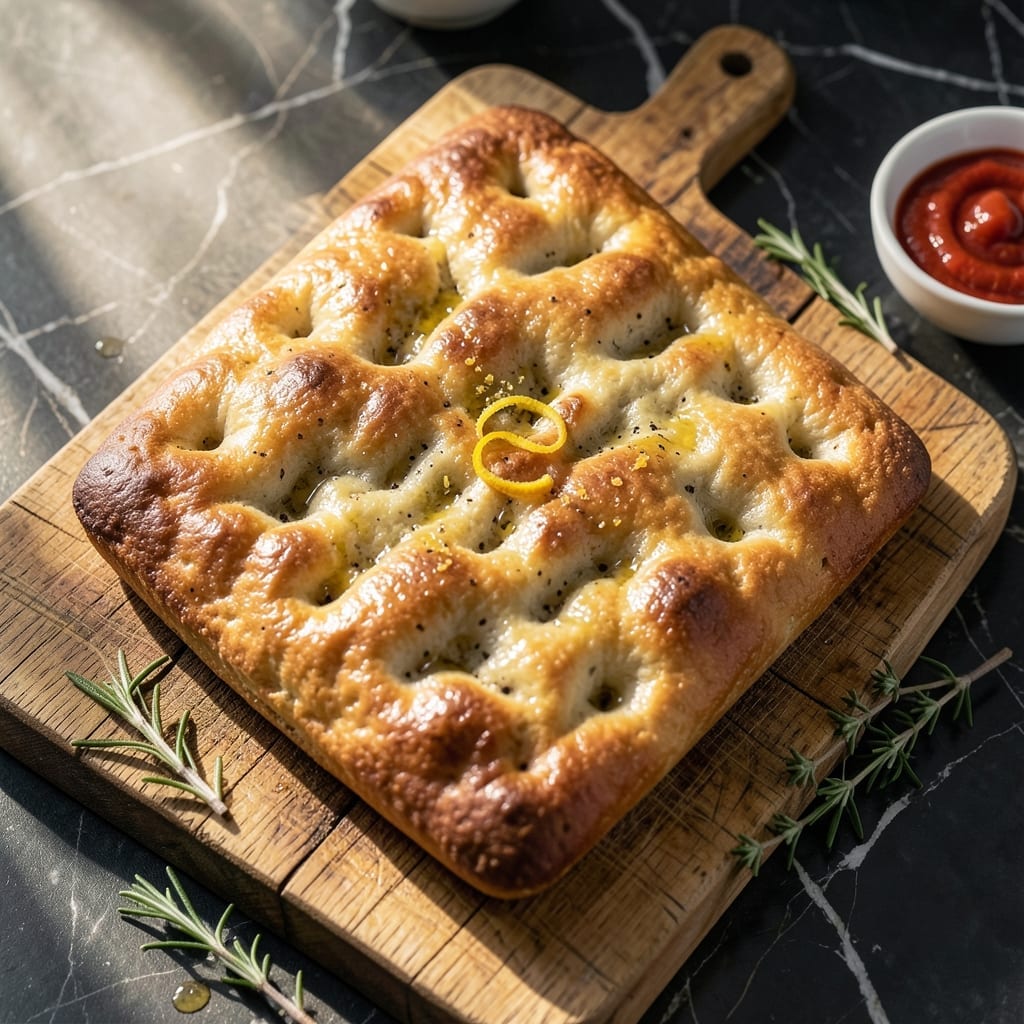
This focaccia delivers the same pillowy texture and herb-infused flavor as traditional versions, but without any olive oil. The secret lies in using a simple vegetable oil substitute that still creates that signature crisp exterior and airy interior.
I developed this method after realizing many home cooks don’t always have olive oil on hand. The dough comes together with basic pantry staples and rises beautifully with just a touch of patience. Baking it at a high temperature ensures a golden crust.
What emerges from the oven is a cloud-like bread with a slightly crisp top, perfect for tearing and sharing. The herbs release their aroma as it bakes, filling your kitchen with an irresistible scent.
Serve warm or at room temperature, ideal alongside soups or as a base for sandwiches.
Ingredients for Focaccia Recipe Without Olive Oil
Basic pantry staples transform into fluffy, herb-kissed focaccia without olive oil.
| Ingredient | Amount | Notes |
|---|---|---|
| All-Purpose Flour 🌾 | 4 cups | Plus extra for dusting |
| Warm Water 💧 | 1 ½ cups | About 110°F, not hot |
| Active Dry Yeast 🍞 | 2 ¼ tsp | One packet, check expiration |
| Granulated Sugar 🍚 | 1 tsp | Feeds the yeast |
| Salt 🧂 | 2 tsp | Kosher or sea salt |
| Vegetable Oil 🫒 | ½ cup | Neutral flavor, like canola |
| Fresh Rosemary 🌿 | 2 tbsp | Chopped, or 1 tbsp dried |
| Fresh Thyme 🍃 | 2 tbsp | Chopped, or 1 tbsp dried |
| Garlic Cloves 🧄 | 4 cloves | Minced or thinly sliced |
| Coarse Sea Salt 🧂 | 1 tsp | For topping, flaky variety |
| Water 💧 | 2 tbsp | For dimpling the dough |
[recipe_ingredient_scaler]
The flour is your foundation—King Arthur is my go-to for consistency. Yeast is non-negotiable here, so check that expiration date (old yeast won’t rise). Most grocery stores carry Fleischmann’s or Red Star in the baking aisle. The vegetable oil is doing double duty: enriching the dough and crisping the crust. Canola or avocado oil work best for their neutral profiles.
No fresh herbs? Dried at half the amount works fine—just rehydrate them in a splash of warm water first. Short on thyme? Sub in oregano or marjoram. For the garlic, pre-minced from a jar saves time (but fresh tastes brighter). The coarse salt on top is what gives it that bakery-style finish—Maldon or Diamond Crystal are perfect.
Dough rises best in a warm spot—turn your oven light on for a cozy proofing nook. Baked focaccia keeps 2-3 days wrapped in foil at room temp. Freeze slices for up to 1 month (reheat in oven to revive). Always dimple the dough deeply so oil and herbs settle in.
Why You’ll Love This Recipe
- No Fuss Mixing: I just stir flour, water, yeast, sugar, and salt—no fancy tools or olive oil required.
- Pillowy Soft Bite: The yeast works its magic for that airy, chewy texture I crave in every slice.
- Endless Toppings: I’ve tried rosemary, cherry tomatoes, even just coarse salt—it takes whatever I have on hand.
- Budget Friendly: Five pantry staples and a little time give me bakery-style bread for pennies.
Step-by-Step Instructions for Fluffy Herb-Infused Focaccia
Here’s my no-fuss method for perfect focaccia with a crisp crust and airy interior.
Step 1: Activate the Yeast and Mix the Dough
In a small bowl, combine the 1.5 cups Warm Water, 2.25 tsp Active Dry Yeast, and 1 tsp Granulated Sugar. Stir gently and let it sit for 5-7 minutes until the mixture becomes frothy and cloudy—this tells you the yeast is alive and active.
In a large mixing bowl, whisk together the 4 cups All-Purpose Flour and 2 tsp Salt. Make a well in the center and pour in the yeast mixture and 0.5 cup Vegetable Oil. Use a wooden spoon to mix until a shaggy dough forms. It’ll look rough at first, but that’s normal.
Step 2: Knead and Let the Dough Rise
Turn the dough out onto a lightly floured surface and knead for 8-10 minutes until smooth and elastic. You’ll know it’s ready when it springs back slowly when poked with a finger. The dough should feel slightly tacky but not sticky—add a sprinkle of flour if needed.
Lightly oil a clean bowl with a bit of the Vegetable Oil, place the dough inside, and cover with a damp towel. Let it rise in a warm, draft-free spot for 1-2 hours or until doubled in size. In cooler kitchens, this might take closer to 2 hours—patience pays off.
Step 3: Shape and Add Herb Toppings
Once risen, punch down the dough to release the air. Transfer it to a greased 9×13-inch baking pan (or similar size) and press it out gently to fit the pan. Use your fingertips to create deep dimples all over the surface—this is what gives focaccia its signature look.
Drizzle the remaining Vegetable Oil over the dough, then sprinkle evenly with the 2 tbsp Fresh Rosemary, 2 tbsp Fresh Thyme, and 4 cloves Garlic Cloves (minced or thinly sliced). Press the toppings lightly into the dimples so they don’t fall off during baking.
Step 4: Final Rise and Bake to Golden Perfection
Cover the pan loosely with a towel and let the dough rise again for 30-45 minutes until puffy. While it’s rising, preheat your oven to 400°F. The dough should look airy and the dimples will expand slightly.
Just before baking, sprinkle the 1 tsp Coarse Sea Salt evenly over the top and drizzle with the 2 tbsp Water—this helps create a crispy, golden crust. Bake for 20-25 minutes until the edges are deep golden brown and the center feels set when lightly pressed.
Step 5: Cool and Serve Warm
Remove the focaccia from the oven and let it cool in the pan for 10 minutes. This allows the structure to set so it doesn’t collapse when you slice it. The herbs will be fragrant and the garlic lightly toasted.
Transfer to a cutting board and slice into squares. Serve warm for the best texture—the crust should be crisp, the interior light and airy, and every bite infused with herb and garlic flavor. Leftovers? Reheat briefly in the oven to restore the crust.
Pro Tips For Making Focaccia Recipe Without Olive Oil
- Proof the Yeast: Dissolve the sugar in warm water (around 110°F) before adding yeast—this wakes it up faster. I learned this the hard way after a few flat loaves that never rose.
- Use Butter Instead: Since there’s no olive oil, melted butter brushed on the dough before baking adds richness and a golden crust. Sounds weird, but it works.
- Don’t Rush the Rise: Let the dough double in size, even if it takes 1-2 hours. After burning three batches, I finally figured out that patience here guarantees a light, airy texture.
- Dimple Deeply: Press your fingers all the way to the bottom of the dough when dimpling—this prevents large air pockets and ensures even baking. My grandmother swore by this, and she was right.
Common Mistakes When Making Great focaccia recipe without olive oil
Overproofing the Dough
Letting your dough rise for too long is one of the most common mistakes. In a warm kitchen, 2 hours might be too much. I check mine at 1 hour and if it’s doubled, I move to the next step. Overproofed dough collapses when baked, losing that airy texture. 💡
Skipping the Second Rise
After shaping the dough in the pan, don’t rush to the oven. That 30-45 minute final rise lets the dimples expand and the herbs infuse. I set a timer to avoid forgetting this crucial step. The dough should look visibly puffy before baking.
Using Cold Water
Your water needs to be 110°F to activate the yeast properly. Too cold and the yeast won’t bloom, too hot and you’ll kill it. I use a kitchen thermometer to be precise, but warm tap water usually works in my Portland kitchen.
Shallow Dimpling
Those characteristic dimples aren’t just for looks—they create pockets for the oil and herbs. Press your fingertips deeply into the dough, almost to the pan. Shallow dimples mean the toppings will slide off during baking.
Underbaking the Center
Focaccia should be deep golden brown at the edges and set in the center. If the top looks pale at 20 minutes, give it 5 more minutes. The internal temperature should reach 190°F for perfect doneness.
Forgetting the Water Drizzle
That 2 tbsp Water drizzled just before baking creates steam for a crisp crust. Without it, your focaccia might turn out dense. I use my fingers to flick the water evenly across the surface.
Nutrition Facts
Frequently Asked Questions
Can I use a different oil instead of vegetable oil?
Yes! Any neutral oil like canola, grapeseed, or avocado oil works perfectly. Avoid strongly flavored oils like coconut or sesame as they’ll overpower the herbs.
Why does my focaccia turn out dense?
Dense bread usually means underproofed dough or insufficient kneading. Ensure your yeast is fresh and the dough doubles in size during rising. Knead for the full 8-10 minutes to develop gluten.
How can I make it crispier on top?
For extra crunch, bake on the lower oven rack and add 1 extra tbsp water before baking. The steam helps create that perfect crisp crust.
Can I make this ahead of time?
Prepare the dough the night before and refrigerate after the first rise. Let it come to room temperature before the second rise and baking. This actually enhances the flavor!

Trained in classic French technique but raised on slow-cooked ribs and spicy rubs, she blends culinary skill with smoke and soul.
- Recipe for Boneless Pork Chops in Cast Iron Skillet: Sear and Baste to Juicy Perfection - October 3, 2026
- Recipe for Boneless Cross Rib Roast: Slow-Roasted Beef with Herb Crust - October 3, 2026
- Hamburgers in Sauce Recipe Crock Pot: Slow-Cooked Savory Delight - October 3, 2026