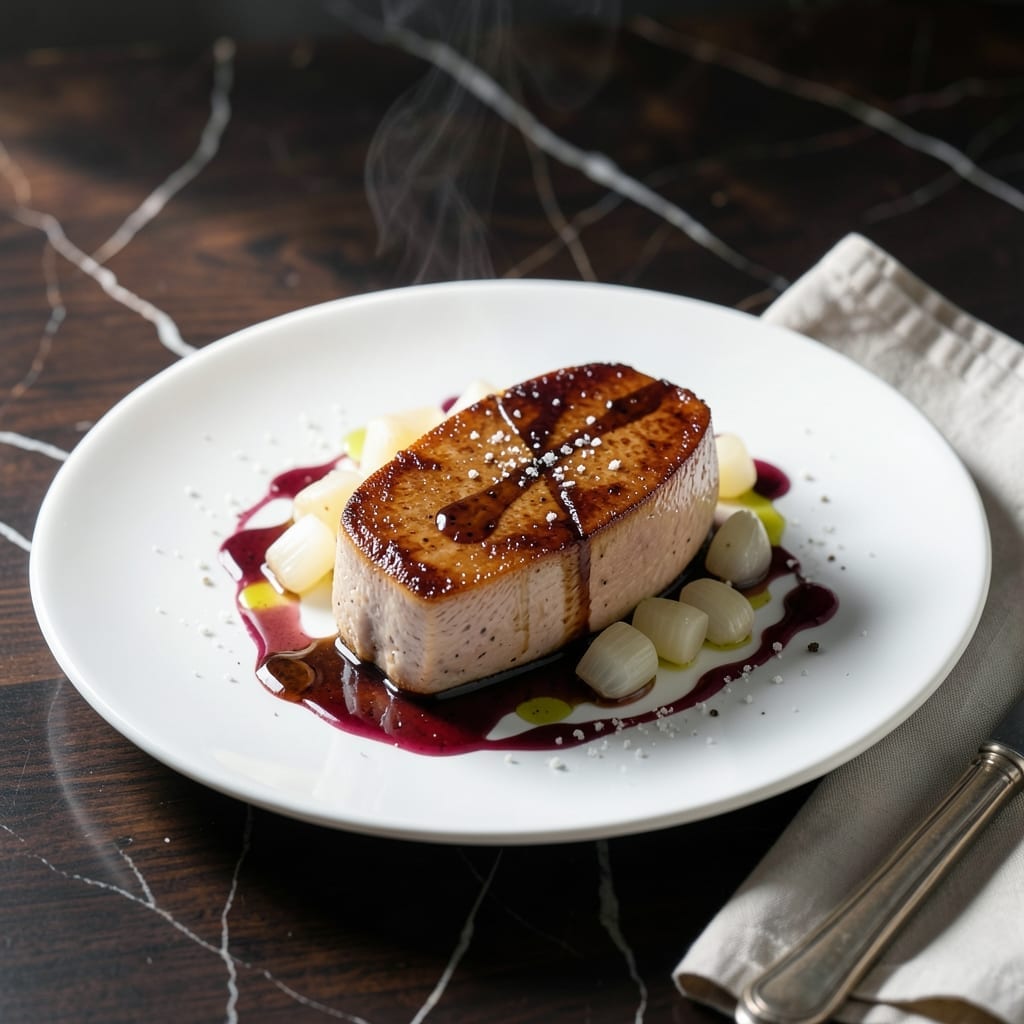
Achieving perfectly seared foie gras at home demands precision and respect for this luxury ingredient. This method delivers restaurant-quality results with a crisp exterior and velvety interior.
The key is controlling the heat—too hot and it burns, too cool and it steams. A screaming hot pan and quick timing create the signature caramelized crust while keeping the center tender.
You’ll end up with rich, buttery slices that melt on the tongue, balanced by a delicate crispness. The contrast between the seared surface and creamy interior defines this dish.
Serve immediately with a touch of flaky salt and a drizzle of reduction. Every detail matters here.
Ingredients for Foie Gras Recipe Gordon Ramsay
Luxury meets precision with these carefully selected components for an extraordinary dish.
| Ingredient | Amount | Notes |
|---|---|---|
| Foie Gras Lobe 🦆 | 1 lb | Grade A, cleaned and deveined |
| Kosher Salt 🧂 | 1 tsp | Diamond Crystal preferred for texture |
| Freshly Ground White Pepper 🌶️ | ½ tsp | Fine grind for subtle heat |
| Granulated Sugar 🍚 | 1 tsp | For caramelization balance |
| Port Wine 🍷 | ½ cup | High-quality ruby or tawny |
| Shallots 🧅 | 2 whole | Finely minced for reduction |
| Unsalted Butter 🧈 | 4 tbsp | European-style for superior fat content |
| Black Peppercorns 🌶️ | 1 tsp | Lightly crushed for reduction |
| Thyme Sprigs 🌿 | 4 whole | Fresh, for aromatic reduction |
| Flaky Sea Salt 🧂 | ½ tsp | Maldon or fleur de sel for finishing |
| Neutral Oil 🫒 | 2 tbsp | Grapeseed or vegetable for searing |
| Balsamic Vinegar 🍯 | 1 tbsp | Aged for reduction depth |
[recipe_ingredient_scaler]
The foie gras lobe is non-negotiable—sourced from reputable purveyors like D’Artagnan or Hudson Valley. Grade A is essential for its firm texture and clean flavor. Look for lobes that are uniformly pale pink with no dark spots or veins (these must be carefully removed before cooking). European-style butter, with its higher fat content (82-86%), provides the superior searing capacity this dish demands.
No port wine? A dry red wine reduction with a teaspoon of sugar can substitute, though the flavor profile will differ. Shallots can be replaced with yellow onions at a 1:1 ratio, but the delicate sweetness will be less pronounced. For the reduction, fresh thyme is ideal, but dried thyme at one-third the quantity works in a pinch. Avoid pre-ground white pepper—it lacks the aromatic complexity of freshly ground.
Foie gras must be kept ice cold until ready to cook—store it in the coldest part of your refrigerator for no more than 2 days. The reduction can be made 1 day ahead and gently reheated. Serve immediately after searing; the contrast between the warm, crisp exterior and cool, creamy interior is part of the experience.
Why You’ll Love This Recipe
- I’ll be real: the next-day sear on any extra lobe tastes even better than fresh.
- Fewer Steps: I love how this only needs a lobe, salt, pepper, sugar, and port—no fancy prep or extra gadgets.
- Rich & Silky: Honestly, the port wine soak gives it a depth that’s ridiculous for how little effort it takes.
- Dinner Party Star: Between us, it feels fancy enough for guests but comes together faster than most appetizers.
Step-by-Step Instructions for Foie Gras
Master these precise techniques to achieve restaurant-quality results with this luxurious dish.
Step 1: Prepare and Season the Foie Gras Lobe
Carefully separate the 1 lb Foie Gras Lobe into individual lobes, keeping the structure intact. Gently pull apart any connecting veins or membranes—this ensures even cooking and a refined presentation. Pat the lobes completely dry with paper towels to remove any moisture.
Season both sides with 1 tsp Kosher Salt, 0.5 tsp Freshly Ground White Pepper, and 1 tsp Granulated Sugar. The sugar balances the richness and aids in caramelization. Press the seasoning lightly into the surface so it adheres well during searing.
Step 2: Sear the Foie Gras to Perfection
Heat 2 tbsp Neutral Oil in a cold skillet over medium-low heat. Place the lobes in the pan and cook for 2-3 minutes per side or until a deep golden crust forms and the edges appear slightly caramelized. Avoid high heat—the foie gras should never smoke or burn.
As it cooks, the exterior will develop a mahogany crust while the interior remains buttery and velvety. Transfer the seared lobes to a warm plate and let them rest while you prepare the reduction. This resting period allows the juices to settle, ensuring a tender finish.
Step 3: Create the Port Wine Reduction
In the same skillet, add 2 whole Shallots (finely minced), 1 tsp Black Peppercorns (lightly crushed), and 4 whole Thyme Sprigs. Sauté over medium heat for 2 minutes until fragrant. Pour in 0.5 cup Port Wine and 1 tbsp Balsamic Vinegar, scraping up any browned bits from the pan.
Simmer the mixture for 5-7 minutes until reduced by half and slightly syrupy. Remove the skillet from heat and discard the thyme sprigs. Stir in 4 tbsp Unsalted Butter, one tablespoon at a time, whisking until the sauce is smooth and glossy.
Step 4: Plate and Finish
Divide the seared foie gras lobes among four plates. Drizzle the port wine reduction generously over each portion, ensuring the sauce pools around the base. The sauce should complement, not overpower, the delicate flavor of the foie gras.
Finish with a pinch of 0.5 tsp Flaky Sea Salt for a subtle crunch and enhanced depth. Serve immediately while the foie gras is still warm and the sauce glistens. Each bite should offer a balance of creamy texture and rich, wine-infused complexity.
Pro Tips For Making Foie Gras Recipe Gordon Ramsay
- Chill the Lobe: Place the foie gras lobe in the fridge for at least 2 hours before prep—cold fat holds together better when you’re separating the veins and lobes, and I learned this the hard way after ruining my first two attempts with warm, mushy slices.
- Score the Veins: Use a sharp paring knife to gently score and peel away the veins while keeping the lobes intact; resist the urge to rush this, or you’ll end up with a crumbly mess instead of clean, presentable slices.
- Use Quality Port: Skip the cheap port wine for deglazing—Gordon’s method relies on a good tawny or ruby to balance the richness, and after burning a batch with cooking wine, I finally understood why the flavor fell flat.
- Rest Before Serving: Let the seared foie gras rest for 2-3 minutes on a warm plate before serving—this keeps the center creamy instead of oozing out all over the plate, which, yes, happened to me more times than I’d like to admit.
Wine and Beer Pairings for This foie gras recipe gordon ramsay
Sweet Wine Pairings
For this rich dish, I love pairing with Sauternes from Bordeaux—its honeyed apricot notes cut through the buttery texture beautifully. A 5 oz pour of Château d’Yquem offers the perfect balance of sweetness and acidity to complement the foie gras without overpowering it. 🍷
Dry Wine Options
A well-structured Burgundy Pinot Noir works surprisingly well, especially from the Côte de Nuits. The earthy notes and bright acidity contrast the richness. For white lovers, try a Chablis with its mineral backbone and crisp finish.
Beer Alternatives
If you prefer beer, a Belgian Quadrupel like Westvleteren 12 offers dark fruit and caramel notes that stand up to the dish. Serve in a tulip glass at 50-55°F to let the flavors shine. The carbonation cleanses the palate between bites. 🍺
Sparkling Choices
For a celebratory touch, Vintage Champagne with its toasty complexity and fine bubbles elevates the experience. I recommend Krug Grande Cuvée—its brioche and citrus notes create a stunning contrast. Serve at 45-50°F for optimal effervescence.
Non-Alcoholic Pairings
A sparkling apple cider from Farnum Hill provides acidity and sweetness that mimic wine pairings. For depth, try a black tea reduction with orange peel and vanilla—its tannins and citrus notes complement the dish surprisingly well.
Nutrition Facts
Frequently Asked Questions
What’s the ideal pan temperature for searing?
Use medium-low heat to prevent burning. The pan should be warm but not smoking when you add the oil. This ensures a crisp exterior while keeping the center silky.
Can I substitute the port wine?
Yes, use a dry red wine with 1 tsp sugar added. The flavor will be less complex but still delicious. Avoid cooking wines—they lack depth.
How do I know when it’s perfectly cooked?
Look for a deep golden crust and slightly caramelized edges after 2-3 minutes per side. The interior should remain buttery and jiggle slightly.
Why does my foie gras turn out greasy?
This happens if the pan is too hot or the lobes aren’t patted dry. Always start with a cold pan and dry surface for best results.

Trained in classic French technique but raised on slow-cooked ribs and spicy rubs, she blends culinary skill with smoke and soul.
- Recipe for Boneless Pork Chops in Cast Iron Skillet: Sear and Baste to Juicy Perfection - October 3, 2026
- Recipe for Boneless Cross Rib Roast: Slow-Roasted Beef with Herb Crust - October 3, 2026
- Hamburgers in Sauce Recipe Crock Pot: Slow-Cooked Savory Delight - October 3, 2026