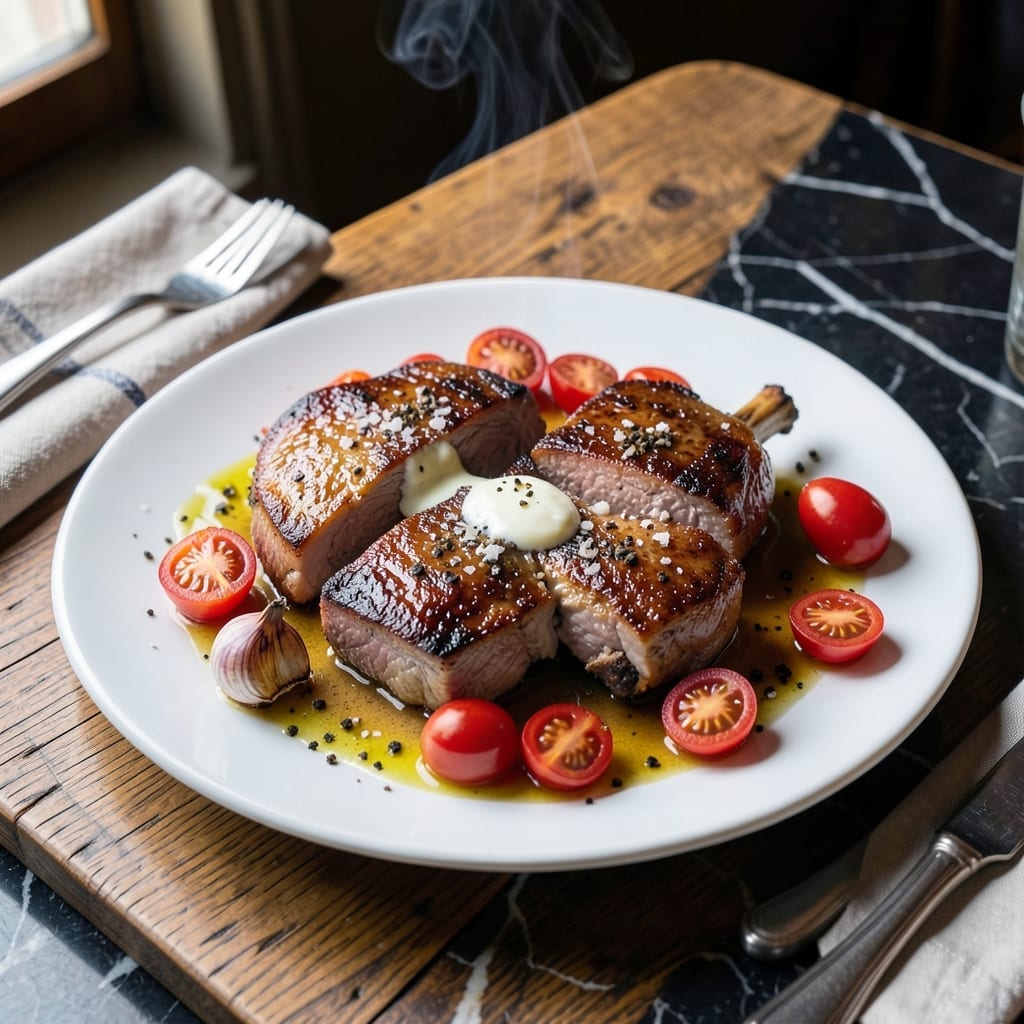
Classic French technique meets home kitchen practicality with this bone-in pork chop method. The secret lies in proper drying, precise temperature control, and a simple pan sauce that elevates the dish without complicating it.
I begin with thick-cut chops, patted thoroughly dry to ensure a crispy sear. A hot pan and careful timing create that golden crust while preserving juicy centers. The fond left in the pan becomes the base for a quick pan sauce.
What emerges is a restaurant-quality chop with a perfectly browned exterior and tender interior. The pan sauce, enriched with butter and herbs, ties everything together beautifully.
This method works for weeknight dinners or special occasions. The technique is simple but the results are anything but ordinary.
Ingredients for French Bone-in Pork Chop
Thick-cut bone-in pork chops and a few pantry staples create this restaurant-quality dish at home.
| Ingredient | Amount | Notes |
|---|---|---|
| Bone-In Pork Chops 🥩 | 4 whole | Thick-cut, 1.5 inches preferred |
| Kosher Salt 🧂 | 2 tsp | Diamond Crystal brand recommended |
| Black Pepper 🌶️ | 1 tsp | Freshly ground for best flavor |
| Unsalted Butter 🧈 | 3 tbsp | Divided for searing and sauce |
| Olive Oil 🫒 | 2 tbsp | High smoke point preferred |
| Garlic Cloves 🧄 | 4 cloves | Smashed, peeled for sauce |
| Fresh Thyme Sprigs 🌿 | 4 whole | Leaves stripped for garnish |
| Fresh Rosemary Sprigs 🌿 | 2 whole | Leaves stripped for sauce |
| Shallot 🧅 | 1 whole | Finely minced for pan sauce |
| Dry White Wine 🍷 | ½ cup | Sauvignon Blanc or Pinot Grigio |
| Chicken Stock 🥩 | ½ cup | Low-sodium preferred for control |
| Dijon Mustard 🟡 | 1 tbsp | Smooth variety for sauce depth |
[recipe_ingredient_scaler]
The pork chops are non-negotiable here. Bone-in, thick-cut (1.5 inches) ensures juicy centers and that crispy exterior. Look for ribeye or center-cut chops at your butcher or Whole Foods—they have the best selection. Pat them thoroughly dry before cooking; moisture is the enemy of a good sear. The fat cap should have visible marbling for maximum flavor.
No white wine? Apple cider vinegar with a splash of water mimics the acidity. Out of fresh herbs? Dried thyme and rosemary at half the amount work in a pinch. Shallots can be swapped for yellow onion, though the flavor will be slightly sharper. For the stock, homemade is ideal, but Better Than Bouillon is a solid store-bought backup.
Pork chops are best cooked fresh, but you can brine them overnight for extra juiciness. The pan sauce keeps in the fridge for 3 days—reheat gently to preserve texture. Leftover chops? Slice thin and crisp in a pan for sandwiches the next day.
Why You’ll Love This Recipe
- One Pan Wonder: I love that this comes together in a single skillet—just sear the chops in butter and olive oil, season with salt and pepper, and you’re done.
- Buttery Crisp: That combination of butter and high heat creates the most insane golden crust on the bone-in chops while keeping the inside juicy.
- Weeknight MVP: Honestly, it’s my Tuesday night lifesaver when I need something impressive but can’t spend hours in the kitchen.
- Budget Friendly: Bone-in chops are always cheaper than boneless, and this recipe lets them shine with just pantry staples.
Step-by-Step Instructions for French Bone-In Pork Chops
Master the technique for restaurant-quality chops with a golden crust and tender interior.
Step 1: Season and Rest the Chops
Pat the 4 whole Bone-In Pork Chops completely dry with paper towels—this is essential for achieving that golden-brown sear. Season both sides aggressively with 2 tsp Kosher Salt and 1 tsp Black Pepper, pressing the seasoning into the meat so it adheres well.
Let the seasoned chops rest at room temperature for 30-45 minutes. This step ensures even cooking and allows the salt to penetrate the surface, enhancing flavor and moisture retention throughout the process.
Step 2: Sear to Perfection
Heat a heavy skillet (cast iron works best) over medium-high heat until very hot. Add 2 tbsp Olive Oil and swirl to coat the pan. When the oil shimmers, add 2 tbsp Unsalted Butter and let it melt completely.
Place the chops in the pan, working in batches if necessary to avoid crowding. Sear undisturbed for 4-5 minutes per side until a deep golden-brown crust forms. The chops are ready to flip when they release easily from the pan. Transfer to a plate and tent loosely with foil to keep warm.
Step 3: Build the Pan Sauce
Reduce heat to medium and add the finely minced 1 whole Shallot to the same skillet. Cook for 1-2 minutes until softened, stirring to scrape up any browned bits from the bottom of the pan.
Add the 4 cloves Garlic Cloves (smashed), stripped leaves from 2 whole Fresh Rosemary Sprigs, and 0.5 cup Dry White Wine. Simmer for 2-3 minutes until the liquid reduces by half and the alcohol smell dissipates. Stir in 1 tbsp Dijon Mustard and 0.5 cup Chicken Stock.
Step 4: Finish and Serve
Return the chops to the skillet along with any accumulated juices. Add the remaining 1 tbsp Unsalted Butter and the leaves from 4 whole Fresh Thyme Sprigs. Spoon the sauce over the chops and simmer for 2-3 minutes until heated through.
Serve immediately with the pan sauce spooned over each chop. The sauce should have a glossy consistency that clings to the meat. Garnish with additional fresh thyme leaves for a restaurant-worthy presentation. The chops will be juicy inside with a crispy, flavorful exterior.
Pro Tips For Making French Bone-In Pork Chop
- Dry the Chops: Pat those bone-in pork chops completely dry with paper towels before seasoning—I learned this the hard way after too many soggy crusts. The drier the surface, the better that butter and oil will sear it.
- Start Hot, Finish Low: Sear the chops over medium-high heat for 3-4 minutes per side to build a crust, then drop to medium-low to finish cooking without burning the butter. Sounds simple, but it’s the difference between tough and tender.
- Salt Aggressively: Use more kosher salt than you think—at least 1 teaspoon per chop—and let it sit for 10 minutes before cooking. My grandmother swore by this, and she was right: it seasons deep into the meat, not just the surface.
- Baste with Butter: Tilt the pan in the last 2 minutes and spoon that melted butter and olive oil over the chops repeatedly. I was skeptical until I tried it, but it adds a ridiculous amount of richness to every bite.
Regional Styles of This Dish
Parisian Bistro Style
In Paris, these chops are often prepared with a simple beurre blanc sauce. I use Sauvignon Blanc wine from the Loire Valley for authenticity. The sauce emulates the classic French preparation with just 3 tbsp butter and a splash of vinegar. 💛
Provençal Herb Blend
The South of France adds herbes de Provence—a mix of thyme, rosemary, and lavender. I forage wild thyme along coastal rides to enhance the flavor. Rub the chops with 1 tbsp herb blend before searing for an aromatic crust.
Normandy Apple Variation
Normandy’s famous apples inspire a sweet-savory twist. After searing, add ½ cup diced apples and 2 tbsp Calvados (apple brandy) to the pan. The apples caramelize beautifully, creating a rich, fruity sauce that pairs perfectly with the pork.
Lyon’s Mustard Cream
Lyon, France’s culinary capital, often serves pork with a Dijon cream sauce. I whisk ¼ cup crème fraîche into the pan sauce at the end. The tangy cream balances the rich pork, adding a luxurious touch reminiscent of Lyon’s bistros.
Alsatian Sauerkraut
Near the German border, Alsace pairs pork with sauerkraut. I sauté 1 cup drained sauerkraut with the shallots before deglazing. The tangy fermented cabbage cuts through the richness, adding a hearty, traditional element.
Nutrition Facts
Frequently Asked Questions
How thick should the chops be for best results?
Use 1.5-inch thick bone-in chops for juicy centers and even cooking. Thinner chops dry out quickly, while thicker ones may not cook through properly without over-browning the exterior.
Why rest the chops before cooking?
Resting for 30-45 minutes brings them to room temperature, ensuring even cooking and better sear. Cold chops cook unevenly, with tough edges and underdone centers.
Can I use a different pan if I don’t have cast iron?
Yes! A heavy stainless steel skillet works too. Avoid non-stick for searing—they don’t get hot enough for a proper crust.
What if my sauce is too thin?
Simmer uncovered for 1-2 minutes to reduce and thicken. A small pat of cold butter whisked in at the end also adds glossy body to the sauce.

Trained in classic French technique but raised on slow-cooked ribs and spicy rubs, she blends culinary skill with smoke and soul.
- Recipe for Boneless Pork Chops in Cast Iron Skillet: Sear and Baste to Juicy Perfection - October 3, 2026
- Recipe for Boneless Cross Rib Roast: Slow-Roasted Beef with Herb Crust - October 3, 2026
- Hamburgers in Sauce Recipe Crock Pot: Slow-Cooked Savory Delight - October 3, 2026