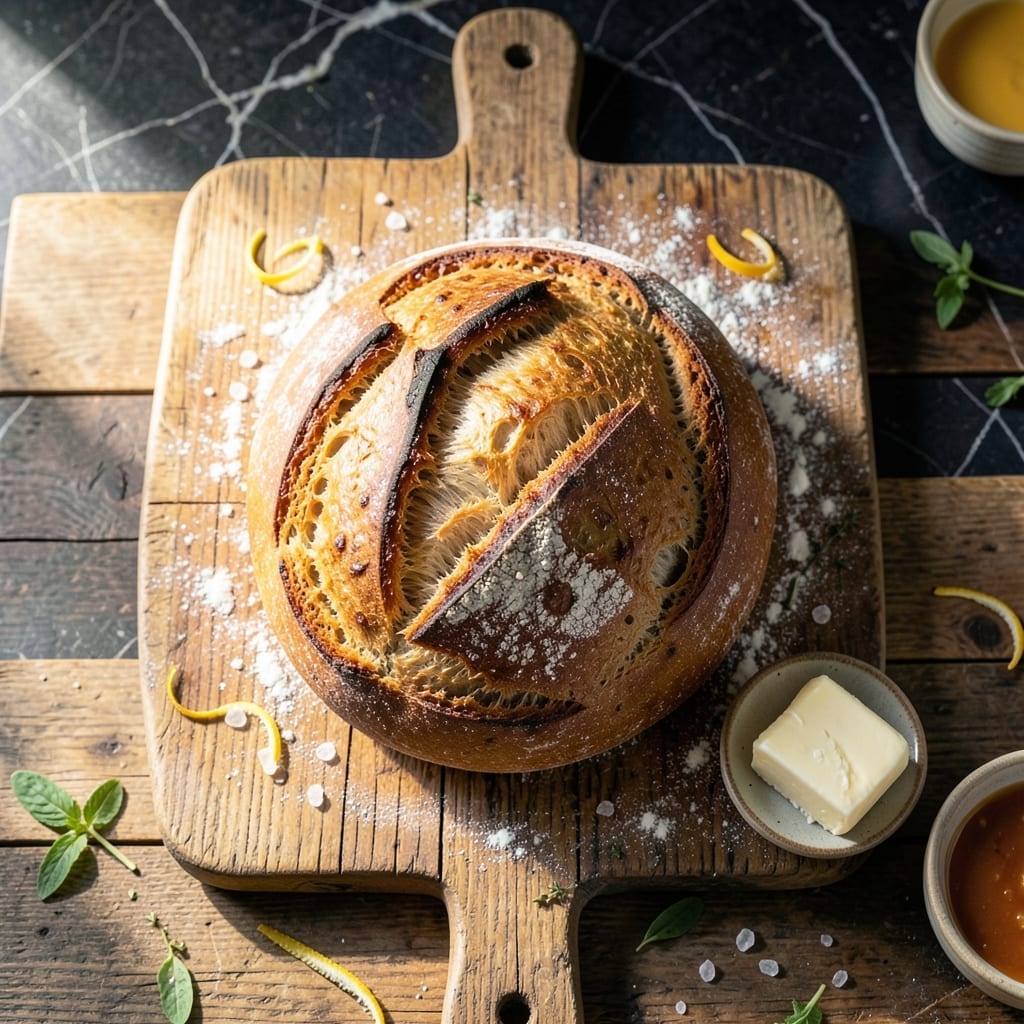
This bread maker recipe delivers a golden, crusty artisan loaf with minimal effort. I’ve perfected the timing and ingredient ratios to ensure consistent results.
With just a few basic ingredients and the right machine settings, you’ll achieve bakery-style French bread at home. The process is hands-off, but the flavor is anything but.
Ingredients for French Bread Recipe Bread Maker
Minimal ingredients yield bakery-quality results with your bread maker at home.
| Ingredient | Amount | Notes |
|---|---|---|
| Bread Flour 🌾 | 3 ½ cups | High-protein for structure |
| Active Dry Yeast 🍞 | 2 ¼ tsp | Or instant yeast, same amount |
| Sea Salt 🧂 | 1 ½ tsp | Fine grain for even distribution |
| Granulated Sugar 🍚 | 1 tbsp | Feeds yeast for rise |
| Water 💧 | 1 ¼ cups | Warm, about 110°F |
| Unsalted Butter 🧈 | 1 ½ tbsp | Softened, for crust |
| Vital Wheat Gluten 🌾 | 1 tbsp | Enhances chewiness |
| Cornmeal 🌽 | 2 tbsp | For dusting pan |
| Egg 🥚 | 1 whole | For wash, optional |
| All-Purpose Flour 🌾 | ½ cup | For dusting surface |
[recipe_ingredient_scaler]
The flour is non-negotiable—bread flour provides the gluten structure needed for that signature crust. King Arthur or Bob’s Red Mill are reliable brands. Yeast freshness is critical; check the expiration date (or do the float test in warm water). For the water, use filtered if your tap has a strong taste. The butter should be at room temperature, not melted—this ensures even incorporation into the dough.
No bread flour? All-purpose plus vital wheat gluten works in a pinch (use 1 tbsp gluten per cup of all-purpose). Skip the egg wash for a more rustic crust, or use olive oil for a different finish. The sugar can be swapped for honey or agave—just reduce by half a teaspoon. For a tangier loaf, replace 2 tablespoons of water with white vinegar (don’t worry, you won’t taste it).
Store flour in an airtight container for up to 6 months. Yeast lasts 1 year unopened in the pantry, but only 4 months once opened (keep it in the fridge). The dough can rest in the fridge overnight if you’re not baking immediately—just let it come to room temperature before shaping.
Why You’ll Love This Recipe
- I’ll be real: one batch costs pennies compared to bakery French bread, and leftovers make killer toast for days.
- Set and Forget: I toss the flour, yeast, salt, sugar, and water in the bread maker, press start, and walk away—honestly, it doesn’t get easier than this.
- Crispy Golden Crust: That first crackle when I slice into the warm loaf, with its buttery flavor from just five simple ingredients, is pure satisfaction.
- Sandwich Savior: Between us, this bread turns lunchbox PB&Js into something special and holds up to hearty dinners like steak sandwiches.
Step-by-Step Instructions for French Bread Bread Maker
Master the art of hands-off artisan bread with precise timing and technique.
Step 1: Activate Yeast and Prepare Wet Ingredients
In your bread machine pan, add the 1.25 cups water first, ensuring it’s warm (about 110°F)—this temperature activates the yeast without killing it. Sprinkle the 2.25 tsp active dry yeast into the water and let it sit for 5-7 minutes until foamy.
Add the 1 tbsp granulated sugar and 1.5 tbsp unsalted butter to the pan. The sugar feeds the yeast for a robust rise, while the butter enriches the dough for a tender crust. Stir lightly to dissolve the sugar, but avoid disturbing the yeast bloom.
Step 2: Combine Dry Ingredients for Structure
In a separate bowl, whisk together the 3.5 cups bread flour, 1.5 tsp sea salt, and 1 tbsp vital wheat gluten. The bread flour and gluten provide the high-protein foundation needed for a chewy, elastic crumb typical of French bread.
Gradually add the dry mixture to the bread machine pan, ensuring it covers the wet ingredients completely. The sea salt regulates yeast activity and enhances flavor, so distribute it evenly. Avoid packing the flour—spoon it lightly into the measuring cup and level off.
Step 3: Set Bread Machine and Begin Kneading
Secure the pan in the bread machine and select the “Dough” setting. This cycle will handle kneading and the first rise automatically. If your machine has a delay timer, avoid using it—fresh ingredients work best for this recipe.
During the first 10 minutes of kneading, check the dough consistency. It should form a smooth, slightly tacky ball. If it’s too dry, add 1 tsp water; if too sticky, sprinkle in 1 tsp all-purpose flour from the reserved 0.5 cup. The dough will pull away from the pan sides when properly hydrated.
Step 4: Shape and Proof for Artisan Texture
Once the dough cycle completes, transfer the dough to a lightly floured surface dusted with the remaining all-purpose flour. Gently deflate the dough and shape it into a long baguette or round boule. Avoid overworking it to preserve the air bubbles developed during kneading.
Place the shaped dough on a baking sheet dusted with the 2 tbsp cornmeal, which prevents sticking and adds a subtle crunch to the crust. Cover with a damp towel and let it proof in a warm place for 45-60 minutes until nearly doubled in size. The dough should spring back slowly when poked.
Step 5: Bake to Golden Perfection
Preheat your oven to 425°F. For a traditional finish, use a sharp knife or razor to score the top of the loaf diagonally. Brush the surface with the 1 whole egg beaten with 1 tbsp water for a glossy, golden crust. This egg wash also helps the scores open up beautifully during baking.
Bake for 20-25 minutes until the loaf is deep golden brown and sounds hollow when tapped on the bottom. Transfer to a wire rack and let cool for at least 30 minutes before slicing—this prevents a gummy crumb. The finished loaf should have a crisp crust and an open, airy interior.
Pro Tips For Making French Bread Recipe Bread Maker
- Warm Your Water: Use water at 110°F—hot enough to activate the yeast but not so hot it kills it. I learned this the hard way after a few loaves that refused to rise.
- Measure Flour Right: Spoon bread flour into your measuring cup and level it off—scooping directly from the bag packs it down and leads to dense bread.
- Skip the Overproof: Let the dough rise just until it doubles, about 1-1.5 hours in the bread maker. Resist the urge to let it go longer, or your loaf will collapse.
- Add Sugar Last: Hold off on the granulated sugar until the yeast is foamy in the water—about 5 minutes. This guarantees the yeast is alive before committing to the full recipe.
Wine and Beer Pairings for This Dish
Crisp White Wines
A dry Sauvignon Blanc from Loire Valley or New Zealand cuts through the bread’s richness with its bright acidity. I recommend Kim Crawford for an accessible option that pairs beautifully. The citrus notes complement the crusty exterior. 🍷
Light Red Options
For red lovers, a chilled Beaujolais from Georges de Boeuf offers red fruit flavors that won’t overpower your loaf. Serve at 55°F to enhance its crispness. The light tannins cleanse your palate between bites.
French Beer Pairings
A Kronenbourg 1664 Blanc with its citrus and coriander notes matches the bread’s simplicity. The wheat beer’s effervescence enhances the crust’s texture. I always keep a few bottles on hand for impromptu gatherings. 🍺
Non-Alcoholic Choices
Sparkling apple cider from Martinelli’s provides the same palate-cleansing effect as wine. The bubbles and sweetness balance the bread’s savory notes. Serve well-chilled for best results.
Cheese Board Pairing
Create a simple board with Brie and Comté to serve alongside your bread. The creamy Brie contrasts with the crisp crust, while aged Comté offers nutty depth. Add a drizzle of honey for complexity.
Olive Oil Dip
Mix ¼ cup extra virgin olive oil with 1 tsp balsamic vinegar and a pinch of sea salt for dipping. This Italian-inspired combination enhances the bread’s flavors without overpowering them.
Nutrition Facts
Frequently Asked Questions
What setting should I use on my bread maker?
Use the Dough setting for kneading and first rise only. This allows you to shape the loaf by hand before final proofing and baking in the oven for that authentic crust.
Why is my bread dense instead of airy?
Dense texture usually means the yeast was old or the water was too hot. Always check yeast freshness and use water at exactly 110°F. Over-kneading can also compress air bubbles.
Can I make this without vital wheat gluten?
Yes, but expect a slightly less chewy texture. Replace it with an extra ¼ cup bread flour to compensate. The gluten strengthens the dough structure for that classic French bread crumb.
How do I get a crispier crust?
Place a baking stone or inverted sheet pan in the oven while preheating. Bake the loaf directly on it with 1 cup of water in a pan below for steam during the first 10 minutes.

Trained in classic French technique but raised on slow-cooked ribs and spicy rubs, she blends culinary skill with smoke and soul.
- Recipe for Boneless Pork Chops in Cast Iron Skillet: Sear and Baste to Juicy Perfection - October 3, 2026
- Recipe for Boneless Cross Rib Roast: Slow-Roasted Beef with Herb Crust - October 3, 2026
- Hamburgers in Sauce Recipe Crock Pot: Slow-Cooked Savory Delight - October 3, 2026