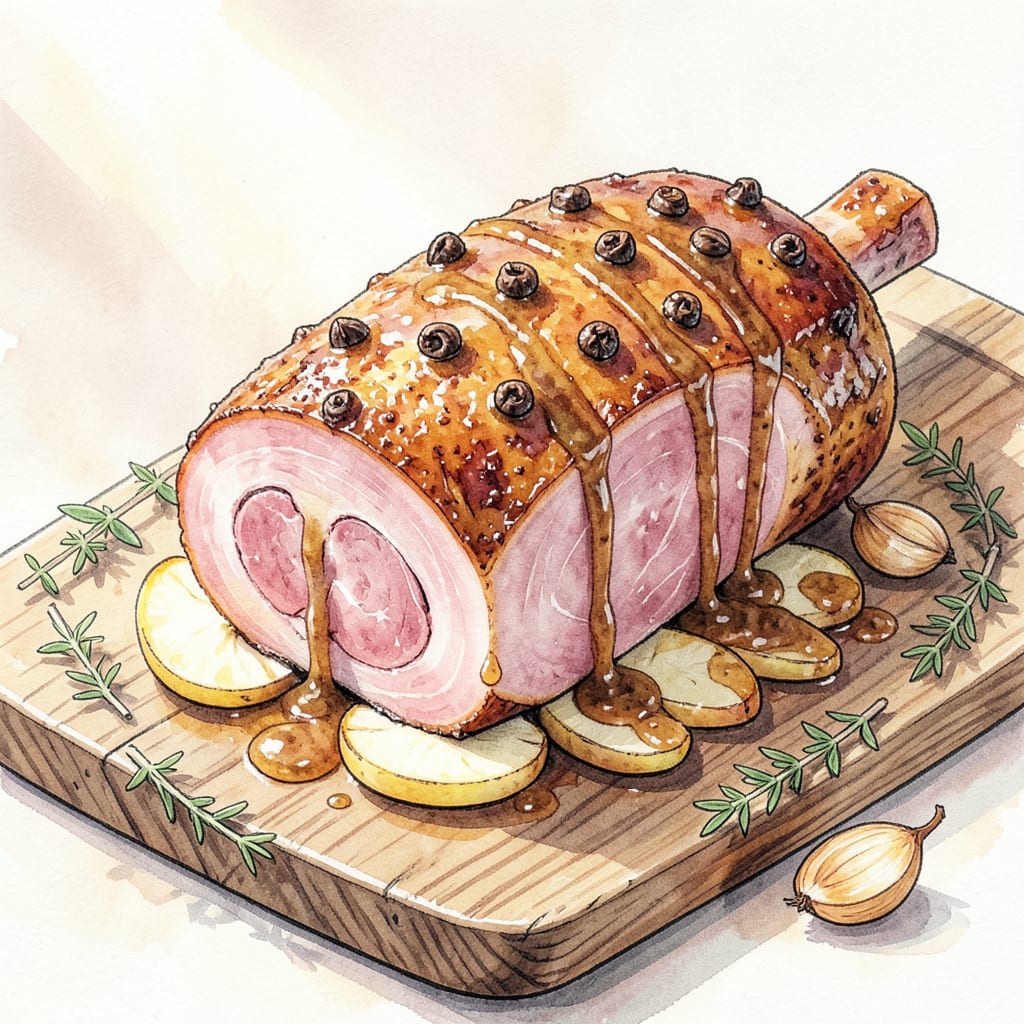
Let me tell you, nothing beats the aroma of a perfectly glazed French ham coming out of the oven. That first whiff of caramelized sweetness mixed with smoky richness? It’s like Christmas morning and Sunday dinner rolled into one. I’ve cooked more hams than I can count, and this method delivers juicy, tender results every single time.
Here’s the thing—most home cooks overlook the simple tricks that make all the difference. We’re talking about scoring the fat just right, using a glaze that actually caramelizes (not just sits on top), and pulling it from the oven at the precise moment. The result is a showstopping centerpiece that’ll have your guests asking for seconds before they’ve finished their first helping.
Ingredients for French Ham
This showstopping centerpiece starts with a fully cooked ham and pantry staples for that caramelized French glaze.
| Ingredient | Amount | Notes |
|---|---|---|
| Bone-In Ham 🐷 | 8 lb | Fully cooked, spiral-cut preferred |
| Brown Sugar 🍚 | 1 cup | Light or dark, packed |
| Dijon Mustard 🥄 | ⅓ cup | Smooth, not grainy |
| Honey 🍯 | ¼ cup | Pure, for glaze sweetness |
| Apple Cider Vinegar 🍏 | 2 tbsp | Balances sweetness |
| Ground Cloves 🌿 | ½ tsp | Freshly ground for aroma |
| Cinnamon 🌰 | ½ tsp | Ceylon or cassia |
| Orange Zest 🍊 | 1 tbsp | Freshly grated, no pith |
| Orange Juice 🍹 | ¼ cup | Freshly squeezed preferred |
| Unsalted Butter 🧈 | 4 tbsp | For basting richness |
| Fresh Parsley 🌿 | ¼ cup | Chopped, for garnish |
| Whole Cloves 🌿 | 20 pieces | For studding ham (optional) |
| Black Pepper 🌶️ | 1 tsp | Freshly cracked |
| Kosher Salt 🧂 | 1 tsp | For seasoning glaze |
[recipe_ingredient_scaler]
The ham is everything here. Spiral-cut bone-in saves time and looks impressive. I grab mine from HoneyBaked Ham or the butcher counter at Whole Foods—ask for a shank-end cut if you want extra juiciness. Size matters: 8 pounds feeds 6 with leftovers (because you’ll want them). Look for “fully cooked” on the label—no need to worry about internal temp, just reheating and glazing. The whole cloves are optional but add that classic French aroma (plus they make it look fancy).
No Dijon? Whole-grain mustard works in a pinch, just strain out the seeds. Out of apple cider vinegar? White wine vinegar or lemon juice at half the amount. The brown sugar can be swapped for maple syrup (use 3/4 cup), but the texture won’t caramelize quite the same. For a boozy twist, add 2 tbsp bourbon to the glaze—just simmer it a minute to cook off the alcohol. The orange zest is non-negotiable though; it brightens all that richness (bottled juice won’t cut it).
Leftovers are the gift that keeps giving. Store wrapped in foil for 4-5 days—great for sandwiches or breakfast hash. The glaze thickens as it cools, so reheat slices in a skillet with a splash of water. Freeze portions for up to 3 months (vacuum-seal if you’ve got the setup). Pro tip: Save the bone for split pea soup—it’s liquid gold after roasting.
Why You’ll Love This Recipe
- Five-Minute Glaze: Honestly, the hardest part is measuring. Stir brown sugar, Dijon, honey, and vinegar in one bowl—no fancy techniques, just dump and mix. Slather it on the ham and let the oven do the rest.
- Sweet-Tangy Magic: That first bite where the caramelized sugar cracks, then gives way to the mustard’s sharpness? I’ve caught people licking the pan. The apple cider vinegar cuts through the richness so it’s never cloying—just balanced, deep flavor.
- Holiday or Tuesday: I’ve served this at Easter with all the fixings and also sliced it cold for sandwiches midweek. The bone-in ham stays juicy whether you’re feeding a crowd or just prepping lunches for three days.
- Leftovers That Work: Between us, I make this *for* the leftovers. Cubed into omelets, tossed with pasta, or piled on crusty bread with extra mustard—it stretches into four more meals. And a bone-in ham this size costs less per serving than deli slices.
Step-by-Step Instructions for French Ham
This method ensures a showstopping centerpiece with perfect caramelization and juicy meat every time.
Step 1: Prepare the Ham for Glazing
Start by preheating your oven to 325°F. While it heats, place the 8 lb bone-in ham cut-side down in a roasting pan. If using whole cloves, press the 20 pieces whole cloves into the ham in a decorative pattern, spacing them about 1 inch apart. This creates those beautiful studded marks you see in classic French preparations.
The ham is already fully cooked, so we’re focusing on warming it through and building flavor. Let it sit at room temperature for 30 minutes before going into the oven—this ensures even heating and prevents the outside from drying out while the center comes to temperature.
Step 2: Create the Signature Glaze
In a medium saucepan, combine the 1 cup brown sugar, 0.33 cup Dijon mustard, 0.25 cup honey, 2 tbsp apple cider vinegar, 0.5 tsp ground cloves, 0.5 tsp cinnamon, 1 tbsp orange zest, and 0.25 cup orange juice. Cook over medium heat for 5-7 minutes, stirring constantly until the mixture thickens slightly.
You’ll know it’s ready when the glaze coats the back of a spoon and bubbles appear thicker and slower. Remove from heat and stir in the 4 tbsp unsalted butter until fully melted. This creates a rich, glossy glaze that will caramelize beautifully on the ham. Season with the 1 tsp kosher salt and 1 tsp black pepper.
Step 3: Apply Glaze and Roast to Perfection
Brush about half of the warm glaze over the entire surface of the ham, making sure to get into all the crevices of the spiral cuts. Place the ham in the preheated oven and roast uncovered for 1 hour. After 30 minutes, baste the ham with the remaining glaze and any pan juices that have accumulated.
The ham is done when the internal temperature reaches 140°F and the glaze has transformed into a deep amber, slightly sticky coating. You’ll see beautiful caramelization around the edges and the whole kitchen will smell like warm spices and citrus. If the glaze starts to darken too quickly, tent loosely with foil for the remaining cooking time.
Step 4: Rest and Garnish for Serving
Transfer the ham to a cutting board and let it rest for 15 minutes before slicing. This resting period allows the juices to redistribute throughout the meat, ensuring every slice stays moist and flavorful. While it rests, spoon any remaining glaze from the roasting pan over the top to enhance the shine.
Just before serving, sprinkle the 0.25 cup fresh parsley over the top for a pop of fresh color and flavor. The parsley cuts through the richness of the glaze and adds that final professional touch. Slice between the natural bone lines for perfect portions, making sure each serving gets some of that delicious caramelized crust.
Essential Equipment for french ham
Roasting Pan Essentials
For this ham, you need a sturdy roasting pan with a rack—I swear by my All-Clad stainless steel with a V-rack. The rack elevates the ham so heat circulates evenly, preventing soggy bottoms while the glaze caramelizes. Look for one that’s 16-18 inches long to comfortably fit an 8 lb ham with room for basting. 🔥
Avoid disposable aluminum pans—they warp under high heat and won’t give you that perfect caramelization. If you’re investing in one piece of equipment, make it this. I found mine at a restaurant supply store for half the retail price, and it’s lasted me a decade.
Basting Tools
A good pastry brush is non-negotiable for applying that glaze evenly. I use a silicone brush with heat-resistant bristles—it won’t melt when you dip it into hot glaze and won’t shed bristles onto your ham. The OXO Good Grips version has the perfect angle for getting into spiral cuts.
Keep a small ladle nearby too for scooping up pan juices during basting. A fat separator comes in handy if you want to skim excess fat from the drippings before making gravy—though with this glaze, you won’t have much fat to separate.
Temperature Control
An instant-read thermometer is your best friend here. I’m obsessed with my ThermoWorks Thermapen—it gives accurate readings in 2 seconds so you can check multiple spots. The ham’s done at 140°F, but you’ll want to monitor the glaze too to prevent burning.
For oven accuracy, consider an oven thermometer—many home ovens run 25-50°F off. Place it on the middle rack near (but not touching) the ham. This $5 tool has saved me from overcooked meat more times than I can count.
Glaze Prep Gear
A medium saucepan with a heavy bottom is ideal for making the glaze—it prevents scorching as the sugar caramelizes. My go-to is a 2-quart All-Clad that conducts heat evenly. The straight sides make it easy to whisk without spills as the mixture thickens.
Have a fine-mesh strainer ready if you’re using whole spices instead of ground. And don’t forget a heatproof spatula for scraping up every bit of that glorious caramelized glaze from the pan. I keep a small bowl of ice water nearby to quickly cool the spatula between uses.
Serving Setup
A large cutting board with a juice groove is essential for carving. I use a John Boos maple board—it’s gentle on knives and catches all those flavorful juices. Place it near the oven so you can transfer the ham directly from pan to board without losing heat.
For serving, warm your platter in the oven while the ham rests—nothing ruins a beautiful presentation like a cold plate. A sharp carving knife (at least 10 inches) makes clean slices. My Wüsthof has never let me down, even through bone.
Optional but Helpful
If you want to get fancy, a kitchen torch can add extra caramelization to the glaze after baking. Just be careful—the sugar burns quickly! For leftovers, vacuum sealer bags extend freshness to 2 weeks in the fridge.
I also love using decorative toothpicks with frilled tops when serving—they make it easy for guests to grab slices without making a mess. Find them at party supply stores or online. The little details make your ham feel like a restaurant-quality centerpiece. ✨
Nutrition Facts

Trained in classic French technique but raised on slow-cooked ribs and spicy rubs, she blends culinary skill with smoke and soul.
- Recipe for Boneless Pork Chops in Cast Iron Skillet: Sear and Baste to Juicy Perfection - October 3, 2026
- Recipe for Boneless Cross Rib Roast: Slow-Roasted Beef with Herb Crust - October 3, 2026
- Hamburgers in Sauce Recipe Crock Pot: Slow-Cooked Savory Delight - October 3, 2026