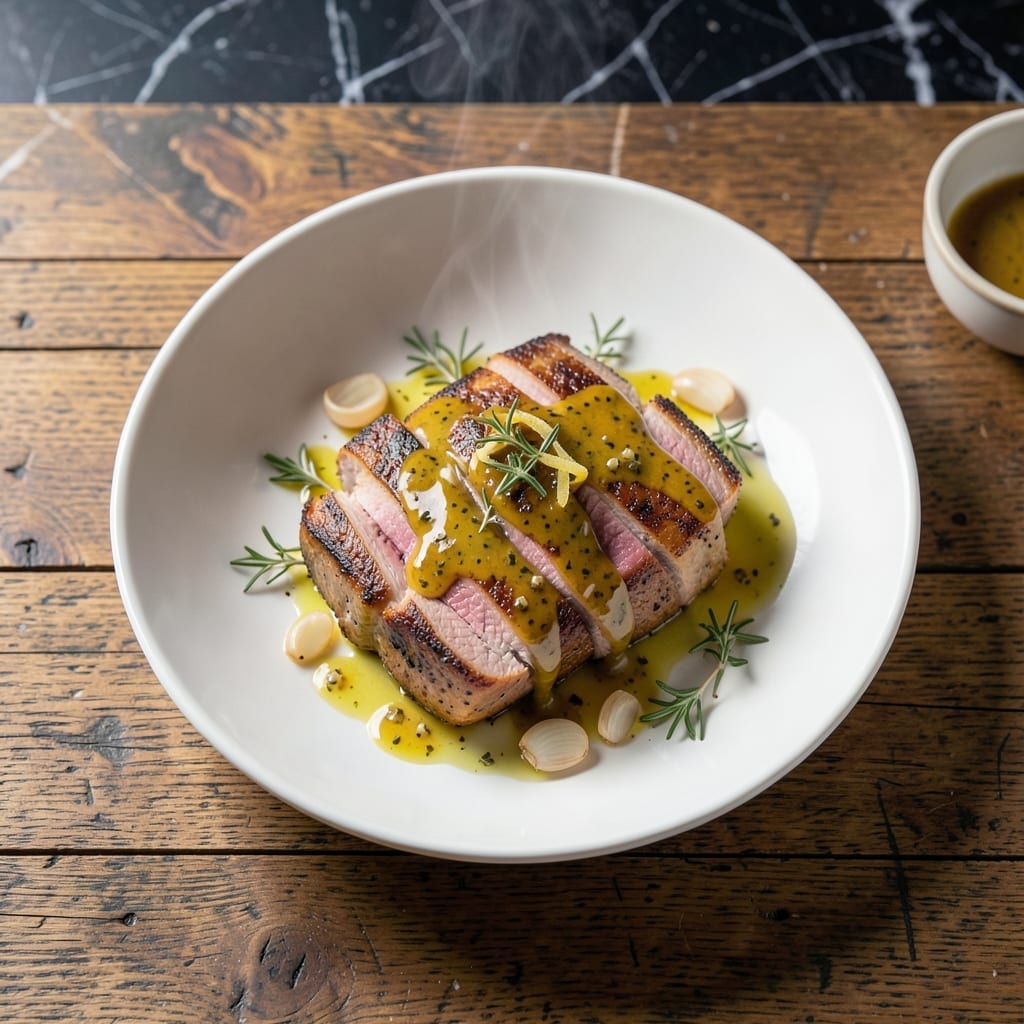
French technique meets simple home cooking in this herb-crusted pork tenderloin that stays juicy and tender every time. I developed this method after realizing classic preparation could elevate my everyday meals.
The secret lies in a mustard-herb crust that seals in moisture while creating a flavorful bark. A quick sear followed by roasting at 400°F ensures even cooking without drying out the lean meat.
What emerges from the oven is perfectly pink pork with a golden crust, ready to impress at any dinner table. The herb blend adds complexity without overwhelming the natural pork flavor.
Serve with roasted vegetables or a simple wine reduction. This dish proves French cuisine can be both elegant and approachable.
Ingredients for French Pork Tenderloin
Elegant French flavors come from a handful of quality ingredients and careful technique.
| Ingredient | Amount | Notes |
|---|---|---|
| Pork Tenderloin 🥩 | 1 ½ lb | Trimmed of excess fat |
| Dijon Mustard 🟡 | 3 tbsp | Smooth, not whole grain |
| Fresh Thyme Leaves 🌿 | 2 tbsp | Stems removed, finely chopped |
| Fresh Rosemary Leaves 🍃 | 2 tbsp | Finely minced for even distribution |
| Garlic Cloves 🧄 | 4 cloves | Minced to fine paste |
| Olive Oil 🫒 | 2 tbsp | Divided for searing and crust |
| Kosher Salt 🧂 | 1 ½ tsp | Diamond Crystal preferred |
| Black Pepper 🌶️ | 1 tsp | Freshly ground coarse |
| Dry White Wine 🍷 | ½ cup | For deglazing pan |
| Unsalted Butter 🧈 | 2 tbsp | For basting during roasting |
| Shallot 🧅 | 1 whole | Finely minced for sauce |
| Chicken Stock 🥫 | ½ cup | Low-sodium preferred |
| Honey 🍯 | 1 tbsp | For glaze finish |
[recipe_ingredient_scaler]
The pork tenderloin must be fresh with a rosy color and minimal odor. Whole Foods or a trusted butcher are ideal sources. Look for pieces that are uniform in thickness for even cooking. I always pat the meat dry before seasoning—excess moisture prevents proper browning (worth the extra minute). For the herbs, organic produce sections often have the most fragrant options.
No Dijon mustard? Whole grain mustard at half the amount works but adjust texture. Fresh herbs can be swapped for dried at one-third the quantity. Shallots can be replaced with red onion, though the flavor will be slightly sharper. The wine can be substituted with additional chicken stock, but the acidity of wine balances the richness beautifully.
The pork rests best for 10-15 minutes before slicing, allowing juices to redistribute. Store leftovers in an airtight container for up to 4 days. The crust softens upon storage but reheats well in a 350°F oven for 10-15 minutes (don’t skip this part).
Why You’ll Love This Recipe
- One Pan Dinner: I love that everything roasts together—just the pork, mustard, and herbs on a single sheet pan.
- Herb-Crusted Perfection: The Dijon, thyme, and rosemary form this crazy-flavorful crust that’s crispy outside, juicy inside.
- Weeknight Hero: I’ve served this for Sunday dinner and thrown it in meal prep containers—works both ways.
- Leftovers Win: The pork slices up beautifully cold for sandwiches, and honestly, it might taste even better the next day.
Step-by-Step Instructions for Herb-Crusted Pork Tenderloin
This method ensures a perfectly seared crust and tender interior every time.
Step 1: Prepare the Herb Crust
In a small bowl, combine the 3 tbsp Dijon mustard, 2 tbsp fresh thyme leaves, 2 tbsp fresh rosemary leaves, and 4 cloves minced garlic cloves with 1 tbsp olive oil. Stir until the herbs are evenly distributed throughout the mixture.
The paste should be thick enough to cling to the pork. I always finely mince the herbs and garlic to ensure maximum flavor distribution and prevent large pieces from burning during roasting. Set this mixture aside while you prepare the pork.
Step 2: Sear the Pork Tenderloin
Pat the 1.5 lb pork tenderloin dry with paper towels, then season all over with 1.5 tsp kosher salt and 1 tsp black pepper. Heat the remaining 1 tbsp olive oil in a large oven-safe skillet over medium-high heat until shimmering.
Add the pork and sear on all sides for 2-3 minutes per side until deep golden brown. This creates a flavorful crust and locks in juices. Use tongs to rotate the tenderloin—never pierce it with a fork, as this releases precious moisture.
Step 3: Apply Herb Crust and Roast
Brush the herb-Dijon mixture all over the seared pork, coating it completely. Add 2 tbsp unsalted butter to the skillet and place it in a preheated 400°F oven. Roast for 15-20 minutes, basting occasionally with the pan juices.
You’ll know it’s done when an instant-read thermometer inserted into the thickest part reads 145°F. The crust should be golden and fragrant, with herbs slightly crisped. Remove the pork from the pan and let it rest on a cutting board for 10 minutes.
Step 4: Make the Pan Sauce
Place the skillet over medium heat and add the 1 whole finely minced shallot. Cook for 1-2 minutes until softened. Deglaze with 0.5 cup dry white wine, scraping up all the browned bits from the bottom of the pan.
Let the wine reduce by half, then stir in 0.5 cup chicken stock and 1 tbsp honey. Simmer for 3-4 minutes until the sauce thickens slightly and coats the back of a spoon. The sauce should have a glossy sheen and balance of sweet and savory notes.
Slice the pork and serve with the pan sauce spooned over the top.
Pro Tips For Making French Pork Tenderloin
- Sear It Hot: Crank the pan to medium-high and get a deep golden crust on all sides—this locks in the juices and gives the Dijon-mustard coating something to cling to. I learned this the hard way after serving pale, sad tenderloins that tasted as bland as they looked.
- Trim the Silver Skin: That tough, silvery membrane on the tenderloin won’t soften no matter how long you cook it, so slice it off before seasoning. Skipping this step means chewy bites, and nobody wants that.
- Don’t Overcook It: Pull the pork at 145°F and let it rest under foil for 10 minutes—it’ll climb to 150°F and stay juicy. After ruining a few by waiting for 160°F, I finally realized pork tenderloin forgives dryness about as well as a cat forgives a bath.
- Crush the Garlic: Smash the garlic cloves with the flat of your knife before chopping—it releases more flavor and blends better with the thyme and rosemary. Sounds small, but it actually changes the outcome.
Make-Ahead Tips for This Recipe
Overnight Herb Marinade
Combine the 3 tbsp Dijon mustard, 2 tbsp fresh thyme, 2 tbsp fresh rosemary, and 4 cloves minced garlic with 1 tbsp olive oil in a bowl. Coat the pork tenderloin thoroughly and refrigerate for up to 12 hours. This deepens the herb flavors significantly. 🌿
Prep the Sauce Base
Finely mince the 1 shallot and store it in an airtight container with the 0.5 cup dry white wine. The wine’s acidity preserves the shallot’s freshness overnight. I always use a Sauvignon Blanc for its bright, crisp notes.
Partial Cooking Method
Sear the pork as directed, then cool and refrigerate it uncovered. The next day, finish roasting at 375°F for 10-12 minutes. This keeps the crust crisp while ensuring the meat stays juicy.
Sauce Reheating
Simmer the prepped shallot and wine with 0.5 cup chicken stock and 1 tbsp honey for 5-6 minutes. The flavors meld beautifully when reheated gently. Avoid boiling to prevent the sauce from breaking.
Storage Tips
Store the seared, uncooked pork and sauce base separately in the fridge. Use within 24 hours for best results. I find this method works perfectly for dinner parties—minimal last-minute stress. 💡
Room Temperature Rest
Before finishing the cook, let the pork sit at room temperature for 30 minutes. This ensures even cooking and prevents the meat from seizing up when it hits the heat.
Nutrition Facts
Frequently Asked Questions
What’s the ideal internal temperature for pork tenderloin?
Cook until it reaches 145°F in the thickest part. This ensures it’s safe to eat while staying juicy and tender. Use a meat thermometer for accuracy.
Can I use dried herbs instead of fresh?
Yes, but reduce the amount to 1/3 of what’s called for. Dried herbs are more concentrated, so using the same amount can make the flavor overpowering.
How long should the pork rest before slicing?
Let it rest for 10-15 minutes after roasting. This allows the juices to redistribute, keeping the meat moist and flavorful.
What if my crust burns before the pork is done?
If the crust darkens too quickly, tent the pork loosely with foil. This protects the herbs while allowing the pork to finish cooking through.

Trained in classic French technique but raised on slow-cooked ribs and spicy rubs, she blends culinary skill with smoke and soul.
- Recipe for Boneless Pork Chops in Cast Iron Skillet: Sear and Baste to Juicy Perfection - October 3, 2026
- Recipe for Boneless Cross Rib Roast: Slow-Roasted Beef with Herb Crust - October 3, 2026
- Hamburgers in Sauce Recipe Crock Pot: Slow-Cooked Savory Delight - October 3, 2026