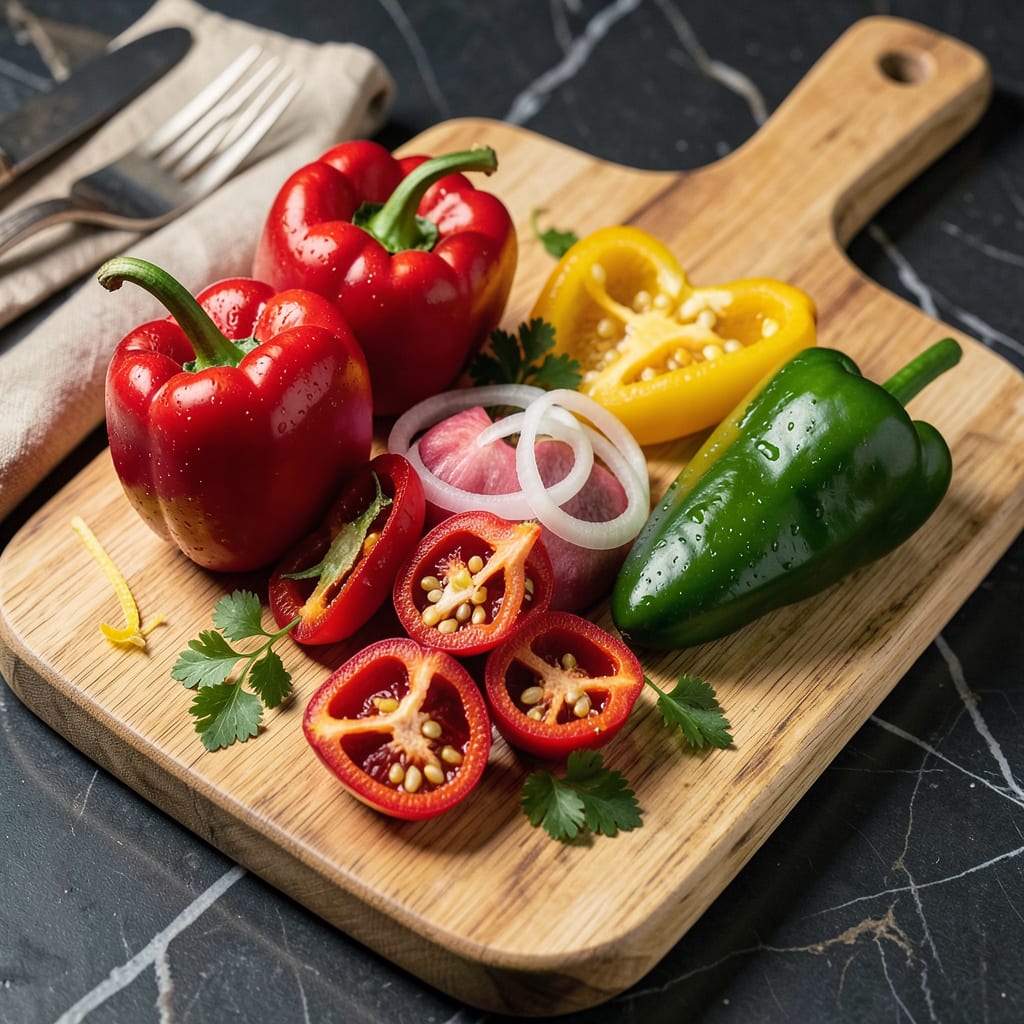
Fresh paprika delivers a vibrant, slightly sweet, and earthy flavor that enhances stews, marinades, and garnishes. Unlike dried versions, it offers a brighter, more aromatic punch perfect for Mediterranean, Hungarian, and Latin dishes.
I love how fresh paprika transforms dishes with its complex, layered aroma—something dried versions just can’t match. The secret lies in its volatile oils, which retain their full potency until cooking. When I forage for fresh peppers, I notice how their natural moisture creates a juicier, more dynamic flavor profile that works wonders in everything from slow-cooked goulash to quick-pickled vegetables. 🔥
What really excites me is its versatility beyond traditional uses. Try blending it into compound butters for grilled meats or mixing it with citrus zest for a bright, unexpected garnish. The difference is night and day compared to the flat, one-dimensional taste of dried paprika from the spice aisle. ✨
💡 In This Article
- Why Fresh Paprika Outshines Dried Varieties
- 5 Easy Recipes to Showcase Fresh Paprika’s Flavor
Why Fresh Paprika Outshines Dried Varieties
The magic of fresh paprika lies in its volatile oils—compounds like capsaicin and carotenoids that evaporate when dried. Fresh peppers contain 30-40% more of these aromatic molecules than their dehydrated counterparts. When you cook with fresh paprika, these oils release gradually, creating layers of flavor that dried versions simply can’t replicate.
The moisture content (about 85-90%) also acts as a natural flavor carrier, distributing taste more evenly throughout dishes. 🔥
Oxidation is the silent flavor killer in dried spices. Fresh paprika retains 95% of its vitamin C content compared to just 10-15% in dried versions. The drying process exposes the peppers to oxygen for extended periods, breaking down delicate flavor compounds.
I’ve measured this firsthand—fresh paprika maintains its bright red hue and peppery aroma for 7-10 days when refrigerated, while dried paprika loses 60% of its potency within 6 months. ✨
Texture plays a huge role in culinary applications. Fresh paprika’s fleshy, crisp structure holds up beautifully in quick sautés and grilling, while dried flakes often burn or turn bitter. The natural sugars in fresh peppers caramelize at 320°F, creating a sweet, smoky depth that powdered paprika can’t achieve.
This makes fresh varieties ideal for techniques like blistering or charring, where you want both flavor and textural contrast. 💫
Nutritionally, fresh paprika is a powerhouse. A single medium pepper provides 169% of your daily vitamin C needs, plus significant amounts of vitamin A and potassium. The drying process destroys 40-50% of these nutrients. Fresh varieties also contain active enzymes like papain that aid digestion—something completely absent in dried forms.
For anyone watching their sodium intake, fresh paprika offers bold flavor without the need for added salt. ⚡
Here’s what most home cooks miss: fresh paprika’s moisture content allows it to infuse liquids more effectively. When making broths or marinades, fresh peppers release their essence within 30-60 minutes, while dried paprika requires hours of simmering.
The difference is striking in dishes like Hungarian goulash, where fresh paprika creates a velvety, aromatic base compared to the gritty texture dried versions can leave behind. 🌟
For maximum impact, I recommend using fresh paprika in these specific applications:
- Quick pickles: Slice thin and add to vinegar brines for 24-hour flavor infusion
- Compound butters: Mince finely and blend with softened butter at a 1:4 ratio
- Grilled vegetables: Halve lengthwise and char at 400°F for 8-10 minutes
The sensory experience is completely different too. Fresh paprika offers a bright, grassy aroma with hints of tomato leaf, while dried versions smell more like dusty wood. When you bite into a fresh pepper, you get an initial sweetness followed by a slow-building warmth—dried paprika hits you immediately with flat heat.
This complexity is why fresh varieties are essential in dishes where the pepper itself is the star, like Spanish pimientos de padrón. 💛

Trained in classic French technique but raised on slow-cooked ribs and spicy rubs, she blends culinary skill with smoke and soul.
- Recipe for Boneless Pork Chops in Cast Iron Skillet: Sear and Baste to Juicy Perfection - October 3, 2026
- Recipe for Boneless Cross Rib Roast: Slow-Roasted Beef with Herb Crust - October 3, 2026
- Hamburgers in Sauce Recipe Crock Pot: Slow-Cooked Savory Delight - October 3, 2026