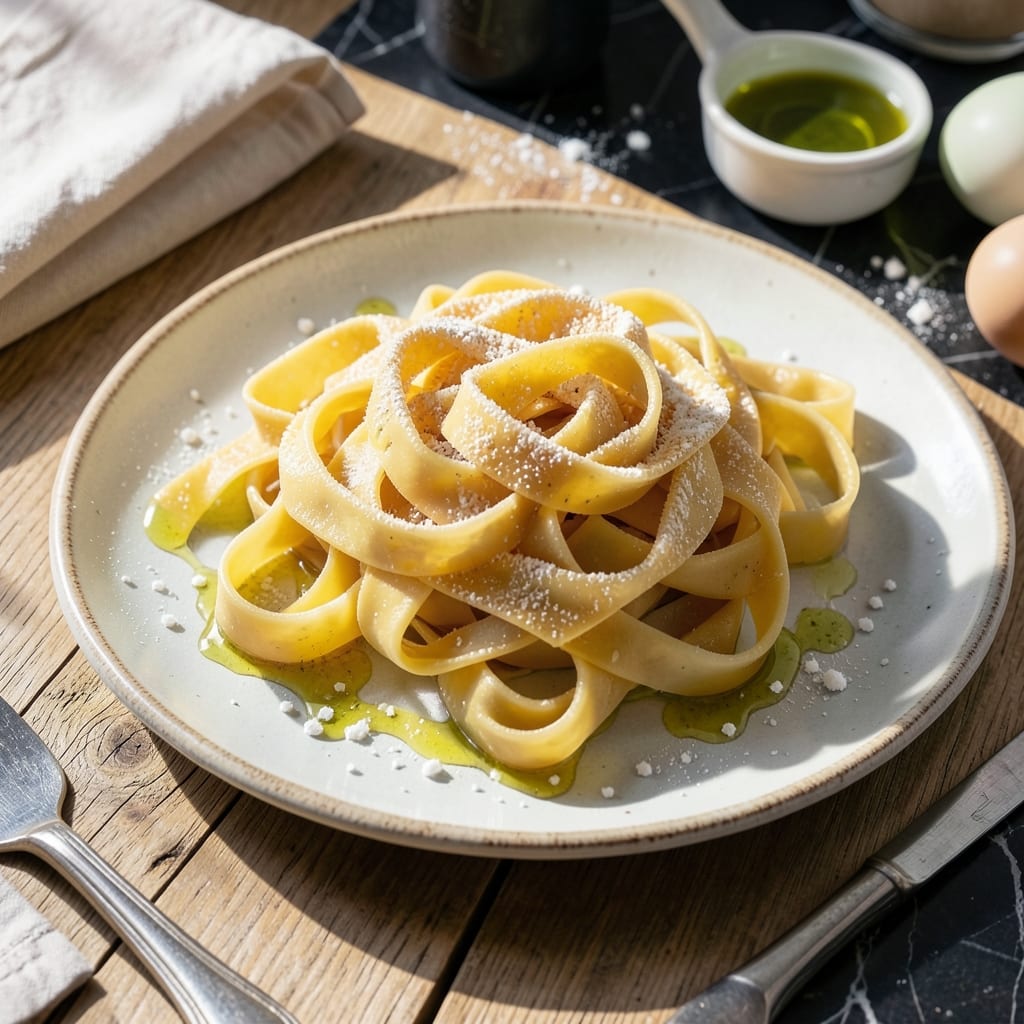
Making fresh pasta from 00 flour transforms your kitchen into an Italian trattoria with just four ingredients and a little patience.
This traditional method combines finely milled wheat with eggs to create dough that’s smooth, elastic, and ready to roll. The silky texture comes from proper kneading and resting time, which develops the gluten for perfect al dente noodles.
Hand-cutting the sheets gives you control over width and thickness, whether you prefer wide pappardelle or delicate tagliatelle. The result is pasta with a tender bite that absorbs sauces beautifully.
Once you taste the difference, store-bought will never compare. Here’s how to achieve restaurant-quality results at home.
Ingredients for Fresh Pasta Recipe 00 Flour
Just four essentials: 00 flour, eggs, salt, and olive oil for authentic Italian pasta.
| Ingredient | Amount | Notes |
|---|---|---|
| 00 Flour 🌾 | 2 cups | Finely milled Italian wheat |
| Large Eggs 🥚 | 4 whole | Room temperature preferred |
| Sea Salt 🧂 | ½ tsp | Fine grain for even distribution |
| Extra-Virgin Olive Oil 🫒 | 1 tbsp | For dough elasticity |
| Semolina Flour 🌾 | ½ cup | For dusting and texture |
| All-Purpose Flour 🌾 | ½ cup | Backup for rolling adjustments |
[recipe_ingredient_scaler]
The 00 flour is non-negotiable—Eataly or Amazon carry it if your local store doesn’t. Look for Antimo Caputo brand (the blue bag) for the silkiest texture. Room temperature eggs incorporate better, so pull them out an hour before starting. The semolina isn’t strictly traditional but adds a nice bite and prevents sticking when cutting. Skip the fancy olive oil here—a neutral one won’t overpower the dough’s clean flavor.
No 00 flour? All-purpose works in a pinch (use the same amount), but the texture won’t be as tender. Out of semolina? Regular flour for dusting is fine, though it may absorb more moisture. Want richer pasta? Add one extra yolk to the egg count. The salt amount is flexible—some Italian nonnas swear by none at all, but I like the subtle flavor boost.
Fresh pasta cooks in 2-3 minutes—test early. Store cut noodles on a floured tray, uncovered, for up to 2 hours before cooking. For longer storage, dust with flour, seal in a bag, and refrigerate for 24 hours or freeze for 1 month (thaw before boiling).
Why You’ll Love This Recipe
- One Bowl Wonder: I just dump the 00 flour, eggs, and a pinch of sea salt in a bowl—no fancy equipment, no mess.
- Silky Smooth Bite: The 00 flour and olive oil create this melt-in-your-mouth texture that store-bought can’t touch.
- Freezer Hero: I make a double batch, dust it with semolina, and freeze it—fresh pasta on demand, even on busy nights.
- Penny Pincher: Honestly, it costs less than half of what I’d pay for fresh pasta at the market, and it’s way better.
Step-by-Step Instructions for Fresh Pasta With 00 Flour
Here’s the method I use to create silky, hand-cut noodles with perfect texture every time.
Step 1: Create the Dough Base
On a clean work surface, mound the 2 cups 00 Flour and make a well in the center. This traditional method gives you better control over the texture. Add the 4 whole Large Eggs, 0.5 tsp Sea Salt, and 1 tbsp Extra-Virgin Olive Oil into the well.
Using a fork, gradually incorporate the flour into the wet ingredients, working from the inner rim of the well outward. The dough will start shaggy and loose, but keep mixing until it comes together. I’ve found this method prevents overworking the gluten, which keeps the pasta tender.
Step 2: Knead to Silky Smoothness
Once the dough forms a rough ball, switch to kneading with your hands. Push the dough away from you with the heel of your hand, then fold it back over itself. Rotate the dough 90 degrees after each push and repeat for 8-10 minutes.
The dough should become smooth and elastic—when you press your finger into it, it should spring back slowly. If it feels too sticky, resist the urge to add more flour; the texture will improve as you knead. If it’s too dry, wet your hands slightly and continue working it.
Step 3: Rest the Dough for Optimal Texture
Wrap the dough tightly in plastic wrap and let it rest at room temperature for 30 minutes. This relaxation period allows the gluten strands to unwind, making the dough easier to roll out thinly. Without this rest, you’ll fight the dough as it springs back during rolling.
While waiting, I prepare my workstation: dust a clean surface with some of the 0.5 cup Semolina Flour (it prevents sticking better than regular flour) and set out my pasta machine or rolling pin. The semolina also adds a pleasant texture to the finished noodles.
Step 4: Roll and Cut the Pasta
Divide the rested dough into 4 equal portions. Working with one piece at a time (keep the others covered), flatten it with your hands and run it through a pasta machine at the widest setting. Fold the sheet in thirds like a letter and repeat 2-3 times to develop smooth sheets.
Gradually decrease the thickness setting, rolling the sheet through once at each level until you reach your desired thickness (I use setting 6 or 7 for fettuccine). If rolling by hand, aim for sheets so thin you can see your hand through them. Dust with 0.5 cup All-Purpose Flour only if needed to prevent sticking.
Cut the sheets into your preferred shape—tagliatelle, pappardelle, or fettuccine. I like to roll the sheets loosely and slice with a sharp knife for rustic ribbons. Unroll the cut noodles and toss with a bit more semolina flour to prevent clumping.
Pro Tips For Making Fresh Pasta Recipe 00 Flour
- Knead Longer: Work the dough for at least 8-10 minutes by hand—it should feel smooth and elastic, not sticky. I learned this the hard way when my early batches kept tearing.
- Use Room-Temp Eggs: Pull your eggs out of the fridge 30 minutes before starting, or they’ll make the dough tight and harder to roll. Sounds picky, but it actually changes the texture.
- Dust with Semolina: Skip the extra 00 flour for dusting and use semolina instead—it keeps the pasta from sticking without making it gummy. My grandmother swore by this, and she was right.
- Rest the Dough: After kneading, wrap it in plastic and let it sit for 30 minutes at room temp. This isn’t the prettiest step, but it relaxes the gluten so rolling becomes effortless.
Health Benefits of This Dish
Rich in Complex Carbs
This dish provides sustained energy through its 00 flour base, which contains complex carbohydrates that digest slowly. A 2-ounce serving of fresh pasta offers about 200 calories, mostly from these slow-burning carbs that keep you full longer. 💪
Quality Protein Source
The 4 large eggs in the dough contribute 24 grams of complete protein per batch, containing all essential amino acids. Eggs also provide vitamin B12 and choline, nutrients vital for brain health and metabolism.
Low in Saturated Fat
With only 1 tbsp olive oil in the entire recipe, this pasta is naturally low in saturated fat. The extra-virgin olive oil adds heart-healthy monounsaturated fats, which support cardiovascular wellness when consumed as part of a balanced diet.
Minimal Sodium Content
Using just 0.5 tsp sea salt for the whole batch keeps sodium in check at about 300mg per serving. This makes it easier to control your daily intake, especially when paired with low-sodium sauces. 💡
Fortified Nutrients
Many 00 flour brands, like Antimo Caputo, are enriched with iron and B vitamins. A serving provides about 10% of your daily iron needs, helping prevent deficiencies that can cause fatigue.
Gentle on Digestion
Fresh pasta is often easier to digest than dried varieties because it’s made without additives. The simple ingredients—flour, eggs, and a touch of oil—make it a gentle option for those with sensitive stomachs.
Nutrition Facts
Frequently Asked Questions
Why is 00 flour better for pasta?
00 flour is finely milled, creating a silky texture that absorbs sauces beautifully. Its low protein content makes the dough tender rather than chewy.
Can I make this without a pasta machine?
Yes! Roll the dough by hand with a rolling pin until it’s thin enough to see through. It takes more effort but delivers the same delicious results.
What if my dough is too sticky?
Resist adding more flour. Keep kneading for the full 8-10 minutes—the texture will improve as the gluten develops. Use semolina for dusting instead.
How long should I cook fresh pasta?
Fresh pasta cooks in just 2-3 minutes. Test early—it’s done when it floats to the surface and has a slight bite.

Trained in classic French technique but raised on slow-cooked ribs and spicy rubs, she blends culinary skill with smoke and soul.
- Recipe for Boneless Pork Chops in Cast Iron Skillet: Sear and Baste to Juicy Perfection - October 3, 2026
- Recipe for Boneless Cross Rib Roast: Slow-Roasted Beef with Herb Crust - October 3, 2026
- Hamburgers in Sauce Recipe Crock Pot: Slow-Cooked Savory Delight - October 3, 2026