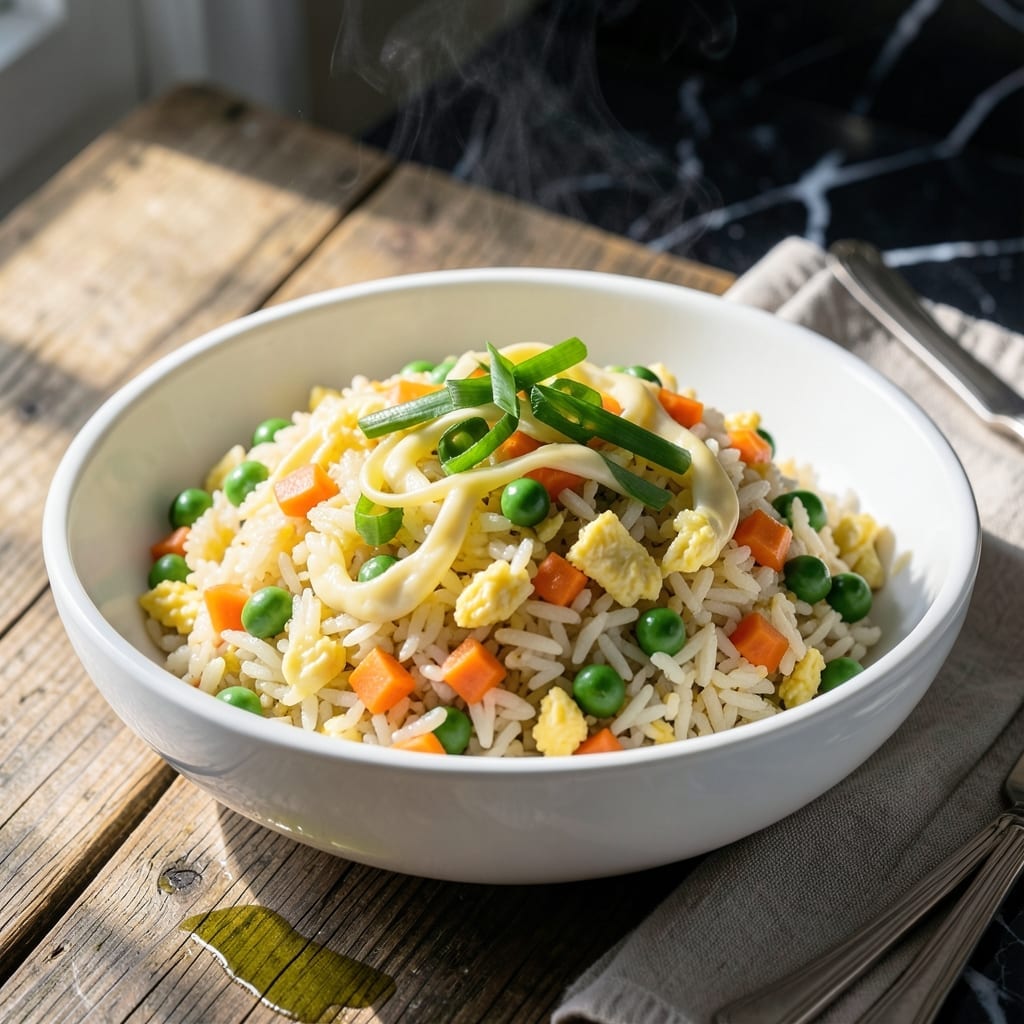
This fried rice recipe transforms leftover jasmine rice into a restaurant-quality dish with minimal effort. The key is high heat and the right sequence of ingredients to achieve that signature wok-charred aroma.
I developed this method after years of takeout comparison, focusing on the perfect balance of savory and slightly sweet flavors. Day-old rice works best, as it’s drier and fries up fluffier than fresh.
You’ll get perfectly charred bits, tender vegetables, and that unmistakable wok hei flavor that makes takeout so addictive. The jasmine rice adds a delicate floral note that elevates every bite.
Ready in 20 minutes, this becomes a weeknight staple you’ll make again and again.
Ingredients for Fried Rice Recipe with Jasmine Rice
Day-old jasmine rice and fresh vegetables create restaurant-quality fried rice with signature wok hei aroma.
| Ingredient | Amount | Notes |
|---|---|---|
| Cooked Jasmine Rice 🍚 | 4 cups | Day-old, chilled, broken up |
| Large Eggs 🥚 | 3 whole | Lightly beaten for scrambling |
| Vegetable Oil 🫒 | 3 tbsp | High smoke point preferred |
| Carrots 🥕 | 1 cup | Small diced, uniform pieces |
| Green Onions 🧅 | ½ cup | Thinly sliced, whites and greens separated |
| Frozen Peas 🌱 | 1 cup | Thawed and drained |
| Garlic Cloves 🧄 | 3 cloves | Minced finely for even distribution |
| Soy Sauce 💧 | 3 tbsp | Low-sodium preferred for control |
| Oyster Sauce 💧 | 1 tbsp | Vegetarian oyster sauce substitute |
| Sesame Oil 🫒 | 1 tsp | Toasted, for finishing aroma |
| Diamond Crystal Kosher Salt 🧂 | ½ tsp | Adjust to taste at the end |
| Ground White Pepper 🌶️ | ¼ tsp | Authentic wok hei flavor |
| Granulated Sugar 🍚 | ½ tsp | Balances savory notes |
[recipe_ingredient_scaler]
The rice is critical—use day-old jasmine for that dry, separate texture that fries up perfectly. Trader Joe’s and Asian markets often carry high-quality jasmine at better prices. For the oyster sauce, vegetarian oyster sauce (made from mushrooms) is essential for authentic flavor without fish products. Look for Lee Kum Kee or Koon Chun brands in the international aisle. The eggs should be fresh—farmers market eggs have richer yolks that add depth.
No jasmine rice? Long-grain white rice works in a pinch, but the floral aroma won’t be as pronounced. Swap carrots for bell peppers or zucchini if preferred. For a gluten-free version, use tamari instead of soy sauce. The green onions can be substituted with chives (use double the amount). If you’re missing sesame oil, a drop of toasted peanut oil adds similar depth, though the flavor profile will differ slightly.
Cooked rice keeps in the fridge for up to 5 days—perfect for meal prep. The finished dish stores well for 3-4 days but is best eaten fresh for that signature char. Freeze portions for up to 3 months, though the rice texture softens slightly upon reheating. Always reheat in a skillet with a splash of water to restore moisture.
Why You’ll Love This Recipe
- One Pan Meal: I love how everything comes together in a single skillet—rice, eggs, carrots, and green onions, no extra dishes to wash.
- Jasmine Rice Magic: The floral aroma of jasmine rice makes every bite fragrant and light, while the eggs add that perfect creamy richness.
- Weeknight Hero: Honestly, it’s my go-to for busy evenings when I need dinner on the table fast without sacrificing flavor.
- Budget Stretcher: A handful of simple ingredients transforms leftover rice into something crave-worthy, saving both time and money.
Step-by-Step Instructions for Fried Rice With Jasmine Rice
Master the wok technique that transforms simple ingredients into a fragrant, restaurant-quality dish.
Step 1: Scramble the Eggs for Silky Texture
Heat 1 tablespoon of the vegetable oil in a wok or large skillet over high heat until it shimmers. Pour in the 3 whole large eggs and let them set for 10 seconds before gently stirring with a spatula.
Cook until the eggs are just set but still slightly soft, about 30-45 seconds. The eggs should form delicate, fluffy curds. Remove them from the pan immediately and set aside. This prevents overcooking and keeps them tender when added back later.
Step 2: Sauté Aromatics and Vegetables
Add the remaining 2 tablespoons of vegetable oil to the wok. When hot, add the minced garlic cloves and stir for 10-15 seconds until fragrant but not browned. Immediately add the 1 cup carrots and stir-fry for 2 minutes.
Add the 1 cup frozen peas and the white parts of the 0.5 cup green onions. Stir-fry for another 1-2 minutes until the vegetables are tender but still bright. The carrots should soften slightly while retaining a slight crunch.
Step 3: Combine Rice and Seasonings
Increase heat to maximum and add the 4 cups cooked jasmine rice, breaking up any clumps with your spatula. Press the rice into the pan and let it sit undisturbed for 30 seconds to develop that coveted wok hei char.
Add the 3 tablespoons soy sauce, 1 tablespoon oyster sauce, 0.5 teaspoon diamond crystal kosher salt, 0.25 teaspoon ground white pepper, and 0.5 teaspoon granulated sugar. Stir-fry for 2-3 minutes until the rice is evenly coated and heated through.
Step 4: Finish and Garnish
Return the scrambled eggs to the wok and fold them into the rice mixture. Drizzle the 1 teaspoon sesame oil over the top and stir to combine. The sesame oil adds a nutty aroma that defines authentic fried rice.
Remove from heat and stir in the green parts of the green onions. Taste and adjust seasoning with additional soy sauce or salt if needed. Serve immediately while the rice retains its subtle smokiness from the high-heat wok work.
Pro Tips For Making Fried Rice Recipe With Jasmine Rice
- Use Day-Old Rice: Freshly cooked jasmine rice is too moist and will turn mushy—I learned this the hard way after my first three attempts came out like porridge. Spread leftover rice on a tray and refrigerate it overnight to dry it out.
- Crank the Heat: High heat is non-negotiable for that classic wok-hei flavor. About 2 tablespoons of oil in a screaming-hot pan will give you those slightly charred bits that make fried rice addictive.
- Scramble Eggs First: Push the scrambled eggs to one side of the pan before adding veggies, so they don’t disappear into the rice. I used to dump everything in at once and wondered where my eggs went.
- Small Dice the Carrots: Cut carrots into tiny, uniform cubes—about ¼-inch—so they cook through quickly without turning the rice soggy while you wait. Sounds tedious, but it actually changes the outcome.
Regional Styles of These Flavors
Thai Street Style
Thai versions swap carrots for long beans or Thai basil leaves, adding a fresh herbal note. I love the fish sauce kick—use 2 tsp instead of soy sauce. Finish with lime wedges and crushed peanuts for that authentic Bangkok street food experience. 🗺️
Chinese Cantonese
Cantonese style often includes char siu pork or shrimp for protein. The rice gets a deeper color from dark soy sauce—replace 1 tbsp of regular soy with it. This creates that beautiful caramelized look you see in Chinatown restaurants.
Indonesian Nasi Goreng
Indonesian versions use kecap manis (sweet soy sauce) for a richer, sweeter profile. Add 1 tbsp alongside the regular soy. Top with a fried egg and krupuk (shrimp crackers) for crunch. The flavors are more complex but just as comforting.
Japanese Chahan
Japanese chahan often includes beni shoga (red pickled ginger) for a tangy bite. Use dashi powder (½ tsp) mixed into the eggs for umami depth. The texture is slightly drier than other versions, perfect for pairing with miso soup.
Vietnamese Com Tam
Vietnamese broken rice dishes often use jasmine rice that’s been broken during processing. Add pork skin for texture and a drizzle of Maggi seasoning for that distinctive Vietnamese flavor. Serve with pickled vegetables on the side. 💛
Portland Food Cart Twist
Here in Portland, food carts often add kimchi or gochujang for a Korean fusion twist. I love the 1 tbsp gochujang mixed into the soy sauce for a spicy-sweet kick. Top with a soft-boiled egg and furikake for that Pacific Northwest flair.
Nutrition Facts
Frequently Asked Questions
Why use day-old rice?
Day-old rice is drier, preventing a mushy texture when stir-fried. Fresh rice contains too much moisture, which creates steam and makes the dish soggy instead of light and fluffy.
Can I substitute other rice types?
Long-grain white rice works, but jasmine’s floral aroma is ideal. Avoid short-grain or sticky varieties—they clump together and won’t achieve the signature separate-grain texture.
How do I get that wok hei flavor at home?
Use high heat and a well-seasoned wok or cast-iron skillet. Press the rice into the pan and let it sit undisturbed for 30 seconds to develop charred bits.
Can I make this gluten-free?
Yes! Swap regular soy sauce for tamari and use vegetarian oyster sauce made from mushrooms. Check all labels to ensure no hidden gluten.

Trained in classic French technique but raised on slow-cooked ribs and spicy rubs, she blends culinary skill with smoke and soul.
- Recipe for Boneless Pork Chops in Cast Iron Skillet: Sear and Baste to Juicy Perfection - October 3, 2026
- Recipe for Boneless Cross Rib Roast: Slow-Roasted Beef with Herb Crust - October 3, 2026
- Hamburgers in Sauce Recipe Crock Pot: Slow-Cooked Savory Delight - October 3, 2026