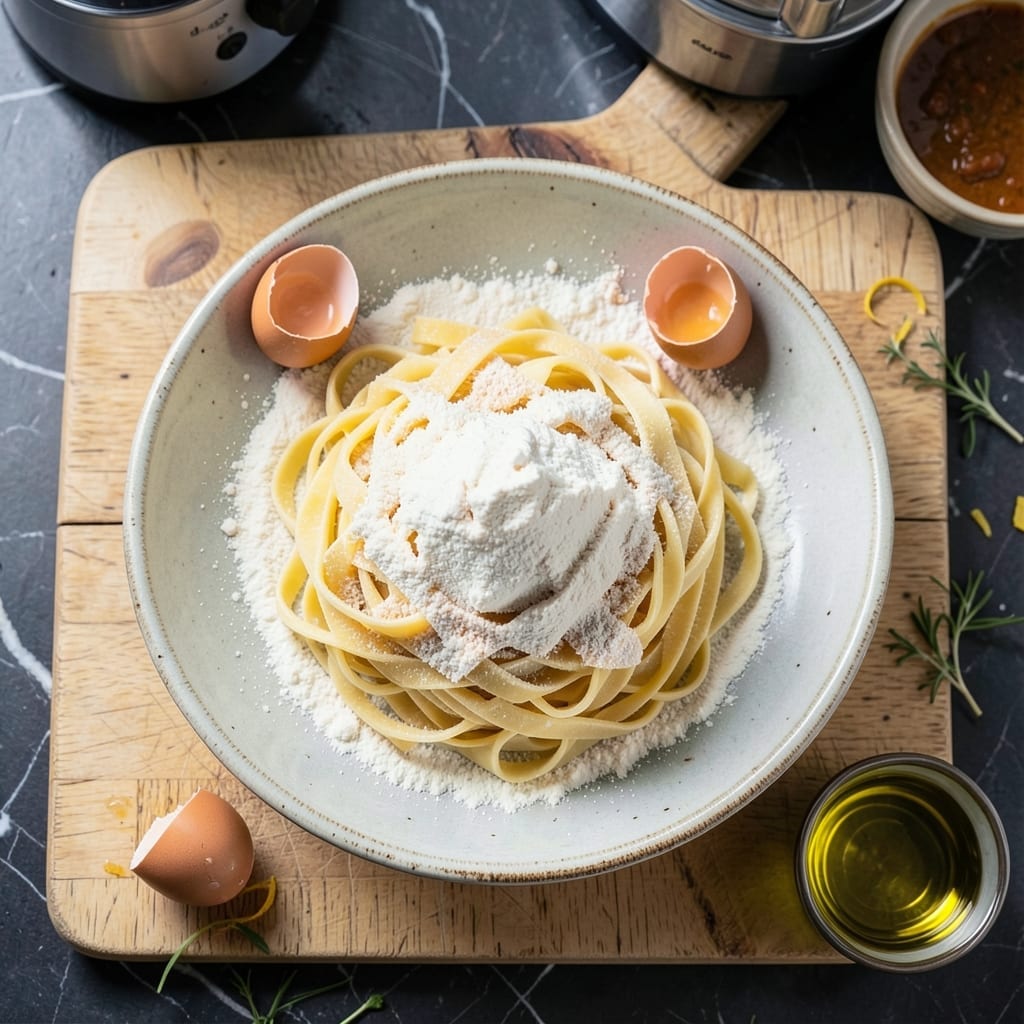
Making fresh pasta at home transforms any meal into something special. This method uses a food processor to combine just eggs and flour, creating smooth, elastic dough in minutes.
The food processor handles the mixing and initial kneading, saving your hands from the usual labor. After a short rest, the dough rolls out into silky sheets ready for cutting into perfect strands.
You’ll achieve homemade pasta that cooks in just 2-3 minutes, with a texture far superior to dried. The process is straightforward yet delivers restaurant-quality results every time.
Whether you’re making fettuccine, tagliatelle, or simple strands, this technique ensures consistent, delicious pasta that will elevate all your favorite dishes.
Ingredients for Fresh Pasta Recipe Food Processor
Just flour, eggs, and a food processor between you and silky homemade strands.
| Ingredient | Amount | Notes |
|---|---|---|
| All-Purpose Flour 🌾 | 3 cups | Plus extra for dusting |
| Large Eggs 🥚 | 4 whole | Room temperature preferred |
| Kosher Salt 🧂 | 1 tsp | Diamond Crystal or Morton |
| Olive Oil 🫒 | 1 tbsp | For elasticity in dough |
| Semolina Flour 🌾 | ½ cup | For dusting and texture |
[recipe_ingredient_scaler]
The flour is the foundation here. King Arthur all-purpose is my go-to—consistent texture, reliable results. Room temperature eggs blend smoother into the dough (cold eggs can make it seize up). Bob’s Red Mill semolina adds that perfect bite if you can find it. Don’t skip the salt—it’s not just for flavor, it tightens the gluten strands for better texture.
No food processor? A stand mixer with the dough hook works too (or even your hands, if you’re feeling old-school). Out of all-purpose? Half bread flour, half 00 flour makes an even silkier dough. Want richer pasta? Replace one egg with an extra yolk. The olive oil isn’t traditional but adds a little flexibility to the dough.
Fresh pasta cooks in 2-3 minutes, so keep an eye on it. Dough keeps wrapped in plastic in the fridge for 24 hours, or freeze for 1 month (thaw before rolling). Dust with semolina to prevent sticking—works better than plain flour.
Why You’ll Love This Recipe
- No-Knead Magic: The food processor does all the mixing—just pulse the flour, eggs, and olive oil until crumbly, then press into dough. No sore arms, no messy counters.
- Rich, Silky Bite: The combo of all-purpose and semolina flour gives it that perfect chew, while the eggs and olive oil add a subtle depth that store-bought can’t touch.
- Freezer-Friendly Stash: I double the batch, cut into portions, and freeze for later. Honestly, it’s my secret for last-minute dinners that taste like I spent hours.
- Pennies per Serving: A few eggs, a splash of oil, and pantry staples make this way cheaper than dried pasta from the grocery store. I’ll be real: it spoils you for the boxed stuff.
Step-by-Step Instructions for Fresh Pasta
Here’s the method. Straightforward, tested, works every time.
Step 1: Pulse Dry Ingredients in Food Processor
Fit your food processor with the dough blade. Add the 3 cups All-Purpose Flour and 1 tsp Kosher Salt to the work bowl. Pulse 3-4 times until the salt is evenly distributed throughout the flour.
This quick pulse ensures the salt, which enhances flavor and strengthens gluten, is completely incorporated. Watch for the mixture to look uniformly speckled—that’s your visual cue it’s properly combined. Don’t over-process at this stage; you just need to eliminate any salt clumps.
Step 2: Incorporate Wet Ingredients Until Dough Forms
Crack the 4 whole Large Eggs into the flour mixture. Add the 1 tbsp Olive Oil directly on top. Pulse the processor in 1-second bursts, about 15-20 times total, until the mixture resembles coarse crumbs.
At this point, the dough might look dry and shaggy, but resist adding more liquid. The flour will continue to hydrate as you work it. You’re aiming for the mixture to just come together when pressed—it should hold its shape but not be sticky. If it’s too dry, add water 1 teaspoon at a time and pulse briefly.
Step 3: Knead the Dough to Proper Consistency
Turn the dough out onto a clean surface lightly dusted with All-Purpose Flour. Knead by hand for 8-10 minutes until smooth and elastic. The dough should feel slightly tacky but not stick to your hands—add more flour 1 tablespoon at a time if needed.
Here’s the thing—you’ll notice the dough transforming from rough and crumbly to silky and pliable. This kneading develops the gluten network that gives pasta its signature chewy texture. Press your thumb into the dough; if it springs back slowly, it’s ready. If it bounces back immediately, it needs more kneading.
Step 4: Rest the Dough for Optimal Texture
Shape the dough into a ball and wrap it tightly in plastic wrap. Let it rest at room temperature for 30 minutes. This resting period allows the gluten to relax, making the dough easier to roll out and preventing it from springing back as you work.
During this time, the flour fully hydrates and the dough becomes more extensible. You’ll find it rolls out much thinner and more uniformly after resting. While waiting, lightly dust your work surface with the 0.5 cup Semolina Flour—its coarse texture prevents sticking better than regular flour.
Step 5: Roll and Cut the Pasta
Divide the rested dough into 4 equal portions. Working with one portion at a time (keep the others covered), flatten it with your hands and pass it through a pasta machine at the widest setting. Fold the sheet in thirds and repeat 2-3 times at this setting.
Gradually decrease the setting and pass the dough through once at each level until you reach the desired thickness. For most shapes, the second-to-thinnest setting works well. Dust with semolina flour between passes to prevent sticking. Cut into your preferred shape and cook immediately or let dry slightly on a floured surface.
Pro Tips For Making Fresh Pasta Recipe Food Processor
- Pulse, Don’t Blend: Use the food processor’s pulse function in short bursts—3-5 seconds at a time—to avoid overheating the dough, which can make it tough. I learned this the hard way after ending up with pasta that tasted like rubber.
- Weigh Your Flour: Skip the measuring cups and use a scale for the all-purpose flour—100 grams per egg is the ratio that works every time. Sounds fussy, but it’s the only way to avoid dense, gummy pasta.
- Rest Before Rolling: After kneading, wrap the dough in plastic and let it rest at room temp for at least 30 minutes—yes, even if you’re impatient like me. This relaxes the gluten so it rolls out smooth instead of springing back.
- Dust With Semolina: Toss your fresh pasta in semolina flour before cutting or shaping to prevent sticking, especially if you’re making ribbons or nests. My grandmother swore by this, and she was right: it works better than regular flour.
Flavor Customization for fresh pasta recipe food processor
Herb Infusions
Add 2 tbsp finely chopped fresh basil or 1 tbsp dried oregano to the flour before pulsing. This creates a subtly aromatic dough that pairs perfectly with tomato sauces. I love basil for summer pasta and oregano for heartier winter dishes. 🌿
Spicy Kick
Incorporate 1 tsp red pepper flakes or ½ tsp cayenne directly into your dry ingredients. The heat builds beautifully as the pasta cooks, creating a warm, lingering finish. Just 1 tsp of chili powder adds depth without overwhelming the dish.
Citrus Zest
Mix in 1 tbsp lemon or orange zest with the flour for bright, fresh flavor. This works especially well with seafood dishes or light cream sauces. The zest adds a pop of color and aroma that makes the pasta feel extra special.
Cheese Integration
Grind ½ cup Parmesan or Pecorino Romano finely and pulse it with the dry ingredients. This creates a rich, savory dough that’s perfect for mac and cheese or baked dishes. I recommend using freshly grated for best melting.
Vegetable Powders
Add 2 tbsp spinach powder or beet powder for colorful pasta that’s as pretty as it is tasty. These add subtle earthy notes and create stunning green or pink strands. You’ll need to adjust hydration slightly as powders absorb moisture differently.
Garlic Boost
Include 1 tsp garlic powder or 2 cloves minced fresh garlic for a savory foundation. This works particularly well with olive oil-based sauces or simple aglio e olio preparations. The flavor mellows beautifully during cooking. 💡
Nutrition Facts
Frequently Asked Questions
Do I need a special blade for the food processor?
Use the standard dough blade if your processor has one. If not, the regular blade works fine—just pulse carefully to avoid overworking the dough.
Why does the dough need to rest?
Resting for 30 minutes relaxes the gluten, making it easier to roll thin. Skipping this step can cause the dough to shrink and spring back.
Can I make this without eggs?
Yes! Replace eggs with ½ cup water and 1 tbsp olive oil for each missing egg. The texture will be slightly different but still delicious.
How do I know when the pasta is done cooking?
Fresh pasta cooks in just 2-3 minutes. Taste test for al dente texture—it should be tender but still have a slight bite.

Trained in classic French technique but raised on slow-cooked ribs and spicy rubs, she blends culinary skill with smoke and soul.
- Recipe for Boneless Pork Chops in Cast Iron Skillet: Sear and Baste to Juicy Perfection - October 3, 2026
- Recipe for Boneless Cross Rib Roast: Slow-Roasted Beef with Herb Crust - October 3, 2026
- Hamburgers in Sauce Recipe Crock Pot: Slow-Cooked Savory Delight - October 3, 2026