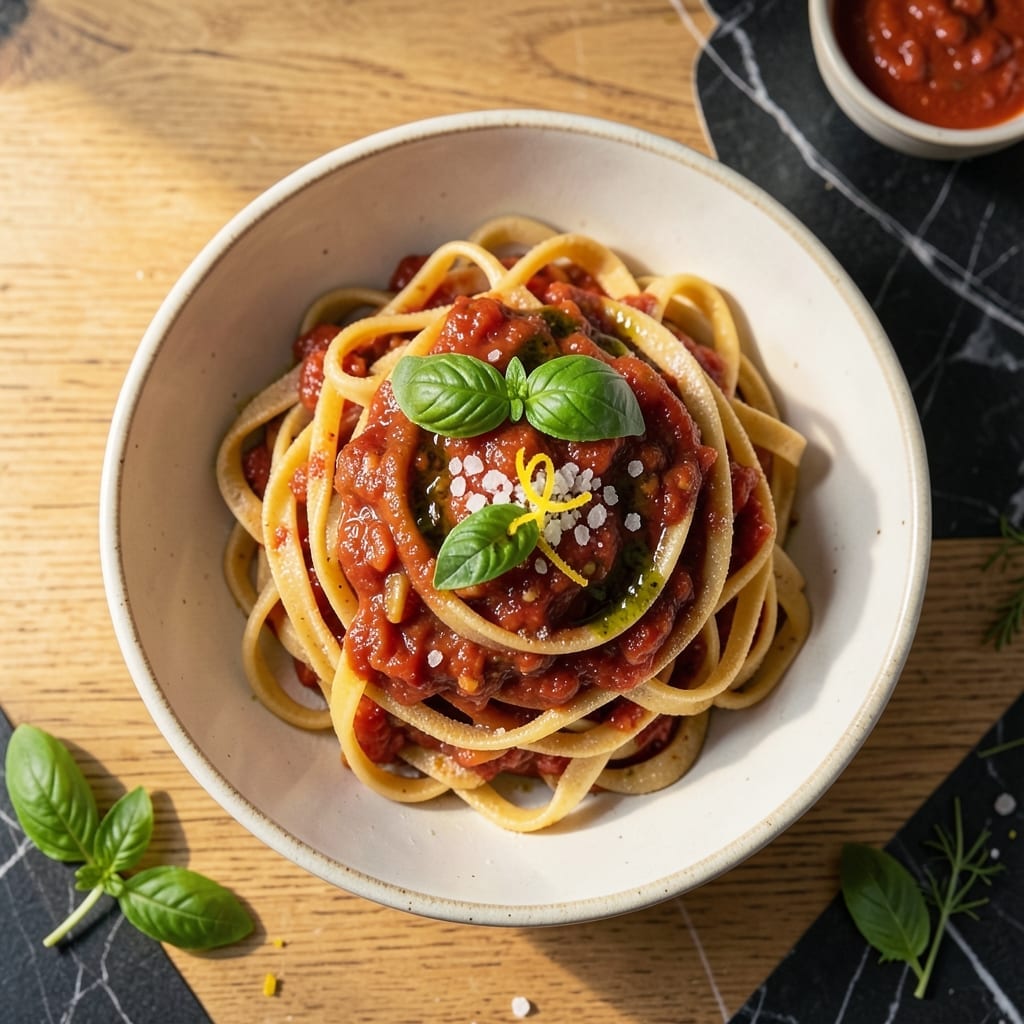
Creating fresh pasta without eggs is a revelation that transforms homemade cooking. This recipe delivers a rustic semolina bite that stands apart from traditional egg-based pasta, offering a heartier texture and earthier flavor that pairs perfectly with bold sauces.
The technique is straightforward: combine semolina flour with water, knead until smooth, and rest the dough. The absence of eggs means the pasta holds its shape beautifully and develops a satisfying chew when cooked. It’s surprisingly simple yet yields professional results.
What you get is pasta with a firm, slightly grainy texture that soaks up sauces without falling apart. The process takes under an hour from start to finish, with most of that time dedicated to resting the dough for optimal elasticity.
Serve it with rich tomato sauces, pesto, or a simple aglio e olio. This method proves that egg-free pasta can be just as delicious and rewarding to make at home.
Ingredients for Fresh Pasta Recipe No Egg
Simple ingredients deliver that signature rustic semolina texture everyone loves in pasta.
| Ingredient | Amount | Notes |
|---|---|---|
| Semolina Flour 🌾 | 2 cups | Fine grind for pasta |
| All-Purpose Flour 🌾 | ½ cup | For elasticity in dough |
| Warm Water 💧 | ¾ cup | Divided, as needed for dough |
| Olive Oil 🫒 | 1 tbsp | Extra-virgin for richness |
| Sea Salt 🧂 | 1 tsp | Fine grain for even distribution |
| Rich Tomato Sauce 🍅 | 2 cups | For serving with pasta |
| Garlic Cloves 🧄 | 4 cloves | Minced for sauce |
| Fresh Basil Leaves 🌿 | ½ cup | Chopped for garnish |
| Black Pepper 🌶️ | ½ tsp | Freshly ground preferred |
| Red Pepper Flakes 🌶️ | ¼ tsp | Optional for heat |
[recipe_ingredient_scaler]
Semolina flour is non-negotiable here. Bob’s Red Mill or King Arthur brands offer consistent quality, and you’ll find both at Whole Foods or larger supermarkets. The all-purpose flour adds stretch—skip the bread flour, as it’s too high in protein. Use warm water (not hot) to avoid cooking the flour prematurely. The dough should feel firm but pliable, like Play-Doh.
Out of semolina? Durum wheat flour at one-to-one ratio works in a pinch. For a nutritional boost, swap up to half the all-purpose with whole wheat flour. The olive oil can be any neutral oil if needed, but extra-virgin adds depth. For the sauce, San Marzano tomatoes crushed by hand make the best base, though a quality jarred marinara is fine too.
Fresh pasta cooks in minutes, so prep your sauce first. Uncooked dough keeps 24 hours wrapped tightly in the fridge or 1 month frozen. Cooked pasta? Toss with a bit of oil and store for 3-4 days in the fridge.
Why You’ll Love This Recipe
- No Fuss Dough: I just mix semolina, all-purpose flour, warm water, olive oil, and salt—no eggs, no stress.
- Pure Semolina Taste: The nutty semolina flavor shines through, and the olive oil adds this subtle richness that makes it irresistible.
- Meal Prep Hero: I make a big batch on Sunday and it keeps beautifully in the fridge for quick dinners all week.
- Pennywise Pasta: Semolina and all-purpose flour are budget-friendly staples, so I can make fresh pasta without breaking the bank.
Step-by-Step Instructions for Fresh Pasta No Egg
Master this rustic semolina dough with precise technique for perfect texture every time.
Step 1: Combine Dry Ingredients
In a large mixing bowl, whisk together the 2 cups Semolina Flour and 0.5 cup All-Purpose Flour until evenly combined. This blend creates the ideal texture—semolina adds that characteristic bite while all-purpose provides necessary elasticity.
Make a well in the center of the flour mixture and add the 1 tsp Sea Salt. The fine grain ensures even distribution throughout the dough, enhancing flavor in every bite without overpowering the subtle nuttiness of the semolina.
Step 2: Incorporate Wet Ingredients Gradually
Pour 0.5 cup Warm Water into the well, then add the 1 tbsp Olive Oil. Using a fork, begin mixing from the center outward, gradually drawing in the flour until a shaggy dough forms. The water should be warm but not hot—about 110°F is ideal.
If the dough seems too dry, add the remaining 0.25 cup Warm Water 1 tablespoon at a time until it just comes together. The dough should feel slightly tacky but not sticky. This careful hydration prevents a tough final product.
Step 3: Knead to Develop Gluten
Turn the dough onto a clean surface and knead for 8-10 minutes by hand. Press the heel of your hand into the dough, then fold it over and rotate a quarter turn. Repeat this motion consistently.
You’ll notice the dough transform from rough and crumbly to smooth and elastic. This development of gluten is what gives the pasta its structure and chew. If it sticks, dust lightly with semolina—avoid all-purpose flour as it can make the dough tough.
Step 4: Rest the Dough
Shape the dough into a ball, wrap it tightly in plastic wrap, and let it rest at room temperature for 30 minutes. This relaxation period allows the gluten strands to unwind, making the dough easier to roll out.
During this rest, the flour fully hydrates, resulting in a more pliable dough that won’t spring back when rolled thin. This step is non-negotiable for achieving that perfect, tender bite in your finished pasta.
Step 5: Roll and Cut the Pasta
Divide the rested dough into 4 equal portions. Working with one piece at a time (keep the rest covered), flatten it with your hands then pass it through a pasta machine on the widest setting. Fold the sheet in thirds like a letter and repeat 2 more times.
Gradually decrease the setting and roll the sheet through once at each level until you reach the desired thickness—typically the second-to-last setting for most shapes. Cut into your preferred shape and cook immediately in boiling salted water for 2-3 minutes until al dente.
Pro Tips For Making Fresh Pasta Recipe No Egg
- Knead Longer: I learned this the hard way—work the dough for at least 8-10 minutes until it’s smooth and elastic, or your pasta will crack when rolling.
- Use Warm Water: Sounds weird, but it works: warm water helps the semolina hydrate better than cold, so aim for about 100°F.
- Rest the Dough: Skip the temptation to roll it out right away—let it rest under a towel for 30 minutes, or it’ll spring back like a rubber band.
- Dust with Semolina: After cutting, toss the strands in semolina flour instead of all-purpose—it keeps them from sticking better during cooking.
Common Mistakes When Making Perfect Results
Overworking the Dough
Kneading beyond 8-10 minutes makes the pasta tough and chewy instead of tender. I stop when the dough feels smooth and springs back slightly when pressed. Overdevelopment of gluten is the most common mistake with this recipe. 💪
Incorrect Water Temperature
Using hot water can prematurely cook the flour, creating a gummy texture. Your water should be warm to the touch—around 110°F. Too cold, and the dough won’t come together properly.
Skipping the Rest
Rushing straight to rolling after kneading causes the dough to spring back. That 30-minute rest at room temperature is essential for gluten relaxation. I set a timer to avoid cutting this step short.
Wrong Flour Ratio
Using only semolina makes the dough too brittle. The 4:1 semolina to all-purpose flour ratio creates the perfect balance of bite and elasticity. Swapping all-purpose for bread flour results in a tough pasta.
Thickness Issues
Rolling the pasta too thick means it won’t cook evenly. Aim for the second-to-last setting on your pasta machine. If hand-rolling, the sheet should be nearly translucent when held to light.
Under-Salting the Water
Cooking this pasta in unsalted water leaves it tasting flat. I use 1 tbsp salt per quart of boiling water—the pasta absorbs this seasoning, enhancing its natural flavor beautifully. 🌟
Nutrition Facts
Frequently Asked Questions
Can I use whole wheat flour instead of all-purpose?
Yes, but replace only up to half the all-purpose with whole wheat. The bran in whole wheat can make the dough denser, so keep the 4:1 semolina ratio for best texture.
How long can I store fresh pasta before cooking?
Uncooked dough stays fresh for 24 hours refrigerated or 1 month frozen. Cooked pasta keeps 3-4 days in the fridge when tossed with oil.
Why does my dough keep springing back when rolling?
This happens when gluten hasn’t relaxed. Always rest the dough for the full 30 minutes before rolling. If it still resists, let it rest another 10 minutes.
Can I make this without a pasta machine?
Roll the dough as thin as possible with a rolling pin—aim for near-translucency. It takes more effort but produces equally great results.

Trained in classic French technique but raised on slow-cooked ribs and spicy rubs, she blends culinary skill with smoke and soul.
- Recipe for Boneless Pork Chops in Cast Iron Skillet: Sear and Baste to Juicy Perfection - October 3, 2026
- Recipe for Boneless Cross Rib Roast: Slow-Roasted Beef with Herb Crust - October 3, 2026
- Hamburgers in Sauce Recipe Crock Pot: Slow-Cooked Savory Delight - October 3, 2026