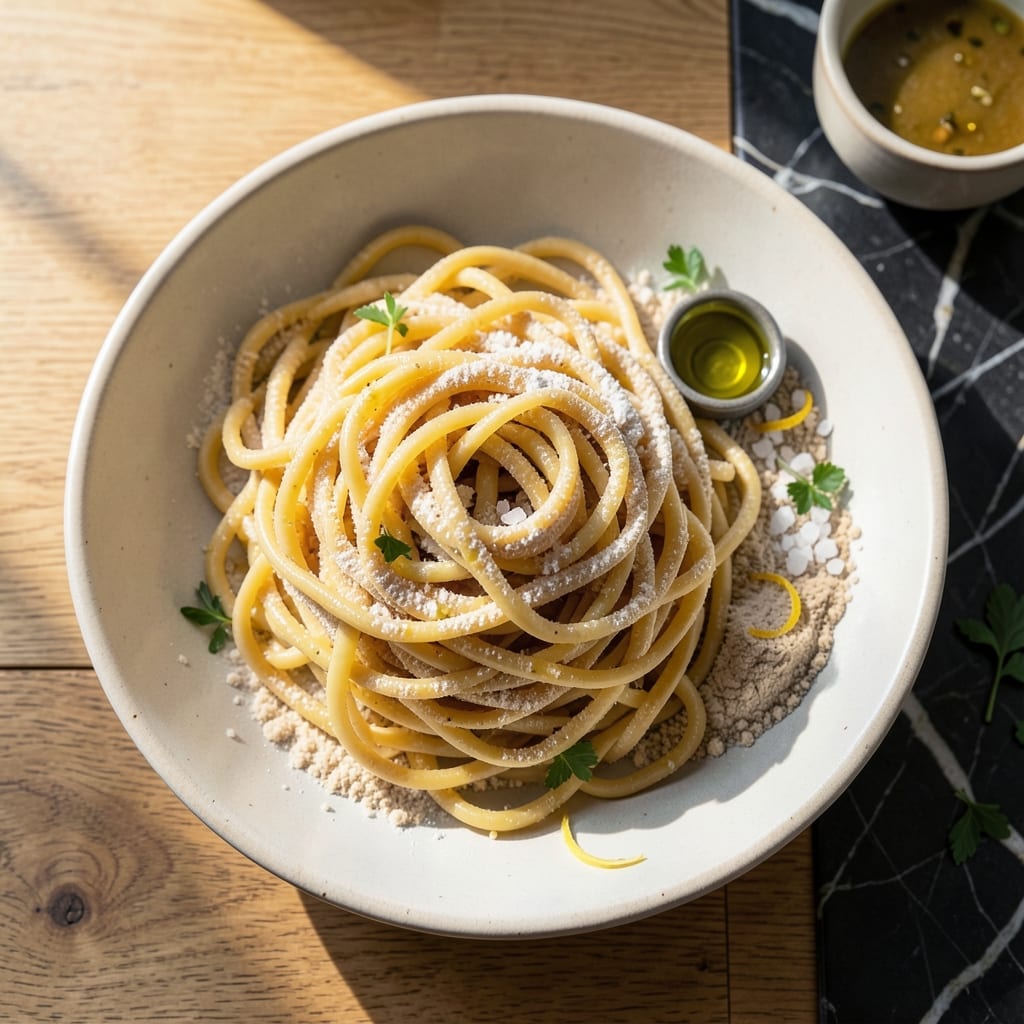
There’s nothing like the texture of homemade pasta made with semolina flour. This recipe delivers perfect al dente bite every time.
I developed this method after years of testing different flour ratios. The semolina creates that signature firm texture that holds up to any sauce. The dough comes together with just eggs and flour.
You’ll roll and cut the pasta by hand or with a machine. The process takes about 30 minutes from start to finish. Fresh pasta cooks in just 2-3 minutes.
Serve with simple butter and sage or your favorite marinara. The semolina base makes it ideal for hearty ragùs too.
Ingredients for Fresh Pasta Recipe with Semolina Flour
Semolina and eggs create that perfect al dente texture everyone loves in fresh pasta.
| Ingredient | Amount | Notes |
|---|---|---|
| Semolina Flour 🌾 | 2 cups | Fine grind for smooth dough |
| All-Purpose Flour 🌾 | 1 cup | For lighter texture balance |
| Large Eggs 🥚 | 4 whole | Room temperature preferred |
| Olive Oil 🫒 | 1 tbsp | Extra-virgin for richness |
| Salt 🧂 | 1 tsp | Fine sea salt preferred |
| Water 💧 | 1 tbsp | Adjust as needed for dough |
| Unsalted Butter 🧈 | 4 tbsp | For serving with sage |
| Fresh Sage Leaves 🍃 | 8 whole | Lightly bruised for flavor |
| Parmesan Cheese 🧀 | ½ cup | Freshly grated for topping |
| Black Pepper 🌶️ | ½ tsp | Freshly cracked preferred |
[recipe_ingredient_scaler]
The semolina is key here—look for fine-ground at Italian markets or Whole Foods. I swear by Bob’s Red Mill if your store doesn’t have bulk options. The all-purpose balances the semolina’s grit, and room temp eggs blend smoother into the dough. Don’t skip the olive oil; it adds elasticity (and flavor, obviously). If you’re making a big batch, King Arthur Flour sells semolina in 5lb bags online.
No semolina? Durum wheat flour is the same thing—just check the label. Out of eggs? Not much you can do here; this is one recipe where they’re essential. For the butter-sage sauce, brown butter takes it next level (just cook until golden and nutty). Fresh sage is ideal, but dried at half the amount works if that’s what you’ve got.
Dough keeps wrapped tightly in the fridge for 24 hours, but it’s best used fresh. Cooked pasta? Toss with a little oil and it’ll keep 3-4 days in the fridge. Freeze uncooked sheets between parchment—good for 2 months (worth the extra minute).
Why You’ll Love This Recipe
- I’ll be real: I double the batch and stash half for lazy nights when I crave fresh pasta in minutes.
- No-Knead Dough: I just mix the semolina, all-purpose flour, eggs, and olive oil—no fancy equipment or elbow grease required.
- Nutty Depth: The semolina gives it this warm, toasty flavor that plain pasta just can’t match.
- Freezer Friendly: I’ll be real: I double the batch and stash half for lazy nights when I crave fresh pasta in minutes.
Step-by-Step Instructions for Fresh Pasta With Semolina Flour
This method delivers perfectly al dente pasta with a wonderful texture and rich flavor.
Step 1: Combine the Dry Ingredients
On a clean work surface or in a large bowl, mound the 2 cups Semolina Flour and 1 cup All-Purpose Flour. Use your fingers to create a well in the center of the mound. This traditional method helps distribute the liquid ingredients evenly throughout the flour.
Sprinkle the 1 tsp Salt into the well. The salt enhances the natural flavor of the pasta and helps strengthen the gluten structure. Make sure the well is wide enough to hold all your wet ingredients without spilling over the edges.
Step 2: Incorporate the Wet Ingredients
Crack the 4 whole Large Eggs one at a time into the well, adding the 1 tbsp Olive Oil and 1 tbsp Water as well. Using a fork, begin whisking the eggs in a circular motion, gradually incorporating the surrounding flour into the liquid.
Continue mixing until the dough starts to come together in a shaggy mass. At this point, abandon the fork and use your hands to knead the dough directly on the work surface. You’ll notice the texture change from crumbly to smooth as the gluten develops.
Step 3: Knead to Smooth Elastic Dough
Knead the dough for 8-10 minutes until it becomes smooth, elastic, and slightly tacky. If the dough feels too dry, wet your hands slightly with water and continue kneading. If it’s too sticky, dust with a bit more semolina flour, but use a light hand—too much flour makes the pasta tough.
You’ll know it’s ready when you can press your finger into the dough and it springs back slowly, leaving only a slight indentation. This elasticity is what gives your pasta its perfect chew. Wrap the dough in plastic wrap and let it rest at room temperature for 30 minutes to relax the gluten.
Step 4: Roll and Cut the Pasta
Divide the rested dough into 4 equal portions. Working with one portion at a time (keep the rest covered), flatten it with your hands and pass it through a pasta machine on the widest setting. Fold the sheet in thirds like a letter and repeat this process 2-3 times to ensure even thickness.
Gradually reduce the setting and roll the dough thinner with each pass, until you reach the desired thickness (usually the second-to-last setting for most shapes). For fettuccine or tagliatelle, cut the sheets into ¼-inch wide strips. Dust the cut pasta lightly with semolina flour to prevent sticking.
Step 5: Cook and Serve Immediately
Bring a large pot of salted water to a rolling boil. Add the fresh pasta and cook for 2-3 minutes until it floats to the surface and is al dente. Fresh pasta cooks much faster than dried, so taste test frequently.
While the pasta cooks, melt the 4 tbsp Unsalted Butter in a large skillet over medium heat and add the 8 whole Fresh Sage Leaves. Cook just until the butter turns golden and the sage becomes crisp. Drain the pasta, reserving some cooking water, and toss with the brown butter and sage. Serve immediately topped with 0.5 cup Parmesan Cheese and 0.5 tsp Black Pepper.
Pro Tips For Making Fresh Pasta Recipe With Semolina Flour
- Knead Longer: I learned this the hard way—semolina dough needs a solid 8-10 minutes of kneading to develop that smooth, elastic texture. Stop too soon and your pasta will crack when rolling.
- Use Room-Temp Eggs: Sounds weird, but it works: cold eggs can make the dough seize up. Pull them out 30 minutes before mixing for easier incorporation.
- Rest the Dough: Skip this and you’ll regret it—let the wrapped dough rest at room temp for at least 30 minutes. This relaxes the gluten so it rolls out thin without springing back.
- Dust with Semolina: After cutting, toss the pasta in a bit of extra semolina flour. It prevents sticking better than all-purpose and adds that nice gritty texture.
Troubleshooting Perfect Results
Dough Too Dry
If your dough feels crumbly and won’t come together, add 1 tsp water at a time while kneading. Semolina absorbs liquid differently than all-purpose flour. I’ve found that room temperature eggs help prevent this issue from the start. 💡
Dough Too Sticky
When the dough sticks to your hands or surface, dust lightly with semolina flour—not all-purpose. Work it in gradually. Avoid adding too much flour, which can make your pasta dense and tough. I keep a small bowl of semolina nearby while kneading.
If it’s still sticky after 5 minutes of kneading, let it rest for 10 minutes before continuing. The gluten will relax and absorb excess moisture.
Pasta Tears When Rolling
This usually means the dough needs more rest. Wrap it in plastic and let sit for another 20-30 minutes. If it’s still tearing, your dough may be too dry—spritz with water and knead briefly before rolling again.
Pasta Sticks Together
Dust your cut pasta generously with semolina flour before cooking. Use a large pot with plenty of water—at least 4 quarts for 1 lb of pasta. Stir immediately after adding to the boiling water. 💫
Pasta Turns Out Gummy
Over-kneading or using too much all-purpose flour can cause this. Stick to the 8-10 minute kneading time and maintain the 2:1 semolina to all-purpose ratio. Cook in well-salted water and test for doneness 30 seconds before the time you expect.
Nutrition Facts
Frequently Asked Questions
Can I use only semolina flour?
Using 100% semolina makes the dough too dense and crumbly. The all-purpose flour balances texture. Stick to the 2:1 ratio for best results.
Why rest the dough for 30 minutes?
Resting relaxes the gluten, making the dough easier to roll thin without springing back. It also improves the final texture, ensuring a perfect al dente bite.
How do I store fresh pasta?
Dust with semolina, then refrigerate in an airtight container for up to 24 hours. For longer storage, freeze flat on a tray before transferring to a bag for up to 2 months.
Can I make this without a pasta machine?
Yes! Roll the dough as thin as possible with a rolling pin, then cut into shapes. It takes more effort but works well for rustic styles like pappardelle.

Trained in classic French technique but raised on slow-cooked ribs and spicy rubs, she blends culinary skill with smoke and soul.
- Recipe for Boneless Pork Chops in Cast Iron Skillet: Sear and Baste to Juicy Perfection - October 3, 2026
- Recipe for Boneless Cross Rib Roast: Slow-Roasted Beef with Herb Crust - October 3, 2026
- Hamburgers in Sauce Recipe Crock Pot: Slow-Cooked Savory Delight - October 3, 2026