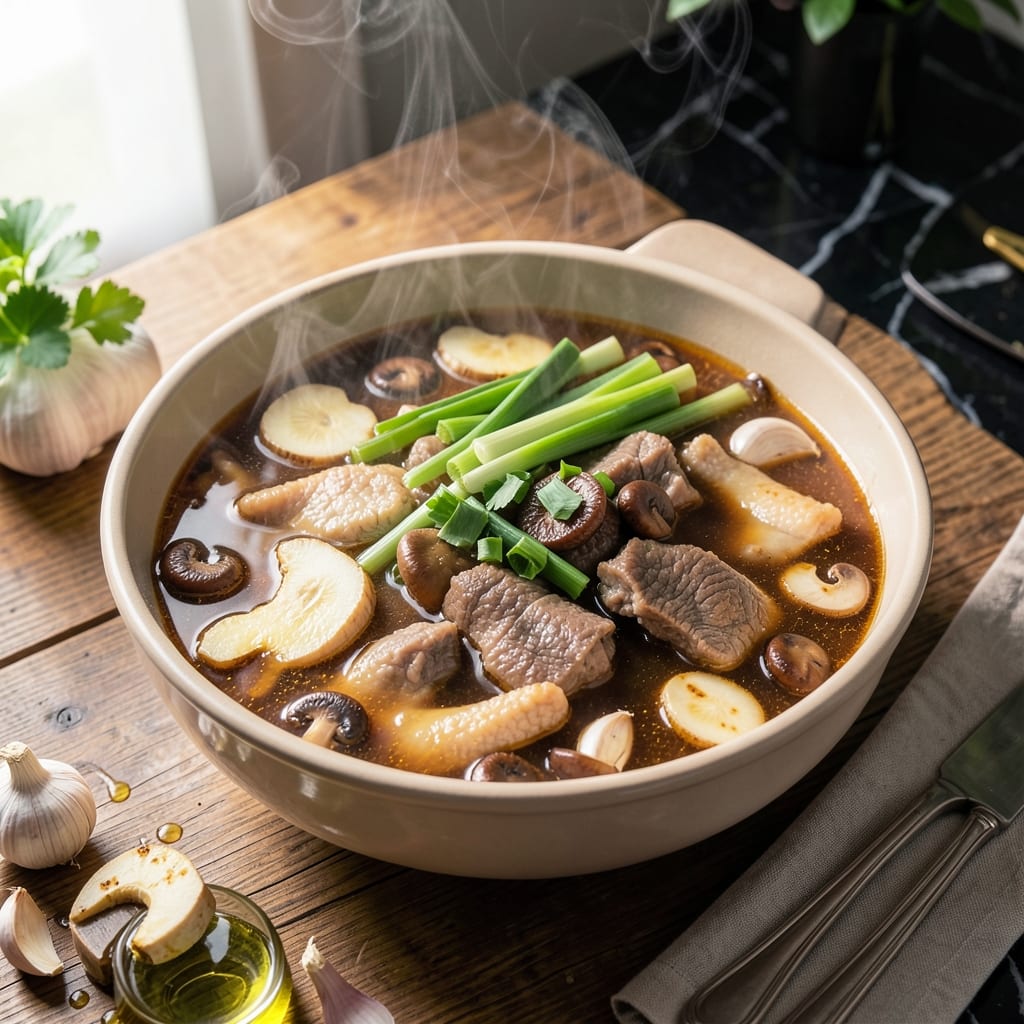
There’s nothing quite like gathering around a bubbling pot of aromatic broth, cooking and sharing a meal together. This traditional approach brings the authentic hot pot experience to your kitchen with rich, flavorful broths that serve as the perfect foundation.
I’ve refined this method to create a restaurant-quality base that’s both deeply savory and perfectly balanced. The secret lies in slow-simmering bones and aromatics to extract maximum depth of flavor, resulting in a broth that’s worth the wait.
What makes this special is the ability to customize every element, from the broth to the dipping sauces. Thinly sliced meats, fresh vegetables, and tofu all cook quickly in the simmering liquid, soaking up those complex flavors.
Serve with an array of dipping sauces for a truly interactive dining experience that’s both authentic and memorable. The possibilities are endless with this versatile foundation.
Ingredients for Hot Pot Recipe at Home
Rich bones and aromatic spices create this deeply flavorful simmering pot for sharing at the table.
| Ingredient | Amount | Notes |
|---|---|---|
| Beef Bones 🥩 | 3 lb | Marrow or knuckle, split |
| Chicken Wings 🍗 | 2 lb | For additional depth |
| Dried Shiitake Mushrooms 🍄 | ½ cup | For umami richness |
| Ginger Root 🌿 | 1 whole | Sliced, skin-on preferred |
| Garlic Cloves 🧄 | 8 cloves | Smashed, skin removed |
| Scallions 🧅 | 4 whole | Cut into 2-inch pieces |
| Star Anise Pods ⭐ | 2 whole | For aromatic depth |
| Cinnamon Stick 🌰 | 1 whole | 2-inch piece |
| Sichuan Peppercorns 🌶️ | 1 tbsp | Lightly toasted |
| Dried Chili Peppers 🔥 | 3 whole | Optional for heat |
| Soy Sauce 🥢 | ½ cup | Low-sodium preferred |
| Shaoxing Wine 🍶 | ¼ cup | Or dry sherry |
| Rock Sugar 🍚 | ¼ cup | Or brown sugar |
| Thinly Sliced Beef 🥩 | 1 lb | Ribeye or sirloin |
| Napa Cabbage 🥬 | 1 whole | Cut into chunks |
[recipe_ingredient_scaler]
The bones are everything here. Ask your butcher for marrow or knuckle bones—they’ve got the most collagen for that gelatinous, rich broth. Asian markets are goldmines for dried shiitake and Sichuan peppercorns (check the bulk section). For the chicken wings, look for skin-on—they add body to the stock. Don’t skip toasting the spices; it wakes up their oils (worth the extra minute).
No beef bones? Pork neck bones work in a pinch, though the flavor’s milder. Swap Shaoxing wine for dry sherry or mirin—just avoid cooking wine, which tastes harsh. Rock sugar? Brown sugar or even white works, but it won’t have that subtle caramel note. The ribeye can be swapped for lamb or pork slices if you’re mixing it up.
Broth actually improves overnight, so make it a day ahead if you can. Keeps in the fridge for 3-4 days or frozen for 3 months. Skim the fat after chilling for a cleaner taste—your guests (and arteries) will thank you.
Why You’ll Love This Recipe
- Set and Forget: I toss the beef bones and chicken wings in the pot with the mushrooms, ginger, and garlic, then let the broth work its magic while I prep the rest.
- Deep Umami: The shiitake mushrooms and slow-simmered bones create a rich, layered broth that’s honestly addictive.
- Crowd Pleaser: I’ve served this for lazy Sundays and birthday dinners—everyone loves customizing their bowl.
- Leftovers Gold: The broth tastes even better the next day, and I stretch it into noodle soups or ramen for a quick meal.
Step-by-Step Instructions for Hot Pot at Home
Here’s the method I use to build layers of flavor that rival any restaurant.
Step 1: Blanch and Parboil the Bones and Wings
Place the 3 lb Beef Bones and 2 lb Chicken Wings in a large stockpot and cover with cold water. Bring to a rolling boil, then reduce to a simmer for 10 minutes.
You’ll see impurities rise to the surface as scum—skim this off with a fine-mesh strainer. This blanch removes blood and impurities that would cloud your broth. Drain and rinse both the bones and wings thoroughly under cold water to stop the cooking process.
Real talk: skipping this step results in a murky, bitter broth that lacks the clean depth you want from a proper hot pot base.
Step 2: Build the Aromatic Broth Base
Return the blanched bones and wings to the cleaned stockpot along with the 0.5 cup Dried Shiitake Mushrooms, 1 whole Ginger Root (sliced), 8 cloves Garlic Cloves (smashed), 4 whole Scallions (cut into 2-inch pieces), 2 whole Star Anise Pods, 1 whole Cinnamon Stick, 1 tbsp Sichuan Peppercorns, and 3 whole Dried Chili Peppers.
Add enough cold water to cover everything by 2 inches. Bring to a boil, then reduce to a low simmer. Partially cover and cook for 4-5 hours, occasionally skimming any foam that rises.
The broth should develop a deep amber color and rich aroma. The Sichuan Peppercorns will create a subtle numbing sensation that defines authentic hot pot.
Step 3: Strain and Season the Broth
Carefully strain the broth through a fine-mesh sieve into a clean pot, pressing gently on the solids to extract all the flavor. Discard the bones, wings, and aromatics—you’ve extracted all their essence.
Return the strained broth to medium heat and stir in the 0.5 cup Soy Sauce, 0.25 cup Shaoxing Wine, and 0.25 cup Rock Sugar. Taste and adjust seasoning if needed, though the flavors will intensify as it simmers.
Simmer for another 30 minutes to allow the seasonings to meld. The Rock Sugar balances the saltiness while adding a subtle depth that distinguishes this from ordinary stock.
Step 4: Prepare the Dipping Ingredients
While the broth finishes, arrange the 1 lb Thinly Sliced Beef and 1 whole Napa Cabbage (cut into chunks) on separate plates. The beef should be sliced paper-thin against the grain for maximum tenderness.
For the cabbage, separate the leaves and cut into manageable pieces that will cook quickly in the hot broth. Both ingredients should be at room temperature when you’re ready to cook them—cold ingredients lower the broth temperature and slow the cooking process.
This setup allows everyone to cook their own ingredients to their preferred doneness while keeping the broth at a consistent rolling simmer.
Pro Tips For Making Hot Pot Recipe At Home
- Blanch the Bones: Parboil the beef bones for 10 minutes first to remove impurities—I learned this the hard way after my first cloudy, scummy broth ruined the whole pot.
- Soak the Shiitakes: Rehydrate dried shiitakes in warm water for at least 30 minutes, then slice and add the soaking liquid to the broth for deeper umami.
- Skim Often Early: Keep a fine-mesh skimmer handy during the first 30 minutes of simmering to remove foam, or you’ll end up with a bitter, greasy broth no matter how long you cook it.
- Toast the Aromatics: Char the ginger and garlic in a dry pan for 2-3 minutes before adding to the pot—it sounds weird, but it adds a nutty depth that raw aromatics just can’t.
Troubleshooting This Recipe
Broth Too Cloudy
If your broth looks murky, you likely skipped the initial blanch. Always boil bones and wings for 10 minutes first, then rinse them thoroughly. For existing cloudy broth, strain through a cheesecloth-lined sieve to catch fine particles. 💡
Weak Flavor Profile
Your simmering time may have been too short. The bones and aromatics need 4-5 hours minimum for full flavor extraction. If it still tastes thin, reduce the broth by 25% on medium heat to concentrate the flavors.
Overly Salty Broth
This usually happens when adding soy sauce too early. Always season after straining. To fix, dilute with 1-2 cups water and add 1 tbsp rock sugar to balance. Taste frequently as you adjust.
Meat Cooks Unevenly
Your slices might be too thick. Freeze the beef for 30 minutes first for easier thin slicing. Ensure your broth maintains a rolling boil before adding ingredients. Cold meat will lower the temperature and slow cooking.
Spices Too Overpowering
Sichuan peppercorns and star anise can dominate if overused. Stick to 1 tbsp peppercorns and 2 pods per 5 quarts of liquid. Remove spices after 3 hours of simmering to prevent bitterness.
Broth Too Greasy
Chill the broth completely, then skim off the solidified fat. For quick fixes, use a fat separator or drag a paper towel across the surface. A small amount of fat adds flavor, but too much feels heavy. ❄️
Nutrition Facts
Frequently Asked Questions
Can I use a slow cooker for the broth?
Yes, but adjust the time to 8-10 hours on low. A slow cooker can’t skim impurities as easily, so blanch bones first. The flavor develops well with the extended cook time.
What’s the best way to slice meat thinly?
Partially freeze the meat for 30 minutes to firm it up. Use a sharp knife and slice against the grain at a slight angle. This creates tender, quick-cooking pieces.
How do I keep the broth hot during serving?
Use an electric hot pot or portable butane burner at the table. Keep the heat on medium-high to maintain a rolling simmer. Add hot water as needed to replace what evaporates.
Can I make this vegetarian?
Replace bones with 8 cups vegetable stock and double the mushrooms. Add kombu seaweed and miso paste for umami depth. The spices and aromatics remain the same.

Trained in classic French technique but raised on slow-cooked ribs and spicy rubs, she blends culinary skill with smoke and soul.
- Recipe for Boneless Pork Chops in Cast Iron Skillet: Sear and Baste to Juicy Perfection - October 3, 2026
- Recipe for Boneless Cross Rib Roast: Slow-Roasted Beef with Herb Crust - October 3, 2026
- Hamburgers in Sauce Recipe Crock Pot: Slow-Cooked Savory Delight - October 3, 2026