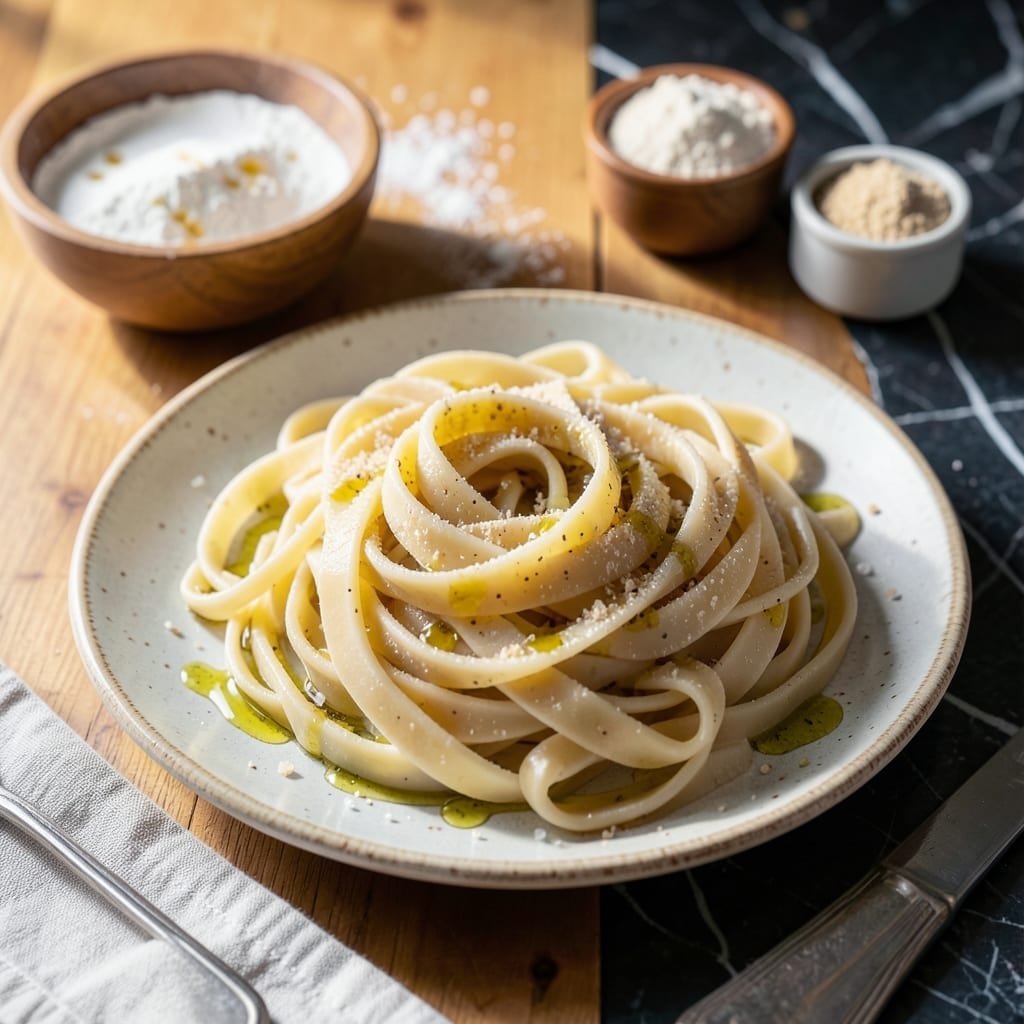
There’s a special satisfaction in making fresh pasta by hand, transforming simple ingredients into silky ribbons without any special equipment. This method proves that restaurant-quality pasta is achievable in any home kitchen.
The process relies on a no-fuss dough that comes together quickly, then rests to develop elasticity. Rolling and cutting by hand creates irregular, rustic shapes that hold sauce beautifully—far superior to machine-extruded pasta.
What emerges is tender yet sturdy pasta with a texture that absorbs sauces perfectly. The manual technique ensures each bite has that authentic, slightly chewy resistance that defines great fresh pasta.
Mastering this skill means you’ll never need to buy dried pasta again. The results speak for themselves with every forkful.
Ingredients for Fresh Pasta Recipe Without Machine
Transform flour, eggs, and a pinch of salt into restaurant-quality pasta with no special tools required.
| Ingredient | Amount | Notes |
|---|---|---|
| All-Purpose Flour 🌾 | 3 cups | 00 flour preferred for authenticity |
| Large Eggs 🥚 | 4 whole | Room temperature for best texture |
| Semolina Flour 🌾 | ½ cup | For dusting and texture |
| Extra-Virgin Olive Oil 🫒 | 1 tbsp | High quality for richness |
| Sea Salt 🧂 | 1 tsp | Fine grain for even distribution |
| Water 💧 | 2 tbsp | As needed for dough consistency |
[recipe_ingredient_scaler]
The flour makes all the difference here. 00 flour from Eataly or Italian markets delivers that authentic, silky texture, but King Arthur all-purpose works beautifully too. Room temperature eggs incorporate more evenly into the dough. If your kitchen is dry, you might need an extra splash of water—dough should feel supple, not stiff. Semolina isn’t strictly necessary but adds that slightly gritty bite that makes fresh pasta so satisfying.
No 00 flour? Bread flour at half the amount blended with all-purpose mimics the protein content. Out of semolina? Fine cornmeal works in a pinch for dusting. The olive oil can be omitted, but it adds elasticity and richness. For a richer dough, some cooks swear by replacing one egg with an extra yolk—but four whole eggs is the classic ratio.
Fresh pasta doesn’t keep long. Cook immediately or refrigerate for up to 24 hours (wrapped tightly). For longer storage, freeze dough balls on a tray first, then transfer to a bag—they’ll keep for 1 month. Dust with extra semolina before freezing to prevent sticking.
Why You’ll Love This Recipe
- No Machine Needed: I just use my hands and a rolling pin—no fancy equipment cluttering my kitchen.
- Rich Egg Flavor: The large eggs and olive oil give it that deep, buttery taste store-bought can’t match.
- Endless Meal Options: I’ve served it with everything from simple garlic and oil to hearty ragù.
- Budget Friendly: All-purpose flour and eggs cost pennies, but it feels like a restaurant meal.
Step-by-Step Instructions for Fresh Pasta Without Machine
Master the art of hand-rolled pasta with this proven method for perfect texture and flavor.
Step 1: Form the Dough with Precision
Create a well with the 3 cups All-Purpose Flour on a clean work surface. I recommend using 00 flour if available for the most authentic texture. Add the 4 whole Large Eggs (room temperature), 1 tbsp Extra-Virgin Olive Oil, and 1 tsp Sea Salt to the center of the well.
Using a fork, gradually incorporate the flour into the wet ingredients, working from the inside out. The mixture will start as a shaggy mass. Continue mixing until it comes together into a rough dough. If the mixture feels too dry, add 1 tablespoon of the 2 tbsp Water at a time until it just holds together.
Step 2: Knead to Develop Gluten Structure
Once the dough comes together, begin kneading by hand. Push the dough away from you with the heel of your hand, then fold it back over itself. Rotate the dough 90 degrees after each push-fold motion. I maintain a steady rhythm for 8-10 minutes until the dough becomes smooth and elastic.
The dough is properly kneaded when it feels silky to the touch and springs back when pressed lightly. If it feels sticky, dust lightly with some of the 0.5 cup Semolina Flour reserved for this purpose. Avoid adding too much flour during kneading, as this can make the pasta tough.
Step 3: Rest the Dough for Optimal Texture
Wrap the kneaded dough tightly in plastic wrap and let it rest at room temperature for 30 minutes. This resting period allows the gluten strands to relax, making the dough much easier to roll out thinly. I’ve found this step non-negotiable for achieving tender pasta.
During this time, the dough will also absorb any remaining moisture evenly. If your kitchen is particularly dry, you can let it rest for up to 1 hour. The dough should feel slightly tacky but not sticky when properly rested.
Step 4: Roll and Shape by Hand
Divide the rested dough into 4 equal portions for manageable handling. On a surface dusted with Semolina Flour, roll the first portion as thin as possible. I use a long rolling pin and work from the center outward, rotating the dough 90 degrees after each pass.
Continue rolling until the pasta is nearly translucent, about 1/16-inch thick. If the dough springs back, let it rest for 2-3 minutes before continuing. Once rolled, cut into desired shapes—tagliatelle, fettuccine, or pappardelle. Dust the cut pasta with Semolina Flour to prevent sticking.
Repeat with remaining dough portions, keeping finished pasta covered with a kitchen towel until ready to cook.
Pro Tips For Making Fresh Pasta Recipe Without Machine
- Knead Longer: I learned this the hard way—under-kneading gives you tough pasta. Work the dough for at least 8-10 minutes until it’s smooth and elastic, even if your arms protest.
- Use Room-Temp Eggs: Cold eggs can make the dough seize up. Take them out of the fridge 30 minutes before mixing, or soak in warm water for 5 minutes if you’re in a hurry.
- Skip Over-Flouring: Resist the urge to dump extra flour on the counter while rolling—it makes the pasta dry and brittle. Light dustings of semolina are enough to prevent sticking.
- Rest the Dough: After kneading, wrap it in plastic and let it sit for 30 minutes. Sounds weird, but it relaxes the gluten so the pasta rolls out thin without springing back.
Make-Ahead Tips for fresh pasta recipe without machine
Dough Prep Ahead
You can make the dough up to 24 hours in advance. Wrap it tightly in plastic and refrigerate. Let it sit at room temperature for 15-20 minutes before rolling to soften slightly. 💡
Pre-Rolled Sheets
Roll out the pasta sheets but don’t cut them. Dust with Semolina Flour, stack between parchment paper, and refrigerate for up to 8 hours. This lets you finish shaping just before cooking.
Freezing Dough Balls
Divide dough into 4 portions, flatten into discs, and freeze on a tray first. Once solid, transfer to a bag. They’ll keep for 1 month. Thaw in the fridge overnight before rolling.
Freezing Cut Pasta
Spread cut pasta on a baking sheet dusted with Semolina Flour, freeze until solid, then transfer to bags. Cook from frozen, adding 1-2 minutes to boiling time. ❄️
Same-Day Efficiency
Make the dough first thing in the morning. While it rests, prep your sauce. By dinner time, you’ll have fresh pasta ready to boil and serve immediately.
Reviving Dried Pasta
If pasta dries out slightly, don’t discard it. Boil for 30 seconds less than fresh pasta timing. The texture will still be superior to store-bought.
Nutrition Facts
Frequently Asked Questions
How thin should I roll the pasta?
Aim for about 1/16-inch thick for most shapes. If the dough springs back, let it rest for 2-3 minutes before rolling again.
Can I use a wine bottle instead of a rolling pin?
Yes! A clean, smooth wine bottle works perfectly for rolling. Just ensure it’s dry and free of labels to avoid sticking.
Why does my dough keep tearing when rolling?
This usually means it needs more rest time. If it’s too dry, add 1 teaspoon water and knead briefly before rolling again.
How long should I cook fresh pasta?
Fresh pasta cooks quickly—just 1-3 minutes in boiling salted water. Test for doneness by tasting; it should be tender but still firm.

Trained in classic French technique but raised on slow-cooked ribs and spicy rubs, she blends culinary skill with smoke and soul.
- Recipe for Boneless Pork Chops in Cast Iron Skillet: Sear and Baste to Juicy Perfection - October 3, 2026
- Recipe for Boneless Cross Rib Roast: Slow-Roasted Beef with Herb Crust - October 3, 2026
- Hamburgers in Sauce Recipe Crock Pot: Slow-Cooked Savory Delight - October 3, 2026