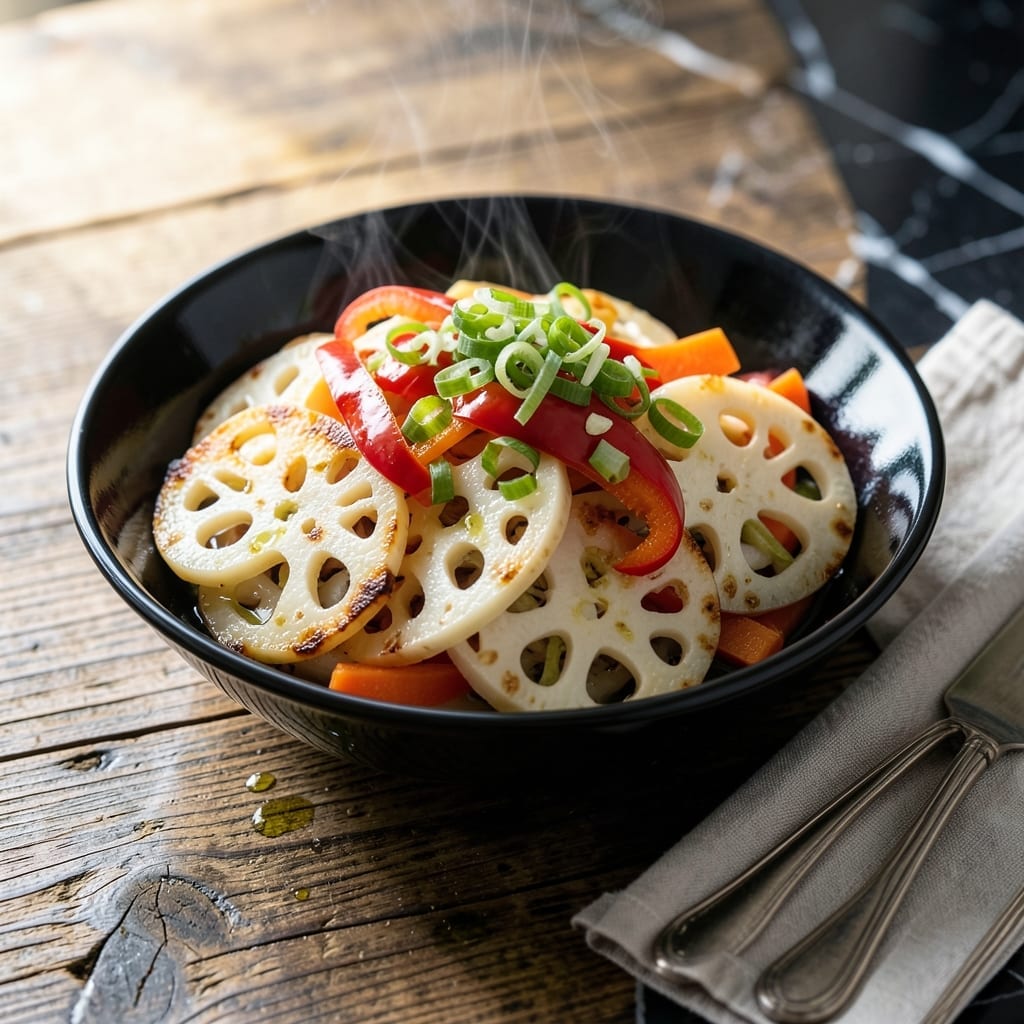
I discovered lotus root in a Boston market and immediately fell in love with its unique texture and subtle sweetness. This stir fry highlights its natural crunch while pairing it with a perfectly balanced sauce.
The key is slicing the lotus root thinly and pre-cooking it briefly to soften without losing that desirable crispness. A hot pan and quick cooking time ensure the vegetable maintains its signature texture.
What emerges is a dish with beautiful patterns of lotus root slices, each bite offering a satisfying crunch followed by a burst of sweet and savory flavors. The sauce clings beautifully to every piece.
Serve this as a main course or alongside your favorite protein for a meal that’s both visually impressive and deeply satisfying.
Ingredients for Lotus Root Recipe Stir Fry
Thinly sliced lotus root plus vibrant vegetables for a crisp, flavorful stir fry.
| Ingredient | Amount | Notes |
|---|---|---|
| Lotus Root 🌱 | 1 ½ lb | Peeled, thinly sliced |
| Vegetable Oil 🫒 | 3 tbsp | High smoke point for stir-frying |
| Red Bell Pepper 🌶️ | 1 whole | Julienned for color |
| Carrot 🥕 | 1 whole | Julienned for texture |
| Scallions 🧅 | 4 whole | Cut into 2-inch pieces |
| Garlic Cloves 🧄 | 4 cloves | Minced for aroma |
| Fresh Ginger 🌿 | 1 tbsp | Minced for depth |
| Soy Sauce 🥢 | 3 tbsp | Low-sodium preferred |
| Rice Vinegar 🍚 | 2 tbsp | For acidity balance |
| Maple Syrup 🍁 | 1 ½ tbsp | For sweetness |
| Sesame Oil 🫒 | 1 tsp | Toasted for finish |
| Cornstarch 🌾 | 1 tbsp | For sauce thickening |
| Water 💧 | ¼ cup | For cornstarch slurry |
| Sesame Seeds 🌰 | 1 tbsp | Toasted for garnish |
[recipe_ingredient_scaler]
Lotus root is the star here. Asian grocery stores often carry it fresh—look for firm, unblemished pieces with no soft spots. The red bell pepper and carrot add color and crunch (don’t skip the julienne cut). I grab mine from H Mart when I’m stocking up on stir-fry staples. Pre-slicing the lotus root thinly and soaking in cold water prevents browning while you prep the rest.
No maple syrup? Agave nectar or coconut sugar work just as well. For gluten-free, swap soy sauce for tamari. If you’re missing rice vinegar, apple cider vinegar (at half the amount) adds a similar tang. The cornstarch can be replaced with arrowroot powder, but don’t over-thicken—you want the sauce to cling, not coat. Sesame oil is non-negotiable for that final aroma.
Prepped lotus root keeps in cold water for 24 hours in the fridge. The stir fry itself is best eaten fresh, but leftovers hold for 3-4 days. Reheat quickly on high to preserve crunch (microwave is fine in a pinch).
Why You’ll Love This Recipe
- One Pan Wonder: I love that everything cooks together in a single pan—lotus root, bell peppers, carrots, and scallions sizzling in oil with zero extra dishes.
- Crunchy Satisfaction: The lotus root stays crispy on the edges while soaking up the sweetness from the bell peppers and carrots.
- Meal Prep Magic: I make a big batch on Sunday and it reheats beautifully for lunches all week.
- Budget Stretcher: Honestly, lotus root is cheap at my Asian market, and a little goes a long way with all those veggies.
Step-by-Step Instructions for Lotus Root Stir Fry
Here’s the method I use for achieving that perfect crunch while balancing all the bold flavors.
Step 1: Prepare and Blanch the Lotus Root
Peel the 1.5 lb Lotus Root and slice it into ⅛-inch thick rounds. As you slice, you’ll notice the beautiful lace-like pattern inside—this is what makes lotus root so visually striking in stir fries.
Bring a pot of water to a boil and blanch the sliced lotus root for 2 minutes. This removes any bitterness and helps maintain that signature crunch. Drain immediately and pat dry with a clean towel. Meanwhile, julienne the red bell pepper and carrot, and cut the 4 whole Scallions into 2-inch pieces.
Step 2: Stir Fry the Vegetables for Maximum Crunch
Heat 2 tbsp of the 3 tbsp Vegetable Oil in a wok or large skillet over high heat until it shimmers. Add the blanched lotus root slices and stir fry for 4-5 minutes until the edges begin to turn lightly golden.
Push the lotus root to one side, add the remaining 1 tbsp Vegetable Oil, then add the minced 4 cloves Garlic Cloves and 1 tbsp Fresh Ginger. Stir fry for 30 seconds until fragrant, then add the julienned red bell pepper, carrot, and scallions. Cook for another 2-3 minutes until the vegetables are tender-crisp.
Step 3: Create the Sweet and Savory Sauce
In a small bowl, whisk together the 3 tbsp Soy Sauce, 2 tbsp Rice Vinegar, and 1.5 tbsp Maple Syrup. This combination delivers that perfect balance of salty, tangy, and sweet flavors.
In a separate small bowl, mix the 1 tbsp Cornstarch with the 0.25 cup Water to create a slurry. Pour the soy sauce mixture into the wok with the vegetables and stir well to coat. Add the cornstarch slurry and cook for 1-2 minutes until the sauce thickens and becomes glossy, coating the back of a spoon.
Step 4: Finish with Aromatic Touches
Drizzle the 1 tsp Sesame Oil over the stir fry and toss everything together. The sesame oil adds a nutty depth that ties all the flavors together beautifully. Taste and adjust seasoning if needed—though the soy sauce usually provides enough saltiness.
Sprinkle the 1 tbsp Sesame Seeds over the top and give it one final toss. The sesame seeds add a delightful texture contrast and a visual pop. Serve immediately while hot—the lotus root will maintain its satisfying crunch, and the sauce will be at its glossy, flavorful best.
Pro Tips For Making Lotus Root Recipe Stir Fry
- Parboil the Lotus Root: Soak lotus root slices in hot water for 5 minutes before stir-frying to remove excess starch and prevent them from turning gray—this keeps them crisp and white.
- Slice Thin, Cook Fast: Cut the lotus root, bell pepper, and carrot into thin, even slices so they cook quickly and uniformly over high heat without burning.
- Skip the Overcrowding: Stir-fry in batches if needed; too many veggies in the pan at once steams them instead of giving that perfect sear.
- Finish with Scallions: Add the scallions in the last 30 seconds of cooking to preserve their fresh crunch and bright flavor—don’t let them wilt.
Best Sauces and Condiments for These Flavors
Classic Sweet-Savory Glaze
The recipe’s built-in sauce is already perfect, but I sometimes boost it with 1 extra tbsp maple syrup for a glossier finish. The soy-vinegar base needs no improvement—it clings beautifully to the lotus root’s crunchy surface. 🌟
Spicy Chili Crisp
For heat lovers, a drizzle of Lao Gan Ma chili crisp (about 1-2 tsp per serving) adds crunchy texture and fiery depth. I keep a jar from the Boston Chinatown market in my pantry for moments like this.
Nutty Tahini Sauce
Whisk 3 tbsp tahini with 1 tbsp rice vinegar, 1 tsp maple syrup, and 2 tbsp warm water until smooth. This creamy contrast to the crisp lotus root works surprisingly well in my tests.
Citrus Ponzu Drizzle
Combine ¼ cup ponzu sauce with 1 tsp toasted sesame oil and ½ tsp grated ginger. The bright citrus notes cut through the richness while complementing the existing flavors.
Garlic Scallion Oil
Heat ¼ cup vegetable oil with 3 minced garlic cloves and 2 chopped scallions until fragrant (30 seconds). Strain and drizzle over the finished dish for aromatic depth.
Quick Pickled Vegetables
Toss thinly sliced cucumbers and carrots with 2 tbsp rice vinegar, 1 tsp sugar, and a pinch of salt. Serve alongside for a refreshing contrast to the warm stir fry. 💡
Nutrition Facts
Frequently Asked Questions
Why do I need to blanch lotus root first?
Blanching for 2 minutes removes bitterness and softens it slightly while preserving the crunch. It also brightens the color and prepares the root to absorb flavors during stir-frying.
Can I use frozen lotus root?
Yes, but thaw it completely first and pat very dry to prevent excess moisture. Frozen root may soften more quickly, so reduce stir-fry time by 1 minute to maintain texture.
How do I keep the slices from browning?
Soak sliced lotus root in cold water with a splash of vinegar until ready to blanch. This prevents oxidation and keeps the slices crisp and white.
What if my sauce is too thick?
Thin it with 1-2 tbsp warm water and stir well. The cornstarch slurry can sometimes over-thicken if cooked too long. Adjust before adding sesame oil.

Trained in classic French technique but raised on slow-cooked ribs and spicy rubs, she blends culinary skill with smoke and soul.
- Recipe for Boneless Pork Chops in Cast Iron Skillet: Sear and Baste to Juicy Perfection - October 3, 2026
- Recipe for Boneless Cross Rib Roast: Slow-Roasted Beef with Herb Crust - October 3, 2026
- Hamburgers in Sauce Recipe Crock Pot: Slow-Cooked Savory Delight - October 3, 2026