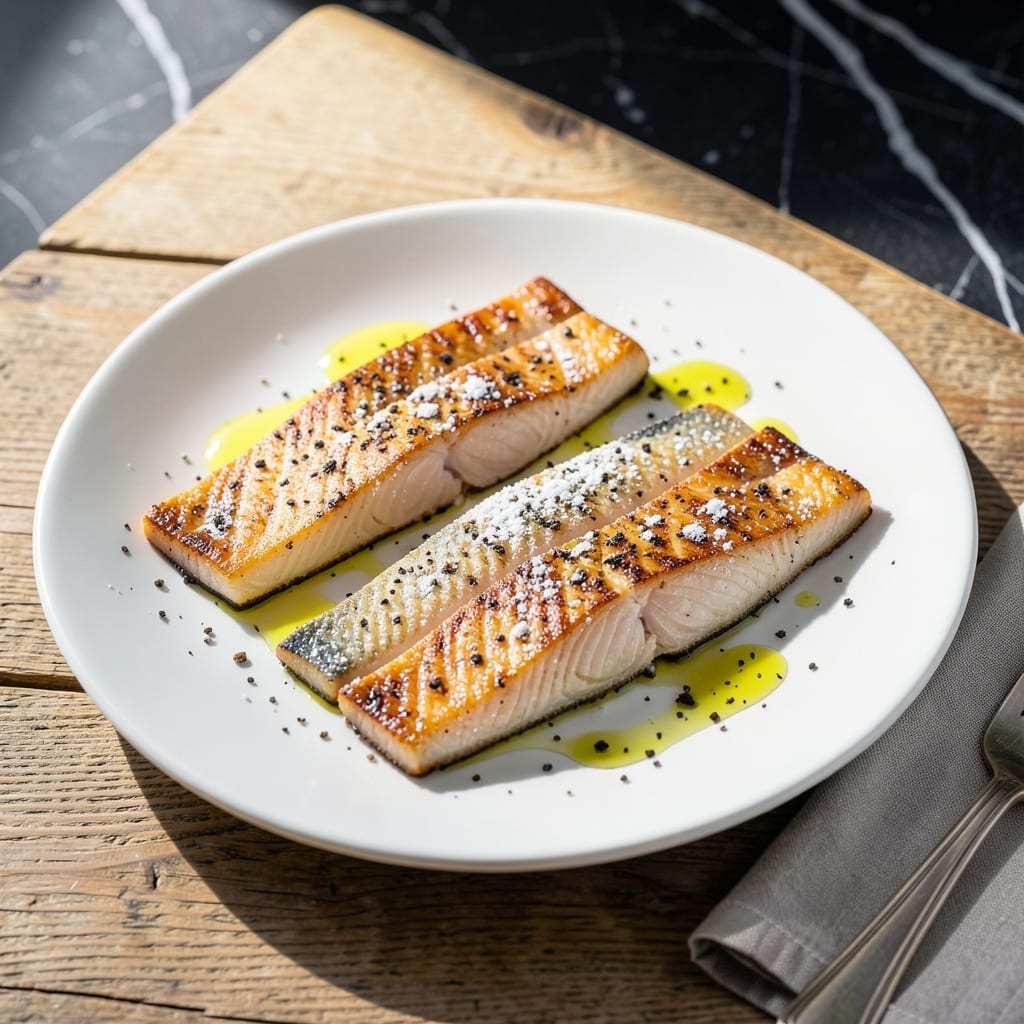
Cooking freshwater bass demands precision to achieve that perfect balance of crisp skin and flaky white flesh. I developed this method after testing multiple techniques in my small Boston kitchen.
The key is starting with a very hot pan and carefully scored fish. This prevents curling while ensuring even cooking. The skin renders to golden perfection when left undisturbed during the initial searing.
By the time it’s done, you’ll have bass that flakes effortlessly at the touch of a fork, with skin so crisp it shatters. The simple seasoning lets the natural sweetness of the fish shine through.
Serve immediately with lemon wedges to preserve that just-cooked texture. Here’s how to master this technique.
Ingredients for Freshwater Bass
Simple ingredients highlight the bass’s natural sweetness and deliver that perfect crisp skin.
| Ingredient | Amount | Notes |
|---|---|---|
| Freshwater Bass Fillets 🐟 | 4 whole | Skin-on, about 6 oz each |
| Kosher Salt 🧂 | 1 ½ tsp | Diamond Crystal preferred |
| Freshly Ground Black Pepper 🌶️ | 1 tsp | Coarse grind for texture |
| All-Purpose Flour 🌾 | ½ cup | For dredging fish |
| Neutral Oil 🫒 | ¼ cup | High smoke point, like avocado |
| Unsalted Butter 🧈 | 3 tbsp | For basting while cooking |
| Garlic Cloves 🧄 | 3 cloves | Thinly sliced for aroma |
| Fresh Thyme Sprigs 🌿 | 4 whole | Optional, for garnish |
| Fresh Parsley 🍃 | ¼ cup | Chopped, for finishing |
| Lemon 🍋 | 1 whole | Cut into wedges for serving |
[recipe_ingredient_scaler]
The bass is everything here. Whole Foods or a trusted fishmonger will have the freshest fillets—look for firm, translucent flesh with no fishy odor. Skin-on is non-negotiable for that shatteringly crisp texture. I get mine from Boston’s New Deal Fish Market when I’m feeling fancy, but any reputable counter will do. Ask them to scale it if you’re not confident doing it yourself.
No freshwater bass? Rainbow trout or striped bass work just as well. Swap the flour for cornstarch for an even crispier crust. Out of fresh herbs? Dried thyme or oregano at half the amount still adds depth. The butter can be clarified if you’re worried about burning (it has a higher smoke point). And if you’re avoiding dairy entirely, olive oil works in a pinch—just don’t expect the same richness.
Cook this the day you buy the fish—freshness is key. Leftovers? Honestly, it’s best eaten right away, but you can store it in the fridge for 1 day. Reheat gently in a skillet to revive the skin. The butter-thyme mixture? Use it up within 3 days or freeze for later.
Why You’ll Love This Recipe
- 20-Minute Meal: I can go from fillet to fork faster than takeout arrives. Just salt, pepper, flour, and a hot pan—no fuss.
- Crispy Perfection: That golden crust from the flour in hot oil? It locks in the bass’s sweet, flaky meat every single time.
- Weeknight Hero: It’s my Tuesday dinner MVP—simple enough for a solo meal, impressive enough for unexpected guests.
- Budget Keeper: Freshwater bass is often cheaper than salmon or cod, but with this method, it tastes like a splurge.
Step-by-Step Instructions for Freshwater Bass
Here’s the method that guarantees crisp skin and flaky white flesh every time.
Step 1: Season and Dredge the Fillets
Pat the 4 whole Freshwater Bass Fillets completely dry with paper towels. This is critical—moisture prevents crisping. Season both sides evenly with the 1.5 tsp Kosher Salt and 1 tsp Freshly Ground Black Pepper, pressing gently so it adheres.
Dredge each fillet in the 0.5 cup All-Purpose Flour, shaking off the excess. The flour creates a thin, even coating that will form a golden crust when cooked. Let the dredged fillets rest on a plate for 5 minutes while you heat the pan—this helps the coating set.
Step 2: Pan-Sear for Crisp Skin
Heat the 0.25 cup Neutral Oil in a large skillet over medium-high heat until it shimmers but doesn’t smoke. Add the fillets skin-side down and press down gently with a fish spatula for 10 seconds to ensure full contact with the pan.
Cook undisturbed for 4-5 minutes until the edges appear golden brown and the skin releases easily from the pan. This is your visual cue—don’t flip too soon or the skin will tear. The skin should be deep golden and crisp when done.
Step 3: Flip and Baste with Aromatics
Flip the fillets carefully and reduce heat to medium. Add the 3 tbsp Unsalted Butter, 3 cloves Garlic Cloves, and 4 whole Fresh Thyme Sprigs to the pan. Tilt the skillet slightly and spoon the foaming butter over the fillets continuously for 2-3 minutes.
The butter will turn a nutty brown, and the garlic will infuse its aroma into the fish. The fillets are done when the flesh is opaque and flakes easily with a fork. Remove from heat immediately to prevent overcooking.
Step 4: Rest and Garnish
Transfer the fillets to a warm plate and let them rest for 2 minutes. This allows the juices to redistribute, ensuring the flesh stays moist and flaky. Meanwhile, chop the 0.25 cup Fresh Parsley and cut the 1 whole Lemon into wedges.
Sprinkle the parsley over the fillets and serve with the lemon wedges on the side. The acidity from the lemon brightens the rich, buttery flavors. Serve immediately while the skin is still crisp.
Pro Tips For Making Freshwater Bass
- Pat Fillets Dry: I learned this the hard way—wipe the bass fillets thoroughly with paper towels before seasoning. Wet fish steams instead of searing, and you’ll lose that crispy crust we’re all after.
- Heat the Oil First: Sounds obvious, but I used to add the fillets too soon. Get that neutral oil shimmering but not smoking (around 375°F) before the flour-dredged bass hits the pan.
- Skip the Overcrowding: After burning a few batches, I finally figured out that you need space between the fillets. Crowd the pan and the oil temp drops, leaving you with soggy, greasy fish.
- Season the Flour: My grandfather swore by this, and he was right: mix a teaspoon of kosher salt and a pinch of black pepper right into the all-purpose flour before dredging for even seasoning and a better crust.
Essential Equipment for This Dish
Skillet Selection
For perfect crisp skin, use a heavy-bottomed stainless steel or cast iron skillet. I swear by my 12-inch All-Clad—it distributes heat evenly and develops a natural non-stick surface over time. Avoid non-stick pans; they can’t handle the high heat needed for proper searing. 🔥
Fish Spatula
A thin, flexible fish spatula is non-negotiable for flipping delicate fillets without tearing the skin. My Mercer Culinary version has a beveled edge that slides under the fish effortlessly. The flexibility helps lift the entire fillet in one motion.
Instant-Read Thermometer
While visual cues are reliable, a digital instant-read thermometer removes all guesswork. I use a ThermoWorks Thermapen to confirm the internal temperature reaches 145°F. It gives me confidence, especially when cooking for guests.
Paper Towels
Pat the fillets completely dry before seasoning—this is the secret to crisp skin. I keep a stack of heavy-duty paper towels dedicated to this task. Even a drop of moisture will cause the fish to steam instead of sear.
Butter Basting Spoon
A heat-resistant silicone basting spoon lets you safely scoop and pour the hot butter-garlic mixture over the fillets. My OXO Good Grips version has a long handle that keeps my hands away from the heat. The angled head makes it easy to reach under the fish.
Tongs for Serving
Use locking tongs to transfer the cooked fillets to the serving plate. This prevents piercing the delicate flesh. I prefer 12-inch tongs for better reach and control. They also work well for garnishing with parsley and lemon wedges.
Nutrition Facts
Frequently Asked Questions
What’s the best oil for searing?
Use a neutral oil with a high smoke point like avocado or grapeseed. These can handle the medium-high heat needed for crisp skin without burning. Avoid olive oil—it smokes at lower temperatures.
Can I use frozen fillets?
Thaw them overnight in the fridge first. Pat completely dry before cooking to prevent steaming. Never cook from frozen—it leads to uneven cooking and soggy skin.
How do I know when it’s done?
The flesh should flake easily with a fork and reach 145°F internally. The skin will be deep golden and crisp. If it resists flaking, cook for 1-2 minutes longer.
Why did my skin stick to the pan?
Either the pan wasn’t hot enough initially or you moved the fish too soon. Wait until the edges turn golden brown and it releases easily before flipping. Always use a well-seasoned or stainless steel pan.

Trained in classic French technique but raised on slow-cooked ribs and spicy rubs, she blends culinary skill with smoke and soul.
- Recipe for Boneless Pork Chops in Cast Iron Skillet: Sear and Baste to Juicy Perfection - October 3, 2026
- Recipe for Boneless Cross Rib Roast: Slow-Roasted Beef with Herb Crust - October 3, 2026
- Hamburgers in Sauce Recipe Crock Pot: Slow-Cooked Savory Delight - October 3, 2026