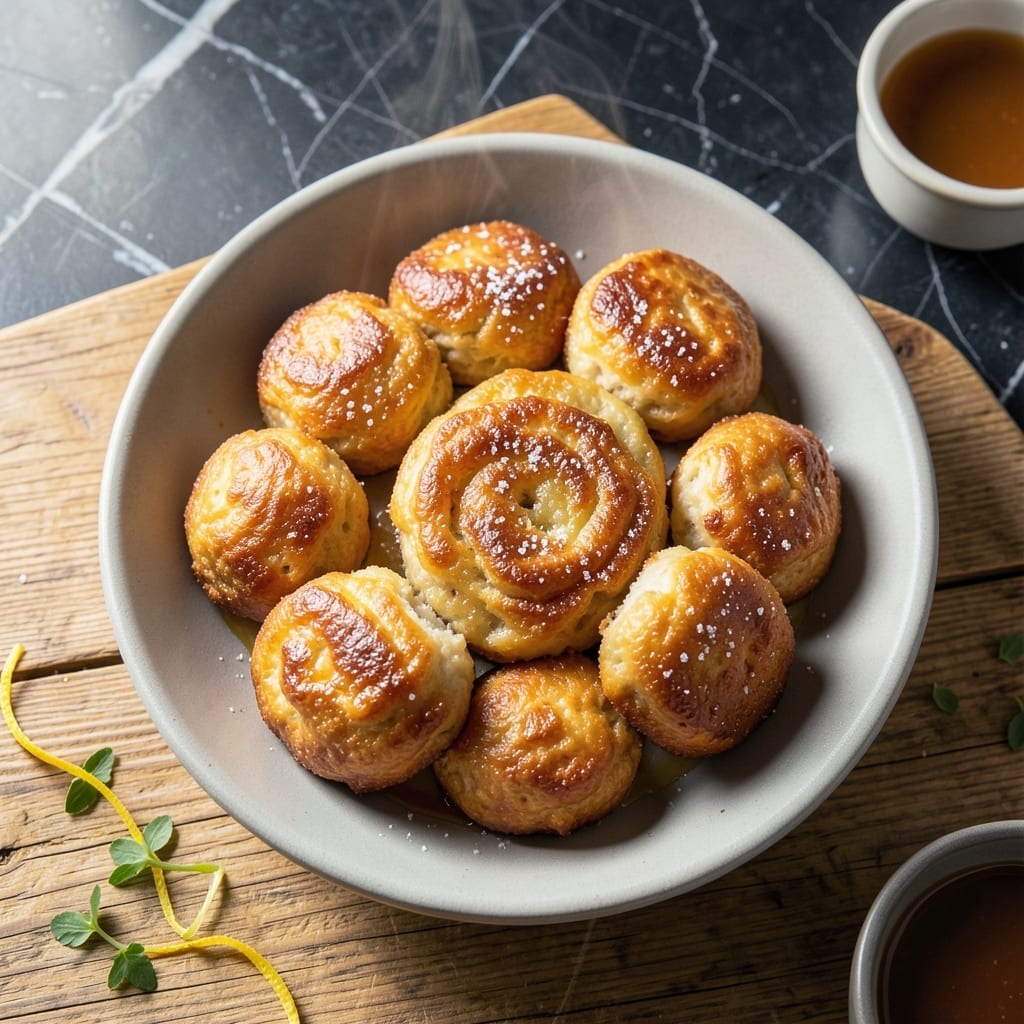
These yeasted fried bakes capture the warmth of my grandmother’s kitchen, where measurements were by feel and results were always perfect.
The yeast creates a light, pillowy texture inside, while frying delivers a golden crust that cracks with every bite.
I’ve refined the process to ensure consistent rise and even cooking, so you get that same reliable quality she achieved without a written recipe.
Filled with island spices, these pockets are as comforting as they are impressive, proving that the best dishes often come from intuition and practice.
Ingredients for Fried Bakes Recipe with Yeast
Warm spices and soft dough come together for these island-inspired fried pockets with a golden crust.
| Ingredient | Amount | Notes |
|---|---|---|
| All-Purpose Flour 🌾 | 4 cups | Plus extra for dusting |
| Active Dry Yeast 🍞 | 2 ¼ tsp | One packet, proofed in warm water |
| Granulated Sugar 🍚 | 2 tbsp | For activating yeast |
| Warm Water 💧 | 1 ¼ cups | 110-115°F for yeast |
| Salt 🧂 | 1 tsp | Kosher or sea salt |
| Unsalted Butter 🧈 | 2 tbsp | Melted and cooled |
| Vegetable Oil 🫒 | 4 cups | For deep frying |
| Ground Cinnamon 🌿 | 1 tsp | For island spice filling |
| Ground Nutmeg 🌰 | ½ tsp | Freshly grated preferred |
| Brown Sugar 🍯 | ¼ cup | Packed, for filling |
| Raisins 🍇 | ½ cup | Optional for filling |
| Vanilla Extract 🌿 | 1 tsp | Pure extract for best flavor |
[recipe_ingredient_scaler]
The flour is the foundation here. Gold Medal or King Arthur all-purpose gives that perfect pillowy texture. Yeast is non-negotiable—check the expiration date (old yeast won’t rise). The warm water needs to be just right: too hot kills the yeast, too cool won’t activate it. I use a thermometer for accuracy, but you can test with your wrist—should feel warm, not hot.
No yeast? Instant yeast works too—just skip the proofing step. Swap raisins for chopped dried apricots or currants. Short on island spices? Pumpkin pie spice is a solid substitute for cinnamon and nutmeg. The vegetable oil can be peanut or canola—whatever you’ve got for frying. Vanilla extract adds depth, but a pinch of almond extract works in a pinch.
Dough can rest in the fridge overnight if you’re prepping ahead. Fried bakes are best eaten fresh but keep 2-3 days in an airtight container. Reheat in the oven to revive the crust—microwave makes them soggy. Filling can be prepped 1 day ahead and stored separately.
Why You’ll Love This Recipe
- One Bowl Wonder: Honestly, mixing flour, yeast, sugar, and warm water in one bowl is about as low-effort as it gets.
- Pillowy Perfection: The yeast makes them light and airy inside with just the right crisp edge from frying.
- Breakfast to Dinner: I’ve served these as a quick breakfast, stuffed with saltfish, or even as a side with stew.
- Penny-Pincher’s Dream: Flour, yeast, and water cost pennies, yet they taste like a million bucks fresh from the fryer.
Step-by-Step Instructions for Fried Bakes With Yeast
These steps make it simple to achieve golden, pillowy pockets with that island spice filling.
Step 1: Activate the Yeast and Prepare the Dough
In a large bowl, combine the 2.25 tsp Active Dry Yeast, 2 tbsp Granulated Sugar, and 1.25 cups Warm Water. Let it sit for 5-10 minutes until the mixture becomes frothy and cloudy—this tells you the yeast is alive and active.
Add the 4 cups All-Purpose Flour and 1 tsp Salt to the yeast mixture. Mix until a shaggy dough forms. Pour in the 2 tbsp Unsalted Butter, melted and cooled, and knead for 8-10 minutes until the dough is smooth and elastic. It should spring back slowly when you press it with your finger.
Step 2: Let the Dough Rise Until Doubled
Lightly oil the bowl, place the dough inside, and cover it with a clean kitchen towel. Let it rise in a warm, draft-free spot for 1-1.5 hours or until doubled in size. I like to turn my oven on to its lowest setting for 2 minutes, then turn it off and place the dough inside to rise.
You’ll know it’s ready when you can press your finger gently into the dough and the indentation stays. If it springs back immediately, give it more time. This step is crucial—don’t rush it, or your bakes won’t be as light and fluffy.
Step 3: Shape the Dough and Add the Island Spice Filling
Punch down the risen dough to release the air, then turn it out onto a lightly floured surface. Roll it out to about ½-inch thickness and cut into 3-inch rounds using a glass or round cutter. You should get about 12-14 rounds for this recipe.
For the filling, mix the 0.25 cup Brown Sugar, 1 tsp Ground Cinnamon, 0.5 tsp Ground Nutmeg, 0.5 cup Raisins, and 1 tsp Vanilla Extract in a small bowl. Place a spoonful of filling in the center of each round, then fold the edges over to create a half-moon shape. Press the edges firmly with a fork to seal.
Step 4: Fry to Golden Perfection
Heat the 4 cups Vegetable Oil in a deep, heavy-bottomed pot to 350-375°F. Use a thermometer for accuracy—if the oil isn’t hot enough, the bakes will absorb too much oil and become greasy. If it’s too hot, they’ll brown too quickly on the outside before cooking through.
Fry the bakes in batches for 3-4 minutes per side until they’re golden brown and puffed. Don’t overcrowd the pot—this lowers the oil temperature and leads to uneven cooking. Use a slotted spoon to transfer them to a paper towel-lined plate to drain.
Serve warm, and watch them disappear. The outside should be crisp and golden, while the inside stays soft and pillowy with that sweet, spiced filling in every bite.
Pro Tips For Making Fried Bakes Recipe With Yeast
- Test Your Yeast: Always bloom your active dry yeast in warm water with a pinch of sugar first—if it doesn’t foam within 5-10 minutes, your bakes won’t rise. I learned this the hard way after wasting a batch of dough that stayed flat as a pancake.
- Keep It Warm: Let your dough rise in a warm spot, like an oven with the light turned on. After burning three batches, I finally figured out cold drafts kill the yeast’s momentum.
- Don’t Overwork Dough: Knead just until smooth—overworking it makes the bakes tough. My grandmother swore by this, and she was right: gentle hands make fluffier fried bakes.
- Use Hot Oil: Fry in oil that’s hot but not smoking, around 350°F. Sounds weird, but it works: too cool and they absorb grease, too hot and they burn outside while staying raw inside.
Health Benefits of These Flavors
Energy Boost
The yeast in these bakes provides B vitamins, including B1, B2, and B3, which help convert food into energy. I notice I feel more sustained after eating them compared to regular fried dough. The natural fermentation process also makes nutrients more bioavailable. 💪
Digestive Health
Yeast-risen dough contains beneficial probiotics from fermentation that support gut health. The 2.25 tsp yeast in this recipe contributes to a healthy microbiome. My grandmother always said food that rises is food that nourishes.
Iron and Fiber
The 4 cups all-purpose flour provides a good dose of iron and fiber, especially if you use whole wheat. Each serving offers about 10% of daily iron needs. I recommend pairing these with a glass of milk to enhance iron absorption.
Natural Sweetness
The brown sugar and raisins in the filling provide quick energy from natural sugars. Unlike refined sweets, these ingredients also offer small amounts of potassium and antioxidants. The spices add flavor without extra calories.
Comforting Carbs
These bakes deliver complex carbohydrates that provide steady energy. The combination of protein from yeast and carbs makes them more satisfying than typical fried snacks. Perfect for when you need a comforting pick-me-up. ✨
Mindful Indulgence
While fried, the yeast makes them lighter than typical doughnuts. The vegetable oil used for frying contains heart-healthy unsaturated fats. I find making them at home lets me control the quality of ingredients.
Nutrition Facts
Frequently Asked Questions
Why does the dough need to rise twice?
Double rising develops the gluten structure for a lighter texture. The first rise activates the yeast, while the second ensures even air distribution for pillowy results. Skipping this makes bakes dense.
Can I use instant yeast instead of active dry?
Yes! Use the same amount but skip the proofing step. Add it directly to dry ingredients. Instant yeast works faster and is more forgiving with water temperature.
How do I keep the filling from leaking out?
Seal edges tightly with a fork and avoid overfilling. Chill filled bakes for 15 minutes before frying to help the dough hold shape.
What oil temperature is ideal for frying?
Maintain 350-375°F for perfect golden bakes. Use a thermometer – too cool makes them greasy, too hot burns the outside before cooking through.

Trained in classic French technique but raised on slow-cooked ribs and spicy rubs, she blends culinary skill with smoke and soul.
- Recipe for Boneless Pork Chops in Cast Iron Skillet: Sear and Baste to Juicy Perfection - October 3, 2026
- Recipe for Boneless Cross Rib Roast: Slow-Roasted Beef with Herb Crust - October 3, 2026
- Hamburgers in Sauce Recipe Crock Pot: Slow-Cooked Savory Delight - October 3, 2026