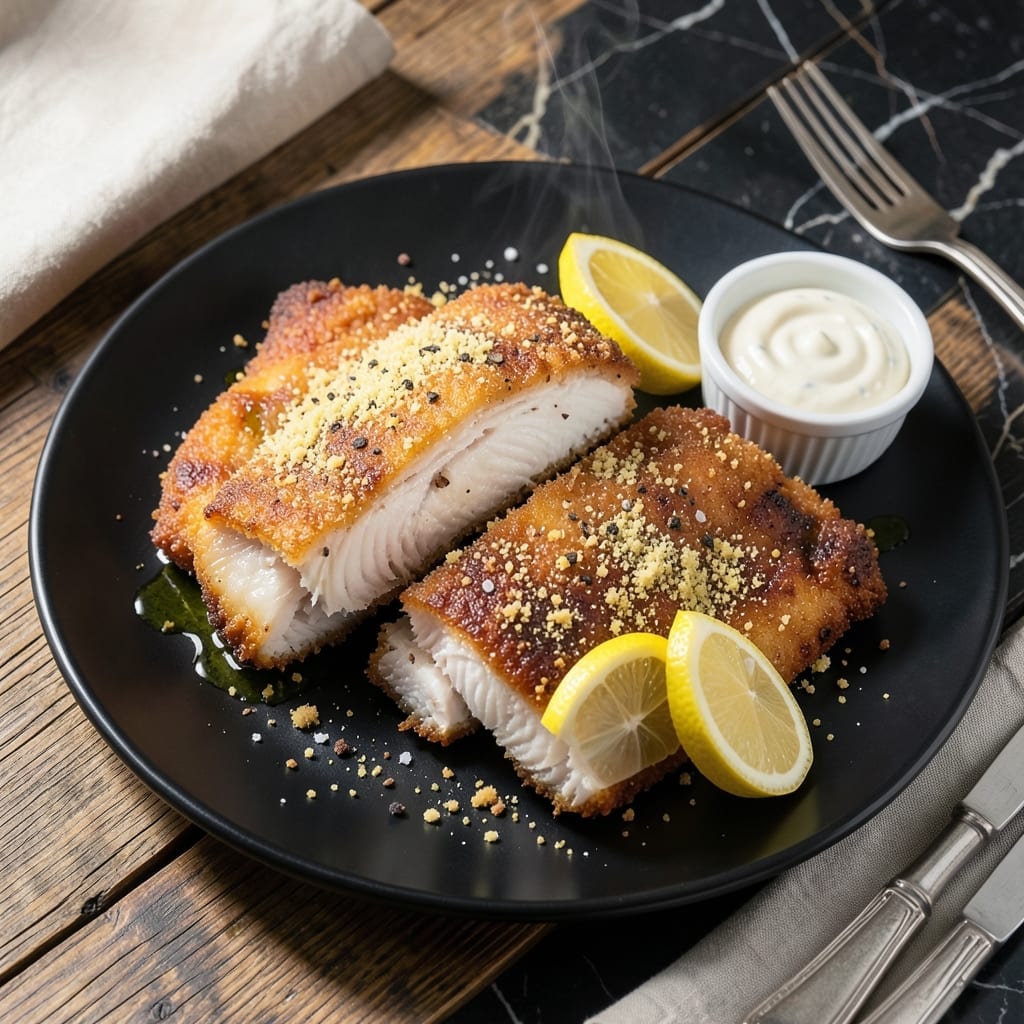
Watching my grandmother cook without recipes taught me that the best dishes often come from intuition. This catfish recipe proves that a crispy coating doesn’t require buttermilk to be perfect.
I developed this method after realizing many home cooks don’t keep buttermilk on hand. A simple egg wash and seasoned flour create that signature crunch without dairy. The result is golden, flaky catfish every time.
The secret lies in the double-dredging technique, which builds layers for maximum crunch. Hot oil ensures the outside crisps while the inside stays tender and moist.
Serve with lemon wedges and hot sauce for a classic meal that’s easy enough for any weeknight. This approach delivers restaurant-quality results with minimal effort.
Ingredients for Fried Catfish Recipe No Buttermilk
Simple pantry staples create a golden, crunchy coating for tender catfish every time.
| Ingredient | Amount | Notes |
|---|---|---|
| Catfish Fillets 🐟 | 1 ½ lb | Fresh or thawed, patted dry |
| All-Purpose Flour 🌾 | 2 cups | Divided for double-dredging |
| Cornstarch 🌽 | ½ cup | For extra crispiness |
| Large Eggs 🥚 | 2 whole | Beaten for egg wash |
| Salt 🧂 | 1 ½ tsp | Divided, Diamond Crystal preferred |
| Black Pepper 🌶️ | 1 tsp | Freshly ground |
| Paprika 🌶️ | 1 tbsp | Sweet or smoked variety |
| Garlic Powder 🧄 | 1 tsp | Not garlic salt |
| Onion Powder 🧅 | 1 tsp | For depth of flavor |
| Cayenne Pepper 🔥 | ½ tsp | Adjust for heat preference |
| Vegetable Oil 🫒 | 4 cups | For deep frying, peanut oil works too |
| Lemon Wedges 🍋 | 4 pieces | For serving |
| Hot Sauce 🔥 | ½ cup | For serving, Crystal or Tabasco recommended |
[recipe_ingredient_scaler]
The catfish itself is critical—fresh fillets from a reputable fishmonger or a trusted grocery store seafood counter yield the best texture. Look for firm, white flesh with no fishy odor. Wild-caught is preferable if available, but farmed works in a pinch. The double-dredging technique requires separating the flour into two portions, so ensure you have enough on hand. For the oil, peanut oil offers a higher smoke point, but vegetable oil is a reliable substitute.
No buttermilk? No problem. The egg wash provides the necessary adhesion for the flour coating. For a gluten-free version, replace all-purpose flour with a 1:1 gluten-free blend. If you prefer a spicier kick, increase the cayenne or add a pinch of Cajun seasoning. The cornstarch can be swapped with rice flour for a similar crispiness. For those avoiding eggs, a flax egg (1 tbsp ground flaxseed + 3 tbsp water per egg) works as a binder.
Store fresh catfish in the coldest part of your fridge and use within 1-2 days for optimal freshness. Leftovers keep in the fridge for up to 3 days, though they’re best eaten immediately for maximum crunch. Reheat in a 350°F oven on a wire rack to maintain crispiness. The seasoned flour mix can be prepped ahead and stored in an airtight container for up to 1 week.
Why You’ll Love This Recipe
- No Buttermilk Needed: I love that this skips the buttermilk step—just eggs, flour, and cornstarch for a crispy coating with zero extra grocery runs.
- Crispy Every Time: The cornstarch in the mix gives that golden, crunchy crust that stays put, even when stacked on a plate.
- Weeknight Hero: Honestly, it’s my go-to when I need dinner fast—20 minutes from fillet to table, no fuss.
- Budget Friendly: Catfish fillets stretch far, and the pantry staples mean I’m not buying special ingredients just for one meal.
Step-by-Step Instructions for Fried Catfish Without Buttermilk
Master this technique for a perfectly crispy exterior and moist, flaky interior every time.
Step 1: Season and Prepare the Catfish Fillets
Begin by patting the 1.5 lb catfish fillets completely dry with paper towels. This step is crucial—any moisture will prevent the coating from adhering properly and result in a soggy crust.
Season both sides of the fillets with ½ tsp salt, 1 tsp black pepper, 1 tbsp paprika, 1 tsp garlic powder, 1 tsp onion powder, and ½ tsp cayenne pepper. This creates the flavor foundation for your dish. Let the seasoned fillets rest for 10 minutes while you prepare the coating.
Step 2: Set Up the Double-Dredging Stations
In a shallow dish, whisk the 2 whole large eggs until fully combined and slightly frothy. In a separate shallow dish, combine 1½ cups all-purpose flour with the remaining 1 tsp salt. Place the ½ cup cornstarch in a third shallow dish.
This three-step dredging process ensures maximum crunch. The cornstarch adds an extra layer of crispiness, while the egg wash acts as the perfect adhesive. Keep the remaining ½ cup all-purpose flour nearby for the final dredge.
Step 3: Dredge and Coat the Fillets
Working with one fillet at a time, dredge it in the seasoned flour, shaking off any excess. Then dip it into the beaten eggs, allowing any excess to drip off. Next, coat it in the cornstarch, pressing gently to ensure full coverage.
Finally, dredge the fillet once more in the plain flour. This double-dredging technique creates a thicker, more robust crust that stays crispy longer. Place the coated fillets on a wire rack set over a baking sheet to rest for 5 minutes while the oil heats.
Step 4: Fry to Golden Perfection
In a deep, heavy-bottomed pot or Dutch oven, heat the 4 cups vegetable oil to 350°F. Use a deep-fry or candy thermometer to monitor the temperature accurately. When the oil reaches temperature, carefully lower 1-2 fillets at a time into the oil, avoiding overcrowding.
Fry for 4-5 minutes per side until the coating is deep golden brown and crispy. The fillets should float to the surface when ready. Use a slotted spoon to transfer the fried catfish to a paper towel-lined plate to drain excess oil.
Step 5: Serve Immediately with Classic Accompaniments
Serve the fried catfish hot, straight from the fryer for the best texture. Arrange the fillets on a platter with the 4 pieces lemon wedges and ½ cup hot sauce on the side. The acidity from the lemon cuts through the richness, while the hot sauce adds a spicy kick.
This dish is best enjoyed immediately, as the coating loses its crispness over time. For a complete meal, pair with classic sides like coleslaw or hush puppies.
Pro Tips For Making Fried Catfish Recipe No Buttermilk
- Dry the Fillets: Pat the catfish fillets completely dry with paper towels before dredging—I learned this the hard way after my first batch turned into a soggy mess.
- Heat the Oil First: Get that oil ripping hot (about 375°F) before adding the fish, or the coating will absorb oil instead of crisping up.
- Skip the Overcrowding: Fry in small batches so the temperature doesn’t drop, or you’ll end up with greasy, unevenly cooked catfish.
- Use Cold Eggs: Sounds weird, but it works: cold eggs create a thicker, stickier wash that helps the flour-cornstarch coating cling better to the catfish.
Regional Styles of fried catfish recipe no buttermilk
Southern Mississippi Style
In the Delta, they swear by a cornmeal-heavy coating for catfish. Replace ½ cup flour with fine yellow cornmeal for a grittier texture that holds up to the region’s spicy come-back sauce. I add 1 tsp Tony Chachere’s to the dredge for that authentic kick. 🌶️
Texas Gulf Coast
Coastal cooks use crushed saltine crackers in their dredge for extra crunch. Mix 1 cup crushed crackers with the flour and seasonings. The salty, buttery flavor pairs perfectly with fresh-caught catfish from the Gulf waters.
Cajun Louisiana
This version gets serious heat. To the seasoned flour, stir in 1 tbsp Cajun seasoning and ½ tsp filé powder. Fry in a cast-iron skillet with 1 cup bacon grease mixed into the oil for that down-home flavor my grandmother always loved.
Carolina Lowcountry
The Gullah-Geechee tradition uses rice flour instead of cornstarch for a lighter, crispier coating. This method reflects the region’s deep rice-growing history. Serve with benne seed (sesame) waffles for a true Lowcountry experience.
Midwestern Farmhouse
In landlocked areas, they often use panko breadcrumbs for texture. Mix ½ cup panko with the flour in the final dredge. The result is a thicker crust that stays crispy even when transported to church potlucks. 💛
Florida Keys
Island cooks add lime zest and dried citrus peel to their seasoning mix. The bright flavor complements the tropical vibe. Use coconut oil for frying to echo the region’s Caribbean influences, if available at your local market.
Nutrition Facts
Frequently Asked Questions
What can I use instead of eggs?
A flax egg (1 tbsp ground flaxseed + 3 tbsp water per egg) works perfectly. Let it sit for 5 minutes to thicken before using. Aquafaba is another great option.
Why does my coating fall off?
Pat the fillets completely dry first. Any moisture prevents the flour from sticking. Also, let the coated fillets rest for 5 minutes before frying.
Can I bake instead of fry?
Yes! Bake at 425°F for 15-20 minutes on a wire rack. Use an oil spray for crispiness, but frying gives the best texture.
How do I keep it crispy?
Drain on a wire rack, not paper towels. This prevents steam from making the coating soggy. Serve immediately for maximum crunch.

Trained in classic French technique but raised on slow-cooked ribs and spicy rubs, she blends culinary skill with smoke and soul.
- Recipe for Boneless Cross Rib Roast: Slow-Roasted Beef with Herb Crust - October 3, 2026
- Hamburgers in Sauce Recipe Crock Pot: Slow-Cooked Savory Delight - October 3, 2026
- Sanjeev Kapoor Egg Biryani Recipe: Fragrant Spiced Rice With Boiled Eggs - October 3, 2026