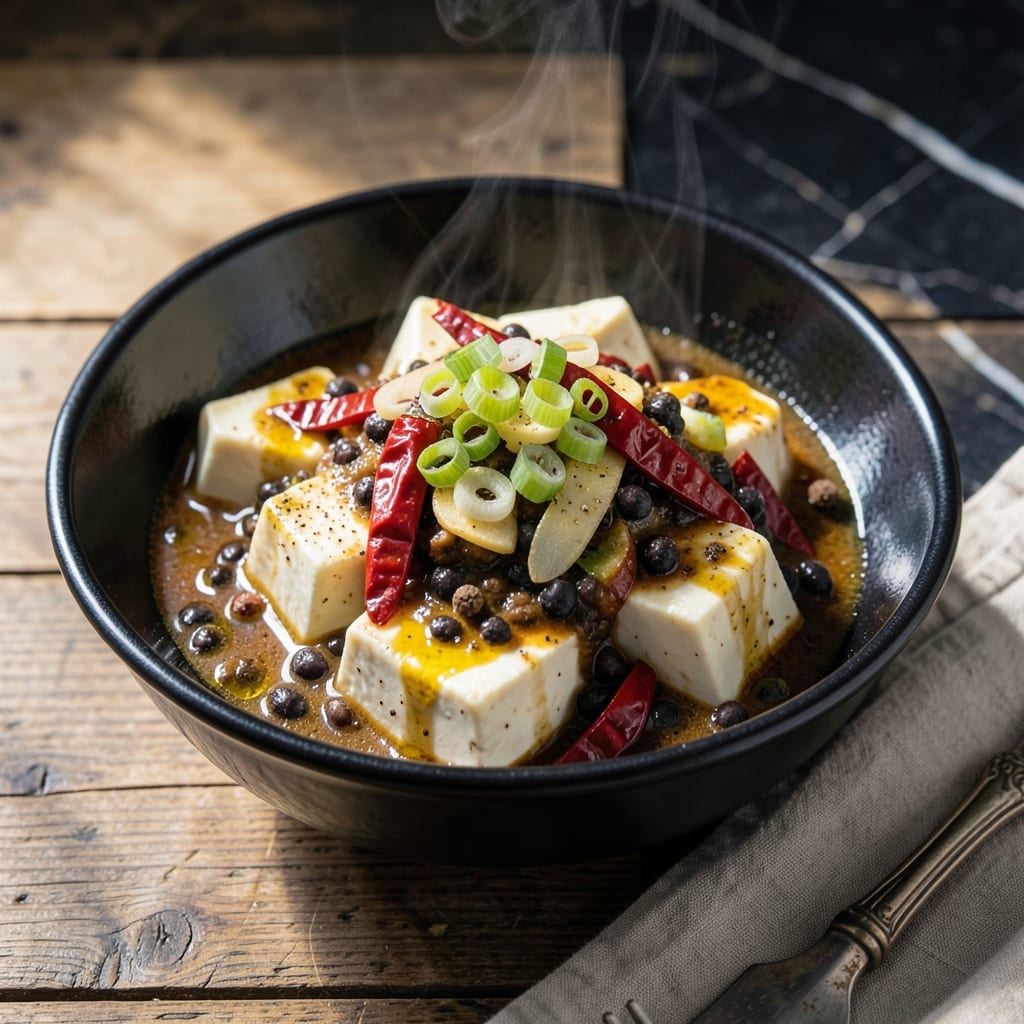
I’ve adapted this classic Sichuan dish to deliver all the bold, numbing heat of traditional mapo tofu—without the meat. The secret lies in fermented black beans and a carefully balanced sauce that brings depth and complexity.
Using firm tofu and a few key substitutions, this version captures the essence of the original. The texture remains rich and satisfying, while the flavors stay true to the dish’s fiery, aromatic roots.
You’ll achieve a silky, spicy sauce that clings to each cube of tofu, with the signature Sichuan peppercorn tingle. It’s a dish that proves vegetarian versions can rival their meat-based counterparts.
Ready in under 30 minutes, this recipe brings restaurant-quality results to your kitchen.
Ingredients for Mapo Tofu Recipe Vegetarian
Bold Sichuan flavors start with firm tofu and a handful of aromatic staples.
| Ingredient | Amount | Notes |
|---|---|---|
| Firm Tofu 🧈 | 1 lb | Pressed and cubed |
| Fermented Black Beans 🫘 | 2 tbsp | Rinsed and chopped |
| Sichuan Peppercorns 🌶️ | 1 tsp | Lightly toasted and ground |
| Dried Red Chili Peppers 🌶️ | 8 whole | Seeds removed for less heat |
| Garlic Cloves 🧄 | 4 cloves | Minced finely |
| Fresh Ginger 🌿 | 1 tbsp | Grated or minced |
| Green Onions 🧅 | 4 whole | Thinly sliced, whites and greens separated |
| Soy Sauce 🫒 | 3 tbsp | Low-sodium preferred |
| Doubanjiang (Spicy Bean Paste) 🥜 | 1 ½ tbsp | Essential for authentic flavor |
| Vegetable Stock 🥕 | 1 cup | Low-sodium preferred |
| Cornstarch 🌾 | 1 tbsp | Mixed with 2 tbsp water |
| Neutral Oil 🫒 | 3 tbsp | Peanut or vegetable oil |
| Sesame Oil 🫒 | ½ tsp | Toasted, for finishing |
| Salt 🧂 | ½ tsp | Adjust to taste |
| Sugar 🥄 | ½ tsp | Balances the heat |
[recipe_ingredient_scaler]
The fermented black beans and doubanjiang are non-negotiable for authentic flavor. Asian markets carry both, or order online from Amazon or Weee!. Sichuan peppercorns should be fresh—look for them in the spice aisle, not the dusty old jars. Firm tofu is key here (the extra-firm stuff holds up best to the saucy braise). Press it for 15 minutes to remove excess water, or buy pre-pressed for convenience.
No Sichuan peppercorns? Black pepper plus a pinch of five-spice powder won’t be the same but works in a pinch. Swap dried chilies for chili flakes at half the amount (or less if you’re heat-sensitive). For the black beans, fermented yellow beans can substitute. The doubanjiang can be replaced with gochujang mixed with miso, though the flavor profile will shift slightly.
Store extra tofu submerged in water (change daily) for up to 5 days. The doubanjiang and fermented beans keep in the fridge for 1-2 years. Sichuan peppercorns stay potent in a sealed container for 6 months.
Why You’ll Love This Recipe
- One Pan Wonder: I toss everything into a single pan—firm tofu, fermented black beans, and those fiery red chilies—and it’s done in under 25 minutes.
- Flavor Bomb: The Sichuan peppercorns give that signature tingly heat, while the garlic and black beans pack a savory punch that’s ridiculously good.
- Meal Prep Hero: Honestly, it tastes even better the next day, so I double the batch for lunches all week.
- Budget Friendly: Firm tofu and a handful of pantry staples keep this dish light on the wallet but heavy on satisfaction.
Step-by-Step Instructions for Mapo Tofu
This authentic technique delivers bold Sichuan flavors with perfectly tender tofu every time.
Step 1: Toast Spices and Bloom Aromatics
Heat 1 tbsp neutral oil in a wok or deep skillet over medium heat. Add the 1 tsp Sichuan peppercorns and toast for 30-45 seconds until fragrant. Immediately add the 8 whole dried red chili peppers and stir for 15 seconds—just enough to release their oils without burning.
Quickly add the 2 tbsp fermented black beans, 1.5 tbsp doubanjiang, 4 cloves minced garlic, and 1 tbsp grated ginger. Stir-fry for 1-2 minutes until the mixture turns deep red and becomes glossy. This builds the flavor foundation—don’t rush it.
Step 2: Build and Season the Sauce
Pour in the 1 cup vegetable stock and stir to combine. Add the 3 tbsp soy sauce, 0.5 tsp salt, and 0.5 tsp sugar. Bring to a gentle simmer and let cook for 2-3 minutes to meld the flavors. The sauce should look slightly thickened and deeply colored.
Taste and adjust seasoning if needed, but remember the tofu will absorb some saltiness. The sauce should balance spicy, salty, and slightly sweet notes. This is where the magic happens.
Step 3: Cook the Tofu in the Sauce
Gently add the 1 lb pressed and cubed firm tofu to the sauce. Use a spatula to coat each piece thoroughly without breaking them. Cook over medium-low heat for 5-7 minutes, allowing the tofu to absorb the flavors.
The tofu should become slightly puffed and saturated with the vibrant red sauce. Be gentle—you want the cubes to stay intact. If the sauce reduces too much, add a splash of water.
Step 4: Thicken and Finish
Stir the 1 tbsp cornstarch mixed with 2 tbsp water into the sauce. Cook for 1-2 minutes until the sauce reaches a glossy, velvety consistency that coats the back of a spoon. The sauce should cling to the tofu without being gluey.
Remove from heat and stir in the 0.5 tsp sesame oil. The sesame aroma should be noticeable but not overpowering. Toss in the 4 whole sliced green onions, reserving some greens for garnish.
Let rest for 2 minutes to allow the flavors to settle, then serve immediately over steamed rice, topped with the remaining green onion greens.
Pro Tips For Making Mapo Tofu Recipe Vegetarian
- Press the Tofu: Drain and press your firm tofu for at least 20 minutes under a heavy pan—this keeps it from turning mushy when stir-fried. I learned this the hard way after my first three attempts dissolved into a bland, watery mess.
- Toast the Spices: Dry-toast the Sichuan peppercorns and dried chilies in the oil for 10-15 seconds until fragrant before adding anything else. After burning two batches, I finally figured out this wakes up their flavor without bitterness.
- Mince the Beans: Roughly mince the fermented black beans so they distribute evenly and don’t leave salty surprises in a single bite. Sounds weird, but it works—your tofu will taste seasoned throughout.
- Skip the Blender: Resist the urge to blend your sauce—whisk the cornstarch slurry in by hand at the end for that perfect glossy, clingy texture. This isn’t the prettiest method, but it’s the tastiest.
Essential Equipment for This Recipe
Wok Essentials
A carbon steel wok is my top pick for authentic results. Its high heat retention and wide surface area let you stir-fry like a pro. I use a 14-inch flat-bottom wok from Made In—perfect for gas stoves. The sloped sides make tossing ingredients effortless. 🔥
Wooden Spatula
Forget metal utensils that scratch your wok. A bamboo or wooden spatula protects your pan while letting you scrape up every bit of flavor. Look for one with a long handle to keep your hands safe from the heat.
Mortar and Pestle
Freshly ground Sichuan peppercorns release oils that pre-ground versions can’t match. A granite mortar and pestle gives you the perfect texture. I grind mine just before cooking to maximize the numbing aroma and flavor.
Tofu Press
Firm tofu needs pressing to remove excess water for optimal texture. A tofu press makes this effortless—I use the Tofuture model which applies even pressure. Press for 15-20 minutes before cubing for best results. 💡
Fine Mesh Strainer
A fine mesh strainer helps rinse the fermented black beans without losing them down the drain. It also works perfectly for dusting the tofu with cornstarch if you want extra crispiness before adding to the sauce.
Digital Scale
For consistent results, I weigh my tofu and sauces. A kitchen scale from OXO ensures I use exactly 1 lb tofu and 1.5 tbsp doubanjiang every time. Precision matters with bold flavors like these.
Nutrition Facts
Frequently Asked Questions
Can I use silken tofu instead of firm?
Silken tofu is too delicate and will break apart in the sauce. Stick with firm or extra-firm tofu for the best texture. Press it for 15 minutes first to remove excess moisture.
What if I can’t find doubanjiang?
Mix 1 tbsp gochujang with 1/2 tbsp miso paste as a substitute. The flavor won’t be identical, but it will provide a similar spicy, umami base.
How do I make it less spicy?
Remove seeds from the dried chilies and reduce the amount by half. You can also omit the Sichuan peppercorns if you’re sensitive to the numbing sensation.
Can I make this ahead of time?
The flavors actually improve overnight! Store in an airtight container in the fridge for up to 3 days. Reheat gently to avoid breaking the tofu.

Trained in classic French technique but raised on slow-cooked ribs and spicy rubs, she blends culinary skill with smoke and soul.
- Recipe for Boneless Pork Chops in Cast Iron Skillet: Sear and Baste to Juicy Perfection - October 3, 2026
- Recipe for Boneless Cross Rib Roast: Slow-Roasted Beef with Herb Crust - October 3, 2026
- Hamburgers in Sauce Recipe Crock Pot: Slow-Cooked Savory Delight - October 3, 2026