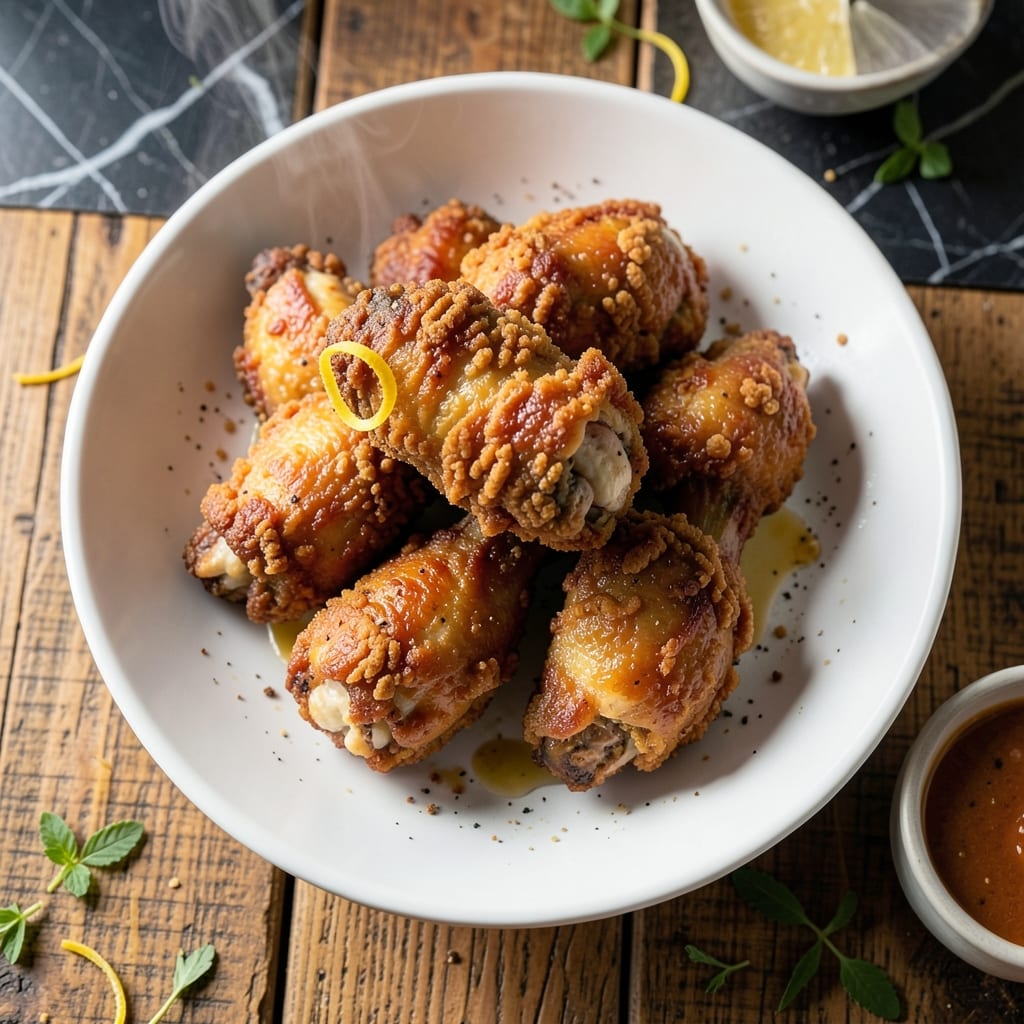
There’s a science to achieving crispy fried chicken at home, and eggs play a crucial role in the process. This method delivers golden, shatteringly crispy results every time with minimal effort.
The egg wash creates a bond between the chicken and coating, ensuring the crumbs adhere perfectly. By double-dipping in flour and egg, you build layers that fry up ultra-crunchy without falling off.
Each piece emerges with a deep golden crust that cracks satisfyingly at first bite. The inside stays juicy and tender, proving that perfect fried chicken is within reach.
No special equipment needed—just a few ingredients and this proven technique. The results speak for themselves.
Ingredients for Fried Chicken Recipe Using Eggs
Crispy results start with these quality ingredients for perfect homestyle flavor.
| Ingredient | Amount | Notes |
|---|---|---|
| Chicken Thighs 🍗 | 2 lb | Bone-in, skin-on for best texture |
| Large Eggs 🥚 | 2 whole | For egg wash binding |
| All-Purpose Flour 🌾 | 2 cups | Divided for dredging and coating |
| Buttermilk 🥛 | 1 cup | For marinating chicken |
| Baking Powder 🧂 | 2 tsp | For extra crispiness |
| Salt 🧂 | 1 tbsp | Plus more to taste |
| Black Pepper 🌶️ | 1 tsp | Freshly ground preferred |
| Paprika 🌶️ | 1 tsp | For color and flavor |
| Garlic Powder 🧄 | 1 tsp | For seasoning flour |
| Onion Powder 🧅 | 1 tsp | For seasoning flour |
| Cayenne Pepper 🔥 | ½ tsp | Optional for heat |
| Vegetable Oil 🫒 | 4 cups | For deep frying |
[recipe_ingredient_scaler]
The chicken thighs are key here—bone-in, skin-on gives you that juicy interior with a shatteringly crisp crust. Most supermarkets carry them, but Costco or Sam’s Club offer great bulk deals. The buttermilk should be full-fat for maximum tenderness (the low-fat versions just don’t deliver). For the flour, any all-purpose brand works, but King Arthur is a favorite for consistent results.
No buttermilk? Whole milk plus 1 tbsp vinegar works in a pinch. Out of cayenne? Skip it or add a dash of hot sauce to the egg wash. The baking powder in the flour is non-negotiable—it’s what gives that extra crunch. If you’ve got self-rising flour, you can use that instead and omit the baking powder and salt.
The dredged chicken can rest in the fridge for 30 minutes before frying if you’re prepping ahead. Leftovers keep in the fridge for 3-4 days—reheat in the oven to maintain crispiness. Freezing isn’t ideal, but if you must, 1 month max.
Why You’ll Love This Recipe
- No-Fuss Coating: I just dip, dredge, and fry—those eggs and buttermilk make the flour cling like magic.
- Crispy Outside, Juicy Inside: The baking powder in the flour gives it that extra crunch while the thighs stay ridiculously tender.
- Weeknight Hero: Between us, this is my Tuesday dinner MVP when I need something satisfying fast.
- Stretches the Budget: Chicken thighs are cheap, and one batch feeds my family of four with leftovers for sandwiches.
Step-by-Step Instructions for Fried Chicken Using Eggs
This method delivers that coveted crispy exterior while keeping the meat impossibly juicy inside.
Step 1: Marinate the Chicken in Buttermilk
Place the 2 lb Chicken Thighs in a large bowl and pour over the 1 cup Buttermilk. I ensure every piece is fully coated by tossing gently with my hands. The buttermilk works as a tenderizer while adding subtle tang.
Cover and refrigerate for at least 4 hours, or preferably overnight. This step is non-negotiable for maximum flavor and moisture. You’ll notice the meat plumps slightly as it absorbs the liquid, which is exactly what we want.
Step 2: Prepare the Seasoned Flour Coating
In a shallow dish, whisk together the 2 cups All-Purpose Flour, 2 tsp Baking Powder, 1 tbsp Salt, 1 tsp Black Pepper, 1 tsp Paprika, 1 tsp Garlic Powder, 1 tsp Onion Powder, and 0.5 tsp Cayenne Pepper. The baking powder creates micro-bubbles in the coating, amplifying crispiness.
I like to spread the mixture evenly so each piece gets an even dusting. The spices should be fully incorporated—no streaks of white flour remaining. This blend gives the perfect balance of savory, slightly smoky heat.
Step 3: Create the Egg Wash and Dredge the Chicken
In a separate shallow dish, beat the 2 whole Large Eggs until the yolks and whites are fully combined. This acts as the glue that helps the flour adhere to the chicken. For best results, I use a fork and beat vigorously for 30 seconds until no streaks remain.
Remove each piece of chicken from the buttermilk, letting the excess drip off, then dip it in the beaten eggs, ensuring full coverage. Next, press it firmly into the seasoned flour mixture, turning to coat all sides. The coating should look thick and slightly clumpy—this ensures maximum crunch.
Step 4: Fry to Golden Perfection
Heat the 4 cups Vegetable Oil in a deep, heavy-bottomed pot or Dutch oven over medium-high heat until it reaches 350°F. Use a deep-fry thermometer for accuracy—oil that’s too cool will make the chicken greasy, while oil that’s too hot will burn the outside before the inside cooks.
Carefully lower 2-3 pieces of chicken into the oil at a time, avoiding overcrowding. Fry for 12-15 minutes, turning occasionally, until the coating is deep golden brown and the internal temperature reaches 165°F. The oil should bubble steadily but not violently around each piece.
Step 5: Drain and Rest Before Serving
Transfer the fried chicken to a wire rack set over a baking sheet or a paper towel-lined plate. This allows air to circulate, keeping the crust crispy instead of soggy. Let it drain and rest for 5-10 minutes before serving.
I always sprinkle a little extra salt over the hot chicken right out of the fryer to enhance the flavor. Serve immediately while hot—the contrast between the shatteringly crisp coating and the juicy meat inside is what makes this dish unforgettable.
Pro Tips For Making Fried Chicken Recipe Using Eggs
- Double Dip the Chicken: Dip each piece in buttermilk, then flour, then back in buttermilk and flour again—this builds a thicker, crunchier crust that actually stays put.
- Rest the Coated Chicken: Let the floured pieces sit for 10 minutes before frying; the baking powder in the flour mix will start working, making the crust lighter and airier.
- Use Room-Temp Eggs: I learned this the hard way—cold eggs straight from the fridge can make the buttermilk mixture clump and coat unevenly, so pull them out 30 minutes early.
- Fry in Small Batches: Resist the urge to crowd the pan; too many pieces at once drops the oil temp, and you’ll end up with greasy, soggy chicken instead of crispy.
Common Mistakes When Making fried chicken recipe using eggs
Skipping the Marinade
Buttermilk isn’t just for flavor—it tenderizes the meat and helps the coating stick. Skipping the 4-hour marinade results in dry chicken and weak crust adhesion. I once rushed this step, and the coating slid right off. 💡
Overcrowding the Fryer
Adding too many pieces at once lowers the oil temperature, leading to greasy, soggy results. Fry in batches with 2-3 pieces at a time to maintain 350°F. A deep-fry thermometer is worth the investment for consistent results.
Inconsistent Oil Temp
Oil that’s too cool makes chicken absorb excess grease, while oil that’s too hot burns the outside before the inside cooks. Keep it steady at 350°F and adjust the heat as needed. I check the temp between batches.
Thin or Uneven Coating
Press the chicken firmly into the flour mixture to create a thick, even layer. A light dusting won’t crisp up properly. The coating should look clumpy—that’s how you get that signature crunch.
Not Resting Before Frying
Let the dredged chicken rest for 5-10 minutes before frying. This helps the coating set, preventing it from falling off during cooking. I use this time to heat the oil to the perfect temperature.
Skipping the Drain Step
Placing fried chicken directly on paper towels traps steam, making the crust soggy. Use a wire rack instead to allow air circulation. This keeps every bite as crispy as the first. 🔥
Nutrition Facts
Frequently Asked Questions
Can I use egg whites instead of whole eggs?
Whole eggs work best for binding and richness, but egg whites can substitute in a pinch. Use 3 egg whites to replace 2 whole eggs for similar adhesion.
How do I keep the coating from falling off?
Press firmly into the flour and let the dredged chicken rest for 5-10 minutes before frying. This helps the coating set properly.
What oil works best for frying?
Vegetable oil is ideal for its high smoke point and neutral flavor. Peanut or canola oil are great alternatives. Avoid olive oil.
Can I bake this instead of frying?
For a lighter version, bake at 400°F for 25-30 minutes. Spray with oil first for crispiness, though frying gives the best crunch.

Trained in classic French technique but raised on slow-cooked ribs and spicy rubs, she blends culinary skill with smoke and soul.
- Recipe for Boneless Pork Chops in Cast Iron Skillet: Sear and Baste to Juicy Perfection - October 3, 2026
- Recipe for Boneless Cross Rib Roast: Slow-Roasted Beef with Herb Crust - October 3, 2026
- Hamburgers in Sauce Recipe Crock Pot: Slow-Cooked Savory Delight - October 3, 2026